
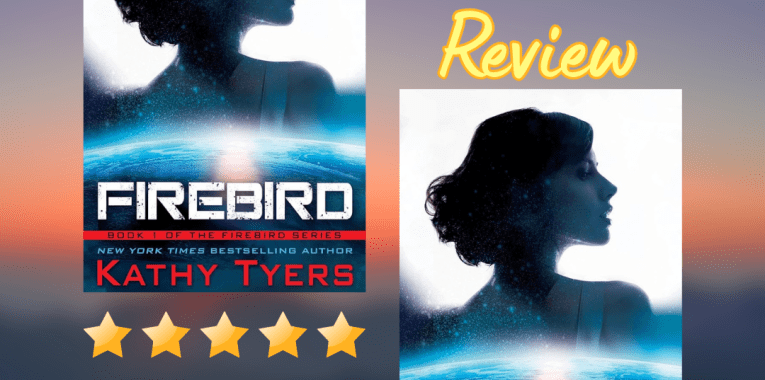
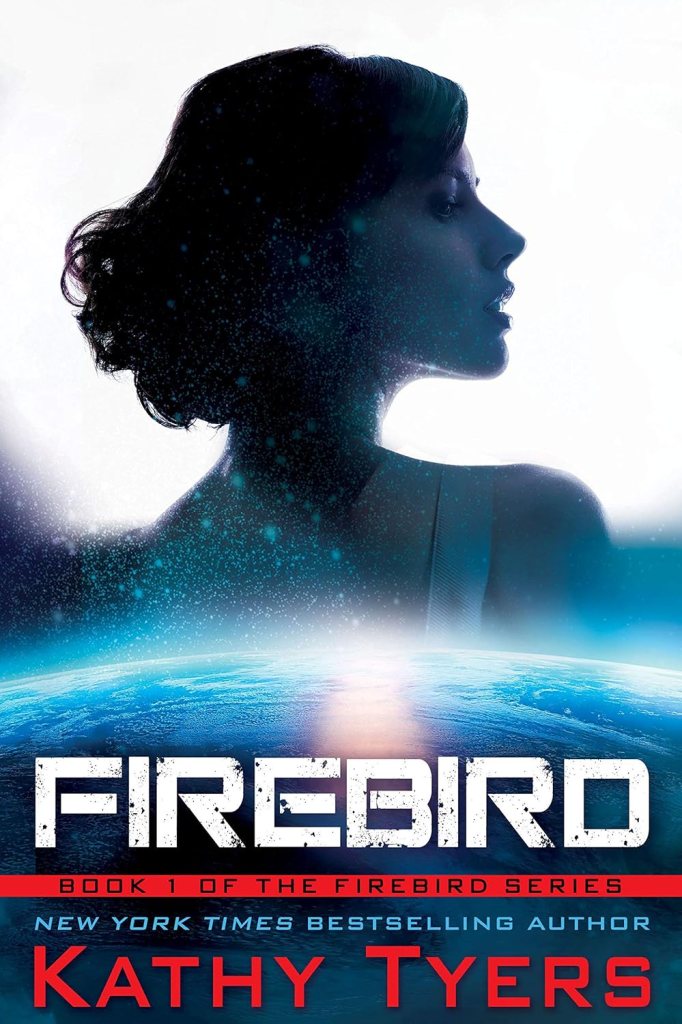
Rating: 5 stars!
Firebird is a thrilling Christian space opera, filled with planetary battles, telepathic warriors, familial betrayal, and the deep longing for one’s soul to be seen – by one’s people, lover, and God himself.
Synopsis
As the third princess of the planet Netaia, Firebird has been ordered to die. Her people consider her a wastling, an extraneous heir whose only role is to die in service to her people. A fighter pilot and Major, Firebird is sent with the leading strike force to conquer a nearby planet which holds mineral resources vital to weapons of mass destruction. Captured by the Federate forces who defend the system, she is shocked when they offer her mercy. Shielded by the telepathic warrior who spared her life, she begins to question the fanatic loyalty her people and gods expect of her.
Characters: 5/5
Characters are the heart of this story, and the dialogue and dynamics between characters have physically palpable energy and tension.
Lady Firebird Angelo is one of, if not the only, female character who I’d consider one of my favorite characters in fiction. I prefer reading about male leads because I never connect well with female protagonists. Not so here! Firebird displays a delightful mix of vulnerability, loyalty, grit, poise, intelligence, and more. She is much better fleshed out than most female characters I encounter, with a strongly incorporated skill for music, a complex dynamic with her family and authority figures, inside jokes and regrets about the past, and maturity beyond her years. She is torn apart by a complex moral dilemma – serve the lies and violent agenda of the planet she loves (but which has rejected her), or embrace truth, eternal salvation, and a new life among the strangers who were once her enemies.
Brennen Caldwell is super hot – it’s true. A fighter pilot, commander, and Sentinel (genetically engineered user of telekinetic and telepathic abilities), he’s the most desirable bachelor in his culture (not even accounting for his religiously significant bloodline). But he’s not just a love interest – we get his POV as he runs ops, struggles to develop his leadership, chafes against the prejudice of the Federacy, and tries to help Firebird heal from the mental abuse she’s lived with her whole life. His driving motivation is to find a true companion who can share his life and soul with him. Their people (Thyrian-Ehretans) form telepathic pair bonds with individuals who are connatural, or share a high mental, spiritual, and physical resonance. And, oh, the dramatic tension when he discovers an enemy is more of a kindred spirit to him than any of his own people.
Plot: 4/5
This is a character-driven story, so while there are some epic (and realistically written) battles, there’s a much greater focus on politics, family dynamics, and cross-cultural encounters.
The first time I read this book, the middle portion irritated me a little, because the plot slows down and the two main characters end up on different planets for a time – however, this is quite necessary for the long-term health of the main characters’ relationship. Brennan was in a position of power over Firebird, who was extremely vulnerable mentally, emotionally, and politically. Separating them for a time allowed Firebird to get her feet under her and explore a new planet and ideology without pressure. If not for this distance, Brennan could easily have come across as predatory – something he himself is highly aware of throughout all their interactions. I admire how Tyers planned this out, allowing both leads to do some soul searching independently before eventually joining forces to address the larger political problems they face.
The ending felt a bit abrupt to me, both the physical conflict and spiritual outcome, but I think the rest of the trilogy did an excellent job of expanding on the themes and ideas present in this book, and progressing the relationship between characters in a realistic way. It is also true that soldiers often make major decisions that would seem abrupt to regular people, because we don’t understand the stakes they live through when risking their lives every day.
Writing: 5/5
I love Kathy Tyers’ writing style! Her dialogue is poignant, sharp, emotional, and filled with tension. She’s an expert at describing body language and using physical motions to punctuate emotion and create breaks within scenes. Her scenes have excellent internal pacing. There are several scenes in this book that are seared into my memory because of how physically visceral it feels reading them. The tension and draw between characters is palpable. Many stories explore the concept of telepathic bonds, but some fall flat because they don’t manage to make readers feel how the characters’ souls sing to one another.
This story explores how mental beliefs and passions, spiritual longings, and physical compatibility all weave together to create truly deep relationships. So many love stories and friendships in fiction omit anything of spiritual significance, but this story is all the richer for raising questions like “will I face more condemnation in the afterlife for committing a moral wrong in loyalty to my people, or for betraying them to save many lives?” Firebird must confront the manipulation, abuse, and state-leveraged religion that has twisted around her her whole life, and she does so because one of her enemies shows her more compassion and forgiveness than any of her mentors or blood relatives ever did. That, is a relationship worth writing home about.
Worldbuilding: 4/5
It’s SO hard to find space opera without aliens, and I’m always delighted when I do. This world is completely focused on human cultures, politics, and relationships, reminiscent of both Star Wars and Lois McMaster Bujold’s world (Shards of Honor). I loved the unique cultural dynamics on Firebird’s planet, Netaia – a society ruled by an aristocratic class, a line of Queens, and a religion of 9 Powers. Their culture reminded me somewhat of Imperial Japan and Russia.
The underlying premise in Brennen’s culture is fascinating too: what if Jesus didn’t come 4,000 years after Creation, but waited many more millennia? His people are essentially the Jews, and his family is like the line of Judah, from which the prophesied Messiah will one day come. Firebird, then, is like Ruth.
The Federacy that rules a large portion of the universe is characterized as a benevolent Empire despite its obvious bureaucratic corruption, self-serving politics, and prejudice against Ehretans. It bothered me, especially in later books, that the Ehretans let the Federacy treat them like trained dogs, and the ones who split off (the Shuhr) to create their own society outside of the Federacy’s self-serving restrictions on ability users are shown as completely evil and in the wrong. In fact, every time an Ehretan acted outside of the extremely controlling rules, they are shown to be despicable people. It rubbed me the wrong way because it reminded me of a brand of Christian authoritarianism that advocates submission to rule following even when leaders are treating you unfairly.
Of course, the strictures they place upon themselves make sense considering how they were nearly wiped out in the past by humans who feared their abilities. They limit individuals out of desperation to maintain the survival of their race. But it still bothers me that Brennan acts as though it would be objectively wrong not to follow the restrictions placed on him by his people and the Federacy alike. The Ehretan government runs personality tests to see how “moral” people are, and then forcibly prevents them from studying their abilities to a greater level if they don’t like what they see – an incredibly self-righteous form of enslavement that implies that any form of ambition is evil. An Ehretan that tries to learn more about their abilities or leave their society is essentially treated like a criminal.
It’s taken for granted that the government has the right to control their people to this extreme because their leaders are holy and God-serving. Imagine if our government was formally Christian and tested people to see how serious they are about their faith or if they have a tendency toward certain sins (not even open sin, but the probability for sin), and based on the results, prevented them from carrying weapons or achieving higher education. And anyone who left was considered a deserter and criminal… It’s a dangerous implication – that if a society is Christian, they can limit human rights if they think the freedoms could hinder God’s “greater good.”
But the best sci-fi makes people think and ask questions like this! I love rereading this book because each time I get to chew on something new. Her story sparked my imagination and helped inspire my own sci-fi world!
Read now!

Hi, I’m Caylah Coffeen, a freelance editor and marketer of sci-fi and fantasy books. I love reading and writing and am a follower of Jesus Christ.
I’ve worked for Monster Ivy Publishing and Eschler Editing, and am currently a weekly editor with Havok Publishing. Reach out to chat about books and publishing!
Thanks for stopping by my website! I hope you’ve found some helpful resources about reading, writing, and publishing. If you liked this article, here’s some more free content…
- Learn more in this interview with Kathy Tyers about her upcoming novel Firebreak
- Send me an email to receive a free sample edit on the first 5 pages of your story
- Subscribe for future posts
Discover more from Creative Cornerstones
Subscribe to get the latest posts sent to your email.

One thought on “Book Review: Firebird by Kathy Tyers”