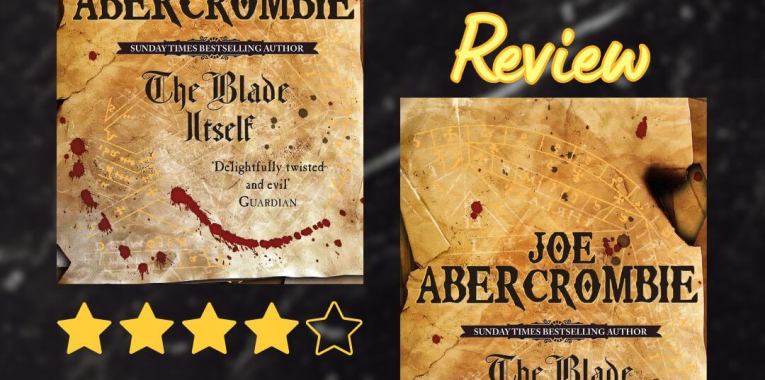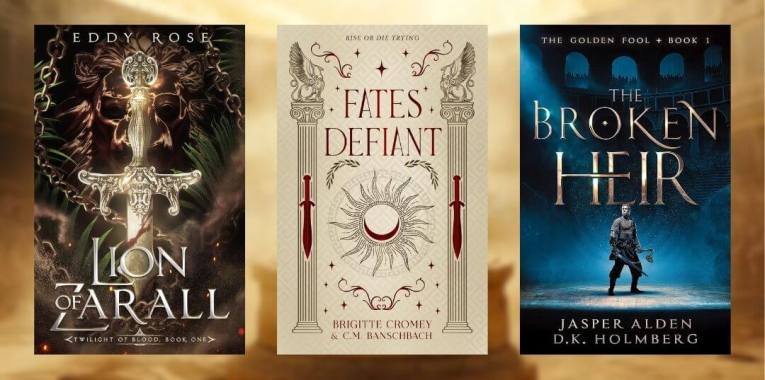
A grimdark, character-driven adult fantasy tale full of morbid wit and deft turns of phrase, but too many POV characters which make the pacing suffer.
Summary
A war hero turned crippled torturer. A barbarian war leader turned refugee. A fop turned unworthy fencing champion. Three extremely different men face wars past and present, uncover political schemes, and get dragged around by the machinations of an entitled old wizard.
Characters: 4/5 stars
This book follows 3 POV characters for the first half of the book and then eases in 3 more in the second half. Glokta, the Inquisitor, is cynically hilarious and a refreshingly realistic take on the “tortured survivor turned torturer” trope. Logan Ninefingers is your lonesome barbarian, trying to find redemption after a very bloody life. Luthar, a noble fencing fop, is insufferable and I wondered why we had his POV at all.
Of the 3, only Glokta gets a real character arc. The problem with stories with so many POVs is that often the first book can feel like only the first act of every character’s story. That’s mostly what this book felt like.
The modern reader will also likely feel dissatisfied with the lack of female representation. The only female character in the first half is the object of Luthar’s sexual fantasies. A vengeful warrior woman is introduced much later, but that’s 2 total women we follow across 3 continents of characters.
Plot: 3/5 stars
I love a character driven story (which this is), but there really isn’t much plot in this book except in Glokta’s arc. The problem mostly lies in the fact that all the characters are in different parts of the world or are introduced before they really become relevant to the plot.
Logan spends the entire book traveling from over the mountains to the main city (where Glokta and Luthar are), thinking about his past and getting caught up in petty fights on the way. If this book was told only from his POV, everything that happens to him in this book would take up only a third of a standalone book.
Similarly, Luthar is a shallow narcissist who spends the whole book sort of fencing and really drinking. He’s the frat boy we know must eventually mature, but it would have been perfectly fine plot-wise to introduce him an entire book later, so little does his POV do for the story (besides irritate us). Glokta gets to chase mysteries and rediscover a friendship he thought lost, which was genuinely moving.
Worldbuilding: 3/5 stars
Nothing special. All the familiar late-medieval/renaissance era equivalents. Faux Viking barbarians in the north. Faux European castles and trade guilds, full of infighting and politicking. Faux “evil Muslims” in the south. Wizard orders and tales of old world demons and magic.
There are some interesting focal points in the soft magic system – the laws forbidding certain practices (hence the title of the series – The First Law), but I won’t spoil that. 😉
Writing: 5/5 stars
I was the most impressed by Joe Abercrombie’s writing style which is truly masterful! It’s why I kept reading. I usually can’t stand books with over 3 POV characters, but he managed them so deftly that I quite enjoyed it. He is an expert at pacing. That may sound strange since I said the plot was slow, but on a scene-by-scene level, Abercrombie is excellent at starting and ending in just the right places.
Everything that needs to happen in a chapter happens – no more, no less. Each segment feels like a full part of the character’s journey, not just a step to get somewhere else. He uses, but does not abuse cliffhangers. He switches between POVs at natural places in a way that doesn’t make the reader distracted and frustrated waiting to get back to them.
We receive just enough information about the characters’ pasts and mysterious plot points to keep us aching for more, and he then reveals the next piece in quite an enjoyable way. His sentence structure and style itself is quite refreshing, not bloated like that of many modern fantasy authors. Great turns of phrase, humor, purposeful descriptions that don’t take a full page to get through, and a great clip at the sentence level.
I went on to complete the trilogy because of how much I enjoyed Abercrombie’s writing style.
Logen Ninefingers, worn down by years of feuds and bad luck, flees the North with more enemies than allies.
In the civilized Union, Jezal dan Luthar coasts on privilege towards a fencing tournament, while Glokta—once a proud soldier himself, now a crippled torturer—cuts through thickening treason cases.
When old Magus Bayaz pulls all three men into his schemes, their paths collide amid political rot and rising conspiracies which threaten the fate of kingdoms.
CONTENT WARNING: Readers may like to know that the book is very R-rated for graphic violence, swearing, and sexual content, in that order of frequency.
Hi, I’m Caylah Coffeen, a freelance editor and marketer of sci-fi and fantasy books. I love reading and writing and am a follower of Jesus Christ.
I’ve worked for Monster Ivy Publishing and Eschler Editing, and am currently a weekly editor with Havok Publishing. Reach out to chat about books and publishing!
Thanks for stopping by my website! I hope you’ve found some helpful resources about reading, writing, and publishing. If you liked this article, here’s some more free content…
Brandon Sanderson is arguably the most popular contemporary fantasy author, with a massive body of work. His books tend to feature a large cast of 3+ point of view characters, a hard magic system, culturally diverse and richly developed worlds, and deeply emotional characters. I have no doubt that his work will remain of mainstay of the fantasy genre for generations to come.
What is the Cosmere?
The Cosmere is a shared universe featuring multiple planets, realms of existence, and a common mythos and magic system. Sanderson has written 3 major series (The Stormlight Archives, Mistborn Era 1, Mistborn Era 2) and multiple standalones, short stories, and anthologies in this larger, interconnected universe. You can find more details about his massive universe on the fan wiki the Coppermind (ENTER AT YOUR OWN RISK OF SPOILERS).
I’ve read a veritable heap of Sanderson’s books by now, and have had the privilege of meeting both him and his wife at DragonCon and JordanCon! So to get you addicted started, here are mini reviews of 5 major works set in Sanderson’s Cosmere:
This is one of my favorites, and I actually recommend that readers new to Sanderson’s work start here, as it’s a standalone (currently), that still gives readers a great sense of the width and breadth of Sanderson’s worldbuilding and magic systems.
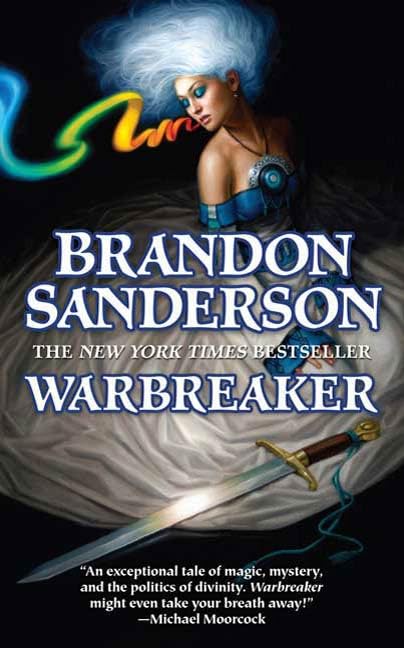
Princess Siri of the kingdom of Idris is sent to marry the God King of Hallandren, a vibrant city full of color magic (inspired by Hawaii and South Asian cultures). Her sister Vivenna chases after her to save her and becomes entangled with a man of mysterious powers. This story has a little of everything – politics, mystery, cultural clashes, a love story against all odds, political and religious turmoil, and of course, a fascinating magic system.
I was disappointed by how abruptly the story ended after its epic conclusion. We didn’t really have any chance to sit with our characters and enjoy their transformations and newly strengthened bonds. A huge plot surprise isn’t enough to create a satisfying ending – there needs to be emotional closure too. This book is the reason I describe Sanderson’s style as a multi-course meal with the final dish exploding like fireworks in your mouth, but with only one bite of dessert – and you’re asked to leave the restaurant immediately afterwards. When you’re in a food coma from a mindblowing meal, you need some more time to sit and savor.
Perhaps Sanderson agrees that Warbreaker is a good place for new readers to start, because he offers it for free on his website.
I absolutely love Kaladin, a grieving slave dragged to the Shattered Plains, the location of a war of attrition, who is followed around by an ancient, mysterious spirit called a spren. His arc from despair to loyalty and self-sacrifice is incredibly moving – he’s my favorite character in all of fiction. We also follow a King trying to avenge his brother’s murder, a girl with seriously strange mental issues, and many other actors who all have their own conflicting opinions of how to save the world from impending Desolation.
However, I found it frustrating to get through this book because of how the many POV characters affected the pacing. That’s just a matter of preference – I usually don’t like reading books with more than 2 POV characters, especially when one of them is on the opposite side of the world the entire time (Shallan) – her story arc could have been an entirely separate book. I also found some of Dalinar and Adolin’s point of view to be unnecessary – sometimes less is more. But I am so glad I kept reading, because this world is stuffed full of incredible mysteries, such real people who are deeply broken and struggling to get back up again, and such dramatic magic and fight scenes!
The second book in this series, Words of Radiance, is my favorite (4.7/5 stars), and Sanderson’s writing style only improves from there. I think his handling of multiple POV’s became utterly masterful in books #3 and #4. I have yet to read #5 because I’m honestly afraid of how it’ll end. But that just goes to show how powerfully Sanderson has seized hold of my emotions and imaginations. A great book makes you cry, enrages you (F*** Moash!), blows your mind, and leaves you aching for more – this series definitely does all these things and more!
This story feels like one of Sanderson’s most daring – how many authors turn their traumatized revolutionary leader figure into a psychopathic, narcissistic cult leader? Unlocking magic by consuming metals – so unique! Through the Inquisitors, secret police with metal spikes through their body, Sanderson also expertly dances along the line between villainy and horror.
This story had a unique flavor that instantly caught me, but it took longer for me to buy in to Vin as a character. She’s a street rat with magic powers who joins a heist crew’s attempt to overthrow an eternal tyrant. In lots of ways she felt like a typical YA character, but Sanderson draws much more nuance from her over the course of the story, letting us enjoy a true found family dynamic on top of the satisfying political webs and mysteries surrounding the nature of their Ruler.
Be forewarned, the second book in this series is hard to get through, and is pretty universally considered Sanderson’s weakest book. But the third one, which ties everything together in a glorious conclusion, is absolutely worth it.
It definitely shows that this was Sanderson’s debut novel, as his style, particularly when it comes to how he switches POV characters, was not yet well-defined. Sometimes Sanderson goes over the same scenes again from each perspective, which would be interesting if done once or twice, but gets repetitive.
This story follows 3 POV characters in the city of Elantris – a prince who falls under a magical curse and is exiled to the old city with others who suffer the same fate, the princess betrothed to him who is at a loss when she shows up for her wedding to find him supposedly dead, and a magically twisted ambassador who actually came to start a religious war.
I loved that the story read like a mystery about the nature of the curse, magic, and their land. I found Prince Raoden to be a refreshingly straight-laced “good” prince, and I shipped him with Sarene – I liked their chemistry together. I think a lot more could have been done with Hrathen, whose ending was all “tell not show.” He had a lot more potential and could have had a much more compelling change. But otherwise, the ending had a satisfying reveal and resolution.
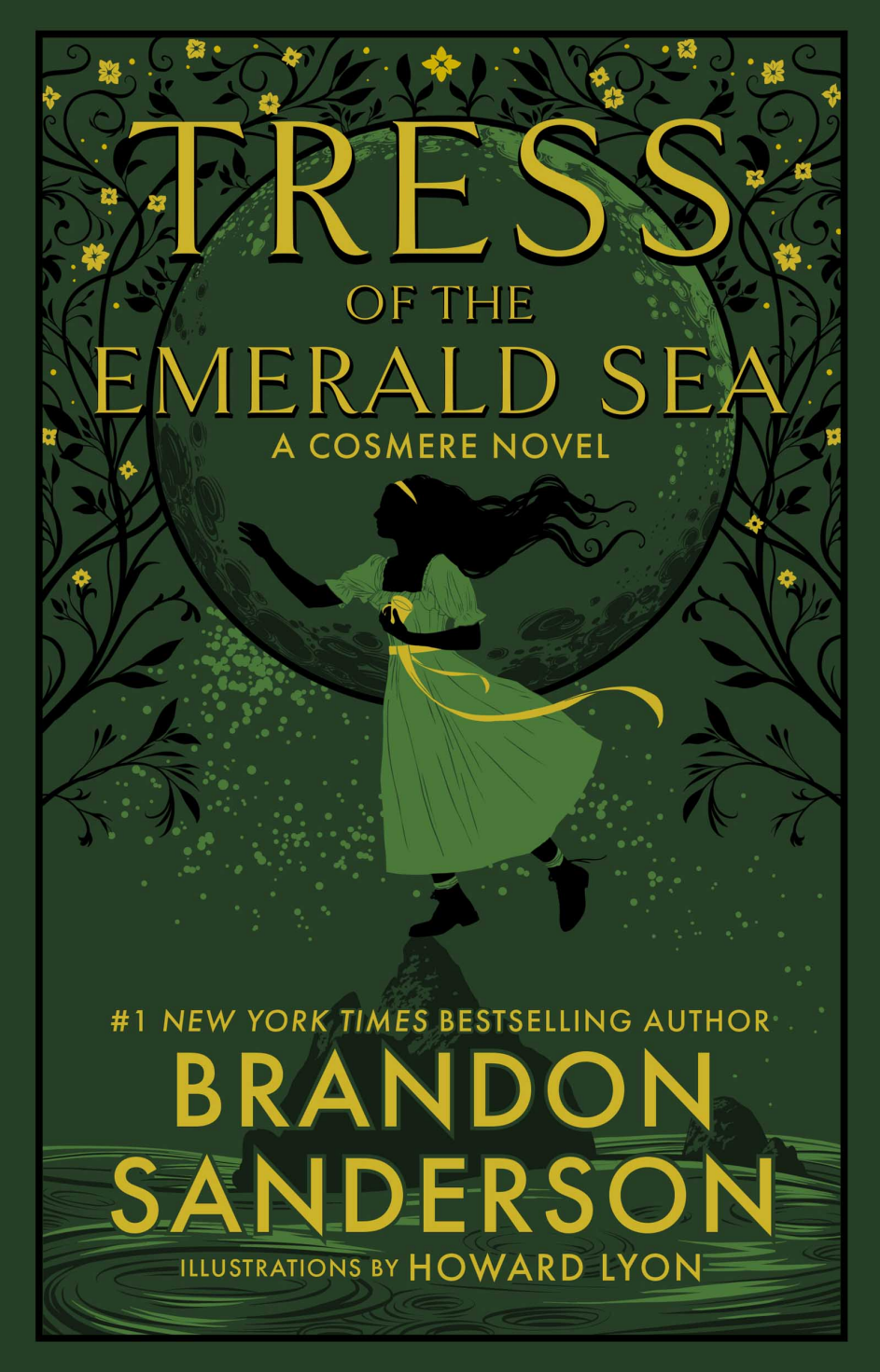
This started out as a rather sweet story, but I DNF’ed about a third of the way through, just because it’s not my personal cup of tea. This is definitely a young adult book about a young woman who sets out on a treacherous sea to rescue the nobleman she loves. The main character was cute, loyal, and brave, but there wasn’t much about her that compelled me to keep reading. As always, this piece was well written and featured fascinating worldbuilding, unique magic, and Hoid running around being ridiculous.
I’ll probably go back and finish it to find the Easter eggs dropped about what (not) on earth Hoid was doing. But for the time being, I’m fine knowing that I just wasn’t the target reader for this particular story. If you like feel-good, lower stakes fantasy with characters that are actually nice people, and still delightful worldbuilding, I’m sure you’ll enjoy this.
Non-Cosmere Works by Brandon Sanderson
Brandon Sanderson has written many books outside his fantasy universe as well, including some middle grade and YA urban fantasy and sci-fi books like Skyward and The Rithmatist. You can find his whole body of work on his website and follow him on social media, where he posts actively.
Cosplay!
Hi, I’m Caylah Coffeen, a freelance editor and marketer of sci-fi and fantasy books. I love reading and writing and am a follower of Jesus Christ.
I’ve worked for Monster Ivy Publishing and Eschler Editing, and am currently a weekly editor with Havok Publishing. Reach out to chat about books and publishing!
Thanks for stopping by my website! I hope you’ve found some helpful resources about reading, writing, and publishing. If you liked this article, here’s some more free content…
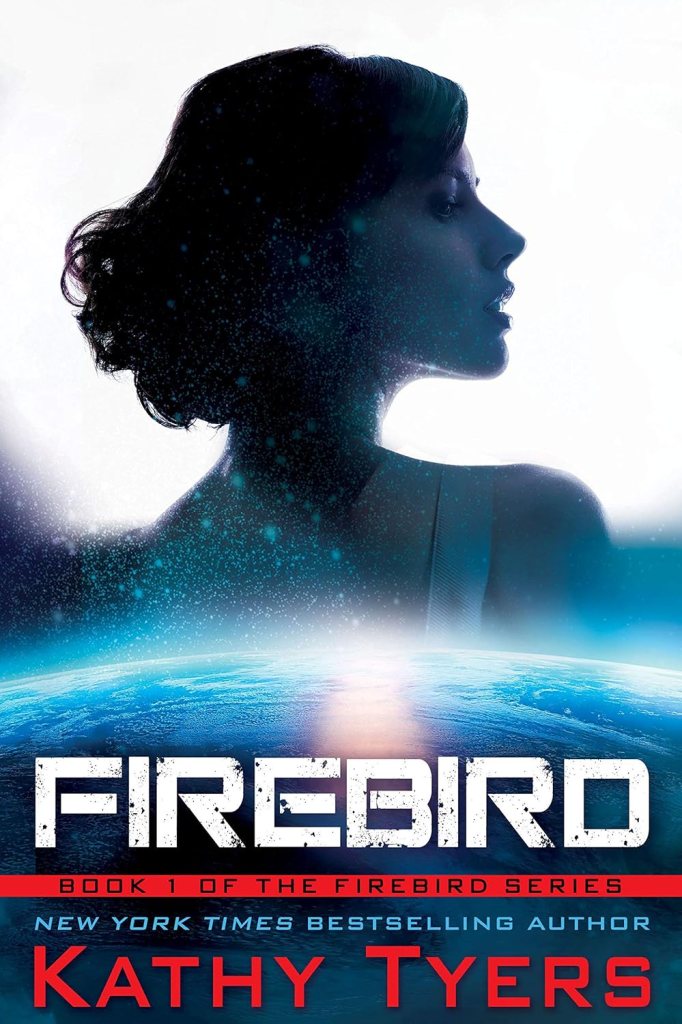
Firebird is a thrilling Christian space opera, filled with planetary battles, telepathic warriors, familial betrayal, and the deep longing for one’s soul to be seen – by one’s people, lover, and God himself.
Synopsis
As the third princess of the planet Netaia, Firebird has been ordered to die. Her people consider her a wastling, an extraneous heir whose only role is to die in service to her people. A fighter pilot and Major, Firebird is sent with the leading strike force to conquer a nearby planet which holds mineral resources vital to weapons of mass destruction. Captured by the Federate forces who defend the system, she is shocked when they offer her mercy. Shielded by the telepathic warrior who spared her life, she begins to question the fanatic loyalty her people and gods expect of her.
Characters: 5/5
Characters are the heart of this story, and the dialogue and dynamics between characters have physically palpable energy and tension.
Lady Firebird Angelo is one of, if not the only, female character who I’d consider one of my favorite characters in fiction. I prefer reading about male leads because I never connect well with female protagonists. Not so here! Firebird displays a delightful mix of vulnerability, loyalty, grit, poise, intelligence, and more. She is much better fleshed out than most female characters I encounter, with a strongly incorporated skill for music, a complex dynamic with her family and authority figures, inside jokes and regrets about the past, and maturity beyond her years. She is torn apart by a complex moral dilemma – serve the lies and violent agenda of the planet she loves (but which has rejected her), or embrace truth, eternal salvation, and a new life among the strangers who were once her enemies.
Brennen Caldwell is super hot – it’s true. A fighter pilot, commander, and Sentinel (genetically engineered user of telekinetic and telepathic abilities), he’s the most desirable bachelor in his culture (not even accounting for his religiously significant bloodline). But he’s not just a love interest – we get his POV as he runs ops, struggles to develop his leadership, chafes against the prejudice of the Federacy, and tries to help Firebird heal from the mental abuse she’s lived with her whole life. His driving motivation is to find a true companion who can share his life and soul with him. Their people (Thyrian-Ehretans) form telepathic pair bonds with individuals who are connatural, or share a high mental, spiritual, and physical resonance. And, oh, the dramatic tension when he discovers an enemy is more of a kindred spirit to him than any of his own people.
Plot: 4/5
This is a character-driven story, so while there are some epic (and realistically written) battles, there’s a much greater focus on politics, family dynamics, and cross-cultural encounters.
The first time I read this book, the middle portion irritated me a little, because the plot slows down and the two main characters end up on different planets for a time – however, this is quite necessary for the long-term health of the main characters’ relationship. Brennan was in a position of power over Firebird, who was extremely vulnerable mentally, emotionally, and politically. Separating them for a time allowed Firebird to get her feet under her and explore a new planet and ideology without pressure. If not for this distance, Brennan could easily have come across as predatory – something he himself is highly aware of throughout all their interactions. I admire how Tyers planned this out, allowing both leads to do some soul searching independently before eventually joining forces to address the larger political problems they face.
The ending felt a bit abrupt to me, both the physical conflict and spiritual outcome, but I think the rest of the trilogy did an excellent job of expanding on the themes and ideas present in this book, and progressing the relationship between characters in a realistic way. It is also true that soldiers often make major decisions that would seem abrupt to regular people, because we don’t understand the stakes they live through when risking their lives every day.
Writing: 5/5
I love Kathy Tyers’ writing style! Her dialogue is poignant, sharp, emotional, and filled with tension. She’s an expert at describing body language and using physical motions to punctuate emotion and create breaks within scenes. Her scenes have excellent internal pacing. There are several scenes in this book that are seared into my memory because of how physically visceral it feels reading them. The tension and draw between characters is palpable. Many stories explore the concept of telepathic bonds, but some fall flat because they don’t manage to make readers feel how the characters’ souls sing to one another.
This story explores how mental beliefs and passions, spiritual longings, and physical compatibility all weave together to create truly deep relationships. So many love stories and friendships in fiction omit anything of spiritual significance, but this story is all the richer for raising questions like “will I face more condemnation in the afterlife for committing a moral wrong in loyalty to my people, or for betraying them to save many lives?” Firebird must confront the manipulation, abuse, and state-leveraged religion that has twisted around her her whole life, and she does so because one of her enemies shows her more compassion and forgiveness than any of her mentors or blood relatives ever did. That, is a relationship worth writing home about.
Worldbuilding: 4/5
It’s SO hard to find space opera without aliens, and I’m always delighted when I do. This world is completely focused on human cultures, politics, and relationships, reminiscent of both Star Wars and Lois McMaster Bujold’s world (Shards of Honor). I loved the unique cultural dynamics on Firebird’s planet, Netaia – a society ruled by an aristocratic class, a line of Queens, and a religion of 9 Powers. Their culture reminded me somewhat of Imperial Japan and Russia.
The underlying premise in Brennen’s culture is fascinating too: what if Jesus didn’t come 4,000 years after Creation, but waited many more millennia? His people are essentially the Jews, and his family is like the line of Judah, from which the prophesied Messiah will one day come. Firebird, then, is like Ruth.
The Federacy that rules a large portion of the universe is characterized as a benevolent Empire despite its obvious bureaucratic corruption, self-serving politics, and prejudice against Ehretans. It bothered me, especially in later books, that the Ehretans let the Federacy treat them like trained dogs, and the ones who split off (the Shuhr) to create their own society outside of the Federacy’s self-serving restrictions on ability users are shown as completely evil and in the wrong. In fact, every time an Ehretan acted outside of the extremely controlling rules, they are shown to be despicable people. It rubbed me the wrong way because it reminded me of a brand of Christian authoritarianism that advocates submission to rule following even when leaders are treating you unfairly.
Of course, the strictures they place upon themselves make sense considering how they were nearly wiped out in the past by humans who feared their abilities. They limit individuals out of desperation to maintain the survival of their race. But it still bothers me that Brennan acts as though it would be objectively wrong not to follow the restrictions placed on him by his people and the Federacy alike. The Ehretan government runs personality tests to see how “moral” people are, and then forcibly prevents them from studying their abilities to a greater level if they don’t like what they see – an incredibly self-righteous form of enslavement that implies that any form of ambition is evil. An Ehretan that tries to learn more about their abilities or leave their society is essentially treated like a criminal.
It’s taken for granted that the government has the right to control their people to this extreme because their leaders are holy and God-serving. Imagine if our government was formally Christian and tested people to see how serious they are about their faith or if they have a tendency toward certain sins (not even open sin, but the probability for sin), and based on the results, prevented them from carrying weapons or achieving higher education. And anyone who left was considered a deserter and criminal… It’s a dangerous implication – that if a society is Christian, they can limit human rights if they think the freedoms could hinder God’s “greater good.”
But the best sci-fi makes people think and ask questions like this! I love rereading this book because each time I get to chew on something new. Her story sparked my imagination and helped inspire my own sci-fi world!
Hi, I’m Caylah Coffeen, a freelance editor and marketer of sci-fi and fantasy books. I love reading and writing and am a follower of Jesus Christ.
I’ve worked for Monster Ivy Publishing and Eschler Editing, and am currently a weekly editor with Havok Publishing. Reach out to chat about books and publishing!
Thanks for stopping by my website! I hope you’ve found some helpful resources about reading, writing, and publishing. If you liked this article, here’s some more free content…
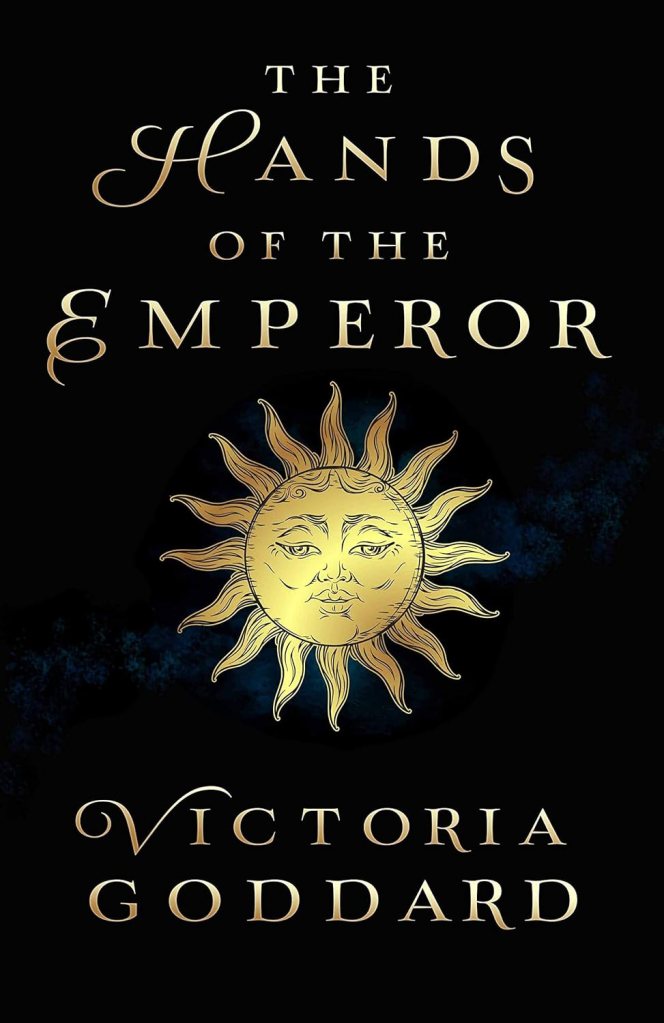
The Hands of the Emperor is a stunningly wrought tale of mythic friendship, set in a world of wild magic and serendipity, featuring rich diversity, epic cultural traditions, and tear-inducing moments of truth between family.
Synopsis
A magical cataclysm devastated the 5 worlds bound into the Empire of Astandalas, ending the 4000 year reign of the lion-eyed god Emperors. Upon the world of Zunidh, the last Emperor of Astandalas, now reduced merely to the lord magus of Zunidh, attempts to piece back together the magic and order of the world on which he was raised. At his right hand, Cliopher Mdang of the Wide Sea Islanders dismantles the lingering corruption of the Empire, establishing a new government and ushering in an era of peace and prosperity.
He loves his lord dearly, but magical and ritual taboos prevent them from truly being friends. Until Cliopher (Kip), seeing the deep loneliness and despair his lord has buried in his heart, invites him on a vacation to his home in the Wide Seas. His gesture, as simple as it is treasonous, changes the course of their lives and that of their world.
Characters
5/5 stars!
The characters are truly where this book shines! Most of the cast is composed of middle-aged characters, which is such a treat given the preponderance of 17-year-old heroes and heroines out on a bildungsroman. These characters know who they are, are solid in their positions in the world, and yet have half a life of choices and regrets behind them, and a whole world of unfulfilled goals before them. There are more and more layers to peel back as the story continues. Cliopher and the Emperor are the twin stars around which this story orbits, but there is a larger cast of strongly developed characters, including Cliopher’s (widely!) extended family and hometown friends and the other members of the Emperor’s household.
Kip is wicked smart, idealistic, and deeply passionate about his culture’s traditions. He’s one of those people that will-powered himself to the top through audacity and stubbornness, in addition to raw talent. In many ways, though, he’s a man at war with himself. He’s desperate for his family to understand why he’s worked so hard to improve the world but is also terrified of letting the prejudiced see what his heritage truly means to him. I related so deeply to his desperate desire to be asked about himself! His family says things like, “why didn’t you let us know how important you were,” and he says, “Because you told me I was boasting every time I mentioned something I cared deeply about!” I resonated with his deep urge to be seen and accepted for all parts of himself, but unsure of how to claim them all. Above all, he is a loyal friend who will do anything to see his Emperor smile, which is why some people have referred to this as a cozy fantasy, though I would call it a low-stakes political & mythic fantasy.
The Emperor, hereafter known as His Radiancy, as that is the title by which his personal household endearingly refers to him, is traumatized both physically, magically, and mentally due to the isolation and other side effects of his power. It’s heartbreaking to see and so rewarding to learn more about him throughout the story. Even Kip didn’t know him fully, despite spending half their lives together. In this way, it almost reads as a mystery (and there is one – if you know, you know, haha), as we piece together both his and Kip’s personal pasts, and their work to reshape the remnants of an empire.
I absolutely love the humor in this book! All these characters rib each other, often in the most subtle ways (satin anyone?).
“‘Come now, I hear you called him a soft-spoken hypocrite. What did he call you to prompt that?’ Cliopher bit his lip. ‘A reasonable man.’ ‘A strike to the heart! My dear Kip, do not look so mulish. I would never stoop so low as to call you reasonable. You are quite the most radical idealist I have ever known-or at least, the only sane one.’”
Some people have complained that this book has a rather meandering plot. I didn’t mind that, since it is decidedly a character-driven story, not a plot-driven one. I wouldn’t even call it straight political fantasy, since while Kip is essentially the Secretary of State of his whole planet, we mostly see his big picture ideas for changing the world, rather than the nitty gritty day-to-day details. All scenes and actions circle around the relationships between Kip and the Emperor, and Kip and his family. In some ways it can almost feel like slice-of-life.
I’d put it this way: the plot felt unpredictable, yet not unplanned. It feels true to life – surprises happen and throw a wrench in your plans, you have a fight with your oldest friends, get an unexpected visitor, nearly lose someone to an illness, and yet still push forward each day in service to others. And yet all of the mini conflicts and revelations propel the characters toward a unified resolution at the end, which is incredibly emotionally rewarding.
Some of Kip’s later accomplishments stretched my suspension of disbelief (establishing a universal income for an entire planet in about 5 years… and there were no major problems?). But because the story was truly about Kip and His Radiancy’s promises to each other, I pushed such doubts aside. However, the vagueness of the explanations (“Kip had contingency plans in place if things did go wrong”) would likely frustrate readers that are more interested in plot and worldbuilding than bromance.
“I have been fortunate beyond the lot of many men that not only can I, do I, admire and respect my lord and my master, but that I could, that I do, also love him. My lord, my… Tor… if you were my brother or my cousin I could not love you more. When you are no longer sitting on the Lion Throne, I would like to know the man behind the Serenity. As a friend.”
The Hands of the Emperor
Worldbuilding
5/5 stars!
What absolutely phenomenal worldbuilding! How rare to find a book that is so incredibly character-focused, yet has such intricately spun magic systems, cultures, traditions, and history! There is so much here, and yet I kept wanting to learn more. Kip’s culture is based around our world’s Pacific Islander culture. I’ve never read a fantasy book like that! So refreshing. There are many uniquely invented cultures too!
The Upper Aristocracy of Astandales feels somewhat like a mix between Roman, Egyptian, and Chinese governance systems, and yet in many ways entirely unique. The rulers are black, descended from both the Sun and Moon, only marry close relatives, and enact a strictly hierarchical system of taboos, blessings, and curses. They conquered and bound their empire together with wild magic yet now employ a rigid schooled magic system. What a delicious set of contradictions and delightfully tormented family history!
I did initially find discussion of “The Fall,” the cataclysmic event which broke the magical connections of the multi-world Empire, to be confusing. The main characters are all intimately familiar with the event, and no one in the world likes talking about it – it was deeply traumatic for everyone. There’s hardly a person who didn’t lose multiple family members and friends in the event, and even time was distorted, causing strange effects on the mind and body in ways even master magicians don’t understand. So basically, the characters are still confused about it, which made me kind of confused about it. The author would mention things like, 100 years ago, or 1000 years ago, so-and-so who’s still alive did x, which had me lost before I realized that time literally broke and who knows why aging didn’t happen.
I was also a bit confused about the world’s level of technology, and which world was which. Characters mention trains, universities, healthcare, and instant mail, but still carry around spears and swords and wear grass skirts if they want. I guess they feel like a 20th century society achieved through magic. The different worlds are essentially planets connected by magic “portals”in-between places,” which wasn’t explicitly stated, so at first I thought the names mentioned were other countries, not entirely separate worlds! But that’s kind of par for the course when it comes to learning about not just one world, and one prior Empire of many worlds, but also about what all those worlds are like after everything broke.
Victoria Goddard’s prose is artful in some places, and surprisingly dense in others. One moment feels like a fairy tale or scene from an old myth, where the gods materialize and issue a challenge in a voice of thunder. Then other scenes felt rather bloated with description, like a pages-long explanation of the structure of the Palace’s throne room. Kip is one of the loremasters of his culture’s oral tradition and lives out their poetry through his actions! He will absolutely walk into a room and declare, “I sing the Wide Seas!” or respond gleefully to the challenge, “Who is this who comes out of the sunrise?” So, in many ways the dialogue of the story is what’s the most artful. His Radiancy also enjoys songs and stories and can be poetic in speech (he is so into it when Kip gets into it, which is utterly adorable).
But at times I felt frustrated that Goddard didn’t go “all in” with the lyrical style and that some passages almost felt journalistic in the way information was conveyed. Yet I also think this was a complex attempt to marry two styles into one, which reflected the character’s personal journey perfectly. After all, Kip is a bureaucrat who has “elevated the report to an art form.” We see him wandering the beach under the full moon, calling upon a goddess’ blessings, and we also see him corralling politicians and writing memos in his office. It would feel strange if the latter scenes were written in a way worthy of an epic. In the second book (minimal spoilers ahead), the plot leans much more toward the mythical, so in turn, so does the writing itself. But I do find myself skipping over some chunks of description when I reread this.
Impact
5/5 stars!
Sometimes, the greater the impact a story has on you, the harder it is to write a book review. It’s a matter of exposing the sticky webs that have woven themselves around your heart and laying them out in order. I fell in love with The Hands of the Emperor on my first read and immediately went on to devour the next 4 books (plus several short stories) in her world! Then I went back and reread my favorite parts of The Hands of the Emperor. Then I fully reread both it and its sequel At the Feet of the Sun.
Each new time, I feel like my heart grows larger as these characters fill my imagination with passion, beauty, and joy. They’re the type of books that richen with each read, revealing more layers to Goddard’s world, the inner lives of these characters, and the philosophies and cultures which define them. The more books you read in life, the harder it is to find a book that truly lights a new spark in your heart (metaphor intended). This is one of those!
“I suppose we always hope that those closest to us can see into our hearts—but unless we invite them, or show them in words or deeds, how can they?”
The Hands of the Emperor
Conclusion
If you enjoy character-driven stories, diverse, sprawling worlds packed with history and magic, deep friendships and found family, and emotional and philosophical conversations, then you will love The Hands of the Emperor! Warning: you will become addicted. Writing this got me all fired up. I need to go read it a fourth time!
You can find books set in the rest of Victoria’s universe on her website! And buying books directly from her site will allow the majority of profits to go to her, not to retailers!
But if, like me, you find it hard to pass up the convenience of Prime, here you go.
P.S. I always advocate supporting authors by buying their books! But for those of you who can’t, I found almost all of Goddard’s books on Hoopla. If your library doesn’t carry them, there is a Discord fan server called the HoTE Support Group and you can request that someone gift you a copy (sub-channel: Crowdfunding the Nine Worlds)! Such a gem of a fandom!
Hi, I’m Caylah Coffeen, a freelance editor and marketer of sci-fi and fantasy books. I love reading and writing and am a follower of Jesus Christ.
I’ve worked for Monster Ivy Publishing and Eschler Editing, and am currently a weekly editor with Havok Publishing. Reach out to chat about books and publishing!
Thanks for stopping by my website! I hope you’ve found some helpful resources about reading, writing, and publishing. If you liked this article, here’s some more free content…
I’m a fantasy writer and hope to soon publish my first middle grade fantasy story! My brand of fantasy is not high fantasy, nor urban fantasy – I take more influence from fairy tales and mythology. Here are 4 mini reviews of enchanting fantasy tales (by Christian authors) which have inspired me.
I love the style and voice of this story. It reminds me of fairy tales or fantasy stories I read and loved as a kid. It feels like it was written a long time ago, which is perfect for a fairy tale. The other book I could compare it to is The Princess and the Goblin by George MacDonald, as both have the feeling of a fairy story.
One time, I did a survey meant for authors asking what was the most important parts of the story, with the multiple choices of (a) plot, (b) characters, or (c) other. I answered with (c) – that the most important part of a story is the tone and feelings it conveys to the reader. I’m bringing this up now because this story conveys so well the kind of adventurous wonder that a fairy tale is supposed to give a reader.
The only little criticism I think of is that Echo really seemed younger that thirteen years old, but that’s hardly a problem when the story is otherwise so good.
Looking forward to finding out why Gareth was the way he was. I loved Braith. She was in such a precarious situation, and I was struck by her boldness in every scene she’s in. The other characters are pretty cool too.
I love the theme too. It’s kind of a similar theme as Fahrenheit 451, but I like this kind of story way better than futuristic dystopian stuff. The feel of the story is very different. I’ll go for a hopeful story over a depressing or disturbing one any day.
I beta-read this and loved it, so I had to get the finished version.
There comes a point in a lot of good books, usually somewhere around half or 2/3 of the way through, where the book becomes very hard to put down. Unfortunately, this point came after 1am both times I read this book, so I was up late…
I like the theater. Pretty much any setting with a maze-like system of hallways and secret passages can make for a fun story setting. And of course, I love the snail circus (I recently read and watched Coraline which I suspect is where the inspiration for the snail circus came from. loved that story too.)
Yes, I cried (both times) going through those tough parts to read. Leo is easy to relate to with her feeling unlovable and wondering what she’s good for.
Something good about independently published books is that you get stylistic elements which don’t pass with a major publisher. (It’s a bit of a shame that you very rarely find books with this kind of unique style from major publishers.) Sherry Rossman has a poetic writing style which has a habit of leaving out details which are (usually) easily filled in by the reader’s brain. Sometimes it takes a minute to figure out what’s going on. This isn’t always a bad thing, and in this story, I don’t think it’s a bad thing at all. You do have to trust the next page to tell you just enough to get the story and the feelings, but it works well here.
There’s some weird timey wimey stuff that reminded me both of N. D. Wilson’s Outlaws of Time trilogy, and of Madeline L’Engle’s stories. I loved it.
About David Justiss
Find more reviews of books by Realm Makers authors on David Justiss’ Goodreads page.
Hi, I’m Caylah Coffeen, a freelance editor and marketer of sci-fi and fantasy books. I love reading and writing and am a follower of Jesus Christ.
I’ve worked for Monster Ivy Publishing and Eschler Editing, and am currently a weekly editor with Havok Publishing. Reach out to chat about books and publishing!
Thanks for stopping by my website! I hope you’ve found some helpful resources about reading, writing, and publishing. If you liked this article, here’s some more free content…
Hi, I’m Ted Atchely, a geek who loves Jesus, and a professional computer programmer. Whether it’s crafting code or weaving tales, I’m always writing. I’ve been influenced by science fiction and fantasy written by fellow Christian authors, and am excited to share 3 mini reviews of my favorites!
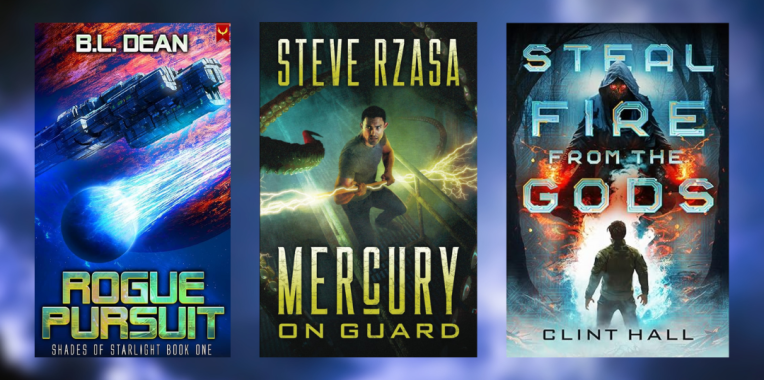
If you enjoy urban fantasy stories with snarky heroes slaying otherworldly beasts, then I give you my strongest recommendation to check out Mercury On Guard. This story has a lighter feel than The Dresden Files with less death and destruction, but similar stark and a bunch of monster fighting.
I’m normally a slow reader, but the pages simply melted away. The description pulls you into the action and the setting. Sometimes it feels like Mercury’s narration even breaks the fourth wall.
The characters are each distinct and feel like real people. They have their issues, but you are rooting for them the whole way. The twists catch you off guard in all the best ways, always cranking up the stakes. The story has a satisfying ending, but also leaves room for further adventures.
If this were a movie, it would probably be PG-13. There’s no adult language that I remember. No adult “situations.” There is plenty of violence, but it was never gratuitous, gory or stomach turning. A minor character consumes alcohol.
I look forward to delving into the rest of the Mercury series and Mr. Rzasa’s other works.
If you like Space Opera, you should definitely check this one out. It has great characters, creative worldbuilding, and plenty of conflict and tension on every page.
I loved how the author used color theory in the dynamics of how the wormholes work in this world. Each planet we visit is unique, with a fresh spin on familiar themes. It feels new, yet familiar.
Tai and Perrin are both well written with varying and conflicting goals and objectives. Their dynamic plus a great balance of micro and macro stakes makes for a rich and enjoyable story. I’m looking forward to seeing more of them in future books by Dean. Even the side characters are memorable and I would love to see them starring in their own spinoffs in the future.
This was a fast read, and one of my favorite reads of the year so far. I’ve already purchased the next book in the series.
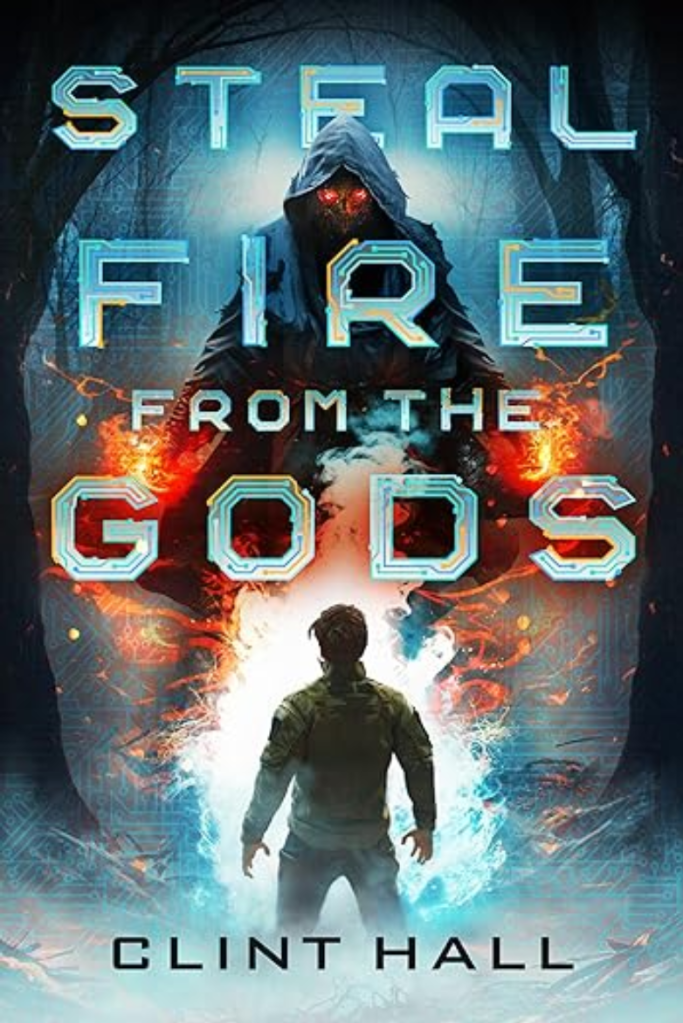
I enjoyed the story and it kept me engaged to the end. It was a fun and creative adventure. The characters are fully dimensional and relatable. This is a great science fantasy book–a blending of science fiction and fantasy that goes together like chocolate and peanut butter.
This book kept me on my toes. The story never went in the direction I thought it was going to go. The “curse your sudden, yet inevitable betrayal” moment, I never saw coming.
The book did leave me with some questions, both about the magic system, but also about the main character. There seems to be a conflict introduced in the opening chapter that I felt could have had a clearer resolution. But these questions never detracted from the enjoyment of the story.
I’m a little bummed this was a standalone. While I look forward to future works from Mr. Hall, I do hope at some point, he will decide to revisit this world and these characters.
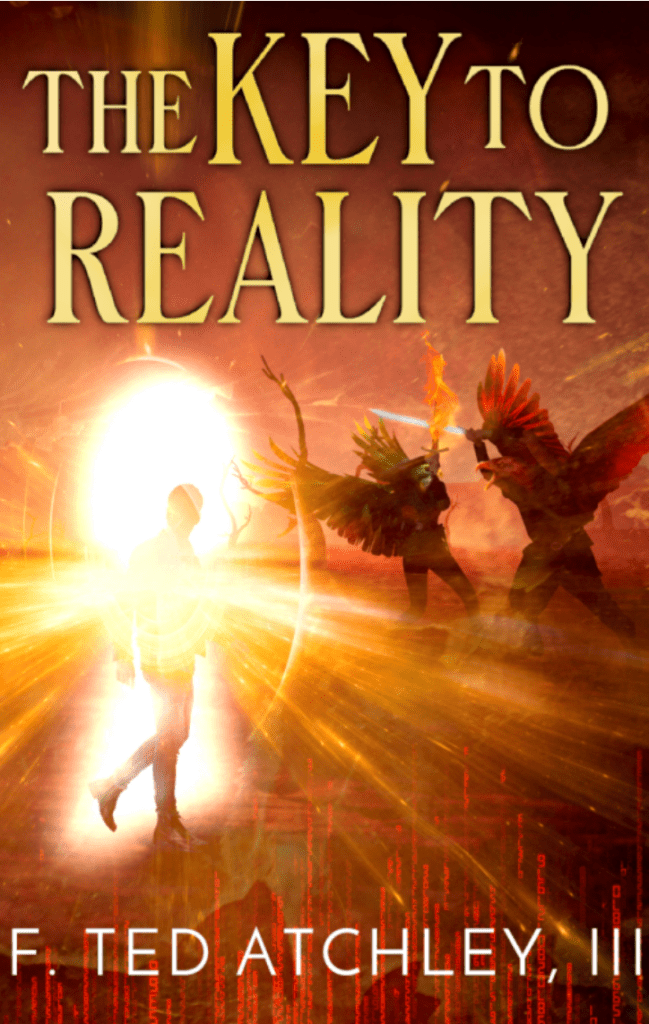
Ted Atchley’s Debut Sci-Fi Novel: The Key to Reality
If these books sound interesting, I invite you to try my debut sci-fi novel, The Key to Reality. It tells the story of a “white hat” hacker who attempts to strike a work / life balance and fails so cataclysmically it breaks the fabric of space-time.
Or get the short story prequel, “Finding the Key,” for free when you subscribe to my newsletter. Fourteen-year-old Brandon has bounced from foster home to foster home since losing his mother. All he wants to do is reclaim a part of his old life and return to the apartment he shared with her. But the old neighborhood has changed much since Brandon last lived there, and a nasty gang runs the streets. His search won’t just be for a place to call home, but for his very survival.
About Ted Atchley
Ted lives in beautiful Charleston, SC with his wife, children, and two cats.
When he’s not writing or reading, he enjoys schooling his kids at Smash Bros, and Mario Kart, as every geeky dad should.
Hi, I’m Caylah Coffeen, a freelance editor and marketer of sci-fi and fantasy books. I love reading and writing and am a follower of Jesus Christ.
I’ve worked for Monster Ivy Publishing and Eschler Editing, and am currently a weekly editor with Havok Publishing. Reach out to chat about books and publishing!
Thanks for stopping by my website! I hope you’ve found some helpful resources about reading, writing, and publishing. If you liked this article, here’s some more free content…
Every reader has their “happy place,” returning to the same kind of story with similar tropes for the pure fun of it. I love books with over-powered magic users, spies and assassins, evil immortal kings, and groups/schools of mages with a system of leveling-up their powers. So here are mini* reviews of 3 quick-read fantasy books I enjoyed on Kindle Unlimited!
*I tend to write long, highly organized reviews, so these are casual/mini for me, but not suuuper short.
Nolan has hidden his gift of Accuracy to avoid the King’s compulsory draft of magic users. But when his lord captures the leader of a group of runaway mages, his comfortable life as a scribe is uprooted. He, the rebel General, and several new recruits escape, starting a journey to uncover the secrets behind the King’s centuries-long rule and the magical undead who plague their land.
Book Review
This was a pleasantly surprising find! I was looking for pure entertainment and I love books about societies of magic users, especially when there’s an element of oppression involved. The main character, Nolan, is a young man, but refreshingly different from many hot-headed heroes. He starts out as a scribe, hiding his magical ability to avoid being drafted. He’s clever, cool-headed, compassionate, and untrained in martial prowess. I deeply related to his greatest desire – to heal the rift in his relationship with his brother and save him from the life he was forced to live.
We get POV from a couple other characters too, including a more shounen-esque hot-headed male hero who Nolan pulls out of trouble. He annoyed me at first but grew on me as their friendship developed. I also loved the leader of the rebels they join, who’s an empath and former General to the King. It’s rare to see a military leader that’s depicted with more internal than external strength.
Nolan gathers quite a bit of magical power as the story progresses. It was fun to watch him level up, though it happened a bit fast. I would have enjoyed seeing him test and develop his abilities more, maybe attempting some practice missions before we get to the big showdown.
Content warning: The villain is known for sexually assaulting both male and female characters. The rapes happen off-screen but are an important part of the character arcs for two characters. I actually found this element one of the most compelling elements of the book and thought the discussion of how different people react to trauma was well-handled.
The ending was wrapped up a bit too neatly for me. I thought the conflict might last over at least a couple books. This was a quickly paced book, taking place over only a few weeks’ time. If more of the conflicts had been left open, I would have wanted to continue the series. As it was, I didn’t feel a need to pick up the next one, though I really enjoyed it.
Born to a life of drudgery and forced labor, Ward becomes the first commoner to every test positive for magic at his coming of age ceremony. Claimed by the elite military mages, he begins training for a life of protecting his country against the magical beasts who haunt their borders. But as he uncovers lies about the past, the true enemy becomes unclear.
Book Review
This book has one of the best training sequences I’ve read in a while! What a great origin story. Our hero Ward starts out as a peasant, essentially a slave, and to everyone’s shock, becomes the first commoner to ever manifest magic. Two types, at that. He and the other initiates set out at a run towards their secret training grounds (reminiscent of the Hunter x Hunter trials!) and spend months learning strategy, spy craft, hunting and tracking, swordplay, and more. High stakes “you fail one task and you’re out for good” vibe.
There’s some satisfying character development here, with Ward having to overcome his hatred of the aristocracy that’s mistreated him his whole life, and the aristocrats around him slowly coming to accept and look up to him.
There’s a mystery lurking in the background regarding the founding of their country, the motives of their immortal King and founder, and the source of the magically deformed beasts they are sworn to protect their country from. I enjoyed learning more as the story progressed, including information about Ward’s parents and the source of all magic.
I didn’t feel much of an urge to continue the story, as it verged more into “the prophesized one who’ll save the world” territory, and I had been enjoying his story for the small-scale missions and close character dynamics. I might go back to it if the mood strikes, as there’s definitely more of a mystery to unravel around several characters!
Orphaned and poor, Robert’s luck changes when he saves the second prince’s life. Chosen as the prince’s personal vassal, Robert is educated and then sent to train with a group of brutal assassins, developing his magic in secret. But after foiling the eldest prince’s murderous plans, and placing the second prince on the throne, Robert runs off to start life as a businessman. Despite his newfound success and freedom, he can’t turn his back when a new threat nearly crushes their kingdom.
Book Review
This was a fun book to read in a night, but the main character was OP to the point of being flat. He had no weaknesses, made no mistakes, had no difficulty overcoming any of his problems, and picked up skills with little to no effort. His magic was extremely powerful but had no side effects or limitations. He could use magic seemingly endlessly, and he only got a headache and had to rest from exhaustion once. That would have been a good limitation to add, but it wasn’t consistent, even when he started using his magic more heavily.
He picks up skills in such quick succession that we don’t get to enjoy them before he moves on to the next one. There is also an overuse of exposition as the author summarizes each stage of development. He doesn’t have to work at developing his magic. It all seems to come naturally, and suddenly he can kill hundreds of people back-to-back with magic without breaking a sweat.
He doesn’t have any character flaws, which makes for kind of boring dynamics. He’s smart, physically and magically talented, kind, generous, and good at business. Money falls into his hands, a gorgeous, talented girl falls into his lap, and everyone seems to like him. That’s all awesome, but it’d be more realistic and interesting if he had any flaws that he had to overcome. As it is, there was no character development here.
His magic is cool, but the fights are a letdown because no one stands a chance against him. If at least one of the enemy mages put up a good fight, and gave us a dramatic showdown, the ending would have felt more earned. Also, he spent years studying under the best spies on the continent, then immediately discovers magical items that allow him to disguise himself perfectly, so never needs his skills. What’s the point then?
Still, I loved the leveling up feel, the details of how he grows his business, and the humor of how he deals with his enemies, coming across as almost a trickster mage at points. I also enjoyed his kindness – his past doesn’t turn him into a brooding grimdark character. A brain candy read for those who love progression fantasy Webtoons!
Hi, I’m Caylah Coffeen, a freelance editor and marketer of sci-fi and fantasy books. I love reading and writing and am a follower of Jesus Christ.
I’ve worked for Monster Ivy Publishing and Eschler Editing, and am currently a weekly editor with Havok Publishing. Reach out to chat about books and publishing!
Thanks for stopping by my website! I hope you’ve found some helpful resources about reading, writing, and publishing. If you liked this article, here’s some more free content…
Traitor Son is a slow burn military fantasy romance with a satisfying civilization-building thread and a touching, relationship-focused ending. However, it ends rather abruptly without resolving any of the plot problems. The second book is scheduled to release only 6 months after the first, so I’m guessing it was split for the sake of length, and is really one story.
Synopsis
The Emperor slaughtered Remin’s family as traitors, and he wants Remin dead too, assigning him the impossible task of retaking the Andelin Valley from sorcerous invaders. But after 7 years of warfare, Remin triumphs and returns to claim his prize: the Emperor’s daughter as his wife. But the treacherous Emperor hands him a scrawny, neglected, illegitimate girl instead of the Princess Remin expected.
Ophele, who has spent her life hiding in the library from the abusive nobles who call her ward, is terrified by the new husband forced upon her. But an unexpected spark grows between them as they travel to the Andelin and begin to build the capital of Remin’s new duchy. As demonic creatures, summoned by Remin’s defeated enemies, plague the town, Remin and Ophele must decide whether or not to trust each other and face their problems with a united front.
Characters – 4/5 Stars
This is a character-driven story, based around Ophele and Remin and how they must overcome the abuse and traumas they’ve experienced in order to build a new city and life together. Basically her father, the Emperor, has ruined both their lives. Ophele is shy, sweet, and a total bookworm. It’s fun seeing her gain confidence over the course of the story and apply her book smarts to the efforts of building their new city. She’s the opposite of a morning person, which leads to many jokes I personally appreciated immensely.
Remin was a bit less interesting to me – he’s a brooding giant of a man, surly but loved by his men, distrustful and paranoid about the Emperor’s plots on his life (with good reason). He fits squarely into the “strong, silent type” who gets softened up by the girl. I felt more attached to all of his knights, who are very well developed side characters.
Plot – 3/5 Stars
This plot feels almost identical to Under the Oak Tree, and I don’t know how much of a coincidence that is. After the couple gets married and travels to Remin’s new duchy, most of the book focuses on the minutiae of how they’re planning the town (which I love – leveling up vibe!) and defending it from demons summoned by the former occupants Remin recently defeated. Otherwise, the plot centers on their relationship, or lack thereof. There’s a lot of back and forth about Remin liking Ophele but thinking she’s going to kill him on behalf of the Emperor, and acting like a total brute toward her. Then Ophele sits around feeling terrible about herself, and the misunderstanding drags on despite them both actually liking each other.
This felt rather repetitive and miserable in the second half of the book. However, Remin’s behavior is clearly shown as problematic and the conclusion centers around how they resolve the conflict in their relationship. It was a satisfying ending, except that nothing came of the Emperor’s plots. It felt rather like Chekhov’s gun – a setup that didn’t deliver. But I’m deferring judgement because I really think that this was one story split into 2 books – I’ll definitely read the second!
Worldbuilding – 3/5 Stars
Fun, but nothing super special. They have a Renaissance-level society. I think the best part of the worldbuilding was all the accurate details about the process of planning a civilization from the ground up – infrastructure, labor, moving supplies, planning for sponsoring of the arts. All of this was clearly well researched and I loved seeing the characters achieve each new step in their goals! There’s definitely more to learn about the magic system of both the Emperor’s bloodline and the sorcerers who’ve been summoning the demons. But that was all setup, leaving mostly questions.
Writing – 4/5 Stars
Pretty good – nothing gorgeous, but clear to read and not bloated. I feel like it got better as the book went on! The first few chapters had a lot of passive voice, but I stopped noticing that as I read. I might not have guessed this was a debut – it’s well organized and enjoyable to read.
Content
There are 3 sexually explicit scenes in this book between the married couple. I almost wondered if someone else wrote these scenes because of how flowery the erotic parts are – I couldn’t help but laugh. But there’s good emotional content there too.
The rest of the book reads PG-13.
I received a free advance review copy from BookSirens, and I am leaving this review voluntarily.
You can buy a copy of Traitor Son by Melissa J. Cave on Amazon when it releases on November 1st!
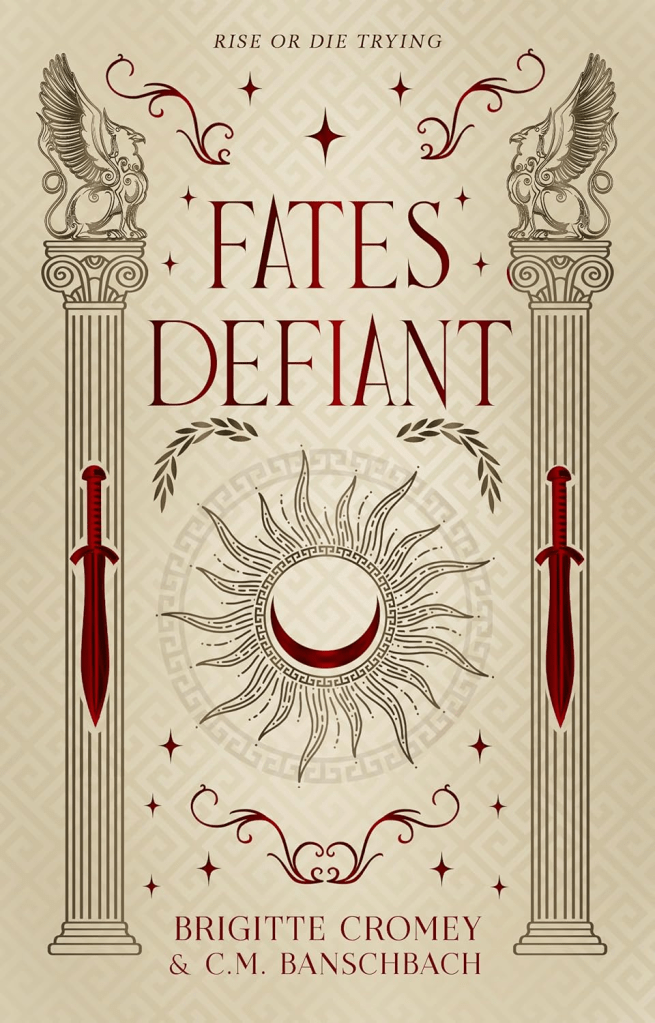
Virtuous Sons is a delightfully original Greco-Roman buddy story that thrills with its snarky dialogue, unusual action scenes, and deeply loyal characters.
Snapshot:
Griffin and Sol, young Greek and Roman patricians respectively, defy their elders and fates, running off to the city of Olympia to attain greater power and make their mark on the larger world. Faced with political upheaval at the center of the Greek world, demons on the Western front, and their own losses and regrets, Griffin and Sol fight alongside each other with wit and audacity on their virtuous path to fame and glory.
Characters: 5/5
This story is all about two reckless, ambitious, smack-talking young men called Griffin and Sol. They’re the best warriors of their generation and they know it. As a result, they’re unbelievably audacious, delighted in the equal competition each presents to the other, and at times completely and excellently ridiculous. I laughed so much while reading this story. They’re like oil and water and rib each other constantly. Griffin is cavalier, spoiled, restless, and desperately thirsty for a fight worthy of him. Sol is depressed, rigidly disciplined, aloof, and quietly confident in his own superiority.
They’re arrogant and violent, yes, but not unintelligent or too foolish (though I know a certain philosopher who’d loudly disagree). They’re sharp, strategic, passionately loyal, with a talent for drawing others to them. It’s really quite a delightful dance watching these two. And it’s not just fun and games either – they aren’t afraid to touch on deeper topics such as grief, fear, trust in the face of lies, and more. Their journey is rich.
Cool side characters too, but the dynamic duo steals the show. Except, we have our eyes on you Damon Aetos, for all the good it’ll do.
Story: 5/5
This plot isn’t what I expected from the blurb, and it’s all the better for it. The description made it sound like a quest story, with two young men wandering around killing monsters and climbing a mountain – a plot you may very well expect from a Greek myth about a demigod or other talented hero. I don’t like quest stories much, and based on the blurb alone, I wouldn’t have picked up this book myself (it was a birthday present). To my delight, this was a character piece which evolved into political (& action) fantasy.
The entirety of the story takes place in 2 Greek city states and the characters run around kicking hornets nests for the heck of it while seeking to prove their prowess to themselves and each other. As they stretch themselves in such a furnace, we learn more and more about their families, pasts, traumas, and dreams – and of course enjoy as they bond (beat each other up and talk trash). The discussions and situation are more “mature” than I initially expected. Navigating a political hellscape takes a lot more brains and nuance than traveling from point A to point B killing monsters. I hope other readers aren’t misled by the blurb, but are willing to give this quite unique story a try.
That said, the plot did rather jump all over the place. These characters don’t really have a plan, so most of what they did felt incredibly random. It seemed like the author was making up a lot of it as he went along (this was published first as a web novel). At times it felt like I was suddenly reading a different book from the one I’d picked up. Sometimes, this is enjoyable as it leaves readers feeling continuously surprised, and I think it works because of who these characters are. But reader expectations are important, and if not for loving these characters so much, it might have been a bit too much of both whiplash and meandering. But not all books need a tightly woven series of events to be great – and you bet there is a master plan deep in the background…
Worldbuilding: 5/5
The author has clearly steeped himself in classical literature. It goes beyond his use of Greek and Roman words or his accurate inclusion of popular philosophies and trends of the time – he gets it. After a certain threshold of absorbing a culture’s art, myths, history, and literature, a person begins to intuitively understand what makes that culture tick. Their fears, desires, aspirations, jokes, and more. It’s a delight to encounter a book so immersed in the classical mindset.
But Striker doesn’t stop there. He presents an alternate version of Mediterranean history – the gods are dead and their names have slipped from the minds of men. And what did you just say about Rome? He also weaves in an alternate magic system based upon the Chinese concept of chi cultivation. He incorporates the popular tropes of progression fantasy perfectly into the realm of Greco-Roman heroes. Because demigods and Roman legionnaires would absolutely love the concept of leveling up! And so do we.
Writing: 4/5
The place this book shines most is in the dialogue. Witty exchanges, perversely convoluted (aka Greek) discussions, and lots of hilarious B.S.-ing and grandstanding by our two endearingly reckless protagonists. However, almost every single chapter begins with an exposition dump, which grows rather tiresome. The prose is written well enough, though it can feel a bit dense at times. And it slows down the pacing when, despite the exciting shenanigans of the previous chapter, the next one almost always steps back with an omniscient voice to explain some element of history or culture. But the action scenes and emotional moments are presented and punctuated exceptionally well.
This story alternates between Griffin and Sol’s perspectives, but they’re both written in first person, which led me to experience quite some confusion when switching chapters. Their voices are incredibly distinct – everything from their manner of speech to attitude and energy – but it’s still mentally difficult to change who “I” is when reading, even when each chapter title names the POV. It didn’t help that I tore through this book in 2 days, so perhaps I just didn’t give myself enough time to mentally shift from one character to the other.
Impact: 5/5
It’s been a long time since I had so much fun reading a story! I went and devoured the next two books in the series immediately after finishing this one. I am ALWAYS on the hunt for stories about rivals and blood brothers, but it’s a strangely difficult itch to satisfy. My sister searched for ages to find a book for me for my birthday, and she is rightfully smug to have gotten it so right! These two, Striker absolutely nailed on the head. I light up talking about them. Now I’ve gotten my mother to read it out loud to my father and youngest siblings back home, and I Facetime in to listen to them all chuckle. I’m in withdrawal waiting for the fourth book! I miss Griffin and Sol!
In the end, there could only be one word to describe that unique quality. That special characteristic that allowed a man chained and robbed of all control of his life to lunge fearlessly at a far stronger opponent. To disdain me with his eyes and strike my face with his clenched fists. “The audacity!” I exclaimed in purest joy, and I struck him right back.
Y.B. Striker, Virtuous Sons
Hi, I’m Caylah Coffeen, a freelance editor and marketer of sci-fi and fantasy books. I love reading and writing and am a follower of Jesus Christ.
I’ve worked for Monster Ivy Publishing and Eschler Editing, and am currently a weekly editor with Havok Publishing. Reach out to chat about books and publishing!
Thanks for stopping by my website! I hope you’ve found some helpful resources about reading, writing, and publishing. If you liked this article, here’s some more free content…
The Lions of Al-Rassan is a richly researched historical fantasy novel about a fading Golden Age and the rivalry and love between men and women across borders, but the distant writing style leaves readers aching to be invited more closely into these cherished characters’ heart-wrenching conclusion.
Snapshot
The empire of Al-Rassan is crumbling. Jaddite raiders prey at their borders, led by the famous Captain Rodrigo Belmonte. The rulers of Al-Rassan turn on one another, compelling the infamous warrior poet Ammar to defy them. Jehane, a Kindath physician and daughter to the most famous doctor in the world, encounters and impresses both men as she seeks vengeance for her father. When both Rodrigo and Ammar run afoul of politics, they find themselves exiled to the same city, where Jehane helps binds their new mercenary band together. This is a story about the love and respect that can grow between people of warring cultures, but to a heartbreaking end.
Characters: 5/5
I read this story for Rodrigo Belmonte and Ammar ibn Khairan, two famous warriors from opposing countries. They form an understated friendship, deep and loyal, one that affects them for the rest of their lives. Ammar is quick to laugh, pretends to be a bit of a fop, is a master of disguise, blows where the winds take him – usually alone – and yet has an abiding, poetic love for his country and all things beautiful in the world. Rodrigo is a bit more stoic, collects talent around him, has twin sons and a wife whom he loves, and refuses to turn a blind eye to injustice. They are the best two warriors and strategists of their time, which means fate has pitted their swords against one another, though their hearts would rather stand together. It is achingly pleasurable to read.
Jehane intrigued me more as a character when she wasn’t with these men, honestly. When she is, she almost starts sounding like a YA character, snapping at them and throwing up a facade of indignant offense. But in her own thoughts she is self-aware, principled, deeply loyal, and a resolute professional. It was an interesting choice to make her a sort of bonding point for these two men. They both care for her, which enabled them to grow closer despite the growing war between their peoples. However, I was left feeling like she could have been removed from the plot, and Rodrigo and Ammar still would have had an unforgettable bond.
There are an overwhelming number of side characters in this book. While this slowed down the pacing and took the focus off the dynamic of the three main characters, perhaps damaging the ultimate emotional impact of the story, all of the side characters are fascinating and compel us to become invested in them. From the unique romance between Rodrigo’s King and Queen, and the shenanigans of his sons to the enduring friendship of an Asharite King and his advisor and the vulnerable spiritual musings of the leader of a fundamentalist warrior sect, we are treated to great intellect and heart from every quarter. Some of these chapters felt so well composed they could have been short stories of their own without losing their emotional impact.
I was particularly impressed by the author’s depiction of female characters. I find women, as written by modern authors, rather insufferable. Too often they seem like a cut-and-paste copy of the same self-consumed, cocksure, cheaply “witty” teenager. Not so of Guy Gavriel Kay’s female characters. We see a refreshing variety – a weary yet stoic wife caring for her disabled husband, a pious wife distraught by the lust she feels for her unbelieving husband, a ferocious mother and wife who doesn’t hesitate to kill her enemies and then punish her husband quite amusingly for causing the problem in the first place, and a vulnerable concubine grieving the loss of her partner even as she plots to overthrow his replacement. It shouldn’t feel like a treat to see a variety of personalities, careers, ages, and beliefs in female characters. This should be the norm. Until it is, I will cherish these characters all the more.
The kingdom of Al-Rassan is itself a character in this book. Or rather “a golden-age kingdom in its death throes.” We don’t necessarily love Al-Rassan itself, but we feel an incredible amount of melancholy and anguish for a fading empire that was once beautiful. This concept is so alive in our minds that at the end of the story we lament as much for her fall as we do for the human characters who are lost.
“Come, brother; Rodrigo Belmonte of Valledo had said today as five hard men with swords had walked forward to encircle the two of them. Shall we show them how this is done? They had shown them. In no time at all, really, they were down, it was over. A dance.” – Guy Gavriel Kay, The Lions of Al-Rassan
Story: 4/5
This plot jumps all over the place. Nearly halfway through the book, and I still had no real idea of where it was going. People wander from one city to another with a goal in mind that they just as quickly dismiss. There’s chaos in the world, and the reader knows a war is coming, but because this is built up so strongly in our minds, we think the plot will center around this war. Instead, we are treated to a series of much smaller, at times seemingly random, conflicts as they pop up for the characters. During the center of the book, some of our POV characters are sitting in a city doing very little, while we hop around to the POV of strangers who are actually pulling the strings of power. When I wanted to see Rodrigo and Ammar bonding, we were watching a fanatic chop peoples hands off.
I enjoyed looking at the fall of an empire from a smaller, character-driven perspective. The real plot was about cross-cultural interactions, lost relationships and dreams, surprising encounters and how they can shape our lives more surely than the ones we expected. However, I think the author needed to better set up reader expectations from the start. I think we needed fewer point of view characters in the first Act to focus more tightly on Jehane, Rodrigo, and Ammar. This would have clearly demonstrated that the story would follow them, not necessarily center around the war. Later insertions of POVs around the world could have pieced together larger events without risking leaving the reader feeling scattered.
Writing: 3/5
I didn’t know this book’s publication date when I picked it up, but based on the omniscient narration and at times dry writing style, I would have guessed it was older than 1995. The writing is certainly masterful and will stand the test of time, and the style often verges towards artistry, but didn’t quite hit it for me. The readers are kept rather emotionally distant from the characters, making the first half of the book rather slow. I almost put it down, but am so glad I did not.
There are far too many point-of-view characters in this book for my taste. We have four major POVs and move around to many more characters in other parts of the world for a chapter or two. It almost felt like the author couldn’t decide whether to make this book about the world or the characters, and the split attention makes us lose out on both. We don’t get the deep attention on the character dynamics that we crave, but the plot isn’t emphasized either. The war we’ve been anticipating for the whole book gets summarized in a single chapter near the end.
Sometimes it felt like Gavriel Kay chose to write a scene from the perspective of the character least emotionally impacted by the events. That felt like an almost cowardly choice, like he worried he wouldn’t be able to properly convey deep emotions from the character most affected, or like there’s something wrong with letting ourselves feel that deeply. It felt like he was maybe trying too hard to write “proper literature” and to maintain decorum and not get swept up in emotions. This diminishes the impact that otherwise powerful scenes had on us as readers.
I think this is the type of book that will endure for decades and even centuries to come. However, this writing style is not what’s popular with modern readers.
Impact: 4/5
I cried at the end of this story. I did not weep. Shame on you Guy Gavriel Kay! I gave you my heart hoping you’d rip it open. I loved these characters so much and you created such an unforgettable final encounter between them. It almost feels like you were afraid to get close. The final chapter should have been from the surviving character’s perspective, but instead we get another distant, external look at him. It was an artistic choice to portray the finale from a distant vantage, one that works incredibly well. But you still need the close up at the end that shows the emotions of the character actually involved! That’s the money shot! I needed to weep for these people. I was right at the edge, and you backed away even farther. You held my heart in your talons but set it down gently when you should have sunk in and never let go. I felt so incredibly frustrated, robbed of the emotional impact this ending could have had.
Rodrigo and Ammar are absolutely now two of my favorite characters in fiction, but I can see why this book is, lamentably, not more widely read among modern fantasy readers. The image below is the only piece of fan art I could find for this book, from a fight scene that should be world-famous. If Guy Gavriel Kay had focused this story more tightly on the friendship between these two men and then given us the emotional punch at the end that we needed, there wouldn’t be a reader alive who wouldn’t say the names Frodo and Sam, Sherlock and Moriarty, and Rodrigo and Ammar, in the same sentence.
By WonkDijon on DeviantArt
It would have been pleasant, the thought came to him, to be able to lay down their weapons on the darkening grass. To walk away from this place, from what they were being made to do, past the ruins, along the river and into the woods beyond. To find a forest pool, wash their wounds and drink from the cool water and then sit beneath the trees, out of the wind, silent as the summer night came down. Not in this life.
Guy Gavriel Kay, The Lions of Al-Rassan
Hi, I’m Caylah Coffeen, a freelance editor and marketer of sci-fi and fantasy books. I love reading and writing and am a follower of Jesus Christ.
I’ve worked for Monster Ivy Publishing and Eschler Editing, and am currently a weekly editor with Havok Publishing. Reach out to chat about books and publishing!
Thanks for stopping by my website! I hope you’ve found some helpful resources about reading, writing, and publishing. If you liked this article, here’s some more free content…