Traitor Son is a slow burn military fantasy romance with a satisfying civilization-building thread and a touching, relationship-focused ending. However, it ends rather abruptly without resolving any of the plot problems. The second book is scheduled to release only 6 months after the first, so I’m guessing it was split for the sake of length, and is really one story.
Synopsis
The Emperor slaughtered Remin’s family as traitors, and he wants Remin dead too, assigning him the impossible task of retaking the Andelin Valley from sorcerous invaders. But after 7 years of warfare, Remin triumphs and returns to claim his prize: the Emperor’s daughter as his wife. But the treacherous Emperor hands him a scrawny, neglected, illegitimate girl instead of the Princess Remin expected.
Ophele, who has spent her life hiding in the library from the abusive nobles who call her ward, is terrified by the new husband forced upon her. But an unexpected spark grows between them as they travel to the Andelin and begin to build the capital of Remin’s new duchy. As demonic creatures, summoned by Remin’s defeated enemies, plague the town, Remin and Ophele must decide whether or not to trust each other and face their problems with a united front.
Characters – 4/5 Stars
This is a character-driven story, based around Ophele and Remin and how they must overcome the abuse and traumas they’ve experienced in order to build a new city and life together. Basically her father, the Emperor, has ruined both their lives. Ophele is shy, sweet, and a total bookworm. It’s fun seeing her gain confidence over the course of the story and apply her book smarts to the efforts of building their new city. She’s the opposite of a morning person, which leads to many jokes I personally appreciated immensely.
Remin was a bit less interesting to me – he’s a brooding giant of a man, surly but loved by his men, distrustful and paranoid about the Emperor’s plots on his life (with good reason). He fits squarely into the “strong, silent type” who gets softened up by the girl. I felt more attached to all of his knights, who are very well developed side characters.
Plot – 3/5 Stars
This plot feels almost identical to Under the Oak Tree, and I don’t know how much of a coincidence that is. After the couple gets married and travels to Remin’s new duchy, most of the book focuses on the minutiae of how they’re planning the town (which I love – leveling up vibe!) and defending it from demons summoned by the former occupants Remin recently defeated. Otherwise, the plot centers on their relationship, or lack thereof. There’s a lot of back and forth about Remin liking Ophele but thinking she’s going to kill him on behalf of the Emperor, and acting like a total brute toward her. Then Ophele sits around feeling terrible about herself, and the misunderstanding drags on despite them both actually liking each other.
This felt rather repetitive and miserable in the second half of the book. However, Remin’s behavior is clearly shown as problematic and the conclusion centers around how they resolve the conflict in their relationship. It was a satisfying ending, except that nothing came of the Emperor’s plots. It felt rather like Chekhov’s gun – a setup that didn’t deliver. But I’m deferring judgement because I really think that this was one story split into 2 books – I’ll definitely read the second!
Worldbuilding – 3/5 Stars
Fun, but nothing super special. They have a Renaissance-level society. I think the best part of the worldbuilding was all the accurate details about the process of planning a civilization from the ground up – infrastructure, labor, moving supplies, planning for sponsoring of the arts. All of this was clearly well researched and I loved seeing the characters achieve each new step in their goals! There’s definitely more to learn about the magic system of both the Emperor’s bloodline and the sorcerers who’ve been summoning the demons. But that was all setup, leaving mostly questions.
Writing – 4/5 Stars
Pretty good – nothing gorgeous, but clear to read and not bloated. I feel like it got better as the book went on! The first few chapters had a lot of passive voice, but I stopped noticing that as I read. I might not have guessed this was a debut – it’s well organized and enjoyable to read.
Content
There are 3 sexually explicit scenes in this book between the married couple. I almost wondered if someone else wrote these scenes because of how flowery the erotic parts are – I couldn’t help but laugh. But there’s good emotional content there too.
The rest of the book reads PG-13.
I received a free advance review copy from BookSirens, and I am leaving this review voluntarily.
You can buy a copy of Traitor Son by Melissa J. Cave on Amazon when it releases on November 1st!
Virtuous Sons is a delightfully original Greco-Roman buddy story that thrills with its snarky dialogue, unusual action scenes, and deeply loyal characters.
Snapshot:
Griffin and Sol, young Greek and Roman patricians respectively, defy their elders and fates, running off to the city of Olympia to attain greater power and make their mark on the larger world. Faced with political upheaval at the center of the Greek world, demons on the Western front, and their own losses and regrets, Griffin and Sol fight alongside each other with wit and audacity on their virtuous path to fame and glory.
Characters: 5/5
This story is all about two reckless, ambitious, smack-talking young men called Griffin and Sol. They’re the best warriors of their generation and they know it. As a result, they’re unbelievably audacious, delighted in the equal competition each presents to the other, and at times completely and excellently ridiculous. I laughed so much while reading this story. They’re like oil and water and rib each other constantly. Griffin is cavalier, spoiled, restless, and desperately thirsty for a fight worthy of him. Sol is depressed, rigidly disciplined, aloof, and quietly confident in his own superiority.
They’re arrogant and violent, yes, but not unintelligent or too foolish (though I know a certain philosopher who’d loudly disagree). They’re sharp, strategic, passionately loyal, with a talent for drawing others to them. It’s really quite a delightful dance watching these two. And it’s not just fun and games either – they aren’t afraid to touch on deeper topics such as grief, fear, trust in the face of lies, and more. Their journey is rich.
Cool side characters too, but the dynamic duo steals the show. Except, we have our eyes on you Damon Aetos, for all the good it’ll do.
Story: 5/5
This plot isn’t what I expected from the blurb, and it’s all the better for it. The description made it sound like a quest story, with two young men wandering around killing monsters and climbing a mountain – a plot you may very well expect from a Greek myth about a demigod or other talented hero. I don’t like quest stories much, and based on the blurb alone, I wouldn’t have picked up this book myself (it was a birthday present). To my delight, this was a character piece which evolved into political (& action) fantasy.
The entirety of the story takes place in 2 Greek city states and the characters run around kicking hornets nests for the heck of it while seeking to prove their prowess to themselves and each other. As they stretch themselves in such a furnace, we learn more and more about their families, pasts, traumas, and dreams – and of course enjoy as they bond (beat each other up and talk trash). The discussions and situation are more “mature” than I initially expected. Navigating a political hellscape takes a lot more brains and nuance than traveling from point A to point B killing monsters. I hope other readers aren’t misled by the blurb, but are willing to give this quite unique story a try.
That said, the plot did rather jump all over the place. These characters don’t really have a plan, so most of what they did felt incredibly random. It seemed like the author was making up a lot of it as he went along (this was published first as a web novel). At times it felt like I was suddenly reading a different book from the one I’d picked up. Sometimes, this is enjoyable as it leaves readers feeling continuously surprised, and I think it works because of who these characters are. But reader expectations are important, and if not for loving these characters so much, it might have been a bit too much of both whiplash and meandering. But not all books need a tightly woven series of events to be great – and you bet there is a master plan deep in the background…
Worldbuilding: 5/5
The author has clearly steeped himself in classical literature. It goes beyond his use of Greek and Roman words or his accurate inclusion of popular philosophies and trends of the time – he gets it. After a certain threshold of absorbing a culture’s art, myths, history, and literature, a person begins to intuitively understand what makes that culture tick. Their fears, desires, aspirations, jokes, and more. It’s a delight to encounter a book so immersed in the classical mindset.
But Striker doesn’t stop there. He presents an alternate version of Mediterranean history – the gods are dead and their names have slipped from the minds of men. And what did you just say about Rome? He also weaves in an alternate magic system based upon the Chinese concept of chi cultivation. He incorporates the popular tropes of progression fantasy perfectly into the realm of Greco-Roman heroes. Because demigods and Roman legionnaires would absolutely love the concept of leveling up! And so do we.
Writing: 4/5
The place this book shines most is in the dialogue. Witty exchanges, perversely convoluted (aka Greek) discussions, and lots of hilarious B.S.-ing and grandstanding by our two endearingly reckless protagonists. However, almost every single chapter begins with an exposition dump, which grows rather tiresome. The prose is written well enough, though it can feel a bit dense at times. And it slows down the pacing when, despite the exciting shenanigans of the previous chapter, the next one almost always steps back with an omniscient voice to explain some element of history or culture. But the action scenes and emotional moments are presented and punctuated exceptionally well.
This story alternates between Griffin and Sol’s perspectives, but they’re both written in first person, which led me to experience quite some confusion when switching chapters. Their voices are incredibly distinct – everything from their manner of speech to attitude and energy – but it’s still mentally difficult to change who “I” is when reading, even when each chapter title names the POV. It didn’t help that I tore through this book in 2 days, so perhaps I just didn’t give myself enough time to mentally shift from one character to the other.
Impact: 5/5
It’s been a long time since I had so much fun reading a story! I went and devoured the next two books in the series immediately after finishing this one. I am ALWAYS on the hunt for stories about rivals and blood brothers, but it’s a strangely difficult itch to satisfy. My sister searched for ages to find a book for me for my birthday, and she is rightfully smug to have gotten it so right! These two, Striker absolutely nailed on the head. I light up talking about them. Now I’ve gotten my mother to read it out loud to my father and youngest siblings back home, and I Facetime in to listen to them all chuckle. I’m in withdrawal waiting for the fourth book! I miss Griffin and Sol!
In the end, there could only be one word to describe that unique quality. That special characteristic that allowed a man chained and robbed of all control of his life to lunge fearlessly at a far stronger opponent. To disdain me with his eyes and strike my face with his clenched fists. “The audacity!” I exclaimed in purest joy, and I struck him right back.
Y.B. Striker, Virtuous Sons
Hi, I’m Caylah Coffeen, a freelance editor and marketer of sci-fi and fantasy books. I love reading and writing and am a follower of Jesus Christ.
I’ve worked for Monster Ivy Publishing and Eschler Editing, and am currently a weekly editor with Havok Publishing. Reach out to chat about books and publishing!
Thanks for stopping by my website! I hope you’ve found some helpful resources about reading, writing, and publishing. If you liked this article, here’s some more free content…
The Lions of Al-Rassan is a richly researched historical fantasy novel about a fading Golden Age and the rivalry and love between men and women across borders, but the distant writing style leaves readers aching to be invited more closely into these cherished characters’ heart-wrenching conclusion.
Snapshot
The empire of Al-Rassan is crumbling. Jaddite raiders prey at their borders, led by the famous Captain Rodrigo Belmonte. The rulers of Al-Rassan turn on one another, compelling the infamous warrior poet Ammar to defy them. Jehane, a Kindath physician and daughter to the most famous doctor in the world, encounters and impresses both men as she seeks vengeance for her father. When both Rodrigo and Ammar run afoul of politics, they find themselves exiled to the same city, where Jehane helps binds their new mercenary band together. This is a story about the love and respect that can grow between people of warring cultures, but to a heartbreaking end.
Characters: 5/5
I read this story for Rodrigo Belmonte and Ammar ibn Khairan, two famous warriors from opposing countries. They form an understated friendship, deep and loyal, one that affects them for the rest of their lives. Ammar is quick to laugh, pretends to be a bit of a fop, is a master of disguise, blows where the winds take him – usually alone – and yet has an abiding, poetic love for his country and all things beautiful in the world. Rodrigo is a bit more stoic, collects talent around him, has twin sons and a wife whom he loves, and refuses to turn a blind eye to injustice. They are the best two warriors and strategists of their time, which means fate has pitted their swords against one another, though their hearts would rather stand together. It is achingly pleasurable to read.
Jehane intrigued me more as a character when she wasn’t with these men, honestly. When she is, she almost starts sounding like a YA character, snapping at them and throwing up a facade of indignant offense. But in her own thoughts she is self-aware, principled, deeply loyal, and a resolute professional. It was an interesting choice to make her a sort of bonding point for these two men. They both care for her, which enabled them to grow closer despite the growing war between their peoples. However, I was left feeling like she could have been removed from the plot, and Rodrigo and Ammar still would have had an unforgettable bond.
There are an overwhelming number of side characters in this book. While this slowed down the pacing and took the focus off the dynamic of the three main characters, perhaps damaging the ultimate emotional impact of the story, all of the side characters are fascinating and compel us to become invested in them. From the unique romance between Rodrigo’s King and Queen, and the shenanigans of his sons to the enduring friendship of an Asharite King and his advisor and the vulnerable spiritual musings of the leader of a fundamentalist warrior sect, we are treated to great intellect and heart from every quarter. Some of these chapters felt so well composed they could have been short stories of their own without losing their emotional impact.
I was particularly impressed by the author’s depiction of female characters. I find women, as written by modern authors, rather insufferable. Too often they seem like a cut-and-paste copy of the same self-consumed, cocksure, cheaply “witty” teenager. Not so of Guy Gavriel Kay’s female characters. We see a refreshing variety – a weary yet stoic wife caring for her disabled husband, a pious wife distraught by the lust she feels for her unbelieving husband, a ferocious mother and wife who doesn’t hesitate to kill her enemies and then punish her husband quite amusingly for causing the problem in the first place, and a vulnerable concubine grieving the loss of her partner even as she plots to overthrow his replacement. It shouldn’t feel like a treat to see a variety of personalities, careers, ages, and beliefs in female characters. This should be the norm. Until it is, I will cherish these characters all the more.
The kingdom of Al-Rassan is itself a character in this book. Or rather “a golden-age kingdom in its death throes.” We don’t necessarily love Al-Rassan itself, but we feel an incredible amount of melancholy and anguish for a fading empire that was once beautiful. This concept is so alive in our minds that at the end of the story we lament as much for her fall as we do for the human characters who are lost.
“Come, brother; Rodrigo Belmonte of Valledo had said today as five hard men with swords had walked forward to encircle the two of them. Shall we show them how this is done? They had shown them. In no time at all, really, they were down, it was over. A dance.” – Guy Gavriel Kay, The Lions of Al-Rassan
Story: 4/5
This plot jumps all over the place. Nearly halfway through the book, and I still had no real idea of where it was going. People wander from one city to another with a goal in mind that they just as quickly dismiss. There’s chaos in the world, and the reader knows a war is coming, but because this is built up so strongly in our minds, we think the plot will center around this war. Instead, we are treated to a series of much smaller, at times seemingly random, conflicts as they pop up for the characters. During the center of the book, some of our POV characters are sitting in a city doing very little, while we hop around to the POV of strangers who are actually pulling the strings of power. When I wanted to see Rodrigo and Ammar bonding, we were watching a fanatic chop peoples hands off.
I enjoyed looking at the fall of an empire from a smaller, character-driven perspective. The real plot was about cross-cultural interactions, lost relationships and dreams, surprising encounters and how they can shape our lives more surely than the ones we expected. However, I think the author needed to better set up reader expectations from the start. I think we needed fewer point of view characters in the first Act to focus more tightly on Jehane, Rodrigo, and Ammar. This would have clearly demonstrated that the story would follow them, not necessarily center around the war. Later insertions of POVs around the world could have pieced together larger events without risking leaving the reader feeling scattered.
Writing: 3/5
I didn’t know this book’s publication date when I picked it up, but based on the omniscient narration and at times dry writing style, I would have guessed it was older than 1995. The writing is certainly masterful and will stand the test of time, and the style often verges towards artistry, but didn’t quite hit it for me. The readers are kept rather emotionally distant from the characters, making the first half of the book rather slow. I almost put it down, but am so glad I did not.
There are far too many point-of-view characters in this book for my taste. We have four major POVs and move around to many more characters in other parts of the world for a chapter or two. It almost felt like the author couldn’t decide whether to make this book about the world or the characters, and the split attention makes us lose out on both. We don’t get the deep attention on the character dynamics that we crave, but the plot isn’t emphasized either. The war we’ve been anticipating for the whole book gets summarized in a single chapter near the end.
Sometimes it felt like Gavriel Kay chose to write a scene from the perspective of the character least emotionally impacted by the events. That felt like an almost cowardly choice, like he worried he wouldn’t be able to properly convey deep emotions from the character most affected, or like there’s something wrong with letting ourselves feel that deeply. It felt like he was maybe trying too hard to write “proper literature” and to maintain decorum and not get swept up in emotions. This diminishes the impact that otherwise powerful scenes had on us as readers.
I think this is the type of book that will endure for decades and even centuries to come. However, this writing style is not what’s popular with modern readers.
Impact: 4/5
I cried at the end of this story. I did not weep. Shame on you Guy Gavriel Kay! I gave you my heart hoping you’d rip it open. I loved these characters so much and you created such an unforgettable final encounter between them. It almost feels like you were afraid to get close. The final chapter should have been from the surviving character’s perspective, but instead we get another distant, external look at him. It was an artistic choice to portray the finale from a distant vantage, one that works incredibly well. But you still need the close up at the end that shows the emotions of the character actually involved! That’s the money shot! I needed to weep for these people. I was right at the edge, and you backed away even farther. You held my heart in your talons but set it down gently when you should have sunk in and never let go. I felt so incredibly frustrated, robbed of the emotional impact this ending could have had.
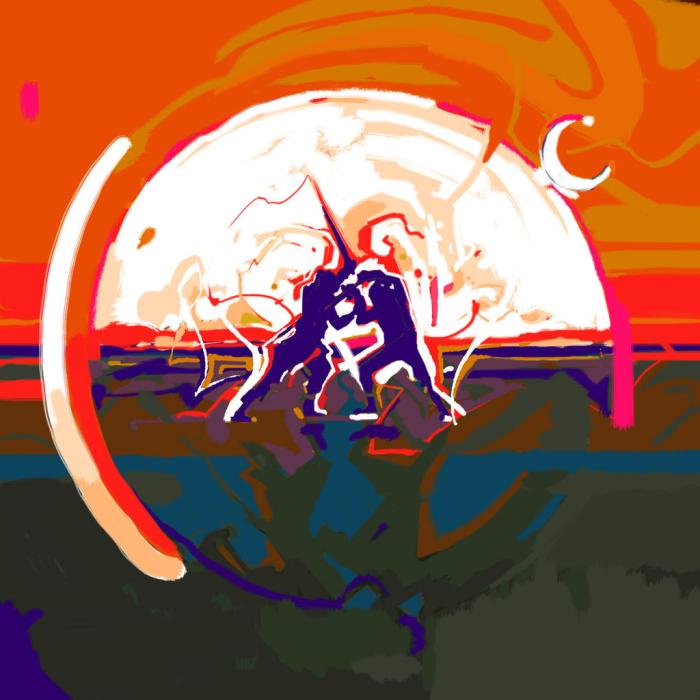
Rodrigo and Ammar are absolutely now two of my favorite characters in fiction, but I can see why this book is, lamentably, not more widely read among modern fantasy readers. The image below is the only piece of fan art I could find for this book, from a fight scene that should be world-famous. If Guy Gavriel Kay had focused this story more tightly on the friendship between these two men and then given us the emotional punch at the end that we needed, there wouldn’t be a reader alive who wouldn’t say the names Frodo and Sam, Sherlock and Moriarty, and Rodrigo and Ammar, in the same sentence.
By WonkDijon on DeviantArt
It would have been pleasant, the thought came to him, to be able to lay down their weapons on the darkening grass. To walk away from this place, from what they were being made to do, past the ruins, along the river and into the woods beyond. To find a forest pool, wash their wounds and drink from the cool water and then sit beneath the trees, out of the wind, silent as the summer night came down. Not in this life.
Guy Gavriel Kay, The Lions of Al-Rassan
Hi, I’m Caylah Coffeen, a freelance editor and marketer of sci-fi and fantasy books. I love reading and writing and am a follower of Jesus Christ.
I’ve worked for Monster Ivy Publishing and Eschler Editing, and am currently a weekly editor with Havok Publishing. Reach out to chat about books and publishing!
Thanks for stopping by my website! I hope you’ve found some helpful resources about reading, writing, and publishing. If you liked this article, here’s some more free content…
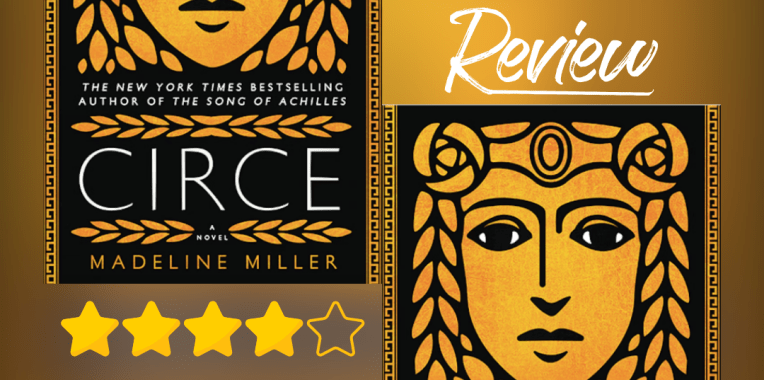
Circe is a decadently beautiful mythological retelling for fans of ancient Greek mythology and high literature alike, but its ending misses the emotional mark.
Snapshot
Circe makes an appearance in Homer’s The Odyssey as an antagonist who famously turns Odysseus’ men into pigs. Miller retells this story from her perspective, illuminating how her deeds intertwined with other mythic heroes and how the Fates spun the other threads of her life: her youth as a nymph daughter of Helios, her exile and discovery of sorcery, and her battle to save her oft-forgotten son and demigod Telegonus.
Characters: 4/5
Circe has clinical depression – an interesting take on an immortal. She is lonely, withdrawn, and finds it difficult to love or pursue anything in life. Yet she is staunchly principled, with a huge heart, a sharp mind, and a fiercely protective nature.
She unfortunately models an “I’m not like other girls” attitude, showing nothing but contempt and standoffishness to all the other women in her life. She can’t be the only nymph or goddess in existence with a brain, yet she does nothing but mock the others for their vapid silliness, ignoring relatives and possible companions because she thinks herself better than every one of them. However, this doesn’t cross the line, partially because it’s accurate according to Greek myths – all the gods were capricious and petty. It’s also in line with how people with depression act, and comes across more as Circe drowning in misery and feeling bitterly out-of-place rather than pompous arrogance.
Much of the book takes place with Circe in isolation, whether willingly or during her exile, and other characters pass in and out of her long life rather than taking the stage alongside her. I found her dynamic with her siblings and Hermes and Athena more compelling that her relationship with Odysseus and her son, despite their greater importance to the plot.
Story: 3/5
This is a character focused story, not a plot driven-one. Miller has clearly done great research to make the world of the ancient Greeks come alive! She weaves so many myths through this one tale, from a perspective we’ve never seen! I had totally forgotten that Medea is Circe’s niece!
At times the book felt a bit slow, with Circe trapped alone on an island brewing plants for magic and feeling miserable. However, overall, Miller weaves together Circe’s 1000s of years of life masterfully, granting us a realistic female perspective in a mythos otherwise dominated by male narration.
I didn’t give this 5 stars for 2 reasons. One, the slowness and sometimes repetitive nature of the middle of the book. Two, the ending felt terribly frustrating, and in direct contradiction to the original myth and Greek philosophy. Looking back, Miller did plant the seeds of this ending, and it does tie in with Circe’s arc as Miller portrays it. But the ending is a very American take, not fitting with Greek ideas of life and death. Unlike her other changes to the myth which still fit with the world, the ending felt out of place, and did not seem to tie together Circe’s story or give readers emotional closure.
Writing: 5/5
Miller’s writing drips off the page like ambrosia. I recall making many faces of pleasure while reading her delicious descriptions. 😀 I kept thinking of the phrase “decadently lyrical” to describe her style. I read this before her debut, The Song of Achilles, and have discovered that her writing has only improved since then. Phrases that felt a bit purple in The Song of Achilles have been refined here and feel completely fitting in the mouth of an immortal.
Impact: 5/5
It’s been a long time since my heart leapt so much when reading a book. I fell in love with language and story all over again. The more you read, the harder it is to find something that moves you, and this book truly did. I became inspired to reshape my own writing as well.
Audiobook Narration: 5/5
I listened to the audiobook version of this, and the narrator, Perdita Weeks, makes Miller’s words, already spun from gold, positively glow. What a delight to listen to, especially knowing this is how the Greeks would have enjoyed their stories – orally!
Hi, I’m Caylah Coffeen, a freelance editor and marketer of sci-fi and fantasy books. I love reading and writing and am a follower of Jesus Christ.
I’ve worked for Monster Ivy Publishing and Eschler Editing, and am currently a weekly editor with Havok Publishing. Reach out to chat about books and publishing!
Thanks for stopping by my website! I hope you’ve found some helpful resources about reading, writing, and publishing. If you liked this article, here’s some more free content…
We’re excited to announce that our blog will now feature book reviews! We love supporting authors, and aside from buying their books, that’s the best way to do so!
There are infinite books in the world, a deliciously guilt-inducing amount piled up on our TBR lists, and more than we could possibly ever read in our lives… sigh, bookworm problems.
Unfortunately, this means we have to be selective about what we can review. So we will review our own curated list of books (that backlog though…) and accept requests for the following:
Science fiction, fantasy, and mythic and fairy (re)tellings…
With themes of faith or by Christian authors
By authors (particularly indie) located in the Southeastern US
With beautifully artful prose (e.x. Roger Zelazny, Madeline Miller)
These genres are open to interpretation. We’re all about genre-blending! However, we do not review apocalyptic or horror SFF or erotica.
You may request a review for your own book, on behalf of an author you like, or submit a review you’ve written yourself if it matches the above themes.
Head over to our book review page for more detailed guidelines and to submit a request.
Looking forward to reading your delightful stories!
Hi, I’m Caylah Coffeen, a freelance editor and marketer of sci-fi and fantasy books. I love reading and writing and am a follower of Jesus Christ.
I’ve worked for Monster Ivy Publishing and Eschler Editing, and am currently a weekly editor with Havok Publishing. Reach out to chat about books and publishing!
Thanks for stopping by my website! I hope you’ve found some helpful resources about reading, writing, and publishing. If you liked this article, here’s some more free content…