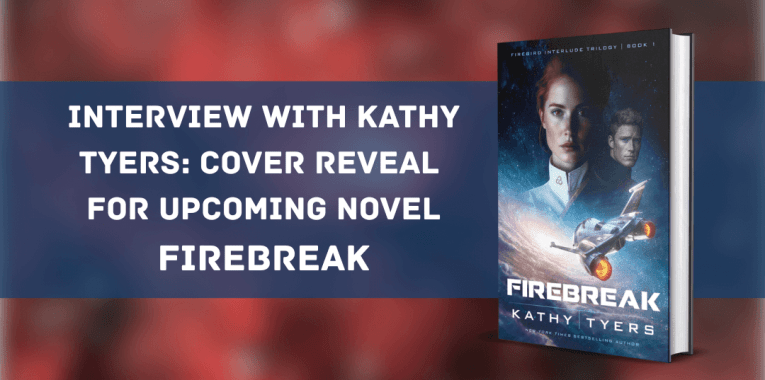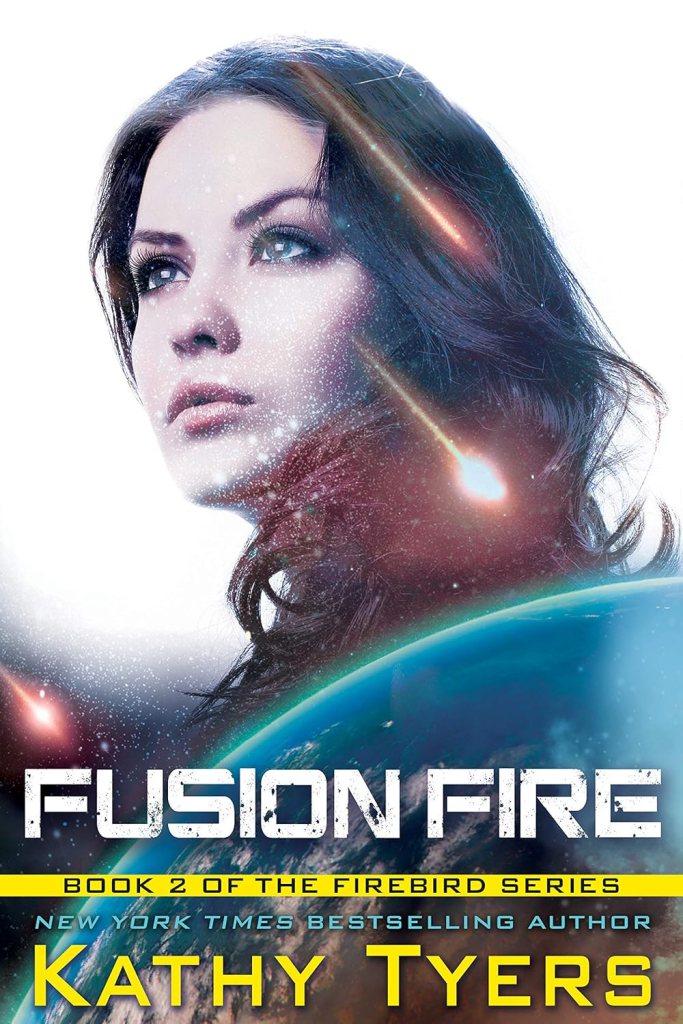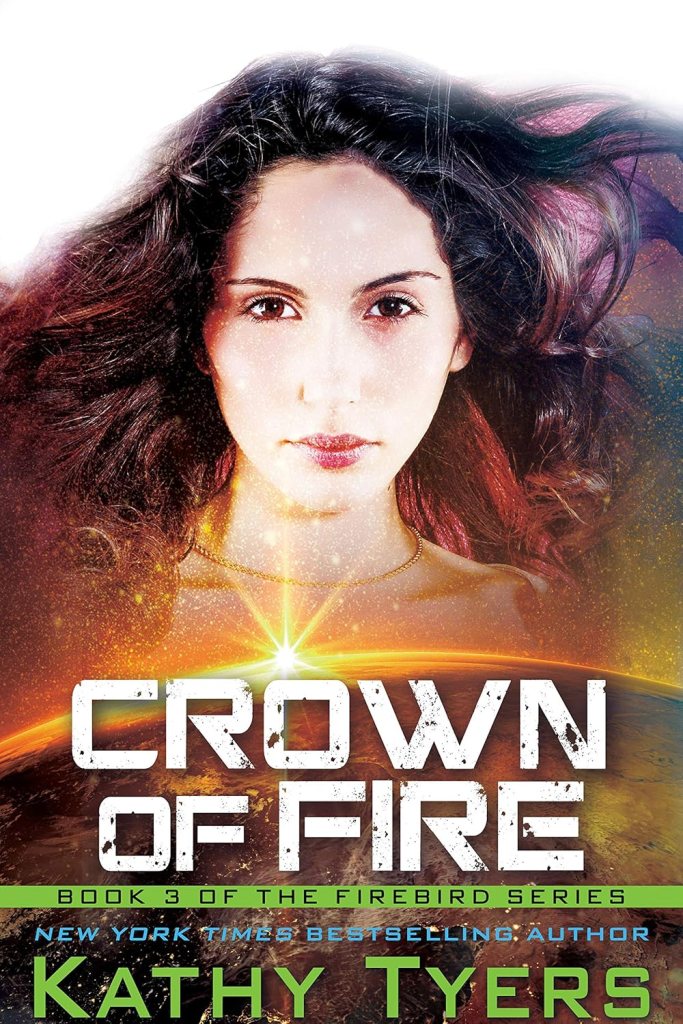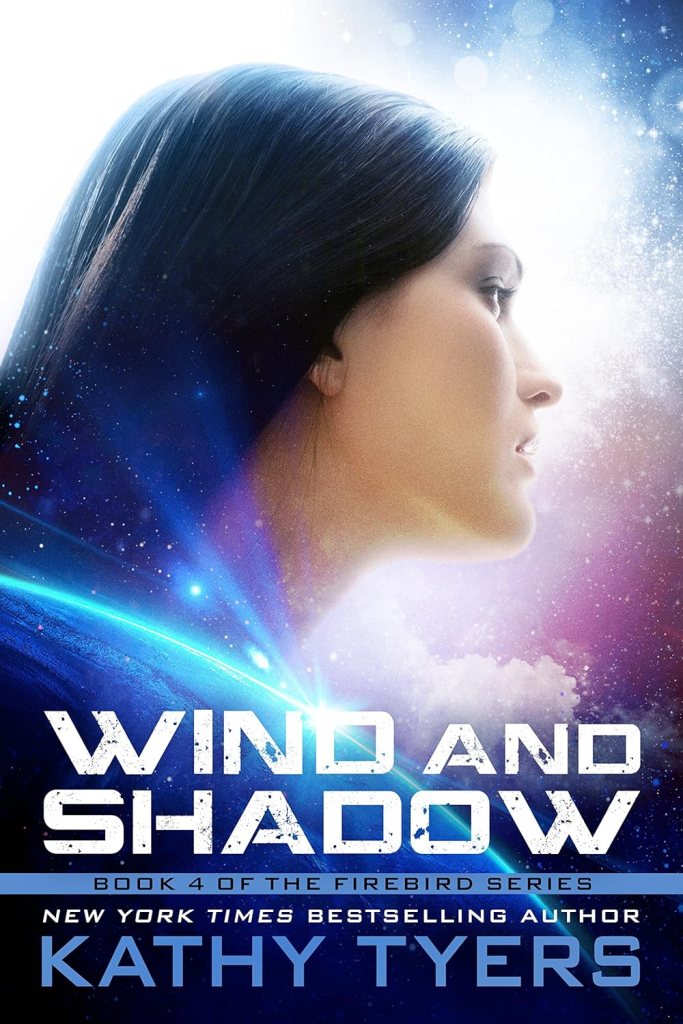
Interview with Kathy Tyers: Cover Reveal for Upcoming Novel Firebreak

Kathy Tyers writes character-driven science fiction with a deep heart and an inquiring spirit. She is the author of the Firebird series – Firebird, Fusion Fire, Crown of Fire, Wind and Shadow, and Daystar – of the Star Wars universe novels Truce at Bakura and New Jedi Order: Balance Point, and of several stand-alones.

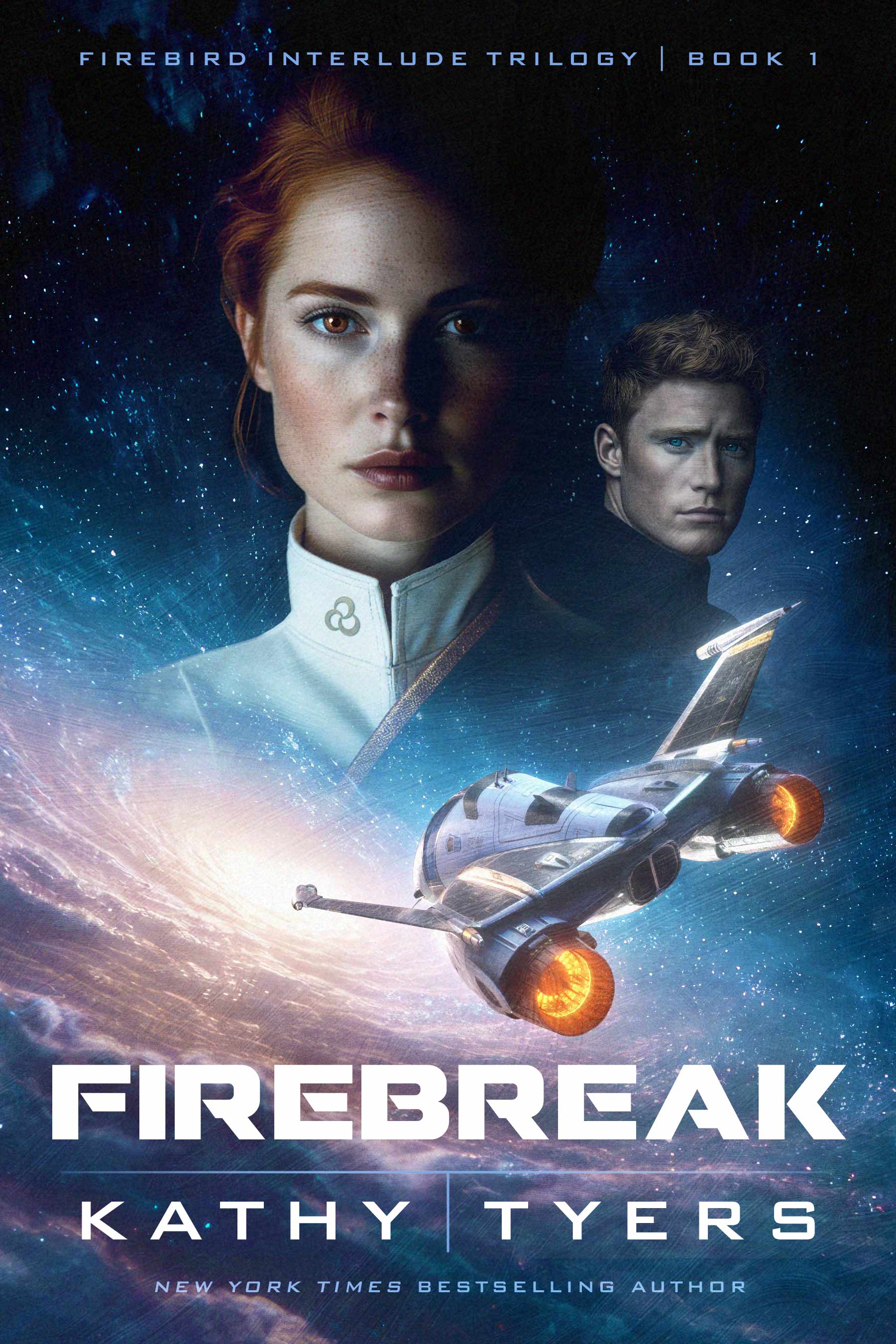
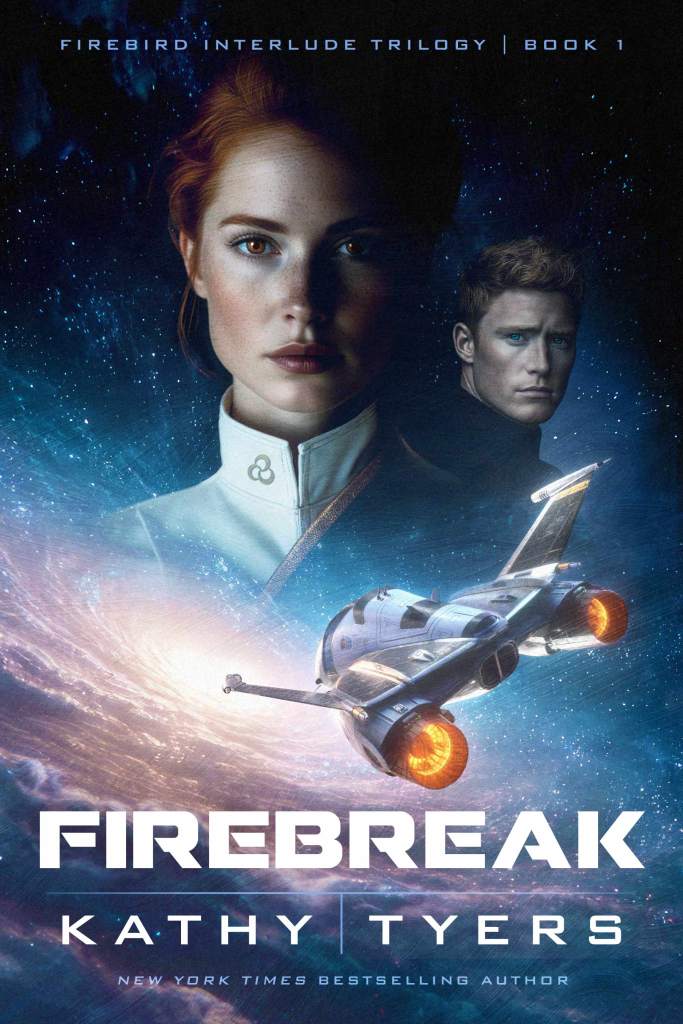
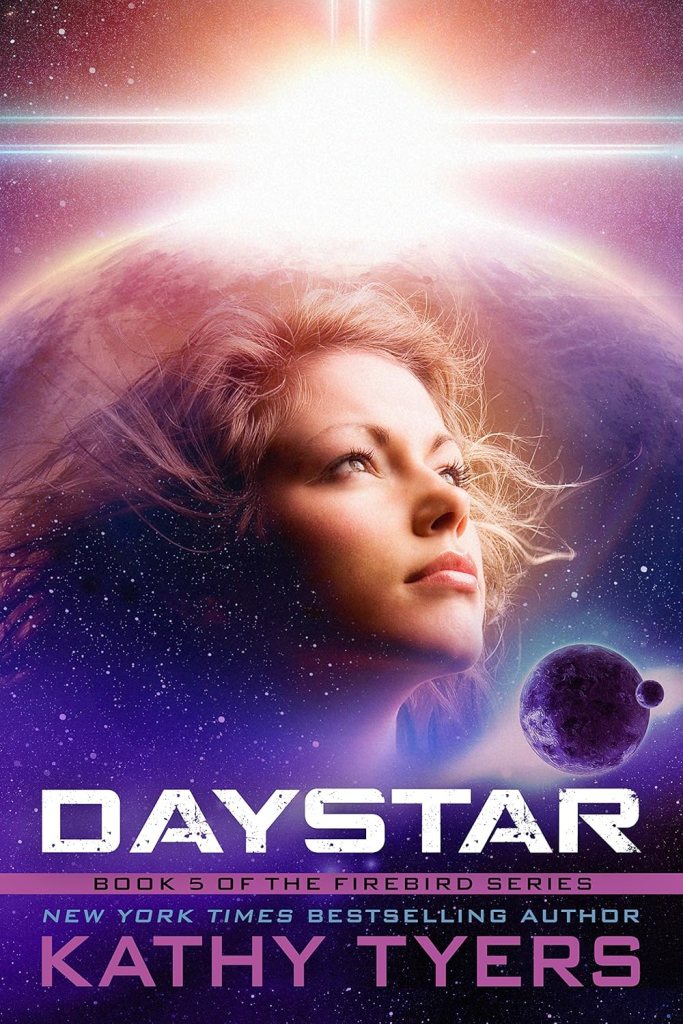
She returns to the Firebird universe with her upcoming release Firebreak, which takes place between Crown of Fire and Wind and Shadow. Releasing March 10, 2026 and now available for preorder, with 20% off on Enclave Publishing’s website!

Cover art by Kirk DouPonce at DogEared Designs

Lady Firebird Caldwell returns to the world of her birth, Netaia, intending to introduce her young sons to the noble Electors while her husband, Brennen, conducts a military inspection. When mysterious ships in distress suddenly approach the planet, the Electorate sends her to initiate first contact. Forced to work alongside a vengeful childhood enemy, Firebird uses everything within her power—even her passion for music—to negotiate, only to discover their alien technology threatens all the worlds she holds dear.

Facing ruthless betrayal, Firebird undertakes a deadly journey to salvage the mission. Brennen must make daring use of his telepathic powers to save human life in the galactic Whorl, including that of their young sons. But saving the worlds might force Brennen to give the order that would mean Firebird’s death. In a galaxy poised on the edge of ruin, survival may demand the ultimate sacrifice—from them both.

Caylah: I’m so excited to hear that you’re releasing a new book in the Firebird universe! The new cover looks stunning! Could you tell us more about Firebreak and how the story came to you?

One of the hardest choices an author can make is where to start and end their story – after all, the universe and characters never “end” in our own minds! It’s been quite a few years since your last book in the Firebird universe. How did you decide it was “right” to return?

Kathy: Caylah, thank you for the opportunity to talk about writing Firebird’s story again. If you don’t mind, I’d like to combine my answers to your first two questions.

In 2022, I thought I would never be able to write again. Long COVID had done bizarre things to my brain. Sometimes, I could barely wake up for two or three days, and then I’d have insomnia for most of a week. The worst of it was the sensation that something seemed to be creepy-crawling inside my skull. I barely had the energy to get through a day and cook dinner. Some people thought I was doing pretty well, but I had no energy left to write, which made me feel sad and old.

Still, every second Monday evening, I got together with some new writers from my church and helped them learn the craft. I tried to resurrect an old project of mine, Holy Ground, a rural fantasy novel. I’d written it in third person limited POV, and my writing friends encouraged me to try rewriting it in first person. Week after week, I simply had nothing to bring to the writers group. The passion just wasn’t there. I couldn’t persevere through the long, long process of writing a full first draft, even though the novel was substantially written already.

Finally, Broose–another founding member of that group, and a former Disney animator–challenged me to simply write something that brought me joy and fed my spirit. I had thoroughly enjoyed writing the Firebird series. They filled up something inside of me that had gone empty and dry during COVID. So, out of a sense of grateful nostalgia, I re-read all five of them. I found myself wondering what Firebird and Brennen were doing between Crown of Fire and Wind and Shadow. (Books 3 and 4) The next thing I knew, a new story was pouring out of me. The post-COVID lethargy was gone. Kathy Tyers was alive again.

Caylah: That is wonderful advice – returning to joy when our muse decides to hide under a rock. What did you enjoy most about this story and what are you excited for readers to experience (no spoilers of course!)? I’m personally excited to see more about Netaia’s culture and how it transforms over the years.

Kathy:  The characters! I’ve known Lady Firebird for most of my life. Over the years, she has matured into someone who feels very real to me. So does Brennen. Letting them find each other and embark on their adventures together satisfied a hunger in my soul. In our fallen world, we long for a happy ending–but doesn’t a happy ending usually lead to the next challenge?

Caylah: Indeed! Firebird came so alive to me, so I’m excited to see more of her story.

How does your relationship with God influence your writing process and story planning? e.g. perhaps you have a prayer you like to pray as you sit down to write. 

Kathy: I try to get to work immediately after my quiet time each morning. One of my favorite C.S. Lewis quotes says, in effect, that who/what you are will come out in your writing whether or not you try to put it there. So I work hard on telling a good story and, occasionally, on bringing forward the faith elements. Lightly but genuinely! The exception to “lightly” was Wind and Shadow, which was written as a Master’s degree project for Regent College, a wonderful theological school in Vancouver, BC. One of the main characters was a priest in training, you see….

Caylah: Amen! Out of the overflow of the heart, the mouth speaks. I remember you published a different edition of Firebird before your deal with Enclave. How did you choose to release a version with enhanced religious themes (is that the biggest difference)? Have you received criticism from fans of your general market (Star Wars) work?

Kathy: My editor Steve Laube had been a fan of my writing before I moved over from Bantam Books to Bethany House publishing, where he worked at the time. During our first conversation, he told me he had suspected for some time that I was a Christian because he’d found hints here and there in my writing (see C.S. Lewis quote above!). Yes, people have left reviews online warning other readers that my books from a Christian publisher have Christian themes. Surprise!

Caylah: Personally, I found the themes of shame, faith, and new life incredibly challenging and encouraging – they make the story have eternal significance. Are there any readers who’ve approached you over the years to share how the Christian message impacted them? All authors want to think that their stories have the power to transform at least one life! 

Kathy: One of the most moving experiences in my life was attending the baptism of a young woman who said she’d decided to become a Christian after reading the Firebird books.

Caylah: Wow, that’s incredible – praise God!

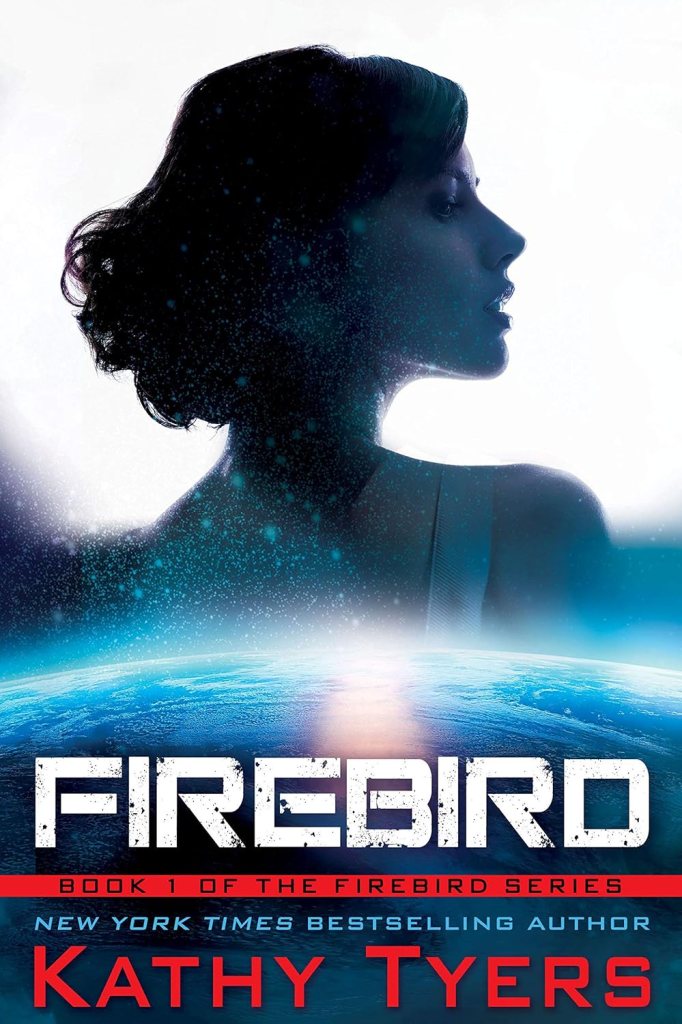
Read my review of Firebird book 1 here.

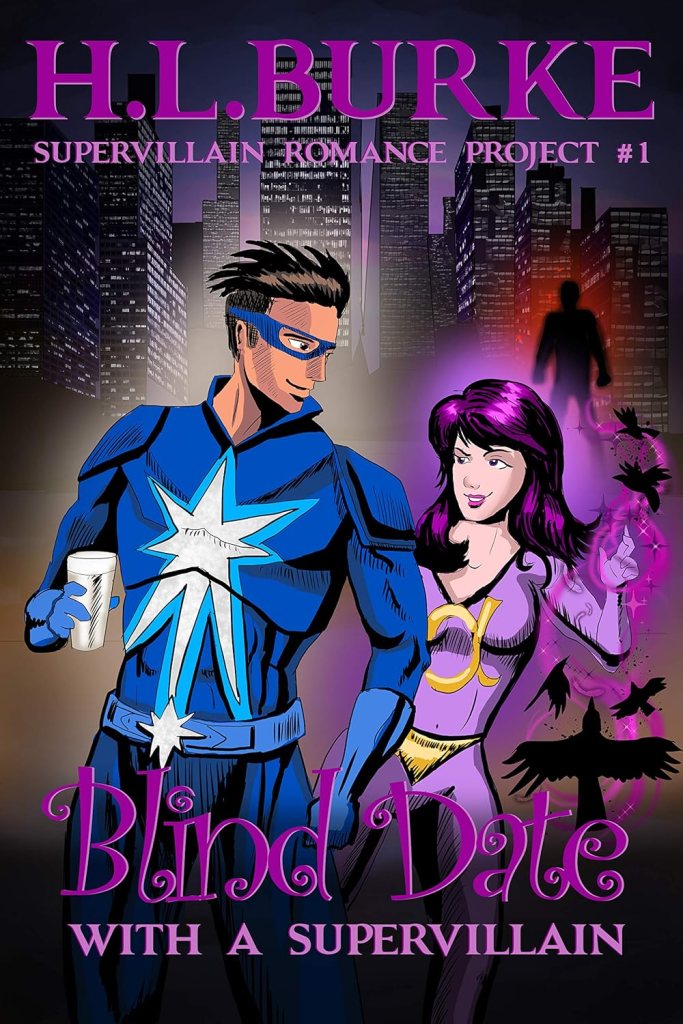
Caylah: I love how much you weave music into the chapter titles and into Firebird’s thought processes! In my opinion, that’s one of the elements that takes a character from “good” to “great” – their hobbies and passions actually transform how they view and interact with the world. I actually use your trilogy as an example when I offer this advance to new writers! Are there any other tips for character development that you’d share with budding writers?

Kathy: My characters usually reveal themselves to me slowly. I need to spend time with them, thinking through what they find beautiful, meaningful,or challenging. Often, it’s through the process of writing a first draft that I learn what drives them. I enjoy involving some of my characters in music or other arts because that’s been a big part of my background since childhood. I grew up in a musical family. I might ask a hopeful writer, “What do you enjoy, what do you know something about, besides your fiction? Can you layer that into your story in some way that enriches the plot?”

Now and then, though, inspiration hits in an instant. For example, I first glimpsed one of my favorite characters, Tel Tellai, when he was standing at the foot of a breakaway strip while a space-and-atmosphere fighter took off. He was just standing there in shock and protest, holding both of his arms stiffly down at his sides. “Who in the world is that?” I wondered. Calmly, he told me his name (honestly, that’s how it felt) and that he loved Phoena Angelo. I was shocked. “You love HER?? What???? How could ANYONE….” 

Caylah: Moments of “conception” like that make storytelling feel like such a superpower! Since we’re quoting C.S. Lewis, your description reminds me of how his main character in Till We Have Faces says, “I was with book, as a woman is with child.”

The interrogation scene between Brennen and Firebird is one of the most tensely compelling scenes I’ve ever read – the chemistry! I remember the first time I read it, how Brennen’s act of clicking his heels together and shifting forward to begin accessing Firebird’s mind was such a tangible moment that made me physically feel the tension in the room. Then I reread your annotated version and realized you did this deliberately (as good authors do, haha)! You articulated so clearly how physical actions can punctuate energy and emotion and create turning points within a scene without the characters using any words. Are you able to expand upon that idea, maybe going into when this tactic works and when it might not, for some writers?

Kathy: Thanks, Caylah. I love that scene too. I wrote at length about tagging dialogue with action beats in my book for the Christian Writers Institute, Writing Deep Viewpoint: Invite your Readers Into the Story. It isn’t always easy to find the right action beat. I hear my characters speak to each other long before I can see their body language or their surroundings. Every writer’s process is just a bit different.

Caylah: That sounds like a great resource – thank you! It’s encouraging to know that even elements which might not come as naturally or quickly to writers can still become a great strength.

There’s a lot of disagreement about what makes a “strong female character.” Some people have complained that Firebird too quickly gets “shunted into the role of wife and mother,” but I think you did a wonderful job of showing a variety of feminine strengths in Firebird. Being a lethal fighter pilot isn’t the only way to kick butt, which she still does throughout the rest of the trilogy! How would you describe your approach to writing female characters and do you think Christians “should” write women differently than we see in mainstream media?

Kathy: I’m especially glad you asked about this. “The role of wife and mother” is not the end of any story. In and of itself, it’s a high calling for many. For others, it’s a vital step into their unique future. When I brought Firebird and Brennen together, I knew that they both had strong reasons for wanting to create a family.

Still, they obviously weren’t the kind of people to live quietly-ever-after. How, then, would they balance parenting with the other calls on their lives? It’s been a challenge for me, just as it’s been a challenge for them. But they’re doing it! Just wait till you read how they get there in Firebreak. 

Caylah: I can’t wait to see the kind of trouble Kiel and Kinnor got into as kids!

Ok, now for my “fan girl” moment. When Brennen first feels Firebird’s mental shout he expects to find brotherhood. Though it didn’t turn out that way, I’ve been fascinated by what that dynamic would look like in their culture. I would LOVE to see a short story about a Sentinel “blood brother” pair!!! Do they have any famous “Gilgamesh-Enkidu” pairs or stories about sisterhood (which is rarer to find in fiction, sadly)?

Can individuals have more than one pair bond? For instance, would a pair bonded husband also be able to pair bond with a brother in arms? Would his bonded wife feel his brother through their connection at all? I then had fun imagining what would have happened if one of the Shuhr assassins had discovered they were connatural with one of the men in the Caldwell bloodline. What do you think would have happened – would they have stayed their hand as Brennen did with Firebird? 

Kathy: You may have given me a great subplot idea. Thank you. 

Caylah: Ooh, yes! Is there anything else you’d like to share about your story, process, or world?

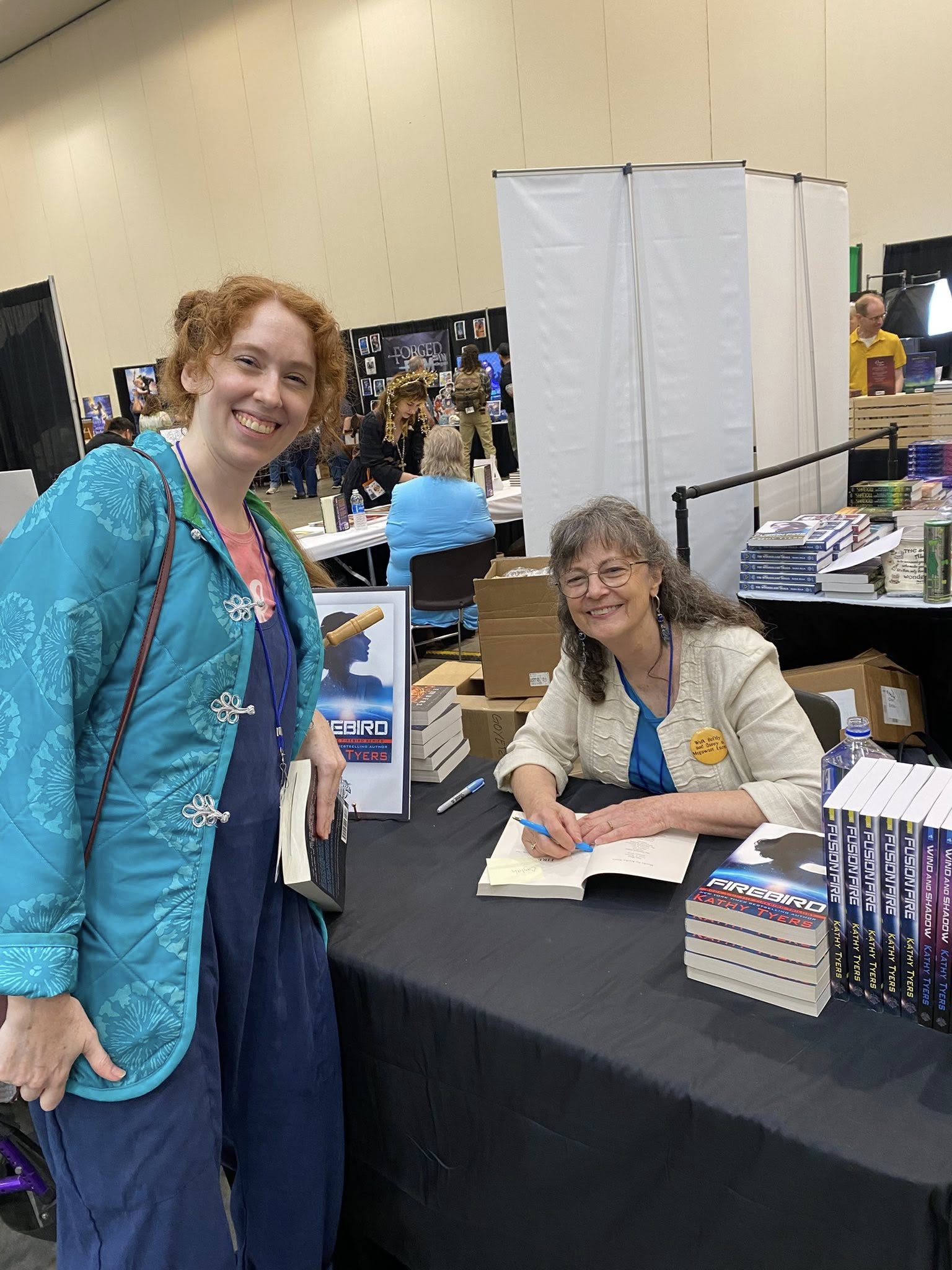
Kathy: Thank you again for the chance to share a bit about Firebreak, my favorite characters, and my writing process. It was a treat to meet you at Realm Makers, and I hope to see you there again in 2026, when Firebreak is finally available!

Caylah: Thanks! It was lovely meeting you too. And congrats on the birth of your grandson!

Kathy: Thank you!

Follow Kathy Tyers on Facebook for more news and discussions, and find the first book in her Firebird trilogy here. Firebreak, releasing March 10, 2026, is now available for preorder on Amazon or through Enclave Publishing’s website (20% off there).

Amazon links are affiliate links – I may earn from qualifying purchases.


Hi, I’m Caylah Coffeen, a freelance editor and marketer of sci-fi and fantasy books. I love reading and writing and am a follower of Jesus Christ.

I’ve worked for Monster Ivy Publishing and Eschler Editing, and am currently a weekly editor with Havok Publishing. Reach out to chat about books and publishing!

Thanks for stopping by my website! I hope you’ve found some helpful resources about reading, writing, and publishing. If you liked this article, here’s some more free content…

Pursuing True Diversity in Fantasy Books

Guest post by Izaic Yorks

Fantasy as a genre has long captured the imaginations of readers with its thrilling adventures and heroic narratives. But if you’ve spent any time in the trenches of Reddit, BookTok, or even Threads, you’ve likely come across a question echoing throughout the zeitgeist:

Does fantasy suffer from a lack of diversity?

That, however, is the wrong question.

At the heart of this conversation lies a more critical distinction. The real question we should be asking is:

What do we even mean by “diversity”?

Is it simply about including characters of various races and socioeconomic backgrounds? 

Or does true diversity dig deeper? 

This article explores that very question while offering insights into how diversity can (and should) transform the realm of fantasy. Along the way, you might come to love me, or you might come to hate me. But one thing you won’t accuse me of is being a vapid wanderer with nothing but clouds for thoughts.

What Does Diversity Mean in Fantasy?

When we think about diversity in fantasy, what’s the first thing that comes to mind? For many, in a culture increasingly unmoored from classical philosophical foundations, “diversity” is often reduced to outward traits: ethnicity, gender, or socioeconomic status.

And yes, those factors matter.

But they shouldn’t overshadow what truly makes stories vibrant and enduring: diversity of thought. Because a book, at its core, is a well assembled stream of consciousness. A meditation and confrontation with ideas.

Diversity in My Own Career

This subject is actually quite dear in my own author journey and not for the reasons you might suspect. Whenever diversity comes up, it’s often along the lines of: “Hey, Izaic, why don’t you mention you’re Black? That could really help spotlight you or bring money in the door.” Every time I hear that, it feels like an arrow to the heart.

Why? 

Because it screams the bigotry of low expectations. Ideas that stand the test of time are based on merit. To have mine judged by skin tone or assumed hardships might grant me a short‑term dopamine hit but, in the end, would leave me wondering: did I earn X or Y, or was that just the result of someone’s assumption about me?

So, over and over again, I have declined grants or invitations that hinge solely on my skin tone. At times it’s been hard and a challenge to the life of virtue. Undoubtedly I am leaving money on the table, but I have faith that I am more than the base materials of my physical body. What remains, and what is important, is the diversity of my mind and soul, which God made perfectly to His design.

Beyond Biometric Metrics

Reducing diversity to metrics like race, gender, or class oversimplifies a much richer and more vital conversation. Biometric diversity does not automatically guarantee depth or quality in storytelling.

True diversity emerges from exploring nuanced ideas, conflicting beliefs, and different cultural frameworks for understanding universal human experiences.

Imagine a world where fantasy novels challenge readers to see the world differently—to entertain new possibilities and reflect deeply on their own beliefs.

That is authentic diversity.

More Than Skin Deep

Reducing diversity to physical characteristics is a form of tokenism, where characters are included as symbolic gestures rather than meaningful contributors to the narrative.

Instead, let’s consider stories where ideas and beliefs are the defining elements of uniqueness.

For example, a Black author can skillfully craft a European medieval fantasy steeped in knights, castles, and folklore. Likewise, a White author can authentically write a story centered around urban Black youths navigating the challenges of Chicago through the lens of portal fantasy.

The richness of a story stems not from the biometric traits of its characters or creators, but from the depth and clarity of its ideas.

Biological factors ≠ Diversity.

They are merely a potential starting point from which diversity might emerge.

This is not to deny the importance of representation but to elevate the conversation.

Our ultimate goal as lovers of literature should be compelling storytelling that speaks to the human condition. As Dr. Martin Luther King Jr. famously said, what matters most is “the content of their character.”

For fantasy, this means content that challenges, inspires, and transports readers into the vast frontiers of imagination.

The Reader’s Role in Seeking True Diversity

Writers aren’t the only ones responsible for cultivating meaningful diversity. Readers play an equally crucial role in shaping demand for more thoughtful and expansive narratives.

When audiences seek out stories that offer fresh perspectives and complex characters, they help pave the way for a broader, richer literary landscape.

Supporting Authentic Storytelling

Here’s how readers can contribute:

  • Explore New Authors: Seek out voices from various cultural and social backgrounds. But celebrate them not for their skin or heritage—celebrate them for the merit of their thoughts and craft.
  • Foster Conversations: Discuss books with others. Unearth the deeper themes and perspectives within a story.
  • Prioritize Depth: Choose books that offer intricate world-building, moral complexity, and provocative ideas over ones that simply check superficial boxes.

By demanding authenticity and intellectual richness, readers uplift authors and help shape a publishing culture centered on excellence.

Raising the Next Generation of Readers

Creating a culture where diversity of thought thrives doesn’t happen overnight. It begins with nurturing a love for reading in young minds. Exposing children of all backgrounds to a range of high-quality, diverse literature helps expand their worldview and strengthens critical thinking.

How to Foster a Love for Diverse Literature:

  • Start Early: Introduce imaginative fantasy stories that stretch the mind and expose kids to different ideas.
  • Align with Values: Share stories that reflect your core values but don’t avoid those that challenge or stretch them.
  • Create a Rich Literary Environment: Fill homes or classrooms with books spanning genres, cultures, and philosophies.
  • Celebrate Curiosity: Encourage kids to ask hard questions about characters, themes, and conflicts.
  • Train for Excellence: Stop paying lip service to mediocrity. If you’re invested in the future of Black youth—or any youth—invest in their craft. Train them rigorously. Push them to be extraordinary.

A sustained effort to introduce children to rich, diverse storytelling shapes a generation that values both creativity and authenticity. Excellence is the only foundation that ensures diversity lasts beyond trends.

Building a Future of Excellence in Fantasy Literature

Fantasy offers endless room for exploration, creativity, and connection. But for the genre to thrive, it requires intentional effort from writers, readers, and publishers alike.

Christian authors, especially, have a unique opportunity to contribute by anchoring their work in faith and reflecting the boundless creativity of God’s design.

The future of fantasy doesn’t rest on superficial representation. It depends on cultivating excellence and allowing the diversity of ideas to compete in all aspects of storytelling.

And that journey begins now.

With you.

About Izaic Yorks

Yorks spent six years as a professional Track athlete, earning silver in the United States championships, among several other distinguishing awards. Now, he seeks his true passion for authoring fantasy works with a heart for virtues that chase the Good, True, and Beautiful.

​Hailing from the Pacific Northwest, Yorks is now happily lost in Hillsborough, living the small-town life and raising a growing family with his wife Courtney.

Check out his book!


Hi, I’m Caylah Coffeen, a freelance editor and marketer of sci-fi and fantasy books. I love reading and writing and am a follower of Jesus Christ.

I’ve worked for Monster Ivy Publishing and Eschler Editing, and am currently a weekly editor with Havok Publishing. Reach out to chat about books and publishing!

Thanks for stopping by my website! I hope you’ve found some helpful resources about reading, writing, and publishing. If you liked this article, here’s some more free content…

Interview with Jeremiah Friedli – Debut Author of Christian Sci-Fi Novel CORE Deception

By Caylah Coffeen

CC: Thanks for joining me Jeremiah, and congrats on your debut novel! Tell us about it!

JF: Thanks, and I appreciate you inviting me to join today! Here’s what you’ll find in my novel CORE Deception:

A tyrannical government, a cryptic letter, a devious hacker…

In a world where the government’s CORE systems see and track everyone, seventeen-year-old hacker Seth Alvarez is determined to save his sister from being placed in a reeducation facility. Armed with a cryptic letter, Seth embarks on a search for the valuable incognito devices—cyber master keys that can set his sister free. But with only three weeks remaining, he finds himself wedged between two powerful forces who will stop at nothing to get the devices first.

CC: That sounds exciting! I love books about siblings (I have 6 myself!). And congrats on making it to the finalist stage in the debut category at the 2025 Realm Makers Awards! What do you love most about this story and what are you hoping readers will connect with?

JF: I love stories of espionage, undercover, and page-turning suspense. I also like some level of technology. A dystopian setting offers the perfect venue for teen characters to get into these activities. If you love clean YA read that keeps you turning pages, stories of underdogs standing up to dystopian governments, and plots filled with intrigue and suspense, CORE Deception is for you.

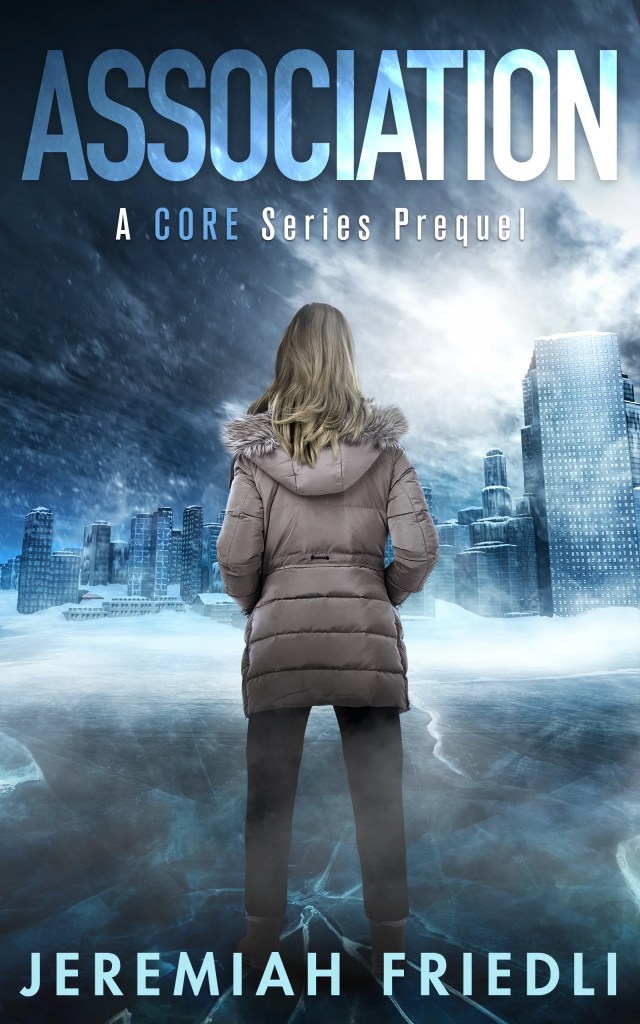
Take codes and ciphers for example. I’d read about them in true spy accounts and liked the idea of incorporating them into the CORE Series. As I learned more so I could write about them correctly, I really enjoyed codes and ciphers. In fact, they play key roles in CORE Deception and its prequel novella Association. I even created a Code and Cipher Guide to go along with my books.

Another reason I like CORE Deception is the primary thematic element, which grew out of 2020 when I faced fears I didn’t know I had. I’ve struggled with fear of acceptance, fear of failure, and fear of incompetence before—to name a few fears. But this was new to me. It was fear that dominated my thinking and tried to control my actions. (And really, doesn’t all fear do that?)

Something told me this wasn’t right—more like Someone. As a Christian, I shouldn’t fear like that, not if I believe the Bible. After all, our future is secure, no matter what happens to us physically. And as Christ-followers, we have more hope than anyone else.

So why was this fear so strong? Later I came across a quote by Max Lucado from his book Fearless. He put it really well: “Fear, at its center, is a perceived loss of control.”

That was me. It felt like I’d lost control of almost every aspect of normal life. Not that I had control in the first place. And that was the foundational deception of my fear. Experiencing this it was painful because it forced me to face a reality—I wasn’t trusting God like I thought I was, like I wanted to think I was. But as painful as that was, it was a gift, growing me as a Christian. And I soon incorporated it into CORE Deception.

CC: That’s such a powerful way to put it. I’ve certainly struggled with that. It’s easy to “trust” God when everything is going well. How else has your faith shaped this story? Could you share what “Christian sci-fi” means to you?

JF: Faith should shape everything Christ’s followers do and think. It’s easier said than done, but that’s what I try to do, including with my writing. This doesn’t mean there’s a Bible verse on every page, but it does mean my writing should reflect a Christian worldview and be done for Christ’s glory.

This reminds me of a pivotal point years ago. I’d been writing it since I was a kid, mainly for enjoyment but with the possibility of publishing eventually. I sensed a challenge from the Lord regarding my time used in writing. If I was going to spend time on it, I should use it for His glory and not just my personal enjoyment. Yes, I want to write engaging stories that whisk readers away into an amazing world of fiction, but I also sensed the call to use my stories to “lay up treasure in heaven” (Matthew 6:20). That includes reflecting biblical worldview and weaving in themes that inspire courageous living for God, regardless of the genre.

I like to think of Christian sci-fi—really any genre—as stories written from a biblical worldview. The Bible should always be the foundation and guide for creators and readers. As 2 Timothy 3:16-17 tells us, God’s word is sufficient for all areas of life.

CC: Amen! What did you most enjoy about writing your book? What was most challenging?

JF: I absolutely love the phase of writing when the spark of an idea grows into something bigger. It’s that phase when I’m exploring characters or a storyworld (or both!), ideas explode, and it seems anything is possible. It’s like receiving a fascinating new toy on Christmas Day—I’m just so excited to play with this new idea and see what it can do! With CORE Deception, it didn’t take long to realize I had enough for more than one novel.

But for all those loose ideas to form a cohesive story, I eventually had to put it into a framework (either before or after writing the first draft). The phase of structuring everything, making my setting consistent, and refining character arcs posed one of my greatest challenges. I’ve polished words before and cranked out many drafts over the years, but pushing a novel through developmental edits (making all the large pieces work) wasn’t something I’d done before and was harder than anticipated. But the story is so much better for it.

CC: Worldbuilding is definitely the fun part! Actually sitting down and writing takes so much discipline! How long have you been writing and how did God guide you into this career?

JF: One of my first stories was a one-of-a-kind picture book I wrote and illustrated myself as a kid. It was four pages long with a grand total of seven sentences (if you include “the end”), put together with construction paper, masking tape, and staples. [optional: insert picture below] The name was Twenty Door Bells. A real page-turner, huh? You can tell I was using cutting edge print-on-demand technology too. But you can see my imagination was already at work.

Mostly, I only wrote creatively when it was required for school. But somewhere along the way, I found I liked crafting stories. Sometimes it was because my siblings were writing stories. Later, it’s more likely that I ran out of stories to read, and so I decided to write my own. I enjoyed it so much I kind of became an overachiever with writing assignments.

For example…

Assignment: 5 pages of fanciful fiction

Completed Project: 39-page story of animals in a medieval kingdom, complete with intrigue and major battle scenes.

Assignment: Short story with dialogue (short, as in, only a few pages)

Completed Project: 35-page mystery with black-cloaked thugs and a pie fight, among other things.

Soon I was writing even when there wasn’t any assignment—short stories, poems, novellas, novels—and sharing them with my family and friends.

I got into westerns, action, mystery, humor, sci-fi, fanciful, fantasy, retellings, and even an interactive mystery-thriller. I did flash fiction, short stories, novelettes, novellas, short novels, novels. Having siblings who wrote helped a lot, offering camaraderie and some friendly competition. I have terrific memories cowriting with my brothers and sisters. Also, it was huge that my mom (and homeschool teacher) fostered creativity.

As time went on, I sensed God calling me to do more with my creative writing, as I mentioned above.

CC: Haha, I love your enthusiasm! And that your mom kept your first story! How would you describe your writing style and how has it evolved since those early stories? Do you have any advice for writers as they try to develop a unique style?

JF: I love stories with high suspense, action, and thriller pacing. I think a lot of teen guys would agree. When I read books in that genre, I’m able to detect a general style, especially for action and suspense scenes.

But when it comes to developing my own style, I’ve largely followed James Scott Bell’s advice on the subject. Keep in mind, both he and I write for the commercial fiction market, not literary or what your high school English teacher taught you. In Revision and Self-Editing for Publication, Bell says, “It’s best to allow voice and style to emerge naturally in the telling of your tale. Attend to the fundamentals of the craft, and voice and style will seem organic. That’s your goal.”

Put another way, don’t think too hard about style. As you write more and more, you’ll naturally develop one of your own. But if you concentrate too much on style, you risk awkward, unnatural prose that jars the reader.

CC: That’s a good point. Sometimes writers can over-plan, rather than letting things develop organically. What was your journey to publication like? Why did you pick the route you did and what kind of challenges did you face along the way?

JF: As mentioned, at some point I pivoted from writing for fun to writing intentionally, like for the purpose of publication. I dedicated myself to the craft of writing and eventually started looking for publishers and agents. But eventually, I didn’t sense any major publisher’s interest in my writing. While a small publishing house might have been, I felt like I’d be doing much of the same work as independently publishing—an idea I gradually liked more and more.

More significantly, as time went on I realized that I would really like to have a say in the final book product. I sensed that God wanted me to influence the story, the editing, the cover, the marketing, and so on. The catch is, I had to learn at least some about all those areas. For example, I knew I should outsource my cover design, but that still requires I understand the norms for covers in my sub-genre and can create a design brief for the designer.

Pragmatically, indie publishing works well in the book industry today. There’s definitely a learning curve if you’re going to do it well, but it’s easier than ever for an author to tackle areas like typesetting and selling directly from their website. And I’ve found I enjoyed the business and marketing parts of writing a lot more than I anticipated.

CC: That must be a relief! It’d be so hard to stick with it if you hated the business and marketing like a lot of authors do!
There has been discussion lately of how few young adult books feature male main characters (outside romance plots). Indeed, it seems like major publishers aren’t interested in these types of stories. Why do you think this is? Are you hoping to reach boys and young men in particular, and how do you hope your book can accomplish this?

JF: Yes, I write for teen guys. Perhaps because as a teen guy, I had a hard time finding books I enjoyed. Thankfully, I did find some, and that’s probably why I ended up writing YA! But more importantly, that’s the genre I sense God calling me to. I still have a lot to learn here, so I’m always eager for resources that help me do this.

It’s no secret to those in the book industry that guys don’t read/buy as many books as girls.

If you look at what the large publishers are producing, the same disparity seems to exist in the young adult genre. Not that there’s anything inherently wrong with that. My guess is they’re publishing what sells. To an extent, it’s a chicken or the egg situation—since not a lot of guys read, few new books get published for them, which leads to fewer guys reading and therefore publishers creating fewer books for that diminishing readership.

Some blame the gaming industry for drawing guys away from books, but my counter to that is “what is it about those games that connect with guys?” There are a number of independently published authors who have figured out how to produce stories guys love and are filling the void left by the larger publishers. Because plenty of young men do like to read, even if they’re not looking for reading material in the same places other people are.

This is a big topic, and this excellent discussion on the Christian Publishing Show is a good next stop.

CC: Thank you! That’s a valuable perspective. What’s next for you as an author?

JF: I’m well into the planning phase of CORE Deception‘s sequel. Readers can expect more suspense and espionage while exploring new facets of the CORE Series storyworld and digging deeper into characters like Seth, Krystin, and Jhalak. The next title and plot are a secret right now, though I’m feeding some insider snippets to those subscribed to my emails. Here’s a teaser for the sequel:

A relentless pursuer.
An unpredictable ally.
The opportunity of a lifetime.

Can seventeen-year-old hacker Seth Alvarez survive a daring undercover mission that could change the course of a nation…or destroy everything he’s even known and loved?

After a third novel in the CORE Series, I’m praying about what to write. Several ideas are pushing their way to the front of the line, and it’s too early to say which one will win out. It could be another sci-fi, a modern thriller, kingdom adventure—you get the idea.

CC: Thanks Jeremiah, I look forward to it! And best of luck in the next stage of judging at the 2025 Realm Makers competition!

JF: Thanks so much for allowing me to join the discussion today!

About Jeremiah Friedli

Author of the 2025 Realm Awards Finalist CORE Deception, Jeremiah Friedli is a homeschool graduate, lifelong writer, ice cream lover, and native Texan. He enjoys getting out in God’s creation, whether that’s hiking, camping, running, or just reading quietly on the porch. Otherwise, you might find him seated behind a large screen with one of his beloved spreadsheets or watching a movie with his family. Learn more and connect with him at jeremiahfriedli.com.

Try a Free Novella!

Or Dive into His Debut!


Hi, I’m Caylah Coffeen, a freelance editor and marketer of sci-fi and fantasy books. I love reading and writing and am a follower of Jesus Christ.

I’ve worked for Monster Ivy Publishing and Eschler Editing, and am currently a weekly editor with Havok Publishing. Reach out to chat about books and publishing!

Thanks for stopping by my website! I hope you’ve found some helpful resources about reading, writing, and publishing. If you liked this article, here’s some more free content…

Why Christians Should Read Fantasy: Can You Imagine Things Unseen?

Guest Post By Willamette Sutta

Let’s face it. When we write our debut novel, we expect the world to be as excited about it as ourselves. At least our family and friends. Mine did make a big deal of my achievement. But when I told them it was a fantasy novel, their smiles became polite, baffled, or embarrassed. Not everyone, but enough to dampen my enthusiasm. True, peoples’ reading tastes vary, so it could just be the genre. But after conversations and consideration, I came to a disturbing conclusion. Few people in my circle of acquaintances read fiction. A common denominator among those acquaintances is that they are Christians. Could there be a correlation?

Christian fiction has gained more acceptance in the ecclesiastical fold in recent decades. Works from such authors as C. S. Lewis and Tolkien are even held in theological esteem. But most seem to be valued as clean entertainment, comfortable encouragement, or harmless escapes to restore mental health. All fine for the young, leisurely, and convalescent. But “serious” Christian growth happens from didactic doses of information, right?

Do we only glean the deepest insights from within the careful lines of logic, or can we also learn through the mysteries of the imagination? Is reason the only tutor of innovation, or must it co-create with abstraction? Consider science. It observes facts and imagines possibilities (hypotheses) which are tested to become theories (new facts). In the Christian life, we seek to grow in faith, which is “the substance of things hoped for, the evidence of things not seen” (Hebrews 11:1). Yet, belief in the unseen requires believers to step into the realm of the imagination. So, if imagination is critical to expand all types of  knowledge and faith, how can we cultivate it?

When we delve into a story and put ourselves in the shoes of fictional people, our minds summon images out of thin air. We experience events and desire outcomes that don’t exist. We are exercising our imagination. And we are learning another important life skill—empathy. Given these benefits, reading fiction should be an essential practice, especially for Christians. Yet the opposite seems to be true. Why would that be?

Why don’t More Christians read fiction?

Whether consciously or not, Christians may hold the mindset that theological textbooks or other expository writings alone can teach real spiritual insights. Perhaps there is some justification for such thinking, as many Christian novels contain little more than a sanctified dollop of sugar or shot of adrenaline. They may provide moments of distraction, but surely, we can offer more than euphoria that quickly evaporates. Following our Master Storyteller, who convicted scholars and laymen alike with life-changing parables, we too could weave profound truths into tales that lead to lasting hope.

Such stories are harder to write and to read. We must deal with murky concepts organically and often indirectly, all while negotiating a riveting plot. But like all things that are uncertain, we seek the guidance of the Holy Spirit. And as with all things difficult, we keep practicing. Indeed, Christians ought to “look not at the things which are seen, but at the things which are not seen: for the things which are seen are temporal; but the things which are not seen are eternal” (2 Corinthians 4:18). It may take time to build up a body of excellent Christian fiction, and to cultivate a reputation of edifying content. But we can do it if we push on in that good work.

There may be another reason that Christians shun the imagination. We fear it. Beyond being an intangible quality that we cannot define and confine, we have much evidence of its potential for evil in our world. Too often it is twisted by our sin nature and the Enemy to create vivid products of destruction. But these are not reasons to retreat. 

Can You Imagine?

I believe that the imagination is a potent aspect of being created in God’s image. It is a touch of the divine to glimpse into the edges of eternity. Of course the Enemy wants to usurp it, corrupting it to focus us on hedonistic desires and to extol ourselves as gods. We, as God’s people, should not concede this mighty gift. We need to claim the imagination for the glory of God. In 2 Corinthians 10:5, Paul tells us to be in the business of “casting down imaginations, and every high thing that exalteth itself against the knowledge of God, and bringing into captivity every thought to the obedience of Christ.”

We are not to abandon imagination, but to bring it into obedience to Christ. So, Christian should be at the forefront of penning magnificent speculations that sing His praises, ignite others to wonder at His goodness, and showcase His beauty and majesty. Stories of power and skill that draw people to His truth. And we should read those stories too, to enlarge our own faith and engage with others.

The imagination is a potent aspect of being created in God’s image.

When I was a 7-year-old immigrant in New York City, I learned to read in a public library. Stories opened the way to a new language and country for me. They normalized a strange culture and transported me to worlds of friendship and adventure. Yes, I relished the escape at first, but my mind was also training to see invisible things. So, when I heard the Greatest Story Ever Told, I could imagine Jesus and His salvation. I knew it was true. He had prepared me to believe.

Since then, faith is a constant journey of trusting God’s promises by seeing that which is not yet. Now, I want every story I write to convey an air of His transcendence, so that readers will long for it and recognize it when they encounter it in this world. Fantasy, more than any other genre, allows the supernatural to be a normal force in the narrative. Therefore, I see it as a perfect conveyance to reveal the most exalted One who surpasses all powers.

For readers, let me leave you with a challenge. Read a fantasy story today and let it take you on a quest. See yourself as the hero you never thought you could be. Find the evil in your world and surmount every danger to vanquish it in Jesus’ name. Do you dare?

About Willamette Sutta

Willamette Sutta is the pen name of a former academic librarian who has always been more fascinated with the worlds of imagination than the STEM books that she curated. Now she combines her love of information and speculation to create fantastic stories that nevertheless give an air of a world truer than the one we see. Find the story beneath the story.

Check out Her Debut Novel!


Hi, I’m Caylah Coffeen, a freelance editor and marketer of sci-fi and fantasy books. I love reading and writing and am a follower of Jesus Christ.

I’ve worked for Monster Ivy Publishing and Eschler Editing, and am currently a weekly editor with Havok Publishing. Reach out to chat about books and publishing!

Thanks for stopping by my website! I hope you’ve found some helpful resources about reading, writing, and publishing. If you liked this article, here’s some more free content…

23 Author Moms Share Tips For How to Write a Book While Parenting

Being an author is a super difficult journey, and so is being a mom! So how can we do both (and well)? I’m not a mother myself (yet!), but I just spent a precious 2 weeks with my newborn nephew, and have been pondering what my future will look like.

So I reached out to over 20 writer moms to hear how they parent and write at the same time! They offered some specific wisdom, compassion, and anecdotes which I wanted to share with you too. Be sure to check out their books or social pages to support author moms!

Dedicated to my dear friend Stephy (who is an adorable mom!): I know you’ll publish your stories one day! I’m rooting for you!

  1. Be gracious to yourself
  2. Dedicate yourself fully to each season in your life
  3. Write while the kids are in bed
  4. Stick to a schedule
  5. Multitask (“drive-by writing”)
  6. Surround yourself with supportive people
  7. Try dictation
  8. Have a backup plan
  9. Include your kids
  10. Take a break from the kids
  11. Take care of yourself
  12. Your stories still matter!

Be Gracious to Yourself (God Sure is)!

“Just rethink what counts as writing, honestly. Absorbing fiction books to store away ideas for later is writing. Reading craft books is writing. Having a newborn is exhausting and time consuming, and a huge learning curve. Be kind to yourself, and remember this is only a season, it will be over way too soon. Also remember that your fellow writers understand. Nobody is expecting a new mom to publish anything right away.”

H. Halverstadt

“This is a verse that came to me back in fall 2023, while I was writing one of my novels. Rev 21:5: “He who was seated on the throne said, ‘I am making everything new!’ Then he said, ‘Write this down, for these words are trustworthy and true.'” God renews us. He makes everything new. That meant even on my weariest and most stressful of days, he could still do things with me and my writing. So that’s a verse that has given me incredible hope.”

Christina Kuhn

Dedicate Yourself Fully to Each Season in Your Life

“There is a time for everything, and a season for every activity under the heavens: a time to tear down and a time to build, a time to weep and a time to laugh, a time to search and a time to give up, a time to be silent and a time to speak.”

Ecclesiastes 3

“I wrapped my identity a little around being a writer as a young woman, but marrying a Marine, having a kid, moving around out of my “safety net” of being close to family so I often had to do things alone… I took a very long break. But when it was time to get started again, when the season was right, and I was just like, “Okay, now,” it rose to meet me. Sometimes we’re not in the season we want or we want it all at once. It’s good to embrace the pauses as well as the progress.”

H.L. Burke

“Invest in your family and marriage. Writing will always be there, but your kids will not. You don’t want to miss out on your little ones growing up, or even worse, your kids believing that writing took you away from them. Find balance. Write during naps, early mornings, or after bed. Limit your words to 500 a day so you can be present with your family. Put off publishing until they are older (I did this).

And don’t forget your spouse. If you want a thriving marriage, don’t put your spouse on the back burner. The worst thing is to achieve all you desired as a writer, only to look around and realize you’re alone. Yes, some sacrifices must be made to become a writer. Don’t let your family be one of them.”

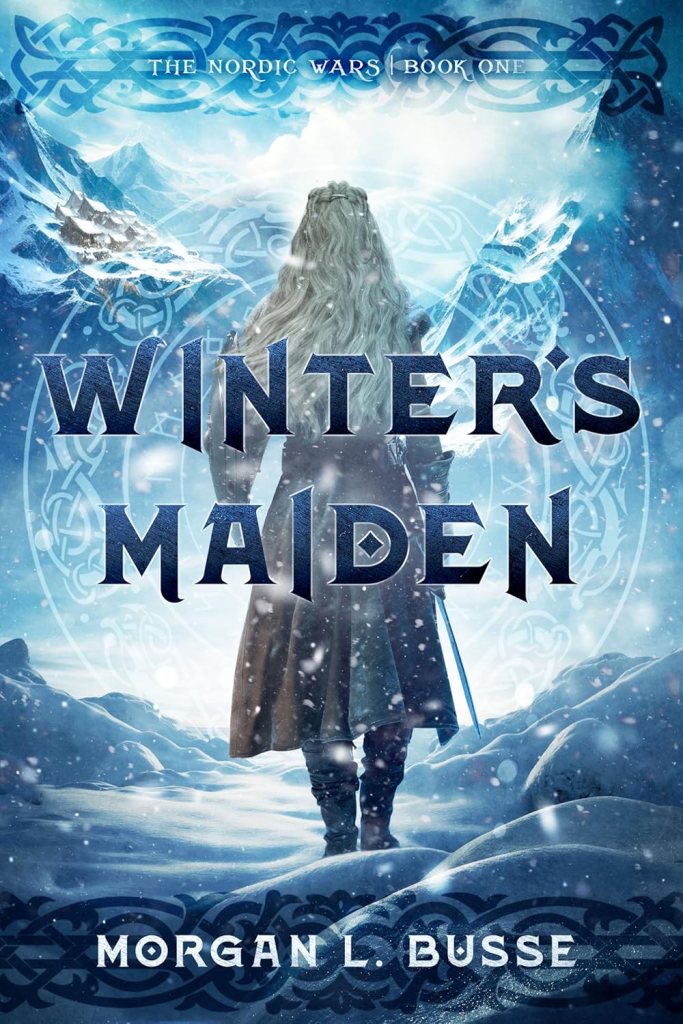
Morgan L. Busse

“I keep telling myself this is a season, and someday I will have more time to write again. Right now, my babies need me more than I need to write, so for now, I am content with that. But I keep writing down ideas and brainstorming and daydreaming and hope that in those moments of writing, no matter how few and far between or close together, that all the mental plotting will pay off as I get words on the page.”

Julie Harbinson

“I have three kids aged 3 and under and I’m still figuring this out. It’s helped me to become okay with being in a season where I don’t write much if at all sometimes. Right now, I write for joy when I can. Lately it’s worked really well to get up early, have my coffee and read the Bible, and then write until the kids wake up.”

Rosemary Johnson

Write When the Kids are in Bed!

“For me, I usually post social media posts before my girls wake up in the morning (I usually don’t get up that much earlier, but it helps me feel productive as a writer first thing). I have a 5.5 and a 2 year old, so my oldest does go to school for half days. When she is at school and my youngest naps, I use that time to write or edit (if im lucky that’s 2 hours every afternoon). Then my girls go to bed at 7pm, so I usually try my best to write or read every evening (usually another 2ish hours).

On the weekends, my husband and I take turns being productive/watching the girls so the other can have a longer period to be productive. I usually try not to work on writing or author stuff while my girls are awake. That’s a personal decision tho haha and it changes and depends on the age of your babies. I get a ton of writing done with a newborn, but I know that’s not the same for others haha.”

Taylor Pence

Whatever your hand finds to do, do it with all your might, for in the realm of the dead, where you are going, there is neither working nor planning nor knowledge nor wisdom.

Ecc 9:10

“I’m going to come back and edit this comment once I’m done cooking dinner, lol!
EDIT: I am finally back (made/cleaned up dinner, chasing kids, getting ice cream with my bro who is in town for work, and feeding a baby…phew!).

I have two kiddos, one is 2.5, the other is almost 4 months. It’s hard to get anything done. My toddler likes to follow me everywhere, and while my baby is amazing, she is still a baby. I don’t know that I have any of this figured out yet, but right now, I typically write at night once they’re in bed, so my writing time can range from 10 min – 2 hours depending on how tired I am. It’s very slow going right now, but I’m trying to get back into typing on my phone while putting the baby to sleep.”

Julie Harbison

“Do you see someone skilled in their work? They will serve before kings; they will not serve before officials of low rank.”

Proverbs 22:29

Stick to a Schedule!

“I’m a homeschooling mom of three kids, ages 12, 8, and 3. I’ll be fully honest. It was pretty overwhelming to be pregnant or dealing with a younger baby and write at the same time, so I took a lot of breaks during those seasons. Otherwise, my older kids would buddy up to play outside, and I wrote while my youngest napped. I keep my kids on a routine/schedule so that they sleep roughly about the same time every night. This allows me to do at least 1-1.5 hours of writing/editing every morning before anyone else is up.

I used to live near my parents, who could provide childcare, and that allowed me to get even more writing done. But now that I’ve moved across the country, my writing time is pretty scarce. All the more critical that I stay on my schedule.”

Christina Kuhn

“For me, early mornings are non-negotiable if I want to get anything done. I go to bed early and get up around 4:30 or so. I struggle with brief sprints, so I really treasure having a solid 1.5 hours or so to sit and focus on writing. I can get a decent amount done, and it makes me feel so “free” throughout the rest of my crazy mom/homeschooling day.

Proverbs 31 is a great chapter to look at for moms who are also writers! We can be industrious while still taking care of our homes and families. It can be tough to balance, but I’m thankful Scripture makes it clear that it’s possible to do both well.”

Kendra Warden

“She is clothed with strength and dignity; she can laugh at the days to come.”

Proverbs 31:25

Multitask or “Drive-By Writing”

“Our dining room was in the exact center of the house. I put my laptop on the table and made a rule for myself that I had to write 1 sentence every time I passed it. That got me to my 1000 words a day goal and I never stopped to work for more than a minute or two.”

E. A. Comiskey

“I first started writing seriously again when I had a nine month old and a 4 year old. Now they’re 17 and 14 and … usually are ignoring me. I basically just wrote whenever I could. As they got a little older, were sleeping through the night, and had a said bedtime, I’d usually put them to bed at 8 and then write for an hour every night. I also wrote waiting for their gymnastics class to end, in doctor’s waiting rooms, on park benches… You just have to grab the time you’re given and go for it.”

Heidi Lyn Burke

“lol I do drive-by writing. I usually have google docs open on my phone and will work on a scene through the day. Most of my writing time is with kids on me or near me. I usually keep my goals low at around 500-1000 words a day. It all adds up.”

Cara Ruegg

“I do drive-by writing! My kids are older (8+), but my laptop and charger live on the counter. If I can squeeze in 15 minutes a few times a day while they’re awake, I call it a success. After food and conversation works best! That goes for all ages.”

Stacey Yaroszeufski

“I did a lot of world building and brainstorming while doing dishes. Especially when listening to inspiring music. 🥰 And while nursing I’d read, critique, chat with other writers, or check social media on my phone. And once the kids were in bed I’d sit with my laptop and type, next to my husband while he played video games or watched a show.”

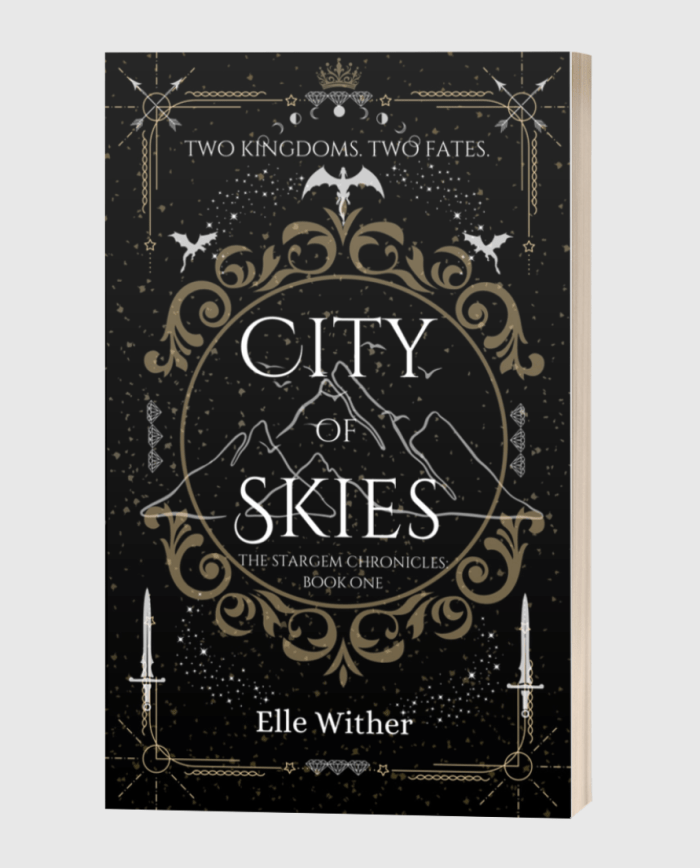
Elle Wither

“Whatever is true, whatever is noble, whatever is right, whatever is pure, whatever is lovely, whatever is admirable—if anything is excellent or praiseworthy—think about such things.”

Phil 4:8

“I always keep notes on my phone whenever the muse strikes so that when I do get to my writing time, I’ve got a list of ideas ready to go. I find I get more done in short focused bursts than when I have a whole day to write. I’m more creative when I’m forced to do it quickly. Driving time is also great to think through scenes or identify plot holes.”

A.E. Dinsmoor

Surround Yourself with Supportive People

“I have a 14, 11, and 9 year old at home, and most of my writing these days is done on my weekly writing nights with RJ Conte—basically we do word sprints for an hour or two and check in with each other to share word counts and snippets of what we’ve written. At the end of the evening we call and read each other what we wrote (if we feel ready to share it). It’s the best!! Doing it once a week is very low pressure but I still get some consistent (slow) progress on projects, and sometimes it gets my momentum going so that I want to keep working on it for days afterward!

I’m by no means a full-time writer. I consider myself more of an artist-hobbyist. But I’m glad to keep creating anyway—I couldn’t create as much as I do without supportive friends! 🥰 So my advice is to pick a consistent day/time and have an accountability partner or two to team up with. It’s satisfying to at least have some progress each week even in the middle of busy parenting and work!”
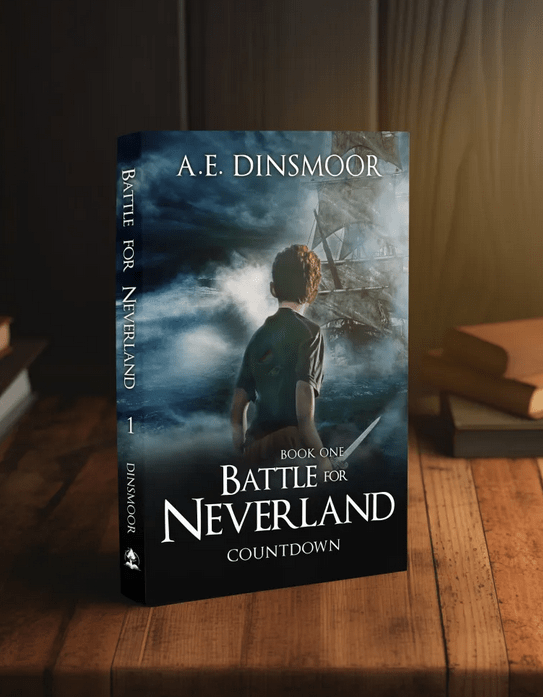
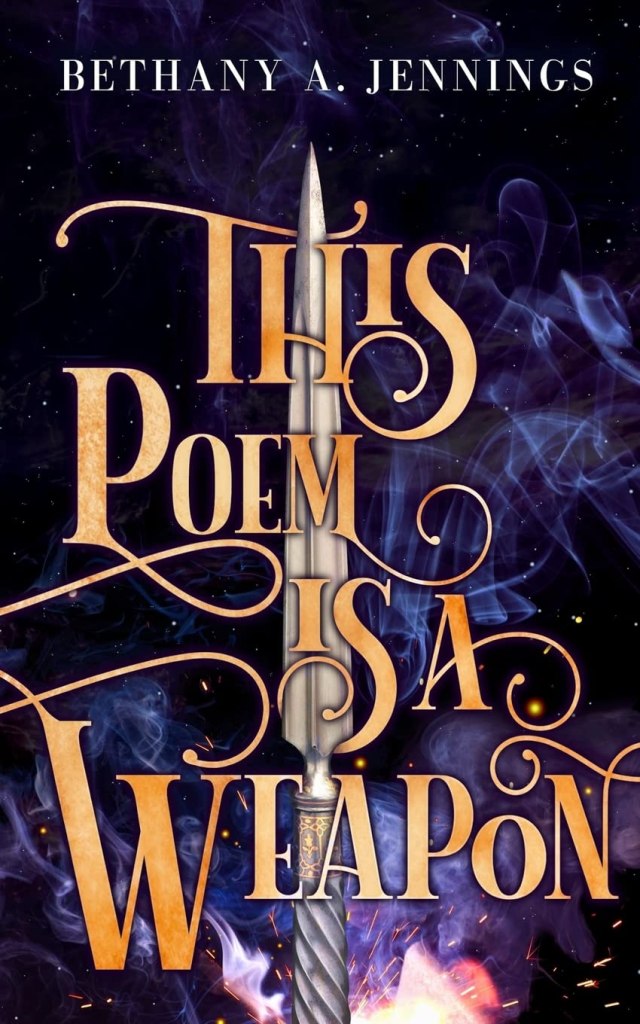
Bethany A. Jennings

“My husband is very supportive of me and helps so much! Find a couple good friends to cheer you on and champion you. It makes a world of difference.”

A.E. Dinsmoor

“I rely on my husband or outside help like occasionally my mom or one of my brothers to take the kids so I can get more time. I’m lucky that my husband works from home 7-3 and gets the full government parental leave offered here in Canada. Things are a bit hectic right now with a newborn and three other little kids but I fully anticipate lots of writing time later on over the course of his leave.”

Selina de Luca

Try Dictation (Voice to Text)

“Out of desperation I tried something totally different. Voice to text has been a big help. Then I take 10 to 15 minutes at night to organize it into sections, but I’m still in the planning stage. I have the story outlined, specific dialogue for important scenes, extensive world building, and character sketches. I should be ready to start compiling and do the actual writing next week.
It’s far different than the ways I’ve written before, but I’m in a much better place than I’ve ever been. I’m feeling confident that I can actually finish a WIP for the first time. This is working for me, but you do what works for you.”

Naomi Talitha

“I know a lot of moms who use dictation and get a lot of writing done while they’re doing chores around the house! I’ve done that a little bit, I’m dictating this comment right now while pumping breast milk, haha. It will take practice for me to use it more for my actual drafting! But I know others who have had success doing that. I have definitely done it here and there though, a few times dictating for example while making supper in the kitchen or something. Multitasking!”

Selina de Luca

Have a Backup Plan

“Try to have a backup plan to help get around especially chaotic days. For example, I identify my writing time for the day, as well as two potential backup options. This way, if my plans go sideways, I know I have another opportunity waiting for me (even if that’s after they’ve gone to bed). Then I just aim to write for at least 10 minutes, which usually goes a bit longer.”

Erin P.T. Canning

Include Your Kids in the Journey

“I’m a mom of three under 7 and all have varying special/medical needs as well. It is very overwhelming, but also an enormous joy. I try to incorporate the kids in whatever I am doing, from acting out scenes, to listening to a passage, to working on artwork. They are so excited and proud to “help mommy write.” I actually just gave each of them a copy of my latest and signed a message to them thanking them for being my helpers.

They have taken that honor so seriously. And coffee. Coffee is amazing. 😅

A.E. Dinsmoor

“I homeschool my 10 yr old son and (since he’s full of stories too) we have a section of his school day that is writing a story. I squeeze some words into a notebook then along with him. We also attend a local writer’s group together. “

Jaymi Mozeak

“Oh, that my words were written! Oh, that they were inscribed in a book! That they were engraved on a rock with an iron pen and lead, forever! For I know that my Redeemer lives, And He shall stand at last on the earth.”

Job 19:23-25

“It’s been really great writing with kids. They are my inspiration. I warned them anything snarky they say can be used in a book. My teen daughter writes too now. She’s working on her third novel.
The theme of my book is Psalm 42:11–“Why art thou cast down, O my soul? and why art thou disquieted within me? hope thou in God…” And it’s an especially important truth to remember when raising children.

There’ll be times when you’re overwhelmed and need wisdom. So even though the book is fantasy, there are elements of truths I’ve learned along the way in my own life.”

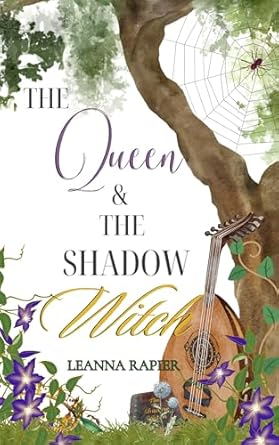
Leanna Rapier

Take a Break From the Kids

“For the first time ever, I am spending the night in a hotel room to get some writing done. I checked in at 3 PM, wrote for about three hours. Drove to band practice because it’s not far from the hotel I’m staying at, and then when I got back, I wrote for another three hours. The time went by so fast it’s already after midnight. I wrote over 6,000 words in two sittings. I have no one to worry about but myself.
I really needed this break because my kids have special needs (they have autism and genetic deletions). I think maybe I need to do this every year for NaNoWriMo. I am astonished at how much I wrote and how the lack of distractions worked on me. Now I must admit, most of the writing is painfully bad but at least I’m writing!”

Alexandra Owen

“My daughter is nearly four. What I have learnt to do is if we do something fun (like lunch out), the deal when we get back is we both get “calm time.” This means she can watch cartoons or play in her room for an hour. I’ve phrased it as part of the deal of getting a treat out.
I’ve found if I say I’m doing work, she’ll want my attention for everything. If we are both having calm time, then she seems quite happy to amuse herself.”

Rachael Marie

“I focus on teaching independence to my kids to give myself extra breaks.”

Christina Kuhn

Take Care of Yourself

“Personal nutrition is key for having the brain/energy capacity to write. I absolutely have to make sure I eat enough protein if I’m going to have the brain power to write and be creative, which surprisingly at this stage, I often do. I have to take care of my body to take care of my mind…”

Ellyn Franklin

Your Stories Still Matter (Hugely)!

“One bible verse I like to reflect on is Matthew 13:34: ‘All these things Jesus spoke in parables to the multitudes: and without parables he did not speak to them.’ Jesus was the ultimate storyteller and this verse proves the value of storytelling!”

Cara Ruegg

“My kids are 2 and almost 4 and writing makes me feel sane, and healthy, and more myself which makes me a better wife and mother and more balanced person. I love that!”

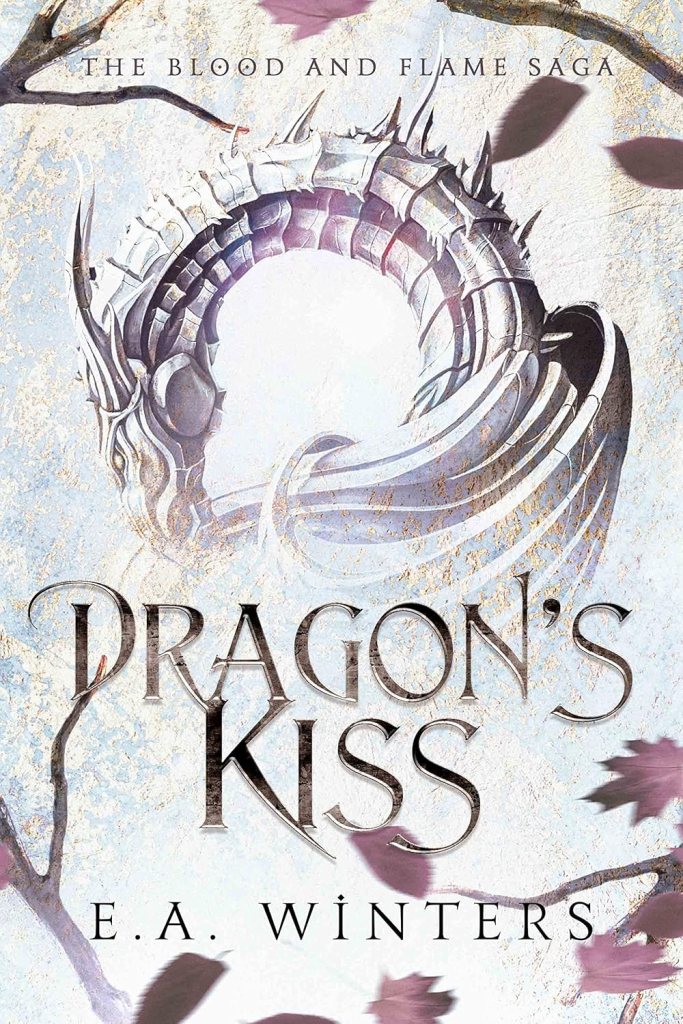
E.A. Winters

“Truly loving what I do keeps me going. It is a calling for me that I really see the Lord blessing, so writing brings me joy — even when I’m dead tired. My goal is that when someone is reading or hearing something I write, ‘many will see it and fear, and will call upon the name of the LORD.’ This is the desire and motivation that keeps me going, even through the little years of parenting. Whether I’m penning fiction, gospel encouragement, or anything else, I want it to be for His praise, and so that others see Him reflected in whatever I write.”

A.E. Dinsmoor

What are your writing/momming tips?

Comment below with your own advice to support fellow writer moms! Or message our team if you’d like your suggestions and book to be featured!


Hi, I’m Caylah Coffeen, a freelance editor and marketer of sci-fi and fantasy books. I love reading and writing and am a follower of Jesus Christ.

I’ve worked for Monster Ivy Publishing and Eschler Editing, and am currently a weekly editor with Havok Publishing. Reach out to chat about books and publishing!

Thanks for stopping by my website! I hope you’ve found some helpful resources about writing and publishing. If you liked this article, here’s some more free content…

A tall Asian woman and a shorter white woman with a brown wavy bob hug in front of a library fireplace, smiling.

Author Talk with Rea Frey – in Conversation with Georgina Cross

Photo from left to right, Georgina Cross and Rea Frey

by Caylah Coffeen

Rea Frey (Nashville), the award-winning author of 4 fiction and 4 nonfiction books, joins Georgina Cross (Huntsville), the author of 6 suspense novels, to discuss her new release In Every Life. Thank you to the South Huntsville Public Library and The Snail on the Wall for hosting this event.

Georgina: So we’re, like, real friends?

Rea: (laughs) Yes, real friends.

Georgina: Well, we first met because we have the same agent. But we just talked for 3 hours at our 3 pm “dinner.” Real friends! Rea was a couple years ahead of me when we met, so she’s someone I’ve looked up to and learned from.

Rea: Well, this is one of the coolest part of being an author – you find your people.

Georgina: Yes! And complain to them, and troubleshoot – we’re still learning from each other. I have 6 books out now, just started my 7th. And you just released your 8th and are writing your 9th!

Rea: That’s right. I just released In Every Life, out August 6th.

Georgina: So you’re beating me now!

Rea: (laughs) It’s not a competition!

Georgina: So what do you write and how did you get published?

Rea: I write thrillers and women’s or book club fiction. I’m with 2 different publishers for the 2 genres. The first book I wrote, I didn’t even know it was thriller. I just wrote the book I loved and the publisher who gave me the book deal said it was thriller.

Georgina: We both started out similarly – we wanted to write the book we wanted to write. But they try to fit you in a genre once you get a book deal. It’s a business, and it helps them sell your books.

Rea: Yes, so after my first book deal, they wanted me to keep writing thrillers. I had to suddenly manufacture books in that genre. I started in fiction, and didn’t know how to get published. I got published at 22 with a sketchy company and it bombed. So I switched to nonfiction, but it didn’t bring me joy. I finally switched back to fiction and my first book, Not My Daughter, poured out of me in a month. By then I knew enough about the industry to land an agent, then a two-book deal. I hadn’t written fiction in 10 years and suddenly I had really tight deadlines. I dealt with a lot of imposter syndrome.

Georgina: You also wanted to write women’s fiction.

Rea: Well that just came to me too. I was out of contract with my first publisher and fell back into my original process where I didn’t know what genre I was writing. I just wrote. I’ve been chasing that feeling from my debut book – when I had no one telling me what to write, and wasn’t put in a genre box. We feel a huge pressure to market and sell our books. We’re creatives, not marketers. I’m putting out 2 books a year and you wouldn’t believe how little time there is to write – it’s all about everything else. I’m trying to push back against that.

Georgina: We’ve both decided to go back to our roots, writing what we love. My 7th, your 9th book. My mind is dark. I’ll always write thriller. But my dad said I’m almost going toward horror. And I don’t want people to say “it’s too unbelievable” if I take a step toward magic realism. I write fiction because I can do what I want!

Rea: Right, can “a story you love” be a genre?

Author Quirks!

A young woman with short, wavy, light brown hair sits at a wood table, cheerfully signing a stack of paperback books.
Photo Credit: Georgina Cross

Georgina: Well, let’s do a lightning round of questions so the audience can get to know you a bit more before we dig into your new release. Are you a morning or night person?

Rea: Morning!

Georgina: Big city or small town?

Rea: I used to have said big city, I’m from Nashville, but now I’d definitely say small town. I hate the traffic.

Georgina: Crowds or intimate gatherings?

Rea: Intimate gatherings, definitely!

Georgina: What’s your favorite snack?

Rea: You know, I really don’t snack anymore, though it used to be fruit.

Georgina: That’s right, your nonfiction books are about nutrition and you work out a lot. I always have snacks with me in case my blood sugar drops. We were at an event together, and you came up to me and said you were dying, hadn’t eaten all day, and I remember offering you one of my snacks. It was a Cliff Bark and you just gave it a look like, “what’s this?”

Rea: (laughs) Did I even eat it?

Georgina: You were just tearing little bits off! I thought, what a waste of my Cliff Bar.

Rea: It’s just so processed. If you do anything for your health, cut out seed oils, you’ll feel so much better.

Georgina: What do you do to relax?

Rea: I just got a rescue dog, an Australian cattle dog, so not relaxing, because they need so much exercise! But I love movement – swimming, hiking, laying in sun. I’ll also watch a movie with family, go out with friends.

Georgina: If you could only take 2 things from your house if it was on fire, what would you take (aside from your husband and daughter)?

Rea: My dog definitely! Because of my tour, I won’t see my daughter for 8 days, and that’s the longest I’ve ever left her (she’s 12 now). But almost cried leaving my dog today. Otherwise, I’m not very materialistic. I had a tiny home as a writing study, filled with books by my clients (I also help authors get published) and limited edition ones. It actually did burn down and I lost everything!

Georgina: Sorry! Didn’t mean to bring up trauma here!

Rea: Yeah, Georgina! No, it’s okay. My husband rebuilt it simpler, and I actually like it better now. It helps me come up with ideas when I don’t have so much bombarding me. Now, I guess I’d also take the framed photo of Sophie’s first ultrasound, which I don’t have a digital copy of.

Georgina: Okay, you have to describe your morning ritual, it’s fascinating. You’ve scaled it down, right?

Rea: Actually, I scaled it up. I’ve really gotten into fascia lately. So I take a block and move it all over the muscles in my face – there’s so much tension in our face that we don’t realize.

Georgina: …

Audience: …

Georgina: You get up in the morning… and the first thing you do is rub a block all over your face?

Rea: (laughs) Yes!

Georgina: Are you still greeting the sun too?

Rea: Oh yes, I usually get up before the sun rises.

Georgina: I have a damn note on my coffee machine that says “greet the sun” because she told me to do that.

Rea: We’re so out of touch with our circadian rhythm because of technology. So I go outside, get the sun in my eyeballs first thing, and it signals the right hormones to activate. I’ll get my feet in earth too. I dry brush my skin, take a cold shower if can’t take an ice bath, journal, meditate of course – the first hour is for me, then my husband and I have a coffee and chat by the pool. And these days I’ll walk the dog.

Georgina: You dry brush your body every day?

Rea: Yes, it’s great for detoxing.

Georgina: And you still have time to write 8 books!

Rea: Because I take care of myself, take time for myself!

Georgina: I think about greeting the sun, but I still haven’t.

Rea: In a whole year?!

Georgina: I look at the sticky note and think, that sounds lovely, then just don’t?

Book Release – In Every Life

A stack of books titled In Every Life by Rea Frey rests on a table. The cover reveals an upside-down auburn woman in a lavender dress against a green field. The spine splits her body in half lengthwise. Half of her is visible on the front, and half on the back cover of the book.
Photo credit: Georgina Cross

Georgina: Alright, we’ve got to talk about your new book, In Every Life.

Rea: Yes! So it’s about a newly wed couple who’s really happy together, but then the husband gets cancer, and comes up with this crazy idea – he wants Harper to find new love before he dies. And suddenly her old flame who she hasn’t met in 10 years shows up. She hasn’t settled (for second best) in life, but she does live with a lot of what-ifs. Harper wanted to be an artist in New York, wanted to go all in with this guy, but she didn’t. The book takes a magical realism turn when she makes several wishes and wakes up in New York with her ideal life. The book splits into 3 timelines – what is, what was, and what-if. This book was inspired by two friends whose wife was diagnosed with leukemia and their whole life was consumed with survival. Cancer became their whole lives, when they were so joyful and active before. I love playing with time and how one little decision can put us on another path entirely (this theme is often called “sliding doors”).

Georgina: Your book last year had a lost love too. So I’ve wondered, who is Rea’s lost love?

Rea: I had a starter marriage when I was 22, a practice marriage I like to say. After the divorce I had a 6 month steamy connection with a best friend. It was messy. I moved away to Chicago, swore off men and dating. We didn’t really have closure so I have wondered. I had just started dating my now-husband when this flame called me and said he wanted to be together for real. I said no. 15 years of marriage later and I’m happy – I don’t hold on to things like that. Not everyone has “the one that got away,” but it’s relatable.

Georgina: So I know I get super excited to write certain scenes. Which part of the book was your favorite – the what is, what was, or what if timeline?

Rea: The what-if is new, so it’s fun to put myself in that position. The “what is” and Harper having to face the end of a relationship after only 2 years was hard to write but really important, I had to put myself in those shoes, to think of losing someone you’re still getting to know. Her whole world becomes about him, but she has to think beyond him, pre-grieving almost. So I think that’s my favorite timeline.

Georgina: Are you a linear writer? You wrote Ch 1 to the end in that order even with the switching timelines?

Rea: Yes, I write them how they appear, not in different chunks, but in the final order.

Georgina: We’ve both just ended our contracts with publishers – we’re in the same place now. What are you looking forward to next?

Rea: As creatives, we need space, time to process. When I used to think about writing I was in the woods, burning candles. I’d walk for hours and come back, totally immersed in it. In our crazy digital world we don’t even have time to think these days. We fill our time with content, consume so much. I’ve gotten away from that because I can’t come up with ideas otherwise. There’s no WiFi in my writing tiny house. Not even candles now, because that’s what burned it down! It was the goddess of words statue that lit up. I don’t have anything extraneous anymore.

Georgina: I write fiction because I want to make stuff up. It’ll be interesting now I’m a free agent to go to a new publisher and define my own stuff. It’s fun for a story to have unbelievable elements. I want to include some paranormal elements without people saying, “but this is supposed to be thriller.”

Rea: Yes! Harper’s friends from In Every Life give her an oracle deck, tell her to burn some sage and stuff under the full moon and make 3 wishes. She doesn’t believe much in it, till she wakes up in an alternate universe! I even included a full moon ritual in the back of the book.

Georgina: I’m Chinese and we’re super superstitious… so I haven’t tried that ritual.

Rea: Ooh you have to. I swear, if I shuffle an oracle deck, one will fly out randomly. I have friends who say they always pick one that’s just perfect for them.

Audience Questions

Q: How do you determine whether to continue on with a character’s story in a sequel or write a standalone novel?

Rea: Back with my first book, I had to choose between 2 publishers – one wanted a sequel and the other wanted a standalone. I went with the one who wanted a standalone. It could have taken my career a whole different route, if I’d tried the sequel path, but I’m glad I didn’t. Once I’m finished with a story, I’m finished. I always write standalones.

Georgina: I’ve never tried writing sequels. Sometimes I think it’d be easier not to have to restart with a whole cast of characters every time. But I wonder if I’d remember all the details from my first book or forget them. And after ripping your book apart so much in editing, you’ll be happy enough to see a new set of characters!

Q: How do you deal with writers block with such strict deadlines?

Georgina: Ask for an extension!

Rea: So I’ve had some crazy deadlines like 3 months to write a whole book when all I started with was a proposal. I already had writer’s block found a prompt that was really interesting and wrote a 10 page proposal. It was accepted and my publisher wanted it in 3 months! I sat there for a month with no idea what to do. I took a lot of walks. I don’t sit and try to write and force it – I allow myself space for things to come to me. That’s actually my best received book and I had zero attachment to it! Sometimes it’s good to have a deadline or writing a book can drag out to a year.

Georgina: Seriously though, ask for an extension. If Simone Biles can, I can. I called and asked – the worst they can say is no. They weren’t happy. It’s a business – they have a whole line of other professionals and a schedule that gets bumped too. But they granted it. Sometimes things just happen in life and you need to feel a bit freer to get it done.

Rea: Books get written by writing consistently. I tell myself, if write 1000 words a day, that’s a book in 2 months. I’m a fast writer, so I can hit that in 30 min. If I can’t dedicate 30 min out of my day to making this work… I mean, it’s totally doable. If I instead give myself 4-6 months to write a book, I fill that time with other things. I need the specific daily goal.

Q: What was your social media presence like before publishing?

Rea: I hate social media, I think it’s responsible for a lot of mental illness. I’ve always resisted it- I want to be an author without it. I finally got on and thought it was so dumb. When I sold my first book, I picked Instagram, then added Twitter, LinkedIn, and Facebook. Then a year or two in said I’m not doing this, and deleted everything but IG. My publishers weren’t happy, and I’m probably not reaching as many people as I could otherwise, but I’m happier. I have met phenomenal readers on Instagram, I’ll say that. I’ve never had negative experiences.

Georgina: I’ve come to terms with it. I don’t think there’s a solution. We unfortunately have to have a social presence. It’s so rare to make it without it.

Rea: But does it sell books?

Georgina: It gets reviewers.

Rea: I’ve worked with authors for 20 years. It’s not the end all be all. Social media can sell but it’s more of an energy sucker, no one can figure out, it regularly changes, and there’s no end date to posting. Publishers want to see 50-100K engaged followers, which is crazy. We’re not designed to have connections with that many people. Publishers have decided the onus to market is on us. But it’s OUR time. That’s not what we signed up for. If we collectively decide “no,” we’re not doing that, things will have to change.

Georgina: I always tell the writers in my writers group, don’t split your brain energy between socials, paying for training, and writing. Step 1: declare yourself an author. Step 2: write. Step 3: finish the book! Don’t worry about all the other things till you finish your book.

Rea: There are other ways. Word of mouth is still the MOST effective sales tool. I think privacy will come back around again. It’s exhausting. I want to be a writer. That’s what I am.

Georgina: Well thank you all so much for coming and please stick around to look at our books!

Support Local Authors!

Support Rea Frey by purchasing her books through Huntsville’s local indie bookstore The Snail on the Wall. Find her on Instagram @reafreyauthor.

Find Georgina Cross’ books online too and follow her on Instagram @georginacrossauthor.


Hi, I’m Caylah Coffeen, a freelance editor and marketer of sci-fi and fantasy books. I love reading and writing and am a follower of Jesus Christ.

I’ve worked for Monster Ivy Publishing and Eschler Editing, and am currently a weekly editor with Havok Publishing. Reach out to chat about books and publishing!

Thanks for stopping by my website! I hope you’ve found some helpful resources about reading, writing, and publishing. If you liked this article, here’s some more free content…

A huge wave crashes into a line of coastal houses, a stormy sky behind them.

Writing with Childlike Faith

Guest Post By Dana Bell

In 2018 I was done with writing. Being a published writer was not at all what I thought it would be, and the stress of having to complete multiple projects burned me out. The last thing I wanted to do was write.

Know why I didn’t quit? A couple reasons. My ex had tried to take everything I cared about away from me. I wasn’t about to allow him to win. The other – I couldn’t imagine doing anything else.

Rediscovering the joy of writing

So, I began a journey to re-discover the joy and fun of writing. God played a huge part in that. I put aside all professional gigs and went back to fan-fiction. This genre taught me so much about being a writer and allowed me to practice the tricks of the trade. My goal: write between 1000 to 1500 words a day. That took me about an hour. By the end of summer, I’d gotten up to 3000 a day. Not a goal I had set for myself.

But I did not make the journey alone. Even when writing fan-fiction, I would sit down at my computer and pray one of two simple prayers:

“Thank you, Dad, for letting me write” or “Hey, Dad, you want to come and play?”

“Hey, Dad, you want to come and play?”

Dana Bell

From faith to a book deal

By the end of the year I sold my first romance novella. NO ONE sells their first romance.

I continued the practice of praying before I wrote, whether I was playing in someone else’s universe or crafting my own original work.

Yet there is one more element involved. It isn’t just prayer. It is faith. Faith so unshakeable I believe that when I sit down to write God will give me the words. My fingers get going on the keys and don’t stop until I’m finished for the day, however many words I write.

Speaking of faith, I actually asked God the other day why He puts up with me. I’m not exactly the most faithful of children. I was curious. Know what the answer was? In that amused and tickled father way He answered, “Because you have the faith of a child.”

That startled me. Of all the answers He could have given, He gave me one I didn’t expect.

My ability to speak with God like this is new. I talked to Him earlier about this article and He said, “I’ll give you words.” So, I quit worrying about it and trusted He would do as He promised. Did I pray first? Of course, I did.

Prayer doesn’t have to be complicated

One thing few people teach about prayer is that it doesn’t have to be complicated. One word can be a prayer. I know. I’ve done this. As I recall, the prayer was, “Father!” I didn’t need to say more.

I have another way to pray, which I use when I have no idea what to say. Paul taught about it in the Bible, and yes, I can Speak in Tongues anytime I want. I don’t know the exact language, but I know the country and region it comes from. Since I know many Christians teach this gift is gone, I won’t go into detail. Though I could teach endlessly about the Gifts of the Spirit, all of which I’ve used at different times in my life.

Rare though it is, I walk in both the natural and supernatural world. I dream dreams and have visions. That’s Acts 2:17.

What does this have to do with writing, faith and prayer? Everything.

God had proven himself faithful all throughout my life. I was saved as a child. I even spoke in tongues, but I didn’t know what it was and quit doing it. Scared me.

He has taken care of me even when I did something stupid or didn’t deserve it. I fought off a purse snatcher when I lived in Boston. Serial rapists hunted around me when I lived in a Denver apartment complex. He sent an angel to watch over my home. I came home one night, and my neighbor told me the guys had been caught. They had lived on the second floor of my building. Recently, I almost lost my house because I had no job and no unemployment income. I went to God with my simple faith and said, “You’ve always taken care of me.” God provided, although not in the way I expected.

I still have my home. I even have a job now.

Have faith God will give you words

These are all acts of faith and the reason I place high value on them is because unless the writer believes God will give them words, their prayer won’t make any difference.

I have faith. I pray. I sit down. I write.

It is a sweet time with God. An Act of Worship.

Yes, writing is worship.

I know, normally we think of worship as church, music and some dancing. Speaking of dancing, Yeshua is a delightful dance partner. Won’t go into the story on how I know that.

Yet writing, when God is invited to be part of it, is worship. It is a father hanging out with his child, delighting in the talent he inspired and the willingness of his child to share it with Him.

I’ll add here that God has taught me a few tricks with writing. I’m a pantzer and had a horrible time finishing my earlier books. Not to mention, I work on multiple projects at once. I’ve learned to leave myself notes about unanswered questions, plot points I need to complete, or what the next scene is. For my last three books, this was a huge help.

Before I asked God to be part of my writing life, I struggled to get the words out. I thought I had to be inspired by the natural world, as many writers are led to believe. Now, I sit down, ask God to join me, and the words flow.

This is precious time with my heavenly father. Part of a rich relationship I share with Him. The Bible says to ask God for what we need. I’m bold enough to walk into His throne room and ask if can fall asleep in His lap when I have problems sleeping.

God has never said no.

My solid foundation

I will share a dream I had during a deeply troubled time.

I was in a house. Built on a rock. Right next to the ocean. It had glass windows along the side of the house and in the ceiling. Huge waves smashed into the house, over and over and over. No window broke. The house did not flood. Someone stood in the house with me. Years later I realized it was Yeshua. He just appeared in a different way than I had ever seen him before.

The dream interpretation was easy. I had my solid foundation. The waves were all the troubles I was going through. My house stood because of my childlike faith.

I recall this dream when I go through times of trouble.

Every writer needs faith. Open every writing session with prayer. Invite God to come and join you in your time of Worship.

About Dana Bell

Owned by a demanding Ocicat named Taj, Dana Bell lives in Colorado and enjoys writing tales about cats, places she’s lived and others she’s visited. She is the author of multiple titles including Bast’s Chosen Ones and Other Cat Adventures and Winter Awakening.

She also writes paranormal romances such as Bound by Blood: Idaho Vampires under the pen name Belle Blukat. As an editor she enjoys putting together anthologies with various themes and helping authors master their writing skills.


Thanks for stopping by my website! I hope you’ve found some helpful resources about reading, writing, and publishing. If you liked this article, here’s some more free content…

A split screen shows the portrait of a young brunette author on the left, and 2 rows of fantasy and sci-fi books on the right.

“Hope, Hope, Hope” – an Interview with Author Angela R. Watts

By Caylah Coffeen

You have a packed release schedule through January! Will you tell us about your upcoming books?

I am very excited for this year’s publication schedule. I set a personal, fun goal of launching nine books, and that number allowed for any anthology acceptances.

So far, I’ve had five releases this year, and the upcoming launches are, in no particular order of actual release:

War of the Fallen, Rogue Survivors #1 (space opera)

Icarus is Burning, Rogue Survivors #2 (space opera)

Of Fallen Gods, Rogue Survivors #3 (space opera)

Up From the Ashes, Glory Epoch Books #1 (post-apocalyptic, a series continuation from my bestselling and award-nominated series, The Infidel Books)

How to Campaign Your Book: A Simple Guide for Authors (nonfiction)

I might have more releases this year, but we’ll see. I also have a very solid launch schedule for 2024, too! Next year, I have multiple middle grade and adult titles set for release.

What do you love most about your new stories that you’re excited to share with readers?

Hope.

Hope, hope, hope.

I write fiction that shows hardships, trials, pain, sorrow, etc, but throughout the insanity, there is hope. My stories are intended to encourage. Inspire. And I pray that they offer readers a good story, with a lot of comfort.

I’ve gone through a great deal in my life. I could have given up. I could have turned away from the light. I could have, I could have…

I try to write stories with characters that face absolute chaos, but still, in the end, overcome. They live. They love. They hope. They do not stop or give up. These are themes in my stories that I cannot stop sharing… because the world is bleak, and tired, and wicked, but we do not have to be.

“They live. They love. They hope. They do not stop or give up.”

I hope my readers are inspired to live, and love, and hope, and dream, after reading these stories.

Can you share a moment when you felt being an author was incredibly satisfying?

I’m not sure if I can pick one. I find immense joy in writing, and I also am grateful for every step of the process. I find satisfaction and joy when I write, when I finish a draft, when I edit, when I format, and so forth. There’s also satisfaction, even if a bit wearisome, when a story releases into the world.

I think the one part of being an author that is always incredibly satisfying is getting a box (or two) of my own books. The feeling has not gotten old yet!

Many people have heard that being an author is difficult. What has your mental health journey been like as you stepped into this role?

I’ve never been able to relate to that perspective, so I’ll answer, but hopefully, my answer is not perceived as frivolous.

I have written since I was too young to even write: I told stories, illustrated them, and my family actually wrote the words down. Since then, I’ve never stopped writing stories. I wrote a lot of short stories and poems as a little kid.

When I was a preteen and such, one of my older sisters began to abuse me more often. During this time, I turned to fiction as a true escape. I gobbled up books, discovered anime, and of course, continued to write my own stories. I wrote some original things, and a lot of fanfiction. Writing, during this time of pain and fear, was therapy for me. I finished my first novella at age twelve, and shortly after this, the abuse stopped when the sister left.

From there, I quickly discovered the world of self-publishing. I kept writing novels, publishing them, and the like. Over the years, I’ve found my own routine, and my own pacing that works for me. I understand my routine isn’t for everyone, but writing is like breathing to me, and I write pretty much nonstop. I usually write daily, in whatever capacity, and a steady pace helps me complete stories and enjoy myself.

I do not view writing as a stressful act. I do not suffer or complain my way through the author life. It’s simply a part of me. When trials come, I conquer them the best I can, etc. I think the most difficult parts of the journey have been 1) marketing and publications do put a lot of stress on me physically, so I’ve also found a pattern and routine for this, so it isn’t too overwhelming for me and 2) many topics I research and write about are heavy, and difficult to ponder for too long, so usually, when I finish one of those scenes, I’ll give myself time to step away to mentally rest.

Overall, above everything, I keep a very close relationship with God, and pray throughout every story, every draft, every launch, and the like. God gives me these stories to watch and write out. Without His guidance, I would not be here.

How has your relationship with God shaped your career as an author and vice versa?

I’ve been a Believer since I was very, very young, and I’ve never strayed from the Lord. I do not say this to brag, but as a very simple fact, because many Believers have boat-rocking testimonies, and I’ve never had any grand “come to Jesus meeting”. My life has been difficult, yes, with multiple family issues, abuse, health diagnosis, and more, but I have clung to God throughout it all.

As I mentioned, writing is a sort of therapy, and I work alongside the Lord through every story. So I would say my relationship with Christ has strengthened throughout my author journey. Through writing, I can tackle themes, questions, situations, etc, that I might not be able to handle, or even consider, without using fiction as the catalyst. God helps me work through questions, ideas, and much more, and in the end, not only have I drawn closer to Him in the process, but that story is also able to minister to another.

I’ve had suicidal readers tell me that my stories helped them hold on. I’ve had Believers tell me that my books opened their eyes, helped them with their mental health struggles, and strengthened their faith. I’ve also had people tell me that my books have helped them through their grieving process… Or that some of my books have made them laugh and see joy again.

I remember every message my readers send me, because it’s why I publish these books. I would write whether I published or not. But when I publish, it becomes about how the story can minister to others, and it is always encouraging to hear when my books help someone. To me, publishing is a way to minister, and serve, others, and give glory to the Lord.

Is there anything else you want to share with readers or aspiring authors (perhaps something you haven’t had a chance to share in interviews before, or a recent impactful moment)?

Recently, I’ve been discussing the hypocrisy of the author community with a dear friend.

I have seen many new authors chastened for writing a story “incorrectly”. I have seen many new authors shunned for newbie “mistakes”, or for differing opinions than the “in crowd”.

Authors insist that community is important… But we must remember, there is such a thing as the wrong community.

If you are a new, or seasoned, author, and are surrounding yourself with people, whether authors or readers, that do nothing but berate you — even when they insist it is to “help you” — step back.

The creative process should not be a true community effort. If voices are engulfing you, and throttling the story inside of you, step back. Do not let anyone change your soul, do not let anyone force you into a box.

Write, and create, at your own pace, with your own soul, and do not accept abuse in the name of “community.” The right, healthy, supportive community will come, but don’t accept any less beforehand. Your voice matters. Don’t let anyone stifle it. 

A young white woman with short, curly brown hair and blue eyes leans pensively against a stone wall wearing a puffy white blouse.

ANGELA R. WATTS is the bestselling and award-nominated author of The Infidel Books and the Remnant Trilogy. She’s been writing stories since she was little, and has over 28 works published. She also writes articles for a few magazines and publishers. When she’s not writing, Angela is a freelance editor, blogger, anime-lover, and artist. She lives in Tennessee with her family and many pets. Angela loves connecting with readers, and you can follow her on social media to stay up-to-date with releases, or contact her through her website.

As an Amazon Affiliate we earn on qualifying purchases.

A gold framed oval portrait of a smiling young blonde woman rests atop a blurred backdrop of ivy. A logo for Monster Ivy Publishing is stamped at the top right corner

Light Will Come: How Monster Ivy Publishing Saved Me

Guest Post By Amy Michelle Carpenter

*Trigger warnings: this story talks about suicidal ideations*

I’ve told the story of how I bought Monster Ivy Publishing many times. What I haven’t told is this part of the story. The gritty part. The part of the story where I encompass the darkness and light defined by the company’s brand–this part I’ve left out for various reasons, the same reasons that no one speaks out about these sorts of things.

Fear of rejection. Of never being able to take the words back. Of being deemed incompetent. Of people knowing the rawest, darkest parts of you. But this has been readily on my mind the past few days and when Caylah, our social media person, reached out to me asking for a story about my journey with the company, I took it as a sign from God that it’s time.

I have struggled with thoughts of suicide

For years, I have been struggling with suicidal ideations because of abuse experiences and anxiety.

However, I have never been as serious about acting on my feelings as I was two days before I found out about Monster Ivy’s planned closure back in 2021.

Despite having on-and-off feelings where I’d wished for death throughout the years, this moment felt very out of the blue. In hindsight, I truly believe it was an attempt from the devil who knew what was coming in a few days–who knew God would be calling me to His work in a way He hadn’t yet. In the depths of a black night, I was engulfed by an attack of darkness.

It completely overcame me with thoughts of worthlessness. I felt like everyone would be better off without me. My children would be better raised by someone without my lack of parenting skills. My husband and parents could give them a better chance at life.

And a continued list of things I can no longer remember. And that I no longer believe about myself.

This is the first time I did the research on how to do it. I slipped away and hyped myself up so that I could finally end things. And then, I didn’t do it. 

I walked away and crawled back into bed and, in the morning, the sun rose and light came. And I moved on from that odd and slightly random mental attack.

Monster Ivy Publishing gave me hope

About two days later, Mary Gray made the post that Monster Ivy was shutting down.

This is the part of the story I’ve told many times. The part where I was getting my Masters in publishing. The part where I had worked in the publishing industry in a variety of ways and had previously daydreamed about owning a company. The part where Monster Ivy was my favorite publishing house, and I just couldn’t let it go. The part where I studied and prayed and asked God, and even though the task seemed far too daunting, I knew that the company needed saving and that–even if others might be better equipped to do it–I might have been the only one at the moment willing to do so.

And so I bought the company.

I can say with full confidence that Monster Ivy has saved me. God knew that I needed that sense of purpose in my life. He knew that when the dark moments crept in and I told myself anyone else would do all my other jobs better than me that this one thing I could be confident in needing to be here for because no one else would do it.

The chains of darkness that were wrapped so tightly around me have slowly begun unwinding, as I have found a sense of cathartic relief and a better understanding of my own experiences through our stories, of the realities I’ve faced, and as I reached out for counseling and sought personal growth. Even recently, my husband supported my desire to leave our old home and go to Texas, and the fresh start has brought even more healing.

The light has come and continues to grow in my life. I only needed to wait two days for Him to start His work.

Darkness comes before the light

This story reminds me of another one. And I ask for forgiveness in sharing because I generally make a rule to only share Bible stories with our fans, but this felt so relevant to my own, I have reflected on it many, many times.

There was a young fourteen-year-old who was also lost and seeking answers. He said,

“I kneeled down and began to offer up the desires of my heart to God. I had scarcely done so, when immediately I was seized upon by some power which entirely overcame me, and had such an astonishing influence over me as to bind my tongue so that I could not speak. Thick darkness gathered around me, and it seemed to me for a time as if I were doomed to sudden destruction. 

But, exerting all my powers to call upon God to deliver me out of the power of this enemy which had seized upon me, and at the very moment when I was ready to sink into despair and abandon myself to destruction—not to an imaginary ruin, but to the power of some actual being from the unseen world, who had such marvelous power as I had never before felt in any being—just at this moment of great alarm, I saw a pillar of light exactly over my head, above the brightness of the sun, which descended gradually until it fell upon me.”

Jesus Sees Our Despair

In my church, we often skip over that gritty part of the story to tell only the beautiful part where this poor farm kid saw Jesus. But the truth is we all experience that pain. We all experience that overwhelming darkness. We all despair and suffer, often silently. And we all need to know that the light will come again.

Jesus is there. He loves you. He will rid the Earth of all the pain and damage and ache. And he can rid you of your aches and pains too.

The light may descend gradually, but it will come.

So, if you feel like all is lost (as I did), your hope may only be two days away. In an eventual morning, light will rise.

Allow yourself two days.

About Amy Michelle Carpenter

Amy Michelle Carpenter is the owner of Monster Ivy Publishing, a company of award-winning, bestselling book titles. Monster Ivy emphasizes “edgy, clean” fiction with a PG13 or less rating. The Kiss List was filmed as a movie by Marvista starring Megan Suri (Never Have I Ever) and Parminder Nagra (ER).

In her personal life, Michelle received her Masters from Western Colorado University where she studied directly under NYT bestselling author Kevin J. Anderson, and she is the author of several YA science fiction books


Hi, I’m Caylah Coffeen, a freelance editor and marketer of sci-fi and fantasy books. I love reading and writing and am a follower of Jesus Christ.

I’ve worked for Monster Ivy Publishing and Eschler Editing, and am currently a weekly editor with Havok Publishing. Reach out to chat about books and publishing!

Thanks for stopping by my website! I hope you’ve found some helpful resources about reading, writing, and publishing. If you liked this article, here’s some more free content…