Apparently I’m in the minority, but I much prefer reading stories set in antiquity than in medieval times and on. Due to fragmentary or absent records, many people might not even consider books about ancient times to be “historical” fiction. Such stories do tend to incorporate much more of myth, legend, and folklore (which is perhaps why I love them).
For this reading list, I’ve compiled historical fiction books set in the BC era, with a focus on Bronze Age empires and civilizations. I love the Greco-Roman and Egyptian world, but they make up the bulk of ancient historical fiction. It can be hard to find novels from the perspectives of any other ancient cultures!
But I’ve wrangled up some options which are intricately researched and can help you expand your story’s worldbuilding beyond Medieval European or Mediterranean analogues (I would LOVE to read more “bronze age fantasy”).
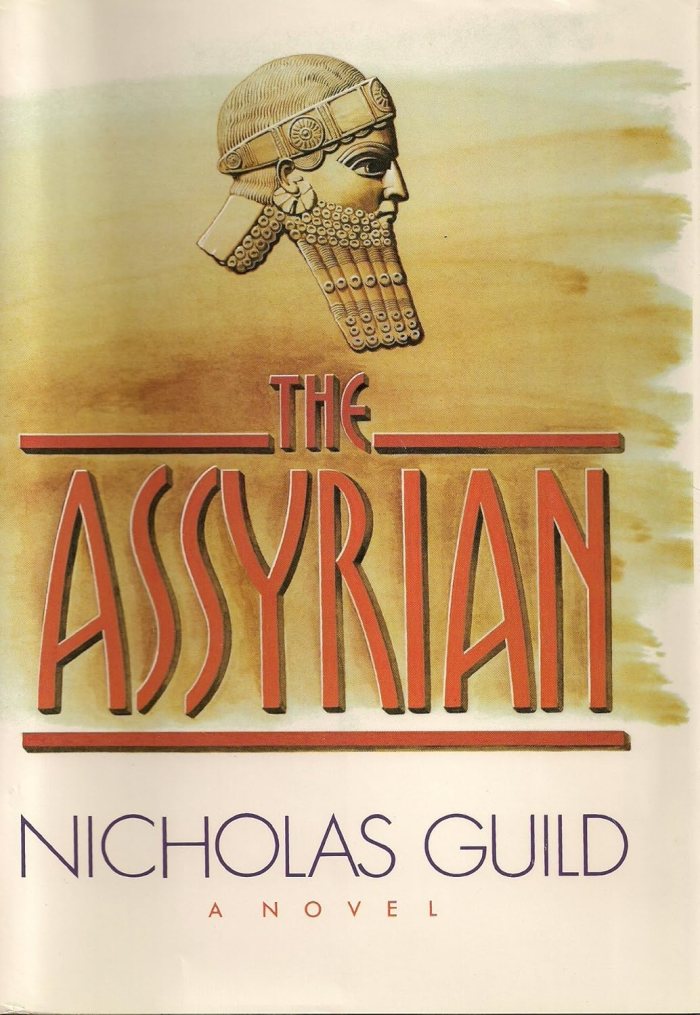
They were brothers, best friends, rivals in love. But, though it seemed that nothing could come between them, only one of them could become master of the dazzling Assyrian Empire that stretched from the Mediterranean to the western borders of India; only one could know the love of Esharhamat, the woman they both desired.
Seven centuries before Christ, the young Assyrian princes Tiglath Ashur and Esarhaddon were forced to compete fiercely against each other, for the greatest Empire the world had ever seen.
1315 BC. The Hittite Empire faces threats from Egypt, Assyria, and Mycenae. The birth of Prince Hattu should unite the Hittites in celebration.
But the Goddess Ishtar delivers a chilling omen: the boy will bring ruin, betrayal, and bloodshed. Thus, he grows up as an outcast, feared by his people, scorned by his father and hunted by prophecy.
Yet as war burns across the horizon, Hattu is drawn into the fray. Will he fulfill the goddess’s curse—or rewrite destiny itself?
Old and blind but still unyielding, Persian ambassador Cyrus Spitama breaks his silence in 445 BC, furious at Herodotus’ tales and determined to dictate the Persian truth of empires, wars, and the gods themselves.
He recounts a life spent at the heart of Darius’ court, surviving boars and palace coups, debating with Buddha and Confucius, taking an Indian wife, and witnessing the rise and fall of kings from Babylon to Cathay. His “travel memoir” becomes a sweeping counter-history to the Grecian perspective.
Note: If you’ve read Herodotus, you’ll understand why many readers say this is hard to get through.
Historical Fiction Set in North Africa
I couldn’t find any historical fiction set in Africa during antiquity, except about cultures bordering the Mediterranean. It’s hard enough to find pre-colonial fiction and records from Africa, let alone pre-Medieval ones. There are many great novels about Egypt, notably River God by Wilbur Smith, but essentially all other fiction set in Africa in antiquity focuses on myths and folklore, as oral histories were lost.
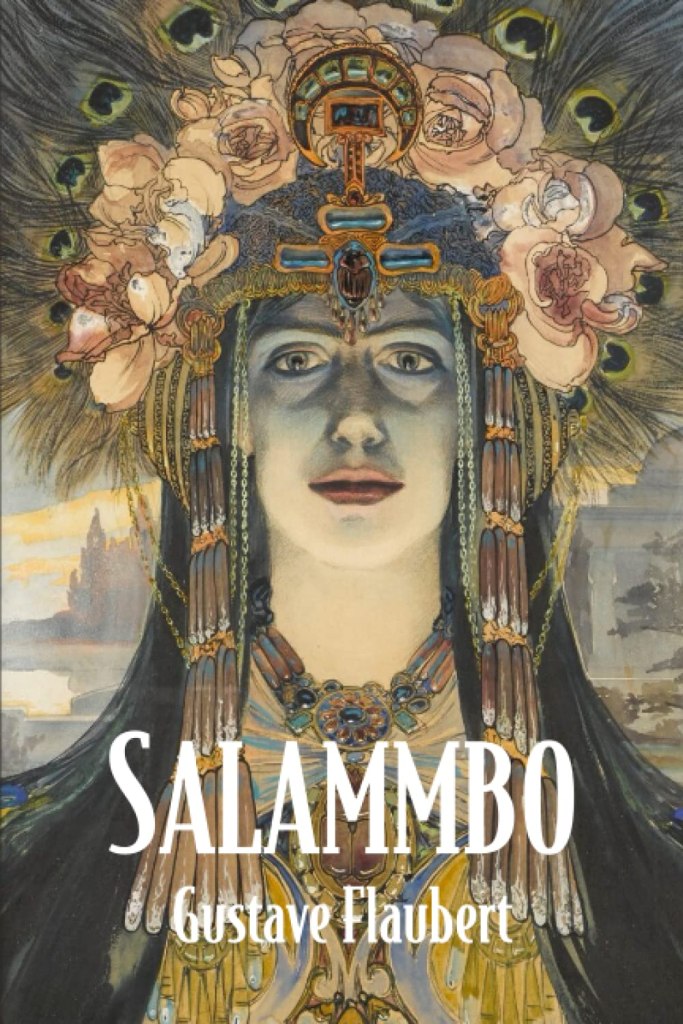
Carthage—an opulent superpower ruled by greed, gods who demand sacrifice, and citizens far too wealthy to fight their own battles. Following the end of the first Punic War, 20,000 mercenaries, still unpaid rise in fury, laying siege to the city.
A rebel warlord’s obsession with the high priestess Salammbò adds fuel to the flame, resulting in a clash of armies so savage the earth itself seems to bleed. Epic, operatic, and unflinching, this is War and Peace by way of the Punic Wars.
Historical Fiction Set in the Americas
The same problem exists concerning historical fiction about ancient civilizations of the Americas. Records were deliberately destroyed by conquistadors, relegating much of what we know to the areas of myth and anthropology. It’s even harder to find historical novels that have been translated into English by native authors.
Set amid the upheavals of the Maya civilization’s Late Classic period, House of the Waterlily follows Lady Winik, a young royal thrust into the rising danger and political chaos of a failing civilization.
As rival powers close in and the world she knows begins to fracture, Winik’s journey invites readers to explore the splendor and dangers of Mayan life, as seen through the lens of Kelli Carmean’s PhD in anthropology.
Centuries before Arthur and Merlin, the orphaned Celt Ainvar rises to master the druidic arts—mind, magic, healing, and war—becoming the unlikely soul-friend of the future warrior-king Vercingetorix.
Together they journey across a fractured Gaul, uniting the Celtic tribes in a defiant stand against Julius Caesar and the relentless legions of Rome.
Note: Yes, the antagonists in this are Roman – hard to avoid. But as the POV characters and culture are not, I let this slip in.
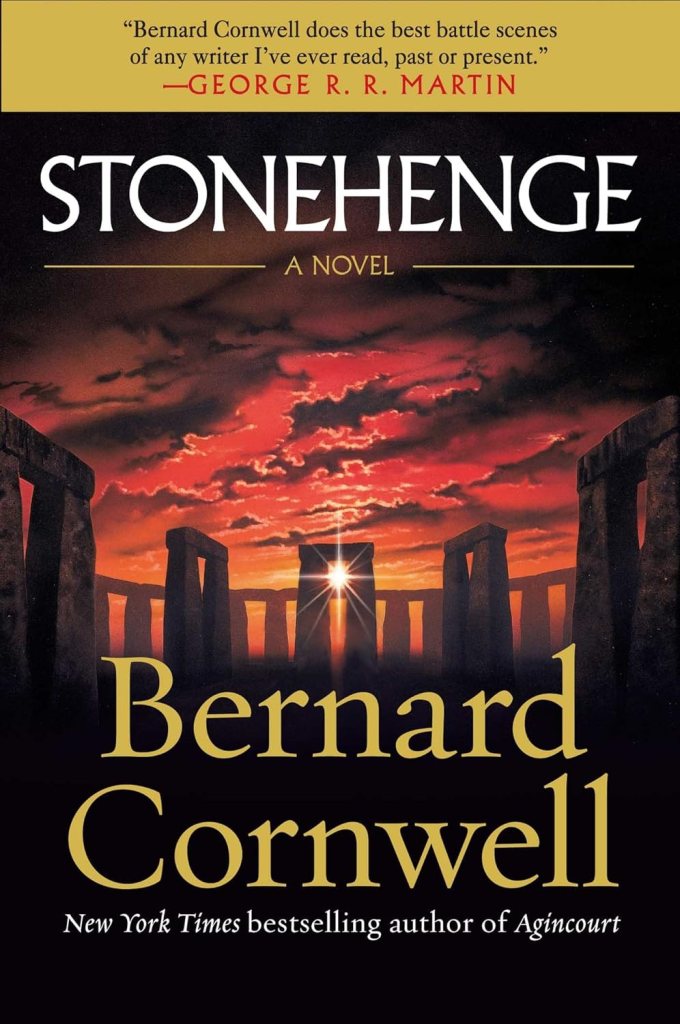
A dying stranger’s trove of gold ignites a deadly rivalry between three brothers. The eldest, Lengar, the warrior, harnesses his murderous ambition to take great power for his tribe.
Camaban becomes a feared wise man, and it is his vision that will force the youngest brother, Saban, to create a great temple where the gods will appear on earth. But when Saban falls in love with Aurenna, the sun bride destined to die for the gods, the great monument becomes a battleground.
Note: this gets into prehistory, but by the acclaimed author best known for his Saxon and Richard Sharpe stories.
Historical Fiction Set in Asia
Most novels set in ancient India are mythic retellings, taken from the delightfully massive epics the Ramayana and Mahabharata or other legends.
Chinese historical records from antiquity are apparently sparse, making accurate historical fiction difficult. I thought I’d be sure to find some fiction about the Warring States period and the first unified dynasty (Qin), or the Han dynasty’s Golden Age and the formation of the Silk Road, but almost everything (including the classic novel Romance of the Three Kingdoms) takes place starting in early AD around the fall of the Han dynasty.
It’s even harder to find examples of historical fiction set in antiquity from the rest of Asia, though it looks like Korea has some popular options (Goguryeo by Kim Jin-myung) that haven’t been translated into English yet.
Discover the ruthless origins of the famously peaceful Emperor Ashoka the Great.
A Brahmin prophesies that a legendary ruler will be born to the Mauryan ruler Bindusara, but the child is born frail and ordinary-looking. Shunned by his father, and bullied and humiliated by his elder brother Susima, prince Ashoka learns from an early age to be the master of his own fate.
Under the determined tutelage of his mother, and inspired by a spirited young woman, he begins to dream of ruling the vast empire.
India, third century BC: a conqueror from Greece has arrived on their doorstep. Chanakya, a wily political strategist looking for vengeance against the ruthless rulers of Magadha, seeks out a hidden heir. Moriya, raised by a tribe of peacock-tamers, is oblivious to his identity until Chanakya becomes his teacher.
The tentative young man, now christened Chandragupta, makes his way across the vast plains of Bharatvarsha to meet the famed invader Alexander, build an army of his own, and right the wrongs of his fathers.
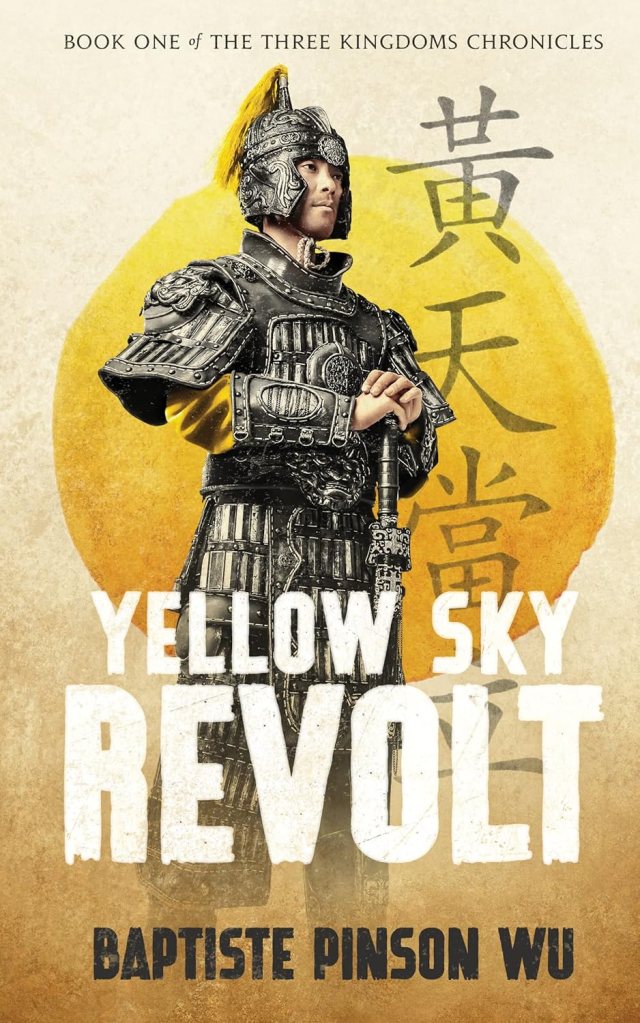
China, 184 AD: the Han dynasty is falling. Liao Hua, a young peasant boy, becomes the symbol of the Yellow Turban’s vengeful uprising. As untrained farmers face the full might of the empire, Liao Hua vows to do whatever it takes to become the greatest warrior of his time. However, when his path crosses that of the bearded warrior, he must face the fact that an iron will won’t be enough to triumph in an age of chaos.
Note: this story falls just barely at the end of antiquity, and is the only modern, well-reviewed novel about the Han dynasty that I could find in English.
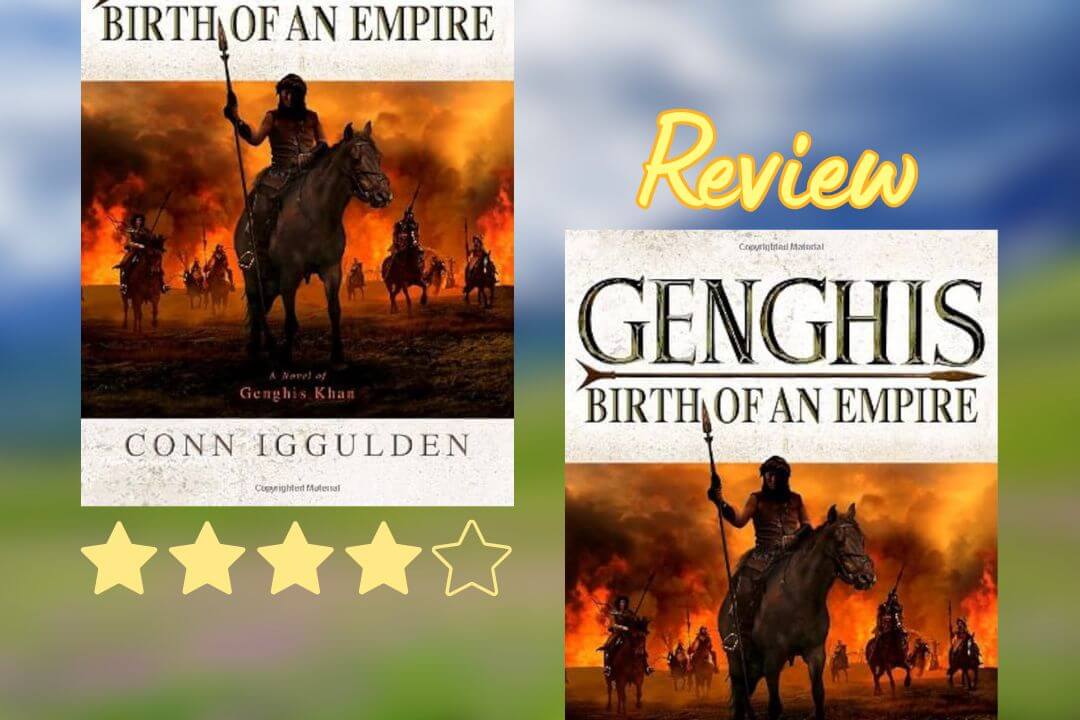
Looking for more historical fiction set in Asia? Check out my book review of Genghis: Birth of an Empire by Conn Iggulden! It does take place in medieval times, but is an absolutely thrilling account of Genghis Khan’s childhood and early rise to power!
If you know of other historical fiction novels set in ancient times, please leave a comment to recommend them!
Hi, I’m Caylah Coffeen, a freelance editor and marketer of sci-fi and fantasy books. I love reading and writing and am a follower of Jesus Christ.
I’ve worked for Monster Ivy Publishing and Eschler Editing, and am currently a weekly editor with Havok Publishing. Reach out to chat about books and publishing!
Thanks for stopping by my website! I hope you’ve found some helpful resources about reading, writing, and publishing. If you liked this article, here’s some more free content…
Demigods vs. monsters, petty gods and kings, dramatic poetry, and way too many genealogies – these are just a few of the elements that have made epics stir the hearts of men for millennia.
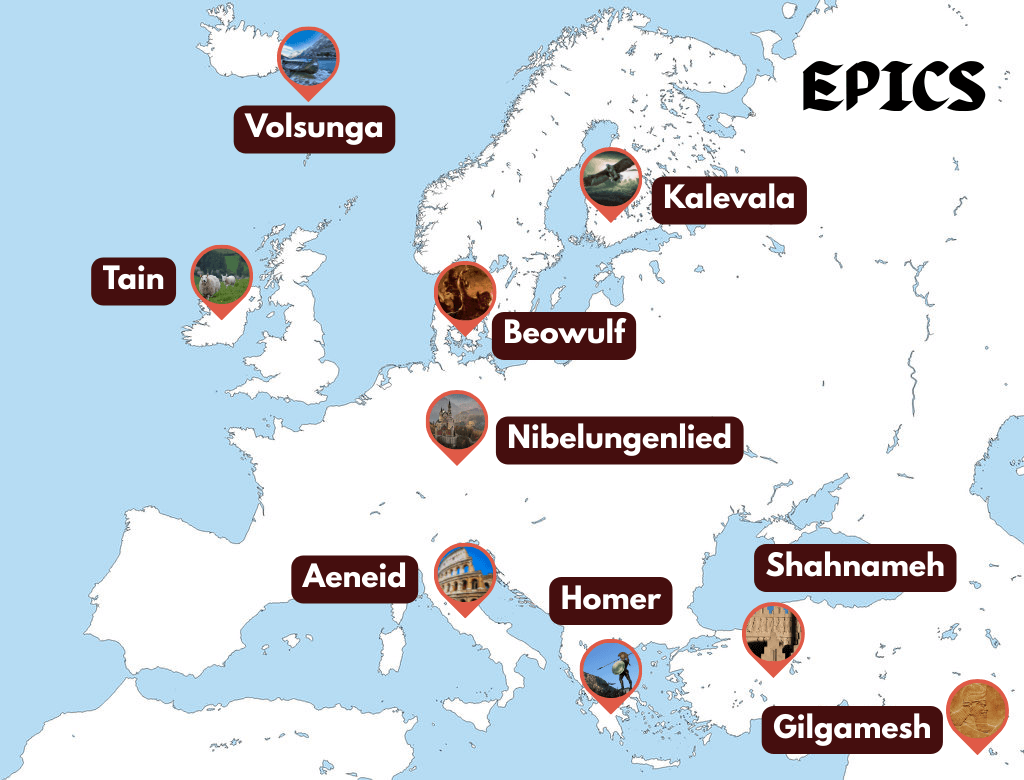
But if you’re only familiar with Greco Roman and Nordic epics, you’re in for a treat – cultures around the world have told epic poems and oral legends since the beginning of time. I’ll highlight 16 major works from these regions:
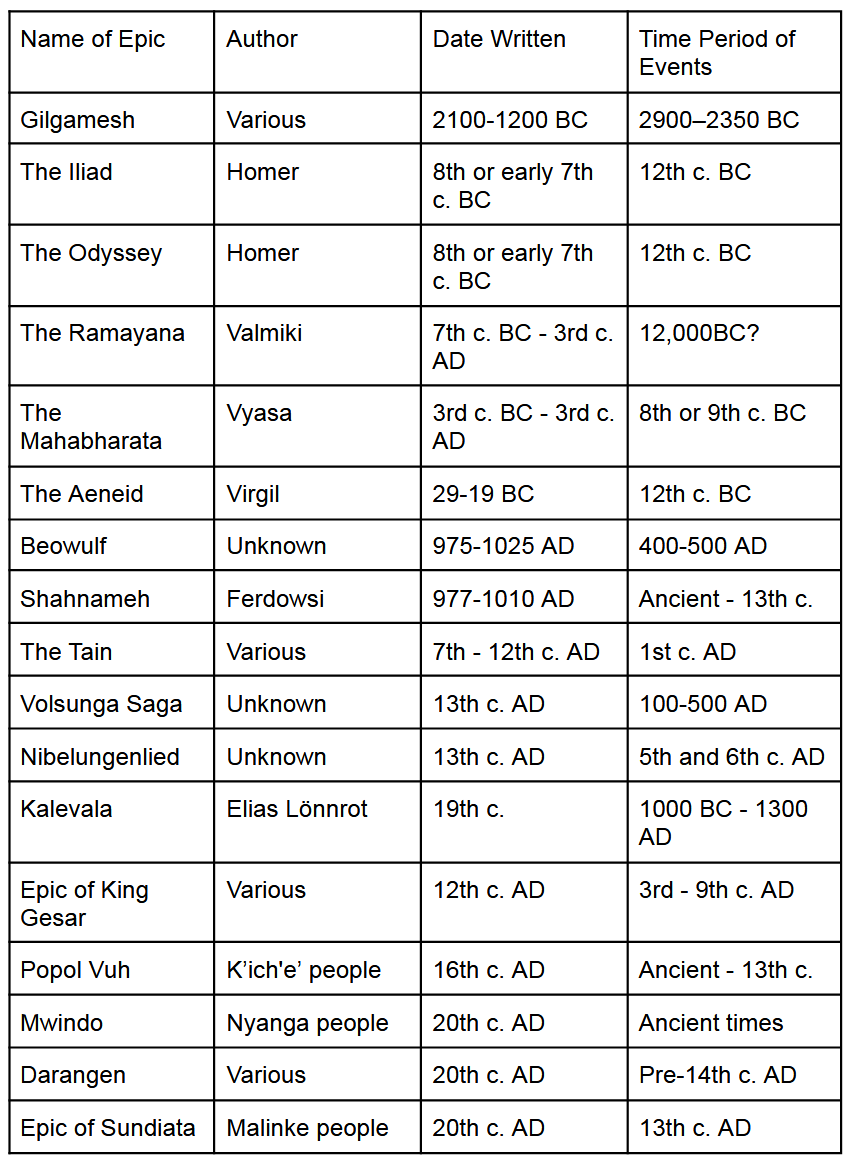
Note that, of the works on this list, only 6 were actually recorded during antiquity – Gilgamesh, The Iliad, The Odyssey, The Aeneid, The Mahabharata, and The Ramayana. The rest were either written during the Middle Ages, or are more recent compilations of culturally significant oral epics that have been passed down for generations.
According to a scholar of medieval literature that I consulted online, most scholars categorize literature according to the age it was written in, rather than by the story’s time of origin, theme, or setting.
But I’ve designed this post to serve as a reading list for people who love legendary, heroic, and mythic tales, so I’ve included works that feature a culture’s oldest, definitive epic traditions, regardless of when they were put on paper.
Most of these are narrative poems, some feature a mix of prose and verse, and a few are written purely in prose. I chose translations that capture the original beauty and style of the verse/prose, while still maintaining accuracy.
This article contains affiliate links – I may earn a small commission on qualifying purchases at no extra cost to you.
So let’s dive in!
Mediterranean and the Near East
Gilgamesh – Mesopotamia
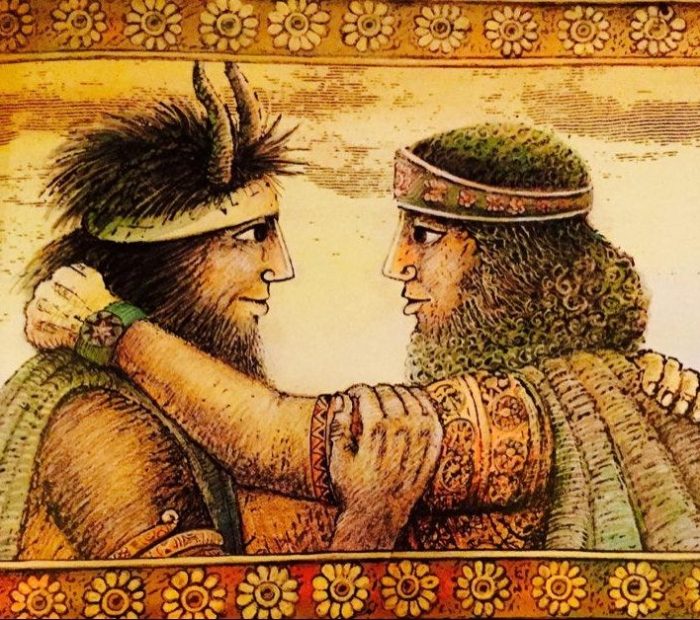
Gilgamesh is the oldest known epic in the world, inscribed in cuneiform on clay tablets. It tells the story of King Gilgamesh and his dear friend Enkidu, their adventures together before Enkidu’s tragic death, and Gilgamesh’s following epistemological crisis about life and death.
“How can I keep silent? How can I stay quiet? My friend, whom I loved, has turned to clay, my friend Enkidu, whom I loved has turned to clay. Shall I not be like him, and also lie down, never to rise again, through all eternity?” ― Gilgamesh
Modern Version of Gilgamesh
Here’s a three part illustrated version suitable for kids (pictured above). I’ve heard great things about this novelization by Emily H. Wilson as well!
Homer – Greece
The Iliad
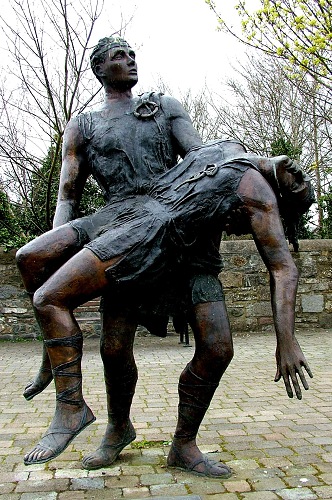
The Iliad tells 10 days of the Trojan War, including Achilles’ refusal to fight for the Greeks after his King takes one of his female prizes, Patroclus’ tragic death, and Achilles’ revenge upon Hector.
“Sing, goddess, the anger of Peleus’ son Achilleus and its devastation, which put pains thousandfold upon the Achaians, hurled in their multitudes to the house of Hades strong souls of heroes, but gave their bodies to be the delicate feasting of dogs, of all birds, and the will of Zeus was accomplished since that time when first there stood in division of conflict Atreus’ son the lord of men and brilliant Achilleus.” ― The exordium of The Iliad, Richard Lattimore (translator)
Modern Version of The Iliad
Rosemary Sutcliff wrote a beautiful version of the Iliad called Black Ships Before Troy, accompanied by stunning illustrations by Alan Lee (Art Direction, The Lord of the Rings). And I will never not laugh at Overly Sarcastic Productions’ description of Achilles as a “sulky burrito.”
The Odyssey
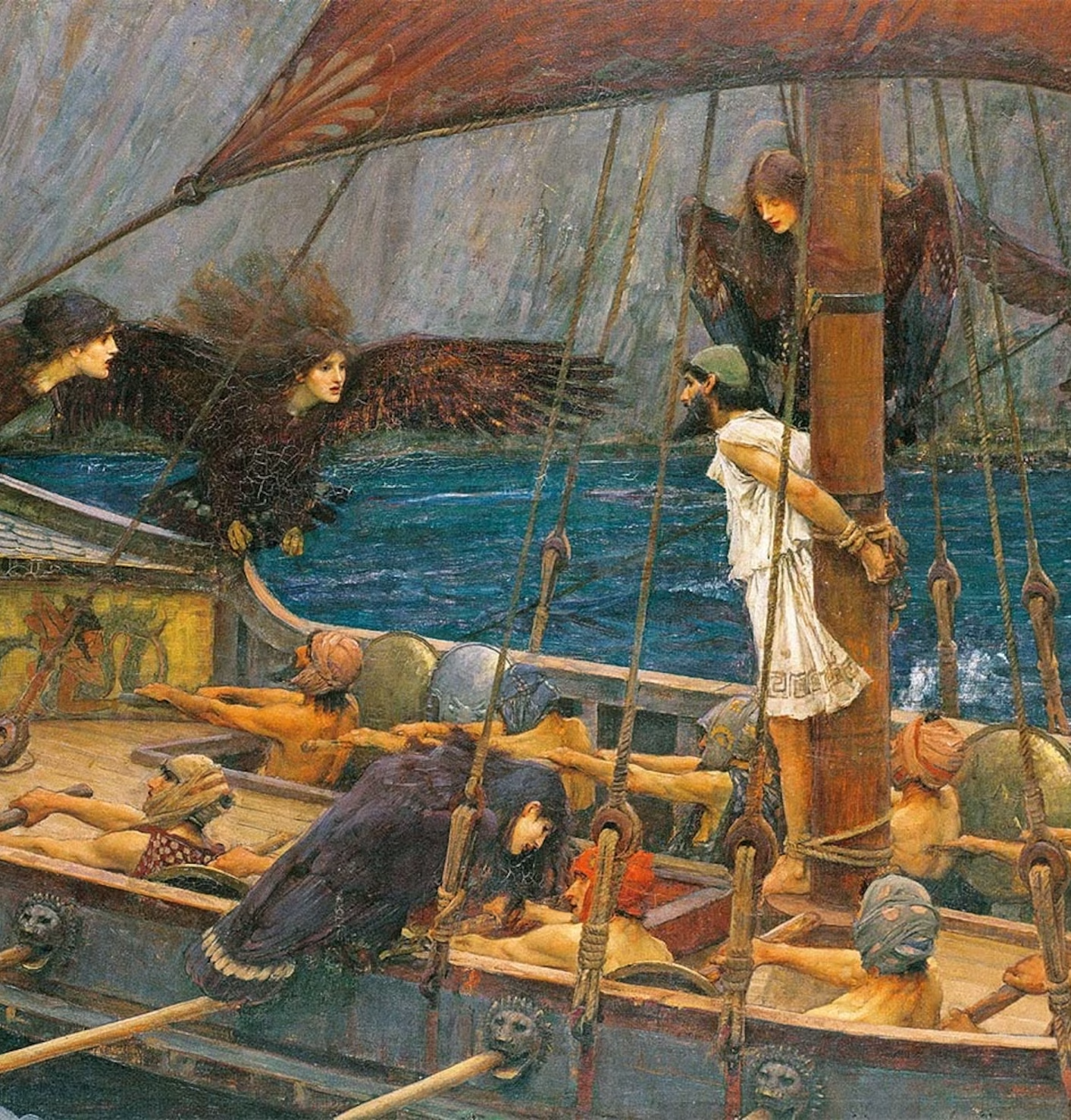
The Odyssey tells of Odysseus’ decade-long attempt to get home after the war, impeded by angry gods, sea monsters, and idiot companions.
“Tell me, Muse, of the man of many ways, who was driven far journeys, after he had sacked Troy’s sacred citadel. Many were they whose cities he saw, whose minds he learned of, many the pains he suffered in his spirit on the wise sea, struggling for his own life and the homecoming of his companions. Even so he could not save his companions, hard though he strove to; they were destroyed by their own wild recklessness… here, goddess, daughter of Zeus, speak, and begin our story.” ― The exordium of The Odyssey, Richard Lattimore (translator)
Modern Version of The Odyssey
Gareth Hinds has created a lovely collection of graphic novel renditions of various classics, including The Iliad and The Odyssey. The Usborne Illustrated Odyssey is great for younger children.
The Aeneid – Rome
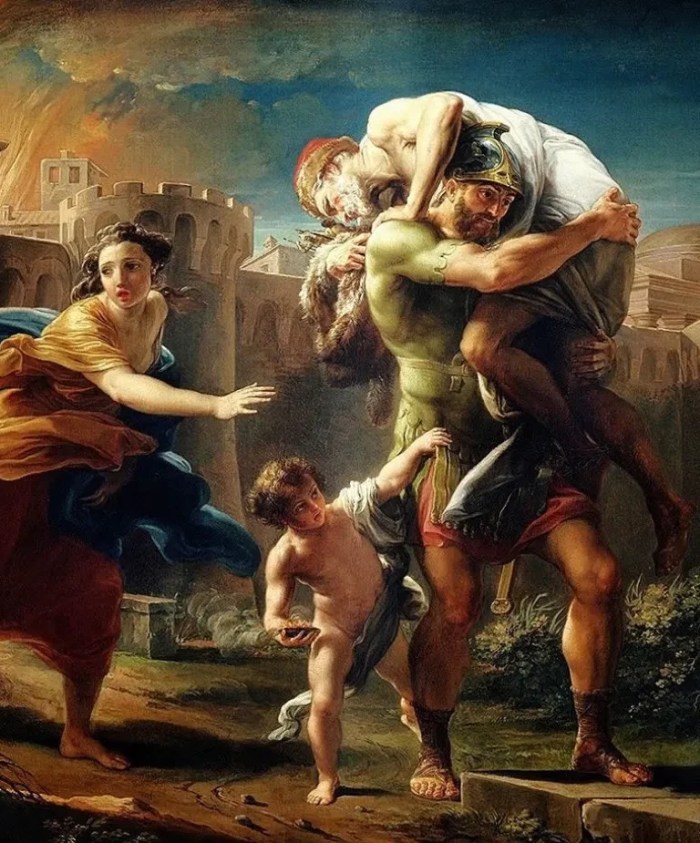
Roman fan fiction of Homer! The Romans thought it’d be super cool to have an origin story that connected them to the epic tales of Greek heroes, so Virgil got busy making a pretty propaganda piece about how the survivors of Troy, led by Aeneas, completed their own odyssey to find and establish a new land – Rome.
“I sing of arms and of a man: his fate had made him fugitive; he was the first to journey from the coasts of Troy as far as Italy and the Lavinian shores. Across the lands and waters he was battered beneath the violence of high ones, for the savage Juno’s unforgetting anger; and many sufferings were his in war- until he brought a city into being and carried in his gods to Latium; from this have come the Latin race, the lords of Alba and the ramparts of high Rome.” ― The exordium of The Aeneid, Allen Mandelbaum (translator)
Modern Version of The Aeneid
The Aeneid for Boys & Girls is a lovely modern telling, accessible for kids and adults alike. Unfortunately, I couldn’t find many illustrated versions of The Aeneid, unlike for Homer’s works, which have many! Though there is a recent graphic novel.
Shahnameh: The Persian Book of Kings – Iran
The Shahnameh is an epic poem of about 50,000 distichs or couplets, composed by the poet Abolqasem Ferdowsi between the years 980 and 1010. He referenced prior histories and verses to compile the story of pre-Islamic Iran, beginning with Creation myths and continuing until the Arab invasion in the seventh century.
“I turn to right and left, in all the earth I see no signs of justice, sense or worth: A man does evil deeds, and all his days Are filled with luck and universal praise; Another’s good in all he does – he dies A wretched, broken man whom all despise.” ― Shahnameh: The Persian Book of Kings, Abolghasem Ferdowsi
Modern Version of The Shahnameh
Unfortunately, the “definitive translation” by Dick Davis, linked above, is already told mostly in prose, with snippets of verse scattered throughout. There is an earlier translation in full verse available on The Internet Archive, but it uses older English (“thou”), which makes it harder to understand. Since the leading version is already more of a summary than a direct translation of the full poem, I’d probably choose to read this gorgeously illustrated edition instead, which is actually how I first discovered the Shahnameh (my library had a copy)!
Europe
Beowulf – Norse
Beowulf is an Old English poem, written between 975 and 1025 AD, but set in pagan Scandinavia in the 5th and 6th centuries. It tells of how the warrior Beowulf defeats the monster Grendel, and then his mother (in a famous underwater battle), before sacrificing himself to defeat a dragon.
“So. The Spear-Danes in days gone by and the kings who ruled them had courage and greatness. We have heard of those princes’ heroic campaigns.
There was Shield Sheafson, scourge of many tribes, a wrecker of mead-benches, rampaging among foes. This terror of the hall-troops had come far… That was one good king.”
This is a lovely illustrated version, great for kids. There’s also an edition of Seamus Heaney’s translation that includes photos of helmets, horns, and other materials from the time.
The Saga of the Volsungs – Norse
The Saga of the Volsungs is a late 13th century heroic saga, but in prose, rather than verse (excepting the prologue). It tells of the rise and fall of the Volsung clan, including the famous portion of Sigurd killing the serpent dragon Fáfnir.
“O hearken, ye who speak the English Tongue How in a waste land ages long ago The very heart of the North bloomed into song After long brooding o’er this tale of woe! Hearken, and marvel how it might be so, That such a sweetness so well crowned could be Betwixt the ice-hills and the cold grey sea.” ― The prologue of the Volsunga Saga, Eiríkr Magnússon, William Morris (translators)
Additional Nordic Epics
You may also have heard of the Poetic Edda, a collection of anonymous Icelandic narrative poems in alliterative verse, thought to have been composed sometime in the 9th-11th centuries. It’s more fragmented, and less of a cohesive epic, essentially like Ovid, but for Norse myths.
The Nibelungenlied is an epic chivalric tale (predates the romance) that recounts many of the stories present in the Edda and Volsunga Saga. However, it is much more Christian, containing less of the original pagan mythic content.
The Táin has its origin in Irish oral tradition, but wasn’t written down until the Middle Ages. Often referred to as “The Irish Iliad,” it is actually written in prosimetrum, alternating prose and verse.
Also known as The Cattle Raid of Cooley, it tells of a Queen who, to spite her husband’s wealth, raids a neighboring kingdom to steal a great bull. Only a young demigod steps up to defend his land in single combat, since his king’s entire army is burdened by a curse. Tragically, he must face his best friend in battle.
“I am alone against hordes I cannot stop nor let go I stand here in the long cold hours alone against every foe.” ― The Táin, Ciaran Carson (translator)
Modern Version of The Táin
I found a modern illustrated children’s version of this tale by Alan Titley, but also loved this beautiful animated short that summarized the story.
Kalevala – Finnish
The Kalevala is a 19th-century compilation of Karelian and Finnish oral folklore and mythology, collected through the many trips of Elias Lönnrot. It tells the story of creation, voyages and wars, and of a legendary wealth-making machine. Kalevala poetry was also known as runic song, often in alliterative trochaic tetrameter, and incorporating call and response, choralists, and dancing hand in hand.
“I am wanting, I am thinking To arise and go forth singing. Sing my songs and say my sayings, Hymns ancestral harmonizing, Lore of kindred lyricking. In my mouth the words are melting; Utterances overflowing To my tongue are hurrying, Even against my teeth they burst.” ― Prelude from The Kalevala Runo 1 – Creation and the Birth of Väinämöinen
Modern Version of the Kalevala
Kirsti Mäkinen (Author) and Pirkko-Liisa Surojegin (Illustrator) created a beautifully illustrated prose version of the Kalevala which also includes snippets of verse on each page – accessible for children.
Asia
Ramayana – India
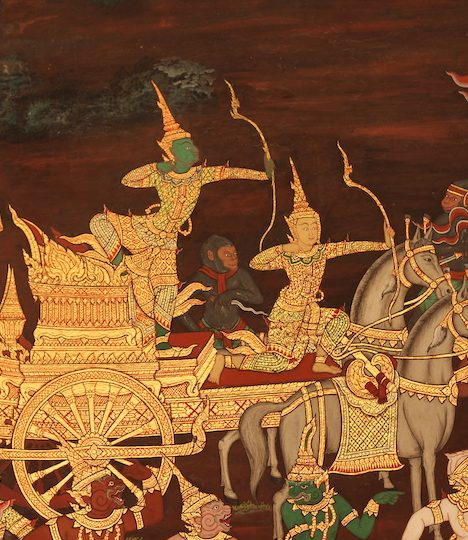
The Ramayana is an ancient Sanskrit epic (smriti) that narrates the life of Prince Rama, the seventh avatar of the Hindu deity Vishnu, following his adventures during a long exile, and his eventual crowning. It is attributed to Valmiki, and was likely written between the 7th and 5th centuries BC.
“O Ayodhya! Architects designed you to be beautiful, gracious and strong. Untouched by enemies, invincible behind towering gates with a wide moat circling your waist, your brave and noble warriors could find their target through sound alone.” ― The Ramayana: A New Retelling of Valmiki’s Ancient Epic, by Linda Egenes
Modern Version of the Ramayana
I dislike a lot of modern renditions of epics because they not only lose the beauty of the original verse or language, but they often just feel like a summary. That gets boring in a hurry. But this lyrical modern prose rendition of the Ramayana reads more like a novel!
Mahabharata – India
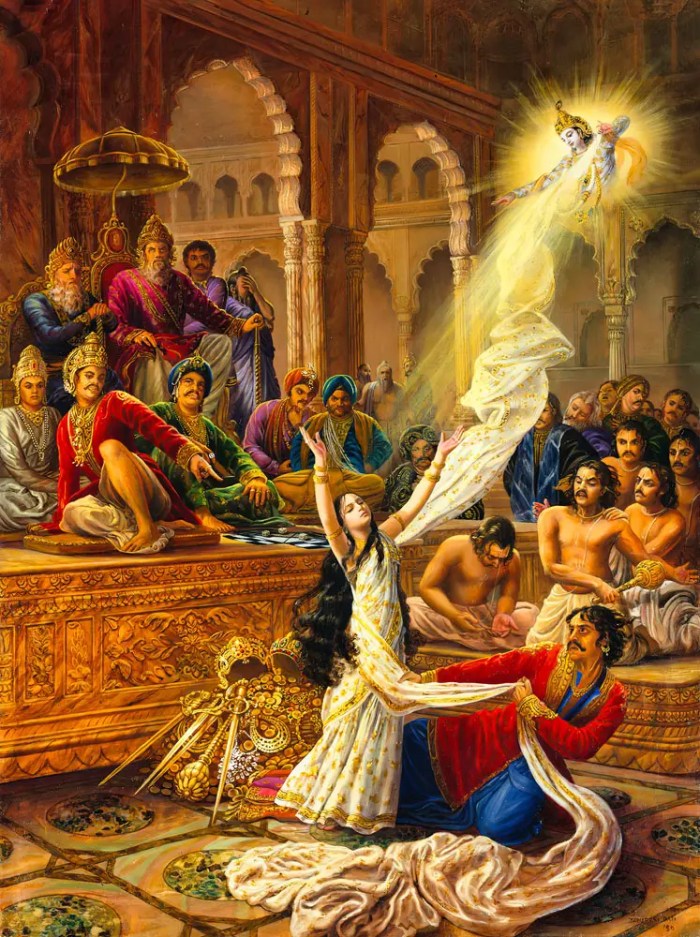
The other major Hindu epic, the Mahabharata tells of the tragic war between two factions of princely cousins, the Kauravas and the 5 Pāṇḍavas brothers, and their famous wife Draupadi. Attributed to Vyāsa, and composed over many centuries, starting in the 3rd century BC, it is often known as “the longest written epic poem in the world.”
“…I bless the name of Sarasvati, goddess of deep learning and of art, she who can touch a poet’s tongue with silver. To her I dedicate my epic poem.
This is the tale of a tragic dynasty; a narrative of hatred, honor, courage, of virtue, love, ideals and wickedness, and of a war so terrible, it marked the threshold between one age and the next.”
I really enjoyed this podcast audio drama by Sudipta Bhawmik, though I certainly recommend keeping a cast list handy since it’s way too easy to lose track of all the characters and their names. This prose rendering by Ramesh Ramon reads like historical fiction!
The Epic of King Gesar – Tibet
The Epic of King Gesar is drawn from centuries of oral traditions, combining cultural, literary, musical, historical, and religious values of Tibet, focusing on the tales of a superhuman warrior king. It includes some 120 volumes, and it looks like, so far, only a small portion of it has been translated into English so far.
“The white smoke of the juniper rises Fragrant and dense from the burning coals, Billowing into an empty shining sky, A vast mirror-like expanse Unclouded by the shadow of birth or fear of death. There, descending on this perfumed bridge of smoke and longing, Swirling and whirling in the smoke clouds, as in a gathering storm, Surrounded by a host of mounted Drala and Werma warriors, Whose golden armor and steel sword blades glitter like lightning, Rides the ever great and youthful conqueror, Gesar, King of Ling, Lord of the four kinds of warrior.” ― The Warrior Song of King Gesar, Douglas Penick
Modern Version of The Epic of King Gesar
The Warrior Song of King Gesar (excerpt above) seems like a captivating compilation of multiple parts of the tale. Shambhala Publication’s has translated the first 4 volumes of the epic more literally from the beginning, and they’ve published numerous other books about him, but I found the Warrior Song version more compelling. There seem to be a number of beautifully illustrated versions, but most are only available in expensive hardcover or sadly out of print.
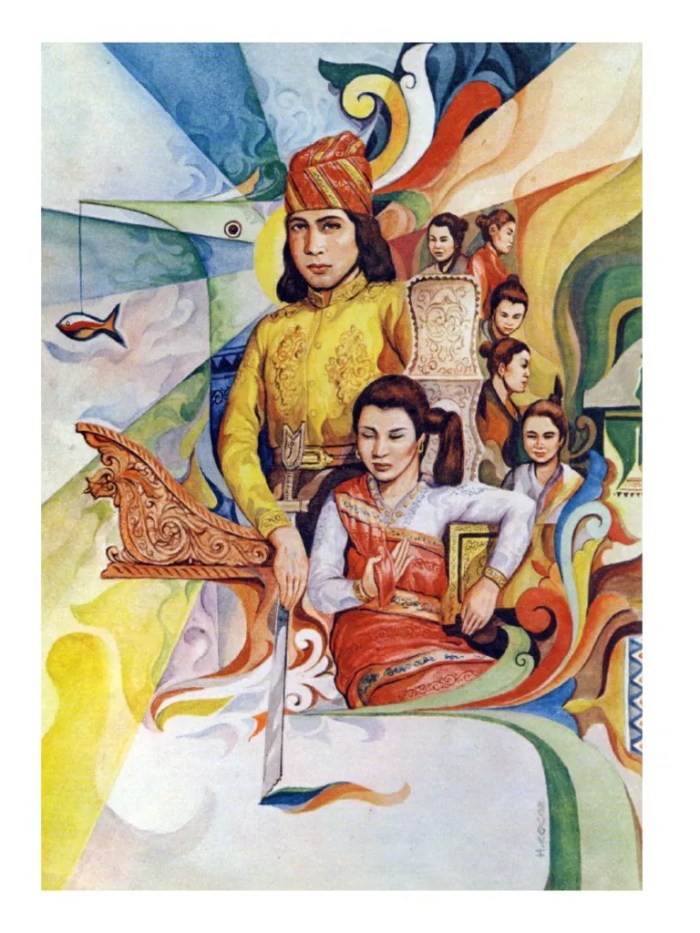
Darangen – Philippines
The Darangen is a collection of pre-Islamic Philippine tales, passed down orally for generations. It has 72,000 lines divided into 17 cycles in iambic tetrameter or catalectic trochaic tetrameter. To perform the full cycle through song and dance takes a week! It tells of the grand city of Bembaran ruled by the main hero, Prince Bantugan.
“And now I shall commence my tale Beginning with the time of the Enthronement of the first ruler Called Diwata Ndaw Gibon. His kingdom was one vacant space Because he had as yet no wife, No fair partner to grace his throne And help him organize the place, Nor were there any settlements No subjects to people a town For this lord was indeed alone.” ― Darangen, recorded by The Folklore Division University Research Center Mindanao State University
Modern Version of the Darangen
Unfortunately, the translation I linked above is a bit awkward and not very engaging to read. It’s also only an excerpt from a book which seems out of print, though it is available at multiple libraries around the U.S. I was not able to find any modern or illustrated versions. But there are some great recordings of live performances by the efforts of UNESCO. I hope we’ll start seeing some lovely renditions and retellings in the future!
China?
China has a massive body of literature, including histories, poetry, religious works, and more. They did not seem to favor long-form narrative poems, though the Epic of Darkness, dated back to the Tang dynasty (618-907 AD), was recently discovered. It features the creation myths and flood narratives of the Han people, including the tale of Pangu. No English translation exists yet, as far as I could find.
More people recommend the Four Great Classic Novels, particularly The Journey to the West, as an example of China’s cultural and mythic epics. I love this animated series about the Monkey King!
Africa
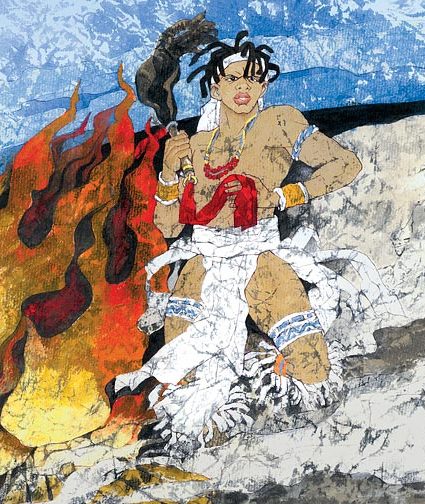
The Mwindo – Congo
The Mwindo epic is an oral tale from the Congo told by the Nyanga people, traditionally performed by a bard through dance and noisemakers like bells and a calabash rattle. The audience would participate, singing along, and young men would accompany the bard on percussion. It tells the tale of a boy with magical powers whose father tries to kill him, spurring him on a series of quests.
This is a fun retelling that includes a mix of prose and verse. It reads like a novel for kids, but I enjoyed it as an adult too! You can find a more official translation here.
More Oral Epics From Africa
Africa is rich with oral traditions, poems, and songs. This is a lovely site that includes many excerpts. The Epic of Sundiata is also well known, but chronicles the creation of the Empire of Mali, a Medieval, not ancient, kingdom of West Africa. The Liyongo Epic is another that tells of a Medieval Swahili warrior chieftain.
Americas
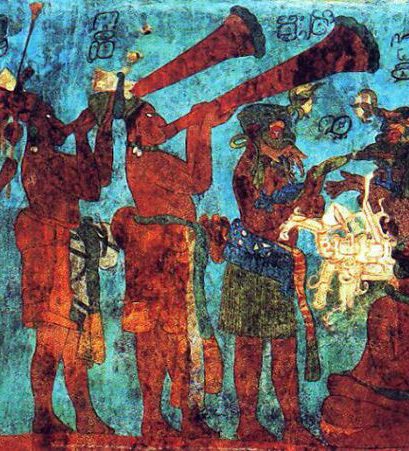
The Popol Vuh – Mesoamerica
The Popol Vuh began as Mayan oral tradition millennia ago, telling of the world’s creation, the acts of the gods, and the founding of the K’iche’ kingdom. In the mid-sixteenth century, during the European conquest, members of the nobility wrote it down in an attempt to preserve their culture, and it was later translated into Spanish, and the original document lost.
“This is the account of when all is still silent and placid. All is silent and calm. Hushed and empty is the womb of the sky. These, then, are the first words, the first speech. There is not yet one person, one animal, bird, fish, crab, tree, rock, hollow, canyon, meadow, or forest. All alone the sky exists. The face of the earth has not yet appeared.” ― Allen J. Christenson (translator), Popol Vuh: The Sacred Book of the Maya
Modern Version of the Popol Vuh
Ilan Stevans has written a modern retelling of the Popol Vuh, complete with illustrations by Salvadoran folk artist Gabriela Larios. One reviewer said, “the art is so beautiful I wish it was available as prints.”
More mythic narratives from the Americas
While there is a difference between myths and epics, it’s quite sad that there aren’t more remaining works from Pre-Colombian Americas. So I thought I’d also include this great online database of Native American myths and legends. They focus more on tales from North American tribes, but include some from Central and South America as well.
Epics about Medieval Times
Many of the epics above were written during the Middle Ages, but about ancient legends or events that occurred through late antiquity (Beowulf, Volsunga). A number of other epics recount historical events that happened during the height of the Middle Ages, with far less mythic content.
The Epic of Sundiata – West Africa The Sundiata is an epic poem of the Malinke people that tells of the hero Sundiata Keita (died 1255), founder of the Mali Empire. It was passed down orally for generations.
The Song of Roland – France The Song of Roland is an 11th-century medieval poem (chanson de geste) about the feats of Frankish military leader Roland at the Battle of Roncevaux Pass in AD 778, during the reign of Charlemagne. It is the oldest surviving major work of French literature.
Cantar de mio Cid – Spain The Song of My Cid is an anonymous Castilian epic poem based on the true story of hero and Medieval knight Rodrigo Díaz de Vivar—known as El Cid—who fought for the unification of Spain during the eleventh century.
The Tale of the Heike – Japan An epic prose account (compiled prior to 1330) of the struggle between two clans to control Japan in the Genpei War (1180–1185). This was a major influence on other feudal samurai content.
The Secret History of the Mongols and The Epic of Jangar – Mongolia The Mongolian Tuuli is an oral tradition comprising heroic epics that run from hundreds to thousands of lines and combine spells, fairy tales, myths and folk songs. The most famous ones tell the tale of Genghis Khan and his children.
Dates of Ancient Epics
What do you love most about ancient, mythic epics?
Hi, I’m Caylah Coffeen, a freelance editor and marketer of sci-fi and fantasy books. I love reading and writing and am a follower of Jesus Christ.
I’ve worked for Monster Ivy Publishing and Eschler Editing, and am currently a weekly editor with Havok Publishing. Reach out to chat about books and publishing!
Thanks for stopping by my website! I hope you’ve found some helpful resources about reading, writing, and publishing. If you liked this article, here’s some more free content…