YA Books Suffer a Plague of Cut-and-Paste Personalities and Reader-Insert Characters

By Caylah Coffeen

Fantasy and science fiction have become more unique and diverse in the past 5 years alone. As a reader, I’m delighted to see a sudden surge of genre blending, plus stories set in non-western places, by authors from all over the world! I keep picking up these books, only to put them down in frustration when the main character doesn’t live up to the concept.

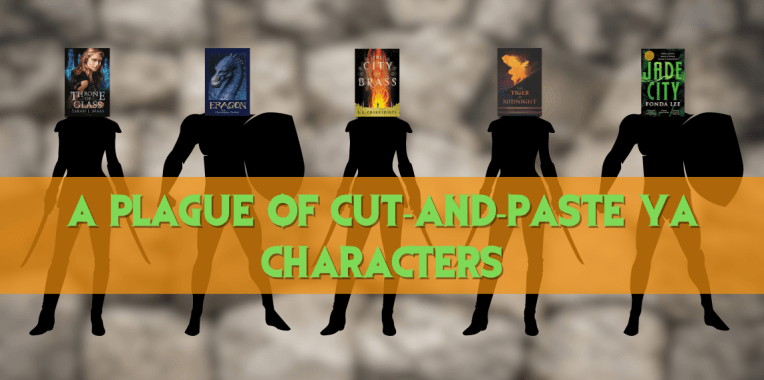
In the past couple years I’ve started and dropped Throne of Glass, The City of Brass, Spin the Dawn, Jade City, The Tiger at Midnight, Empire of Sand, and more despite absolutely loving the worldbuilding and premise of all of them.

I could not resonate with any of the main characters. After trying all of these in quick succession, it occurred to me that I could swap any of the female leads, and I wouldn’t be able to tell the difference. They faced problems the same way, talked smack the same way, and reacted to people and changes with a seemingly identical script.

To those who might protest that I’ve just outgrown these characters (that was my first thought too – it’s been a while since I was 17), I’d remind you that the largest demographic for YA readers is not actually teenagers, but women in their 30s-40s!

As another disclaimer, the most common reason I will drop a book is if the characters don’t catch me. I’ve done this plenty of times with adult books. But I’ve noticed a distinct pattern to why young adult characters in particular can fall flat.

Mashing together all personality traits to maximize “reader-insert” potential

These days, large publishing houses only buy books they can mass market. This means they look for stories and characters with the greatest appeal for the greatest number of people. Unfortunately, this results in characters who seem to embody all major personality traits melded together. After all, you want any reader to be able to insert themself.

Some people love personality tests, others hate them, and most agree that there is little scientific basis to any of them. Regardless of your stance, I’m going to reference the Myers Briggs test to illustrate this point.

The Myers Briggs test breaks personalities into 4 categories where people fall along a scale between two major traits. You’re probably familiar with the scale of introversion/extroversion. Most people fall closer to one than the other. Some people fall right in the middle and call themselves ambiverts, and that’s possible for the other categories in the personality test too. This is where we see great variety in people – after all, even if you share the same “type,” no two people are the same.

But I’ve never once met someone who would say that they fall in the middle for every single trait in this (or another personality) test. But that’s just what most YA characters seem to be – an average of everything.

Let’s break down each personality category for some concrete examples. (I won’t explain the test in much detail below, as that’s not the point of this article, but you can find more information about it here.)

Introversion/Extroversion –

Most YA characters I’ve encountered lately are a bit reserved, with one or two close friends, yet they also have little problem meeting new people, engaging in large groups, or persuading strangers and influential people to their opinion. These characters have a small inner circle, or very little in the way of a social support structure, but this often seems more like a choice, as if the rest of the world is just not as cool as them. But if they only put their mind to it, of course they could be the most popular girl in the room (Katniss).

One of the major problems with this is that the character gets to experience the best of both worlds, without the downsides of either. They don’t get nervous and make awkward mistakes in big groups, and they don’t talk way too much and put people off. This makes for boring character development – a rounded character needs weaknesses. But when you average out extremes of a personality, you avoid a lot of (interesting) problems that could make their story more unique.

Book Smarts/Street Smarts (Intuitive/Sensing) –

Can you pick up knife throwing in a week and best everyone else in your party? But can you also analyze a new political landscape and design a strategy that people 30 years your senior somehow never thought of? Well, most YA characters can do both!

They’re athletic, hands on, and pick up new skills quickly, making their odds of survival great. But they’re also of above-average intelligence and are great at coming up with clever plans on the fly, even in situations they’ve never encountered before.

It’d be more interesting if these characters had one set of skills in which they excelled, and struggled with other areas. Someone who spends their whole life physically training will probably have trouble focusing on a book about the local religion and vice versa.

But while characters often make jokes like, “oh, I’m terrible at math,” or “if our wagon wheel breaks, we’ll be stranded for 3 weeks,” these supposed weaknesses never actually affect the character and plot. They still cobble together practical fixes and have no trouble budgeting their finances while on a mad dash across the kingdom.

Feeling/Thinking (what you Primarily base your decisions on) –

Teenagers are hormonal and emotional, and so many YA characters understandably make their decisions based on their feelings in the moment. Yet, likely because authors don’t want their female characters accused of being “controlled by their emotions,” they feel the need to portray their characters as perfectly aware of all logical routes and just willfully choosing otherwise.

For instance, in a book I recently started, we’re introduced to the FL as she spins a magic spell in a public square. She hates this spell and wants to deviate from her mentor’s instructions. She feels very strongly about this, but looks into her mentor’s eyes, sees the warning, remembers her teacher could abandon and leave her in poverty, or that the king could have her executed for the deviation.

She thinks through all these reasons even as she’s apparently swept up by her own emotions. Then decides, “I’m going to do it anyway.” The spell shatters and she is punished – an entirely avoidable scenario.

More and more, I see scenes like this, where the character creates problems for themselves with stupid decisions. That’s definitely something humans do ALL THE TIME. But these choices are often strangely depicted, not as stupid, but as daring or assertive.

And again, these authors are trying to have the best of both worlds – “oh, yes my character feels very deeply and just gets carried away sometimes – don’t we all? Oh, but she didn’t really get carried away – you see, she thought through every possible problematic outcome first, and just decided to face them all! It’s not like she’s foolish or incapable of controlling herself.” Um… ok?

Go-with-the-flow/Structured (Perceiving/Judging) –

Again, many teenagers are impulsive as a result of their rapidly shifting hormones, so it’s not too much of a stretch that many YA characters would be perfectly happy to abandon their home on short notice for a new quest. But people still tend to prefer one or the other in their life and day-to-day schedules – flexibility or consistency.

Yet so many of these impulsive characters also fit perfectly fine into more structured scenarios. I need to go undercover at a royal court, which has a rigid set of rules? No problem! I’m not bouncing on the balls of my feet all day – I can keep my cool perfectly in any situation.

Some characters are the opposite – they’ve grown up with the same schedule every day (a farm, the military, a magic school), but when their whole world is upturned, they do just fine.

Sure, they may miss their old life, but they don’t feel lost, agitated, lose sleep or perform more poorly than usual because of this sudden shift which does not suit their needs. Or if they do, they very quickly overcome it, as though it was just a habit, and not one of their core traits as a person.

YA personalities embody everything and nothing

Whether you agree with this way of analyzing a personality or not, the point is, YA characters these days are designed to embody everything and nothing at the same time, so that they will resonate with the most readers.

This is not only unrealistic, but makes these characters exceptionally boring. Where are the unique quirks and flaws that make you laugh and want to talk about a character for years to come?

I have a couple friends who love YA, and it’s struck me that no matter how many YA books they recommend to me, they never say, “oh, I just loved this character because x.” They rarely mention the characters at all. Because most of these books are situational – they’re about what happens, not who is facing these trials.

But do readers actually want characters like this? Sarah J. Mass books are wildly popular after all – so clearly plenty of readers love these stories, but do they really love these characters?

Or do they get swept up in the quick pace and frenetic emotions that define the YA genre, and not realize that if the plot paused, they might not really care about the characters themselves?

Writing Tips: how to avoid this pitfall

Personality tests can be a fun way to analyze your character and make sure you write them with consistent reactions across your stories. It can also help you flag if you’re writing too many characters of the same type. That’s only natural as writers – we write what we’re familiar with and drawn to. But opposites attract and create all sorts of other sparks that make for great stories.

If you’re writing a female young adult character, you may be afraid to give her flaws, especially ones that women have often been accused of, and with good reason. Women are far too often portrayed negatively in fiction. But it’s just as bad when they’re underdeveloped, 2-dimensional, or cut-and-pasted.

If you play it too safe, making your character a little too perfect, too talented, or too generic, you’ll unintentionally be adding to the crowd of flat female characters. Be bold! Give your female characters personalities with more extreme quirks. Some readers may be turned off. Who cares? There should be a space in fiction for all sorts of main characters, not just the brash, aloof Homecoming Queens.

Writers hate on ourselves and compare ourselves way too much to others, so I say this with caution, but it’s worth asking if your character feels too similar to a slew of other heroes. I’m also a marketing professional, and it’s necessary to analyze the market.

If you see a lot of similar characters out there, it can mean they’re in high demand – readers do seek out the same archetypal characters again and again (the antihero, the guy next door, the angsty assassin). But it’s also a sign that your character may not feel original to your readers. Trends do come and go, and if a press has already published a lot of Sarah J. Mass lookalikes, they, and their readers, may be looking for something fresh.

Hi, I’m Caylah Coffeen, a freelance editor and marketer of sci-fi and fantasy books. I love reading and writing and am a follower of Jesus Christ.

I’ve worked for Monster Ivy Publishing and Eschler Editing, and am currently a weekly editor with Havok Publishing. Reach out to chat about books and publishing!

Thanks for stopping by my website! I hope you’ve found some helpful resources about reading, writing, and publishing. If you liked this article, here’s some more free content…

Book Review: Virtuous Sons by Y.B. Striker

By Caylah Coffeen

Rating: 5/5 stars!

Virtuous Sons is a delightfully original Greco-Roman buddy story that thrills with its snarky dialogue, unusual action scenes, and deeply loyal characters.

Snapshot:

Griffin and Sol, young Greek and Roman patricians respectively, defy their elders and fates, running off to the city of Olympia to attain greater power and make their mark on the larger world. Faced with political upheaval at the center of the Greek world, demons on the Western front, and their own losses and regrets, Griffin and Sol fight alongside each other with wit and audacity on their virtuous path to fame and glory.

Characters: 5/5

This story is all about two reckless, ambitious, smack-talking young men called Griffin and Sol. They’re the best warriors of their generation and they know it. As a result, they’re unbelievably audacious, delighted in the equal competition each presents to the other, and at times completely and excellently ridiculous. I laughed so much while reading this story. They’re like oil and water and rib each other constantly. Griffin is cavalier, spoiled, restless, and desperately thirsty for a fight worthy of him. Sol is depressed, rigidly disciplined, aloof, and quietly confident in his own superiority.

They’re arrogant and violent, yes, but not unintelligent or too foolish (though I know a certain philosopher who’d loudly disagree). They’re sharp, strategic, passionately loyal, with a talent for drawing others to them. It’s really quite a delightful dance watching these two. And it’s not just fun and games either – they aren’t afraid to touch on deeper topics such as grief, fear, trust in the face of lies, and more. Their journey is rich.

Cool side characters too, but the dynamic duo steals the show. Except, we have our eyes on you Damon Aetos, for all the good it’ll do.

Story: 5/5

This plot isn’t what I expected from the blurb, and it’s all the better for it. The description made it sound like a quest story, with two young men wandering around killing monsters and climbing a mountain – a plot you may very well expect from a Greek myth about a demigod or other talented hero. I don’t like quest stories much, and based on the blurb alone, I wouldn’t have picked up this book myself (it was a birthday present). To my delight, this was a character piece which evolved into political (& action) fantasy.

The entirety of the story takes place in 2 Greek city states and the characters run around kicking hornets nests for the heck of it while seeking to prove their prowess to themselves and each other. As they stretch themselves in such a furnace, we learn more and more about their families, pasts, traumas, and dreams – and of course enjoy as they bond (beat each other up and talk trash). The discussions and situation are more “mature” than I initially expected. Navigating a political hellscape takes a lot more brains and nuance than traveling from point A to point B killing monsters. I hope other readers aren’t misled by the blurb, but are willing to give this quite unique story a try.

That said, the plot did rather jump all over the place. These characters don’t really have a plan, so most of what they did felt incredibly random. It seemed like the author was making up a lot of it as he went along (this was published first as a web novel). At times it felt like I was suddenly reading a different book from the one I’d picked up. Sometimes, this is enjoyable as it leaves readers feeling continuously surprised, and I think it works because of who these characters are. But reader expectations are important, and if not for loving these characters so much, it might have been a bit too much of both whiplash and meandering. But not all books need a tightly woven series of events to be great – and you bet there is a master plan deep in the background…

Worldbuilding: 5/5

The author has clearly steeped himself in classical literature. It goes beyond his use of Greek and Roman words or his accurate inclusion of popular philosophies and trends of the time – he gets it. After a certain threshold of absorbing a culture’s art, myths, history, and literature, a person begins to intuitively understand what makes that culture tick. Their fears, desires, aspirations, jokes, and more. It’s a delight to encounter a book so immersed in the classical mindset.

But Striker doesn’t stop there. He presents an alternate version of Mediterranean history – the gods are dead and their names have slipped from the minds of men. And what did you just say about Rome? He also weaves in an alternate magic system based upon the Chinese concept of chi cultivation. He incorporates the popular tropes of progression fantasy perfectly into the realm of Greco-Roman heroes. Because demigods and Roman legionnaires would absolutely love the concept of leveling up! And so do we.

Writing: 4/5

The place this book shines most is in the dialogue. Witty exchanges, perversely convoluted (aka Greek) discussions, and lots of hilarious B.S.-ing and grandstanding by our two endearingly reckless protagonists. However, almost every single chapter begins with an exposition dump, which grows rather tiresome. The prose is written well enough, though it can feel a bit dense at times. And it slows down the pacing when, despite the exciting shenanigans of the previous chapter, the next one almost always steps back with an omniscient voice to explain some element of history or culture. But the action scenes and emotional moments are presented and punctuated exceptionally well.

This story alternates between Griffin and Sol’s perspectives, but they’re both written in first person, which led me to experience quite some confusion when switching chapters. Their voices are incredibly distinct – everything from their manner of speech to attitude and energy – but it’s still mentally difficult to change who “I” is when reading, even when each chapter title names the POV. It didn’t help that I tore through this book in 2 days, so perhaps I just didn’t give myself enough time to mentally shift from one character to the other.

Impact: 5/5

It’s been a long time since I had so much fun reading a story! I went and devoured the next two books in the series immediately after finishing this one. I am ALWAYS on the hunt for stories about rivals and blood brothers, but it’s a strangely difficult itch to satisfy. My sister searched for ages to find a book for me for my birthday, and she is rightfully smug to have gotten it so right! These two, Striker absolutely nailed on the head. I light up talking about them. Now I’ve gotten my mother to read it out loud to my father and youngest siblings back home, and I Facetime in to listen to them all chuckle. I’m in withdrawal waiting for the fourth book! I miss Griffin and Sol!

In the end, there could only be one word to describe that unique quality. That special characteristic that allowed a man chained and robbed of all control of his life to lunge fearlessly at a far stronger opponent.
To disdain me with his eyes and strike my face with his clenched fists.
“The audacity!” I exclaimed in purest joy, and I struck him right back.

Y.B. Striker, Virtuous Sons

Hi, I’m Caylah Coffeen, a freelance editor and marketer of sci-fi and fantasy books. I love reading and writing and am a follower of Jesus Christ.

I’ve worked for Monster Ivy Publishing and Eschler Editing, and am currently a weekly editor with Havok Publishing. Reach out to chat about books and publishing!

Thanks for stopping by my website! I hope you’ve found some helpful resources about reading, writing, and publishing. If you liked this article, here’s some more free content…

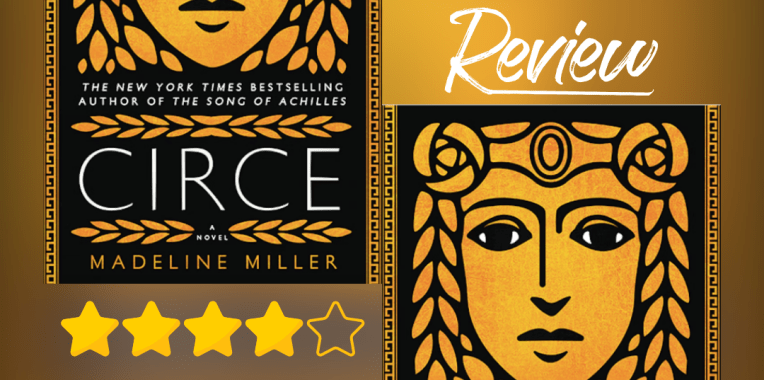
Book Review: Circe by Madeline Miller

By Caylah Coffeen

Rating: 4/5 stars

Circe is a decadently beautiful mythological retelling for fans of ancient Greek mythology and high literature alike, but its ending misses the emotional mark.

Snapshot

Circe makes an appearance in Homer’s The Odyssey as an antagonist who famously turns Odysseus’ men into pigs. Miller retells this story from her perspective, illuminating how her deeds intertwined with other mythic heroes and how the Fates spun the other threads of her life: her youth as a nymph daughter of Helios, her exile and discovery of sorcery, and her battle to save her oft-forgotten son and demigod Telegonus.

Characters: 4/5

Circe has clinical depression – an interesting take on an immortal. She is lonely, withdrawn, and finds it difficult to love or pursue anything in life. Yet she is staunchly principled, with a huge heart, a sharp mind, and a fiercely protective nature. 

She unfortunately models an “I’m not like other girls” attitude, showing nothing but contempt and standoffishness to all the other women in her life. She can’t be the only nymph or goddess in existence with a brain, yet she does nothing but mock the others for their vapid silliness, ignoring relatives and possible companions because she thinks herself better than every one of them. However, this doesn’t cross the line, partially because it’s accurate according to Greek myths – all the gods were capricious and petty. It’s also in line with how people with depression act, and comes across more as Circe drowning in misery and feeling bitterly out-of-place rather than pompous arrogance. 

Much of the book takes place with Circe in isolation, whether willingly or during her exile, and other characters pass in and out of her long life rather than taking the stage alongside her. I found her dynamic with her siblings and Hermes and Athena more compelling that her relationship with Odysseus and her son, despite their greater importance to the plot. 

Story: 3/5

This is a character focused story, not a plot driven-one. Miller has clearly done great research to make the world of the ancient Greeks come alive! She weaves so many myths through this one tale, from a perspective we’ve never seen! I had totally forgotten that Medea is Circe’s niece!

At times the book felt a bit slow, with Circe trapped alone on an island brewing plants for magic and feeling miserable. However, overall, Miller weaves together Circe’s 1000s of years of life masterfully, granting us a realistic female perspective in a mythos otherwise dominated by male narration.

I didn’t give this 5 stars for 2 reasons. One, the slowness and sometimes repetitive nature of the middle of the book. Two, the ending felt terribly frustrating, and in direct contradiction to the original myth and Greek philosophy. Looking back, Miller did plant the seeds of this ending, and it does tie in with Circe’s arc as Miller portrays it. But the ending is a very American take, not fitting with Greek ideas of life and death. Unlike her other changes to the myth which still fit with the world, the ending felt out of place, and did not seem to tie together Circe’s story or give readers emotional closure.  

Writing: 5/5

Miller’s writing drips off the page like ambrosia. I recall making many faces of pleasure while reading her delicious descriptions. 😀 I kept thinking of the phrase “decadently lyrical” to describe her style. I read this before her debut, The Song of Achilles, and have discovered that her writing has only improved since then. Phrases that felt a bit purple in The Song of Achilles have been refined here and feel completely fitting in the mouth of an immortal. 

Impact: 5/5

It’s been a long time since my heart leapt so much when reading a book. I fell in love with language and story all over again. The more you read, the harder it is to find something that moves you, and this book truly did. I became inspired to reshape my own writing as well. 

Audiobook Narration: 5/5

I listened to the audiobook version of this, and the narrator, Perdita Weeks, makes Miller’s words, already spun from gold, positively glow. What a delight to listen to, especially knowing this is how the Greeks would have enjoyed their stories – orally! 


Hi, I’m Caylah Coffeen, a freelance editor and marketer of sci-fi and fantasy books. I love reading and writing and am a follower of Jesus Christ.

I’ve worked for Monster Ivy Publishing and Eschler Editing, and am currently a weekly editor with Havok Publishing. Reach out to chat about books and publishing!

Thanks for stopping by my website! I hope you’ve found some helpful resources about reading, writing, and publishing. If you liked this article, here’s some more free content…

Now Featuring Book REVIEWS!

We’re excited to announce that our blog will now feature book reviews! We love supporting authors, and aside from buying their books, that’s the best way to do so!

There are infinite books in the world, a deliciously guilt-inducing amount piled up on our TBR lists, and more than we could possibly ever read in our lives… sigh, bookworm problems.

Unfortunately, this means we have to be selective about what we can review. So we will review our own curated list of books (that backlog though…) and accept requests for the following:

Science fiction, fantasy, and mythic and fairy (re)tellings…

  • With themes of faith or by Christian authors
  • By authors (particularly indie) located in the Southeastern US
  • With beautifully artful prose (e.x. Roger Zelazny, Madeline Miller)
  • Inspired by nonwestern places, people, and mythos
  • Anything that matches our manuscript wishlist!

These genres are open to interpretation. We’re all about genre-blending! However, we do not review apocalyptic or horror SFF or erotica.

You may request a review for your own book, on behalf of an author you like, or submit a review you’ve written yourself if it matches the above themes.

Head over to our book review page for more detailed guidelines and to submit a request.

Looking forward to reading your delightful stories!


Hi, I’m Caylah Coffeen, a freelance editor and marketer of sci-fi and fantasy books. I love reading and writing and am a follower of Jesus Christ.

I’ve worked for Monster Ivy Publishing and Eschler Editing, and am currently a weekly editor with Havok Publishing. Reach out to chat about books and publishing!

Thanks for stopping by my website! I hope you’ve found some helpful resources about reading, writing, and publishing. If you liked this article, here’s some more free content…

Prayer to my Shisho in Heaven

Guest Post By Sue Martha Shigemitsu

Note: “shishō”—Japanese word for “master” or “instructor”.

Dear Heavenly Father,

Thank you for giving me this opportunity to write.

Lord, You are Lord of All Creation and have created this world from nothing, bringing life to us.

Lord, because You are the Master Creator, I ask that You would be my Shishō—my Master and Instructor in creating things. I want to create with You, both something new and using what I already have; but I want to make things that honour You and give you glory. I want whatever I imagine, produce, and contribute to be things that glorify You by telling other about Your love and grace; to create stories, worlds, and characters that touch the hearts and minds of readers and inspire them to seek Your face. I want my writing to be flavoured with the saltiness of Your Word and brightened with the light of Your love and grace. However, I cannot do this alone, because this is something I know I can only accomplish if I work with You.

Lord, please help me. Show me, guide me and create with me these stories that are flavoured with Your saltiness and brightness—stories that make readers thirst for You and seek Your presence.

Lord, thank You for Your generous grace and abundant love that You have shown me. I pray I will share it through my life and writing, that others too will discover, learn, and grow in that same love and grace.

I leave all these things with You.

In Jesus’ Name I pray,

Amen

A young Japanese woman with a sweet, round face, glasses, and short-cropped hair stands inside a warm living space, smiling.

S.M. Shigemitsu is a Canadian fantasy writer of Japanese descent who published her debut novella, The Blue Bird of Happiness, on Amazon in 2022. She has also worked overseas as a teacher in Mongolia, Japan, and Bangladesh.


Hi, I’m Caylah Coffeen, a freelance editor and marketer of sci-fi and fantasy books. I love reading and writing and am a follower of Jesus Christ.

I’ve worked for Monster Ivy Publishing and Eschler Editing, and am currently a weekly editor with Havok Publishing. Reach out to chat about books and publishing!

Thanks for stopping by my website! I hope you’ve found some helpful resources about reading, writing, and publishing. If you liked this article, here’s some more free content…

A young redheaded woman sits dreamily in a lush forest clearing, sunlight cascading across her face. Open books float in the air all around her, and she holds one loosely propped against her bare feet.

Welcome Word-Lovers!

Welcome to A Writer’s Hand, Creative Cornerstones’ blog.

I’m Caylah Coffeen, the founder and head of editing and marketing.

I like to say my first love is Jesus, and my second love is books! What better way to live than in dedication to the first and greatest story, and in creation of our own new worlds and tales!

I’ve worked as a freelance editor and marketer for several years, and have gotten an exciting look behind the scenes at Monster Ivy Publishing and Eschler Editing. It’s so rewarding to help authors bring their stories to life! But it really is a team effort, so I’ve partnered with lovely cover artist Galadriel and copywriter Anneliese, who have themselves co-authored and published a fantasy adventure novel.

Our team finds inspiration from myths and epics, fantasy and sci-fi, historical fiction, and more. From the timeless power of Homer and the Bible, to the decadently lyrical words of Madeleine Miller and Roger Zelazny, to the sprawling worlds of Timothy Zahn and Brandon Sanderson, we have found tears, laughter, beauty, and passion in unforgettable measures.

We hope to share such joys with you here!

“She was with book, as a woman is with child.”

Till We Have Faces, C.S. Lewis

Whether you are an (aspiring) author or publishing professional, I hope you will find encouragement from the success stories, prayers, and deep discussions on craft you’ll find here.

We host guest posts from all kinds of word-lovers. If you’d like to share your ideas, hopes, and prayers, please find details on our submissions page.


Thanks for stopping by my website! I hope you’ve found some helpful resources about reading, writing, and publishing. If you liked this article, here’s some more free content…