“Toxic Femininity” – Where “Strong Female Characters” Went Wrong

By Caylah Coffeen

I recently picked up an epic fantasy book I had greatly anticipated reading – it promised unusual worldbuilding, an intricate plot, and a unique authorial voice. I didn’t make it through the first chapter.

In the opening, the main female character gets drunk, breaks into someone’s home to commit adultery, assaults the homeowner when he tries to stop her, and gets thrown in jail. When she wakes up, she bangs on the bars and yells at the guards to let her out, as though she’d done nothing wrong. A stranger, who greatly outranks her, bails her out and gets her acquitted because he wants to hire her. She struts out like she owns the place, doesn’t offer this man a single thank you, and instead mouths off at him, becoming offended that he expects her to work off her debt to him!

That’s when I stopped reading. I was astounded we were supposed to find this character likeable. Or even admire her defiant attitude and the gargantuan chip on her shoulder.

Unfortunately, this is the exact type of character readers can expect to see over and over again, advertised as a “strong female lead.”

I would use another word: cocksure. I’m sorry if you find that crass, but that’s the point – that’s exactly what these characters are.

The Double Standard

How is it that the word I’ve found to best describe these “strong female characters” has largely been used in the past to describe men being jerks? It’s pretty much the old word for “toxic masculinity!” If a male character acted the way these female characters do, that’s exactly what they’d be called! No, if they acted half so horribly, they would never have made it past a publisher’s slush pile. Instead, we would have seen acquisitions editors tweeting about how triggered they felt.

I’m glad that publishing has enacted a higher standard for male characters! So many male “heroes” in books do treat everyone around them terribly, break their word, kill and torture without remorse, look out only for themselves, emotionally abuse their friends, abandon their families, and drink, swear, and fight with impunity. It continues to horrify me that stories like Prince of Thorns were ever published, and I’m relieved that publishers would reject such books today.

But I don’t want to read about hubristic, “antihero” women any more than I want to read about sociopathic, egotistical men. So why is this behavior seen as not just acceptable, but “cool” when enacted by women?

It shouldn’t be, for two reasons. But before I get into why, let’s define our terms.

“Toxic” or “Sinful?”

I’m a Christian, and I’m fine with using the phrase “toxic masculinity” because men are sinners, and like all sinners, glorify their sin as right. The world’s version of a “strong man” is extremely different from God’s version, and yes, it’s often toxic. Greed, rape (jokes), idolatry, and violence are all sins that God condemns. In the Bible, the “men after his own heart,” are faithful, humble, selfless, obedient to his law, self-controlled, and gracious. This is “righteous masculinity,” nothing like the “locker room boasters” which our culture has seen as cool (in the past). And praise God for the men who seek to be made anew in such a way!

When women call out “toxic masculinity,” I feel a lot of compassion for people who are often coming from non-Christian households. They’ve never met a godly man in their life, and they don’t have the words to explain why their relationships feel so wrong. So they use terms given to them by mental health professionals.

However, I know that many modern* feminists also use the phrase “toxic masculinity” to assert that the idea of gender differences and the existence of masculinity are in themselves toxic. I reject that claim and do not use the phrase in such a way.

*Early feminists were wonderfully brave women who championed equal rights under the law and were almost all Christians, so please be careful if you’re tempted to make blanket denigrating statements about feminists. I encourage you to read about the different “waves” of feminism to understand how/when things went wrong.

Our culture also praises the sins of women, glorifying selfish, petty, greedy, cruel speech and actions as “subversive, bold, driven, audacious, or strong.” We could refer to this as “toxic femininity,” and indeed if we are going to call out sinful masculinity, then we should be willing to do the same for sinful versions of femininity.

Though perhaps it’d be much better if we dropped this phrase entirely, in favor of biblical language. The Bible uses different words than “toxic”:

Righteous or wicked
Godly or ungodly
Integrity or crookedness
Alive in Christ or dead in sin
The wise or the fools

What does Proverbs tell us about what it looks like to live a righteous life?

The righteous hate what is false, but the wicked make themselves a stench and bring shame on themselves.
The heart of the righteous weighs its answers, but the mouth of the wicked gushes evil.
The righteous detest the dishonest; the wicked detest the upright.

Proverbs 13:5, 15:28, 29:27

I yearn to read about main characters who are considered heroes because they are righteous, not because they are wicked!

How dare publishers act as though they’ve made a stand for morality, only to turn around and espouse those same evils when committed by people like themselves! And these new heroes aren’t even well written.

Most “Strong Female Characters” Are Badly Written

It wasn’t just a shift in culture that led to a decline in the “toxically masculine” character. Publishers just started pointing out that such characters are often badly written and make for flat stories. Which is true.

Contemporary female leads, like many stereotypical male leads in older books (prophesied farm boy), are often 2-dimensional, cut-and-pasted copies of each other. Handing a girl a sword doesn’t give her a personality, though apparently it gives the author an excuse not to develop one. The most noticeable things about them, aside from their superior talent and skills, are their entitlement, aggression, arrogance, and air of martyrdom. When the story starts, they are the universe’s gift to humanity, and when the story ends, they are the universe’s greater gift to humanity.

Readers see very little character development, with the exception of “healing” from whatever injustice the world has perpetrated against the main character. There are no personal flaws they need to face and overcome. Everything is someone else’s fault. This makes for extremely boring storytelling. It breaks the cardinal rule of character development.

Everyone who’s taken an intro to creative writing course knows the joke about “the frat boy who signed up to get an easy humanities credit”: The guy writes a story about a perfectly handsome, intelligent, desirable young man who breezes through all his problems and gets the girl who wrongly rejected him before. The professor has to explain that a good (and realistic) story needs flawed protagonists (not the same as morally grey) and problems that they can’t immediately overcome. This creates tension in the plot and spurs development in the character. Usually, the new writer resists, because their character is actually a self-insert and they feel personally attacked at the implication that they have flaws.

These points are no less true for female writers and female characters. In fact, these days male writers are much more likely to accept feedback when you tell them their character needs work – I know, I’ve worked with quite a few developing male writers. But female writers are likely to get up in arms if anyone criticizes how unrealistic or entitled their female characters are. Because these authors are often living out their dreams of being able to get away with literal crime, say whatever they want to the men in their life, and be respected and taken seriously for it.

And, predictably, the characters and plot of these stories suffer for it. Yet publishers will ignore these obvious problems when they’re seen in female characters, because they too are fantasizing about walking around like god and being worshiped for it – as all sinful humans do.

Which brings me to the second reason why we should reject “toxic femininity” – the glorification of unrighteous women – in books.

Bad Ideology, Bad Examples

The version of femininity which is portrayed in so many of these stories is not something I want to embody. I don’t find these women strong. They are not good role models. Most of them are angry, bitter, self-absorbed individuals who hate authority, are isolated from healthy community and family, and listen to no one but themselves. They are unrighteous and thoroughly broken.

These characters embody everything that women have called out as wrong in male behavior. At least modern feminists have gotten more honest. Their actual message is, “men shouldn’t play god, but women are god.” I suppose these books sell because fallen people do relate to this desire. I don’t know why anyone is shocked – this is the oldest sin there is.

“You will be like God, knowing good and evil.”

Yours truthlessly,
Satan

That’s the message publishers are selling to girls: “you can be like god.” Girls down these books like cheap shots, craving temporary gratification in place of the answer that will truly quench their thirst. Such stories can never satisfy, because they run in direct opposition to the Great Story, which tells of a plain, humble, kind man doing what is right and vanquishing evil at great cost to himself, for the sake of others.

This doesn’t mean I only want to read stories about knights saving damsels in distress from dragons, though the trope is justifiably iconic (pun intended)! This is one major reason why I personally prefer reading about male mc’s.

But I do want Queens who save their kingdom from evil. Yes, give me heroines running around in capes and busting out martial arts moves. I need to read stories about female strategists, inventors, explorers, and more. AND I want to read stories about mothers, sisters, shy girls, bookworms, wives, and any other profession out there.

SO LONG as all these women first and foremost embody integrity, kindness, faithfulness, humility, goodness, and other signs of godly character. So long as her flaws and mistakes are actually portrayed as problematic and she actively wrestles to overcome them!

We have beautiful examples to guide us!

Noah’s wife cared for her family through the ending of the world, Abigail defied her wicked husband, Ruth braved the wilderness and poverty for love, Esther faced the emperor of the known world head on, Mary encountered an eldritch creature with who knows how many eyeballs and sang for joy. Jael and the woman of Thebez smashed open the heads of villains with household implements!

The woman of Thebez wields her deadly millstone

These are strong women, brave women, faithful women – women after God’s own heart.

Don’t believe the world’s picture of femininity. It is toxic. It is the way that leads to death. I urge you not to write self-absorbed, 2D, arrogant female OR male characters, but to look at the truth of God’s word and write stories that would please him and better teach us how to hear his story.

P.S. If anyone wants to make a biblical argument in favor of the descriptor “toxic,” I’m all ears (Matt 16:6). After all, a little Axe body spray goes a long way. 😉


Hi, I’m Caylah Coffeen, a freelance editor and marketer of sci-fi and fantasy books. I love reading and writing and am a follower of Jesus Christ.

I’ve worked for Monster Ivy Publishing and Eschler Editing, and am currently a weekly editor with Havok Publishing. Reach out to chat about books and publishing!

Thanks for stopping by my website! I hope you’ve found some helpful resources about reading, writing, and publishing. If you liked this article, here’s some more free content…

Character Development Questions – Beginner, Intermediate, and Advanced

A character has popped into your head, and now you want to write them! How do you develop this character to feel realistic and make readers care about them? Imagine yourself sitting down in a tavern to get to know your character. What kind of questions would you ask them?

To help you get started, I’ve listed beginner questions that go over the basics like appearance, skills, and backstory. Then, some intermediate questions that further examine who your character is and why they behave as they do. Finally, if you’ve been writing for a long time, feel stuck, or are looking for some questions you might not find on other character development sheets, we have some advanced questions that dig further into the psychology of your character.

Use this as a brainstorming resource, but don’t force yourself to answer everything! I encourage you to write down your answers as mini scenes – just listing traits gets boring pretty fast. You can download an editable Word document with all the questions here. Or I like to start a Pinterest/mood board to “collect” my character’s outfits, weapons, and castles! The first rule is have fun!

  1. Stage 1 – Beginner character development questions
  2. Stage 2 – Intermediate character development questions
  3. Stage 3 – Advanced character development questions

Stage 1 – Beginner Character Development Questions

These are the bare bones that you need to know as a writer in order to craft a compelling story.

Defining Features

What is their name and what does it mean? (Are their parents actually the type of people who’d give them a profound/unique name?) How do they feel about their name?

What are their physical features? What do they like and dislike about their own body?

How do they dress and groom (makeup, tattoos) and is this important to them?

What are some of your character’s favorite things (foods, clothes, activities, romantic types)?

What are some of their dislikes (phobias, allergies, irritating childhood acquaintances, pet peeves)? What are their dealbreakers?

Status Quo

What does their everyday life look like (job, school, social life)?

What is their socioeconomic status and how does this affect them? How large of a role does money play in their mindset?

What do they like about their current life?

What do they wish they could change?

“Stats”

What’s something your character is good at? Do they like this about themself?

What’s something they’re bad at? Do they dislike this about themself?

What’s their highest level of education or training (in a skill or craft)? How quickly do they learn new things?

Social Circle

Who are their closest friends and family and how healthy are these relationships?

Who are your character’s enemies (or rivals, or people they dislike)? Why?

What are some defining features (traditions, mannerisms, habits) of their culture of origin?

Do they like or dislike their culture (hate big family gatherings, like greeting people with a kiss, chafe under strict hierarchies etc.)?

How do other characters perceive your mc on average (e.x. the town clown, the teacher’s pet, the eccentric recluse)?

Inner Life

What is your character’s driving goal, desire, or need?

What makes your character laugh?

What makes them cry?

What makes them angry?

How do they demonstrate intense emotions (lash out, suppress it, talk it out)?

Stage 2 – Intermediate Character Development Questions

Here, we start to get into greater detail, fleshing out what you already know. The reader doesn’t need to know all of these facts, but they will affect how you write the character. In fact, many of these details will enhance a story most if they are not explicitly stated, but shown over time as a pattern of behavior. Don’t tell the reader your mc will start a fight with someone who makes them feel stupid, but remains calm when hangry – show us and let us draw our own conclusions.

Environment

What is their dwelling place like and what makes them feel most at home (luxurious, homey, full of people, quiet, near nature, etc.)?

How important are possessions and ownership to them (are material items important, do they keep heirlooms and collections, are they a minimalist)?

How in tune are they with their surroundings? Do they notice shifting details?

Personality (Behavioral Patterns)

What is their personality type (use any common personality test or get started with the questions below)?
How comfortable are they around strangers and do social interactions drain or enliven them?
Do they make decisions based primarily on emotion or logical reasoning?
Are they rule abiding or free spirits?
Do they perform better in structured settings or with flexibility?
Are they better at street smarts or book smarts?
Are they a motivated worker and curious learner?

^TIP: Be aware of how your own personality affects how you write characters. I’ve read characters who were supposed to be outgoing, but spent most of their time (even in group situations) internally thinking about what was going on around them – that’s an introverted behavior which the author likely defaulted to out of familiarity.

What’s your character’s love language?

How do they behave when pushed to the brink (exhausted, grieving, in pain, hungry, trapped)? Do they have differing responses to varying threats?
– E.x. some people respond well to an intellectual challenge, but cave under physical pressure, and vice versa.

Relationships

How do they form relationships with others?
– Do they have a lot of friends, or a few deep ones?
– Do they take a while to open up to people, or strike up a conversation with everyone they meet?

What are the requirements for joining their inner circle?

How much weight do they put on how other people view them? How much are they motivated by external social pressure?

Are they aware of their reputation? Is their self-image in line with their external one?

Past

What’s a part of their upbringing that they have rejected?

What’s something your character is truly proud of?

What’s something your character deeply regrets?

What’s the worst thing that’s ever happened to them?

What’s something/someone they miss?

Quirks

What’s a unique physical quirk of theirs (birthmark, can or cannot roll their tongue, weirdly flexible in a certain part of their body, fingernails grow super fast)?

What are their physical advantages (5 senses, looks, stamina, great at power-naps)?

What are their physical disadvantages (weak knees, prone to headaches, jittery, natural sprinters – just terrible at long-distance running)?

What are their mental advantages and disadvantages (mental health disorders, intelligence, memory, focus, creativity, problem-solving capacity, executive function ability)?

Habits

Night owl or early bird?

Heavy or light eater?

Do they partake in intoxicating substances? What kind of a drunk are they (flirty, weepy, loud)?

What are their opinions and preferences about sex?

What’s a habit or mistake your character just can’t seem to shake (being late, forgetting things, picking toxic partners)?

Beliefs

What are their deepest beliefs and convictions?
– This could refer to religion, ideology, and political alignment, but also to internal codes like “family first,” or “no good deed goes unpunished,” or “every man paves their own way.”

What is their mindset toward death? How was this shaped (personal experience, upbringing)?

What’s something they could not live without? Do they know this about themself?
– Many people think they can’t live without their career or a certain part of their identity, only to discover what “truly matters” the hard way.

Has your character ever committed a crime? What is their attitude toward the law?

Stage 3 – Advanced Character Development Questions

Many stories do not take their characters further than stage two. People are more than a list of personality traits, features, and needs, and are certainly more than what we can see in a plot. We learn, but then regress, change, and then change again. People are complex and demonstrate inconsistencies in both thought and behavior. This round of questions seeks to go past “what” and “who” your character is and ask “why?” Digging deeper into your character’s psyche can push your story to become more meaningful, enhancing themes and character arcs.

But sometimes a story is richer for the things the author knows, which take place off the page, but which aren’t necessarily resolved in the book. These are the type of things you might wish to keep as secrets from your readers. Or never fully show – there’s nothing quite so tantalizing as a half-revealed backstory. A great story will spark additional levels of imagination in your readers, because they can sense that your imagination went to greater depths. They’ll chase after you if you give them the seeds for thought.

What is the nature of their character (ethos), and more importantly why?
– In the past, people might have asked if a man or woman was of “good character,” referring to the level of integrity, honor, or virtue a person displayed. Today, we might instead ask after a person’s “true colors,” in an attempt to see if someone acts morally or immorally.
– Is your character honest or do they lie easily? Do they keep their word or are they flaky? Do they treat others respectfully or degradingly? Do they have a strong work ethic or are they lazy? Are they magnanimous or self-centered? Are they fair and consistent in their dealings with others?

What are some internal inconsistencies in your character’s behaviors, thought-processes, or belief systems?

What does your character get wrong about themself?
– People think they understand themselves, and often they don’t. Some people will switch jobs, partners, or homes, only to realize they preferred their old one, but didn’t understand why.

Is your character deliberate about their relational boundaries? How did they learn them? If they have not, are they a pushover, emotionally codependent, callously indifferent to others?

Do your character’s hobbies actually affect how they think and interact with the world on a daily basis?
– For instance, if your character is a musician, they’ll likely hum a lot, notice sounds and voices more than others, and make metaphors based around music. An artist will see color and shape in unique ways and go out of their way to see pretty things. An engineer or handyman might collect odds and ends and tinker with things as they sit and talk with friends. It’s not enough to state that your character likes something – it has to actually visibly impact their life and behavior.

How in tune is your character with other peoples’ inner lives?
– Are they a good judge of character, sensitive to emotions, and know the right thing to say at the right time, or do they miss the mark, guess at peoples’ motivations, or act on instinct rather than insight?

How well does your character understand themself?
– Are they aware of their own capacity for self-insight, or deluded by their vision of themself?
– Do they want to understand themself better and actively reflect upon themself?

How do they reconcile with others?
– For instance, do they need time to cool off after an argument, or do they want to clear the air right away? Do they want a detailed breakdown showing the other person understood why they were angry, or do they want the other person to make a gesture to make up for it?
– How do they make amends when they were in the wrong?

What’s their style of conversation?
– Authors can fall into the trap of making all their characters converse in a similar style (to them). But different people converse in a variety of ways. Do they love or hate small talk? Love deep discussions or not want to touch anything personal with a 10 foot pole. People have conversational quirks like: telling the same story over and over again even though people are sick of hearing it, info dumping a lot at once about a topic they find interesting, saying very little for a while and then stunning everyone with something powerful and profound, asking a lot of questions in response to what others say, asking no questions about others but instead replying with a similar anecdote of something that happened to them.
– Some people are good listeners, while others won’t shut up about themselves. Some people pause a lot between words, while others talk a mile a minute. Lean into these unique idiosyncrasies! The way people talk (or don’t) to each other can be a huge barrier in relationships and an interesting point of conflict in a story.

How do their unique traits bring out different qualities in their companions?
– People respond to others in different ways. Not everyone will love, hate, or laugh around your character. Sometimes a main character comes across as boring not (just) because they’re a reader insert, but because everyone in the story responds to them in the exact same way. In a single group, your main character might bring out courage in one individual, belligerence in another, and attraction in a third.
– The best stories are ones that don’t have only strongly developed characters, but also strongly developed character dynamics. Do these individuals bring out the best or worst in each other? Stories are formed when people clash and bond in unique ways that evolve over time.

Download the Word Doc to Start Writing!


Hi, I’m Caylah Coffeen, a freelance editor and marketer of sci-fi and fantasy books. I love reading and writing and am a follower of Jesus Christ.

I’ve worked for Monster Ivy Publishing and Eschler Editing, and am currently a weekly editor with Havok Publishing. Reach out to chat about books and publishing!

Thanks for stopping by my website! I hope you’ve found some helpful resources about reading, writing, and publishing. If you liked this article, here’s some more free content…

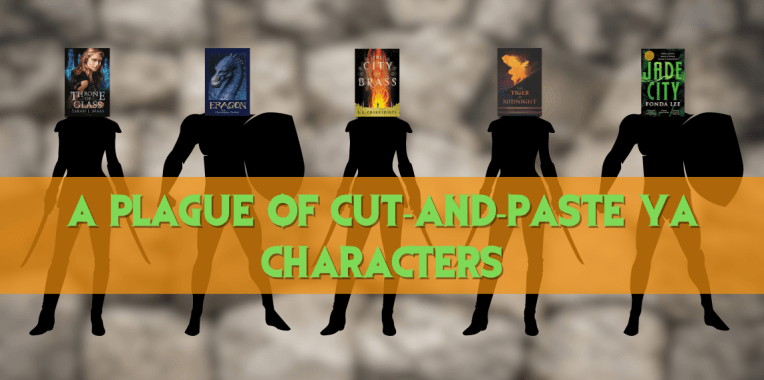
YA Books Suffer a Plague of Cut-and-Paste Personalities and Reader-Insert Characters

By Caylah Coffeen

Fantasy and science fiction have become more unique and diverse in the past 5 years alone. As a reader, I’m delighted to see a sudden surge of genre blending, plus stories set in non-western places, by authors from all over the world! I keep picking up these books, only to put them down in frustration when the main character doesn’t live up to the concept.

In the past couple years I’ve started and dropped Throne of Glass, The City of Brass, Spin the Dawn, Jade City, The Tiger at Midnight, Empire of Sand, and more despite absolutely loving the worldbuilding and premise of all of them.

I could not resonate with any of the main characters. After trying all of these in quick succession, it occurred to me that I could swap any of the female leads, and I wouldn’t be able to tell the difference. They faced problems the same way, talked smack the same way, and reacted to people and changes with a seemingly identical script.

To those who might protest that I’ve just outgrown these characters (that was my first thought too – it’s been a while since I was 17), I’d remind you that the largest demographic for YA readers is not actually teenagers, but women in their 30s-40s!

As another disclaimer, the most common reason I will drop a book is if the characters don’t catch me. I’ve done this plenty of times with adult books. But I’ve noticed a distinct pattern to why young adult characters in particular can fall flat.

Mashing together all personality traits to maximize “reader-insert” potential

These days, large publishing houses only buy books they can mass market. This means they look for stories and characters with the greatest appeal for the greatest number of people. Unfortunately, this results in characters who seem to embody all major personality traits melded together. After all, you want any reader to be able to insert themself.

Some people love personality tests, others hate them, and most agree that there is little scientific basis to any of them. Regardless of your stance, I’m going to reference the Myers Briggs test to illustrate this point.

The Myers Briggs test breaks personalities into 4 categories where people fall along a scale between two major traits. You’re probably familiar with the scale of introversion/extroversion. Most people fall closer to one than the other. Some people fall right in the middle and call themselves ambiverts, and that’s possible for the other categories in the personality test too. This is where we see great variety in people – after all, even if you share the same “type,” no two people are the same.

But I’ve never once met someone who would say that they fall in the middle for every single trait in this (or another personality) test. But that’s just what most YA characters seem to be – an average of everything.

Let’s break down each personality category for some concrete examples. (I won’t explain the test in much detail below, as that’s not the point of this article, but you can find more information about it here.)

Introversion/Extroversion –

Most YA characters I’ve encountered lately are a bit reserved, with one or two close friends, yet they also have little problem meeting new people, engaging in large groups, or persuading strangers and influential people to their opinion. These characters have a small inner circle, or very little in the way of a social support structure, but this often seems more like a choice, as if the rest of the world is just not as cool as them. But if they only put their mind to it, of course they could be the most popular girl in the room (Katniss).

One of the major problems with this is that the character gets to experience the best of both worlds, without the downsides of either. They don’t get nervous and make awkward mistakes in big groups, and they don’t talk way too much and put people off. This makes for boring character development – a rounded character needs weaknesses. But when you average out extremes of a personality, you avoid a lot of (interesting) problems that could make their story more unique.

Book Smarts/Street Smarts (Intuitive/Sensing) –

Can you pick up knife throwing in a week and best everyone else in your party? But can you also analyze a new political landscape and design a strategy that people 30 years your senior somehow never thought of? Well, most YA characters can do both!

They’re athletic, hands on, and pick up new skills quickly, making their odds of survival great. But they’re also of above-average intelligence and are great at coming up with clever plans on the fly, even in situations they’ve never encountered before.

It’d be more interesting if these characters had one set of skills in which they excelled, and struggled with other areas. Someone who spends their whole life physically training will probably have trouble focusing on a book about the local religion and vice versa.

But while characters often make jokes like, “oh, I’m terrible at math,” or “if our wagon wheel breaks, we’ll be stranded for 3 weeks,” these supposed weaknesses never actually affect the character and plot. They still cobble together practical fixes and have no trouble budgeting their finances while on a mad dash across the kingdom.

Feeling/Thinking (what you Primarily base your decisions on) –

Teenagers are hormonal and emotional, and so many YA characters understandably make their decisions based on their feelings in the moment. Yet, likely because authors don’t want their female characters accused of being “controlled by their emotions,” they feel the need to portray their characters as perfectly aware of all logical routes and just willfully choosing otherwise.

For instance, in a book I recently started, we’re introduced to the FL as she spins a magic spell in a public square. She hates this spell and wants to deviate from her mentor’s instructions. She feels very strongly about this, but looks into her mentor’s eyes, sees the warning, remembers her teacher could abandon and leave her in poverty, or that the king could have her executed for the deviation.

She thinks through all these reasons even as she’s apparently swept up by her own emotions. Then decides, “I’m going to do it anyway.” The spell shatters and she is punished – an entirely avoidable scenario.

More and more, I see scenes like this, where the character creates problems for themselves with stupid decisions. That’s definitely something humans do ALL THE TIME. But these choices are often strangely depicted, not as stupid, but as daring or assertive.

And again, these authors are trying to have the best of both worlds – “oh, yes my character feels very deeply and just gets carried away sometimes – don’t we all? Oh, but she didn’t really get carried away – you see, she thought through every possible problematic outcome first, and just decided to face them all! It’s not like she’s foolish or incapable of controlling herself.” Um… ok?

Go-with-the-flow/Structured (Perceiving/Judging) –

Again, many teenagers are impulsive as a result of their rapidly shifting hormones, so it’s not too much of a stretch that many YA characters would be perfectly happy to abandon their home on short notice for a new quest. But people still tend to prefer one or the other in their life and day-to-day schedules – flexibility or consistency.

Yet so many of these impulsive characters also fit perfectly fine into more structured scenarios. I need to go undercover at a royal court, which has a rigid set of rules? No problem! I’m not bouncing on the balls of my feet all day – I can keep my cool perfectly in any situation.

Some characters are the opposite – they’ve grown up with the same schedule every day (a farm, the military, a magic school), but when their whole world is upturned, they do just fine.

Sure, they may miss their old life, but they don’t feel lost, agitated, lose sleep or perform more poorly than usual because of this sudden shift which does not suit their needs. Or if they do, they very quickly overcome it, as though it was just a habit, and not one of their core traits as a person.

YA personalities embody everything and nothing

Whether you agree with this way of analyzing a personality or not, the point is, YA characters these days are designed to embody everything and nothing at the same time, so that they will resonate with the most readers.

This is not only unrealistic, but makes these characters exceptionally boring. Where are the unique quirks and flaws that make you laugh and want to talk about a character for years to come?

I have a couple friends who love YA, and it’s struck me that no matter how many YA books they recommend to me, they never say, “oh, I just loved this character because x.” They rarely mention the characters at all. Because most of these books are situational – they’re about what happens, not who is facing these trials.

But do readers actually want characters like this? Sarah J. Mass books are wildly popular after all – so clearly plenty of readers love these stories, but do they really love these characters?

Or do they get swept up in the quick pace and frenetic emotions that define the YA genre, and not realize that if the plot paused, they might not really care about the characters themselves?

Writing Tips: how to avoid this pitfall

Personality tests can be a fun way to analyze your character and make sure you write them with consistent reactions across your stories. It can also help you flag if you’re writing too many characters of the same type. That’s only natural as writers – we write what we’re familiar with and drawn to. But opposites attract and create all sorts of other sparks that make for great stories.

If you’re writing a female young adult character, you may be afraid to give her flaws, especially ones that women have often been accused of, and with good reason. Women are far too often portrayed negatively in fiction. But it’s just as bad when they’re underdeveloped, 2-dimensional, or cut-and-pasted.

If you play it too safe, making your character a little too perfect, too talented, or too generic, you’ll unintentionally be adding to the crowd of flat female characters. Be bold! Give your female characters personalities with more extreme quirks. Some readers may be turned off. Who cares? There should be a space in fiction for all sorts of main characters, not just the brash, aloof Homecoming Queens.

Writers hate on ourselves and compare ourselves way too much to others, so I say this with caution, but it’s worth asking if your character feels too similar to a slew of other heroes. I’m also a marketing professional, and it’s necessary to analyze the market.

If you see a lot of similar characters out there, it can mean they’re in high demand – readers do seek out the same archetypal characters again and again (the antihero, the guy next door, the angsty assassin). But it’s also a sign that your character may not feel original to your readers. Trends do come and go, and if a press has already published a lot of Sarah J. Mass lookalikes, they, and their readers, may be looking for something fresh.


Hi, I’m Caylah Coffeen, a freelance editor and marketer of sci-fi and fantasy books. I love reading and writing and am a follower of Jesus Christ.

I’ve worked for Monster Ivy Publishing and Eschler Editing, and am currently a weekly editor with Havok Publishing. Reach out to chat about books and publishing!

Thanks for stopping by my website! I hope you’ve found some helpful resources about reading, writing, and publishing. If you liked this article, here’s some more free content…