By Caylah Coffeen
I recently picked up an epic fantasy book I had greatly anticipated reading – it promised unusual worldbuilding, an intricate plot, and a unique authorial voice. I didn’t make it through the first chapter.
In the opening, the main female character gets drunk, breaks into someone’s home to commit adultery, assaults the homeowner when he tries to stop her, and gets thrown in jail. When she wakes up, she bangs on the bars and yells at the guards to let her out, as though she’d done nothing wrong. A stranger, who greatly outranks her, bails her out and gets her acquitted because he wants to hire her. She struts out like she owns the place, doesn’t offer this man a single thank you, and instead mouths off at him, becoming offended that he expects her to work off her debt to him!
That’s when I stopped reading. I was astounded we were supposed to find this character likeable. Or even admire her defiant attitude and the gargantuan chip on her shoulder.
Unfortunately, this is the exact type of character readers can expect to see over and over again, advertised as a “strong female lead.”
I would use another word: cocksure. I’m sorry if you find that crass, but that’s the point – that’s exactly what these characters are.

The Double Standard
How is it that the word I’ve found to best describe these “strong female characters” has largely been used in the past to describe men being jerks? It’s pretty much the old word for “toxic masculinity!” If a male character acted the way these female characters do, that’s exactly what they’d be called! No, if they acted half so horribly, they would never have made it past a publisher’s slush pile. Instead, we would have seen acquisitions editors tweeting about how triggered they felt.
I’m glad that publishing has enacted a higher standard for male characters! So many male “heroes” in books do treat everyone around them terribly, break their word, kill and torture without remorse, look out only for themselves, emotionally abuse their friends, abandon their families, and drink, swear, and fight with impunity. It continues to horrify me that stories like Prince of Thorns were ever published, and I’m relieved that publishers would reject such books today.
But I don’t want to read about hubristic, “antihero” women any more than I want to read about sociopathic, egotistical men. So why is this behavior seen as not just acceptable, but “cool” when enacted by women?
It shouldn’t be, for two reasons. But before I get into why, let’s define our terms.
“Toxic” or “Sinful?”
I’m a Christian, and I’m fine with using the phrase “toxic masculinity” because men are sinners, and like all sinners, glorify their sin as right. The world’s version of a “strong man” is extremely different from God’s version, and yes, it’s often toxic. Greed, rape (jokes), idolatry, and violence are all sins that God condemns. In the Bible, the “men after his own heart,” are faithful, humble, selfless, obedient to his law, self-controlled, and gracious. This is “righteous masculinity,” nothing like the “locker room boasters” which our culture has seen as cool (in the past). And praise God for the men who seek to be made anew in such a way!
When women call out “toxic masculinity,” I feel a lot of compassion for people who are often coming from non-Christian households. They’ve never met a godly man in their life, and they don’t have the words to explain why their relationships feel so wrong. So they use terms given to them by mental health professionals.
However, I know that many modern* feminists also use the phrase “toxic masculinity” to assert that the idea of gender differences and the existence of masculinity are in themselves toxic. I reject that claim and do not use the phrase in such a way.
*Early feminists were wonderfully brave women who championed equal rights under the law and were almost all Christians, so please be careful if you’re tempted to make blanket denigrating statements about feminists. I encourage you to read about the different “waves” of feminism to understand how/when things went wrong.
Our culture also praises the sins of women, glorifying selfish, petty, greedy, cruel speech and actions as “subversive, bold, driven, audacious, or strong.” We could refer to this as “toxic femininity,” and indeed if we are going to call out sinful masculinity, then we should be willing to do the same for sinful versions of femininity.
Though perhaps it’d be much better if we dropped this phrase entirely, in favor of biblical language. The Bible uses different words than “toxic”:
Righteous or wicked
Godly or ungodly
Integrity or crookedness
Alive in Christ or dead in sin
The wise or the fools
What does Proverbs tell us about what it looks like to live a righteous life?
The righteous hate what is false, but the wicked make themselves a stench and bring shame on themselves.
Proverbs 13:5, 15:28, 29:27
The heart of the righteous weighs its answers, but the mouth of the wicked gushes evil.
The righteous detest the dishonest; the wicked detest the upright.
I yearn to read about main characters who are considered heroes because they are righteous, not because they are wicked!
How dare publishers act as though they’ve made a stand for morality, only to turn around and espouse those same evils when committed by people like themselves! And these new heroes aren’t even well written.
Most “Strong Female Characters” Are Badly Written
It wasn’t just a shift in culture that led to a decline in the “toxically masculine” character. Publishers just started pointing out that such characters are often badly written and make for flat stories. Which is true.
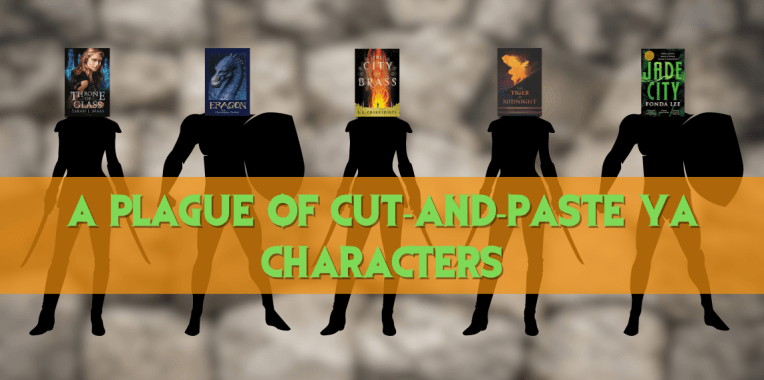
Contemporary female leads, like many stereotypical male leads in older books (prophesied farm boy), are often 2-dimensional, cut-and-pasted copies of each other. Handing a girl a sword doesn’t give her a personality, though apparently it gives the author an excuse not to develop one. The most noticeable things about them, aside from their superior talent and skills, are their entitlement, aggression, arrogance, and air of martyrdom. When the story starts, they are the universe’s gift to humanity, and when the story ends, they are the universe’s greater gift to humanity.
Readers see very little character development, with the exception of “healing” from whatever injustice the world has perpetrated against the main character. There are no personal flaws they need to face and overcome. Everything is someone else’s fault. This makes for extremely boring storytelling. It breaks the cardinal rule of character development.
Everyone who’s taken an intro to creative writing course knows the joke about “the frat boy who signed up to get an easy humanities credit”: The guy writes a story about a perfectly handsome, intelligent, desirable young man who breezes through all his problems and gets the girl who wrongly rejected him before. The professor has to explain that a good (and realistic) story needs flawed protagonists (not the same as morally grey) and problems that they can’t immediately overcome. This creates tension in the plot and spurs development in the character. Usually, the new writer resists, because their character is actually a self-insert and they feel personally attacked at the implication that they have flaws.
These points are no less true for female writers and female characters. In fact, these days male writers are much more likely to accept feedback when you tell them their character needs work – I know, I’ve worked with quite a few developing male writers. But female writers are likely to get up in arms if anyone criticizes how unrealistic or entitled their female characters are. Because these authors are often living out their dreams of being able to get away with literal crime, say whatever they want to the men in their life, and be respected and taken seriously for it.
And, predictably, the characters and plot of these stories suffer for it. Yet publishers will ignore these obvious problems when they’re seen in female characters, because they too are fantasizing about walking around like god and being worshiped for it – as all sinful humans do.
Which brings me to the second reason why we should reject “toxic femininity” – the glorification of unrighteous women – in books.
Bad Ideology, Bad Examples
The version of femininity which is portrayed in so many of these stories is not something I want to embody. I don’t find these women strong. They are not good role models. Most of them are angry, bitter, self-absorbed individuals who hate authority, are isolated from healthy community and family, and listen to no one but themselves. They are unrighteous and thoroughly broken.
These characters embody everything that women have called out as wrong in male behavior. At least modern feminists have gotten more honest. Their actual message is, “men shouldn’t play god, but women are god.” I suppose these books sell because fallen people do relate to this desire. I don’t know why anyone is shocked – this is the oldest sin there is.
“You will be like God, knowing good and evil.”
Yours truthlessly,
Satan
That’s the message publishers are selling to girls: “you can be like god.” Girls down these books like cheap shots, craving temporary gratification in place of the answer that will truly quench their thirst. Such stories can never satisfy, because they run in direct opposition to the Great Story, which tells of a plain, humble, kind man doing what is right and vanquishing evil at great cost to himself, for the sake of others.
This doesn’t mean I only want to read stories about knights saving damsels in distress from dragons, though the trope is justifiably iconic (pun intended)! This is one major reason why I personally prefer reading about male mc’s.
But I do want Queens who save their kingdom from evil. Yes, give me heroines running around in capes and busting out martial arts moves. I need to read stories about female strategists, inventors, explorers, and more. AND I want to read stories about mothers, sisters, shy girls, bookworms, wives, and any other profession out there.
SO LONG as all these women first and foremost embody integrity, kindness, faithfulness, humility, goodness, and other signs of godly character. So long as her flaws and mistakes are actually portrayed as problematic and she actively wrestles to overcome them!
We have beautiful examples to guide us!
Noah’s wife cared for her family through the ending of the world, Abigail defied her wicked husband, Ruth braved the wilderness and poverty for love, Esther faced the emperor of the known world head on, Mary encountered an eldritch creature with who knows how many eyeballs and sang for joy. Jael and the woman of Thebez smashed open the heads of villains with household implements!

The woman of Thebez wields her deadly millstone
These are strong women, brave women, faithful women – women after God’s own heart.
Don’t believe the world’s picture of femininity. It is toxic. It is the way that leads to death. I urge you not to write self-absorbed, 2D, arrogant female OR male characters, but to look at the truth of God’s word and write stories that would please him and better teach us how to hear his story.
P.S. If anyone wants to make a biblical argument in favor of the descriptor “toxic,” I’m all ears (Matt 16:6). After all, a little Axe body spray goes a long way. 😉

Hi, I’m Caylah Coffeen, a freelance editor and marketer of sci-fi and fantasy books. I love reading and writing and am a follower of Jesus Christ.
I’ve worked for Monster Ivy Publishing and Eschler Editing, and am currently a weekly editor with Havok Publishing. Reach out to chat about books and publishing!
Thanks for stopping by my website! I hope you’ve found some helpful resources about reading, writing, and publishing. If you liked this article, here’s some more free content…
- Explore this guest post on why Christians should read fantasy
- Send me an email to receive a free sample edit on the first 5 pages of your story
- Subscribe for future posts