3 Mini Book Reviews of Fantasy Gladiator Novels

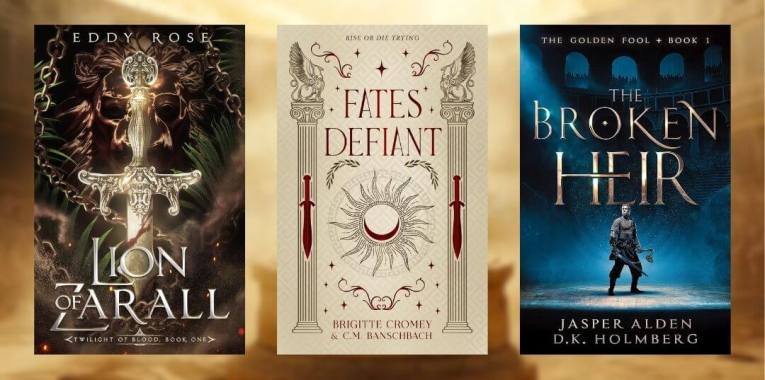
Here are my reviews of 3 fantasy books that feature arena fights and a gladiator main character. If you love this trope, you can find more books on my list: “Slaves and Gladiators: 18 Fantasy Heroes Who Rise From Rock Bottom.” The first two below are adult dark fantasy and the third is YA to new adult.

  1. Fates Defiant Book Review
  2. Lion of Zarall Book Review
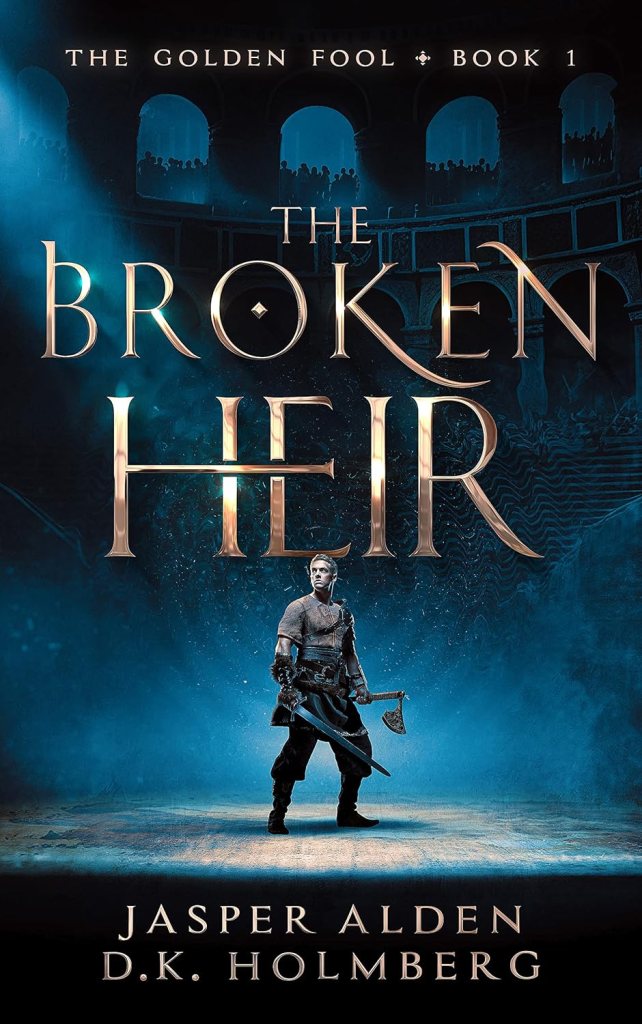
  3. The Broken Heir Book Review

This article contains affiliate links. I may earn a small commission on qualifying purchases at no extra cost to you.
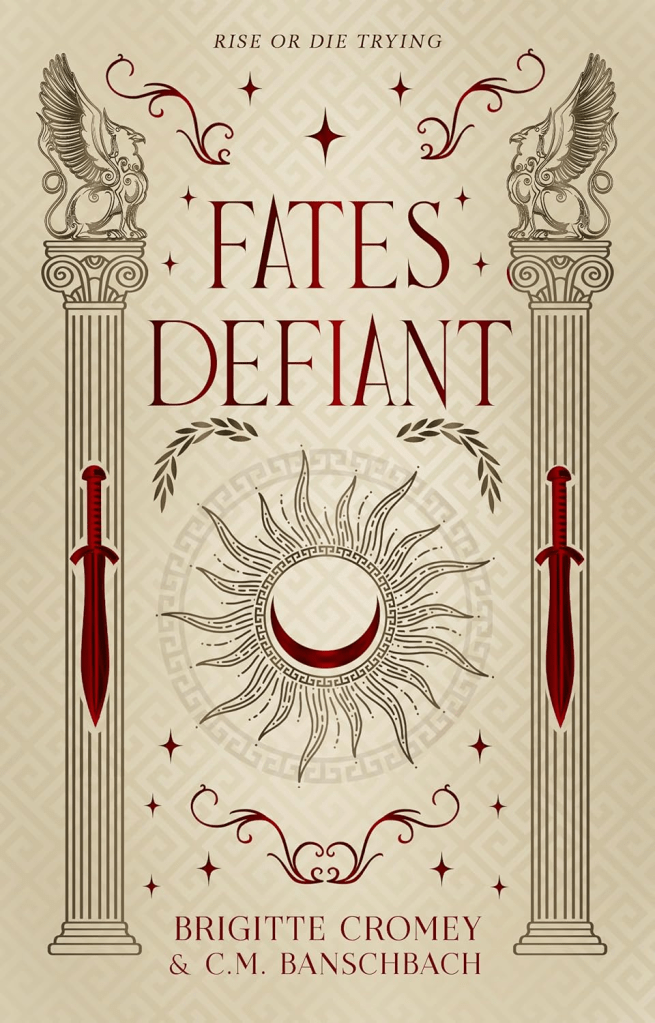
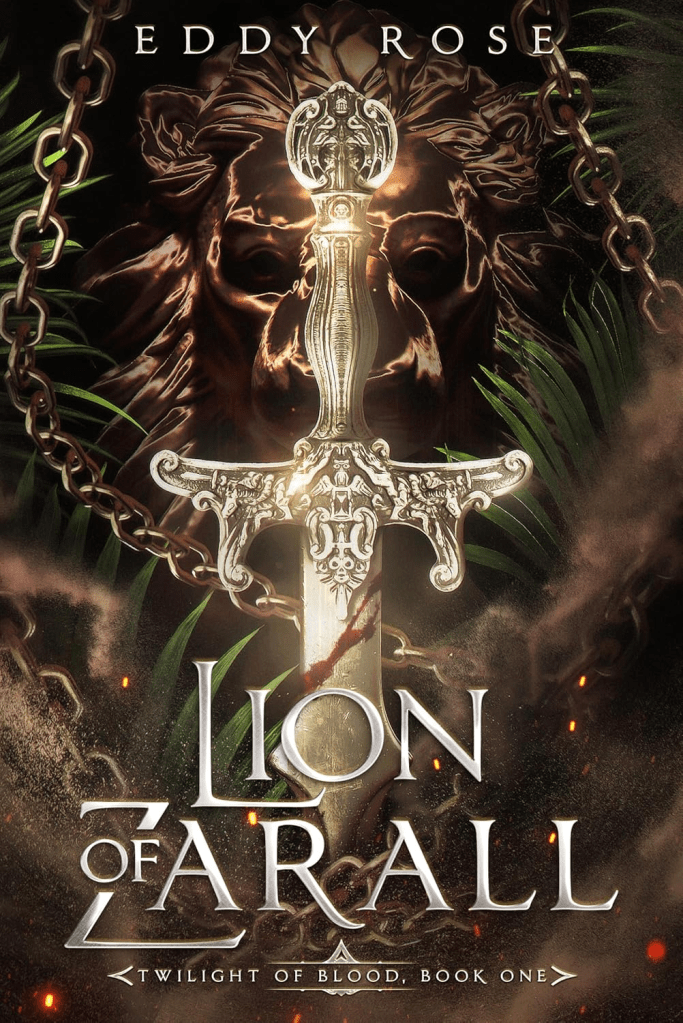
1. Book Review: Fates Defiant by Brigitte Cromey and C.M. Banschbach

Cyrus and Bastian, stars of the arena, both despair that they will die for the whims of their cruel masters. At first enemies, when one shows unexpected mercy to the other, they develop an unusual alliance.

With the compassion of an old god and one of his followers, and the daring of Bastian’s former griffin rider comrades, they might just find freedom… if their tenuous trust can bear them through their next fight to the death.

4/5 Stars

The author pitched this story to me as “enemies to brothers” and I joked that’s how you sell me a book in 0.1 seconds. But it wasn’t a joke, because I immediately bought, read, and loved it. It’s a good thing I heard about it from the author because the cover did not at all convey these dynamics and the gladiator setting to me – I would have never picked it up. The story is told from 2 POVs with each of the co-authors taking one perspective. I deeply enjoyed both, which is rare.

It’s a bromance but it takes half the book for Cyrus and Bastian to start interacting and I felt pretty impatient. But there’s a good mix of backstory, exciting fights, and heartbreaking abuse (closed door sexual assault). The fights are awesome and there are many of them! Of the three on this list, this felt most like an exact Roman analogue… plus griffins!

The writing is good. I would have given this 5 stars if the ending had a more compelling resolution with the main antagonist and if the theme of faith been a bit more deliberate. The villain seemed to give up too quickly. Both characters start praying to an old god for deliverance, but their shift from doubt to belief felt a bit too abrupt and wasn’t clearly tied up in the conclusion. I think the authors could have developed this theme a bit more.

But I highly recommend this one – it made me laugh, cry, sit on the edge of my seat, grit my teeth because of the antagonists, and root for them and their girls.

You can find this book in print or on Kindle Unlimited.

2. Book Review: Lion of Zarall by Eddy Rose

Lion is the King’s favorite gladiator, a “purebred beast” controlled by 3 magical words that ensure his complete submission.

But when the King sends him a freeborn slave woman and commands him to produce offspring, Lion’s torturous conditioning begins to break down.

Can he find the courage to even want his freedom, as the kingdom collapses in a coup and he falls into the hands of an unusual new master – a farm girl who claims to be different, but still treats him as the answer to her debts?

3.5/5 Stars

This book has one of the cruelest, most messed up systems of slavery I’ve ever seen depicted in fantasy – it’s definitely grimdark. Spells are placed on infant “purbred” slaves that allow their owner to control them with 3 different words, unique to each slave. One word paralyzes them, the second tortures them, and in the case of “beasts,” the gladiator slaves, their third word sends them into a mindless berserker state. They are raised at ranches where a psychotic level of torture and manipulation breaks them of the will to speak, defend themselves, want or feel anything, or even look fellow slaves in the eyes. The main character, Lion, is one such “beast.”

I really liked Lion’s journey which, at its heart, is an attempt to break free from conditioning and depression and learn how to love and be human again. It’s heartbreaking to see all the things he’s forced to do and how his owners treat him as a literal animal – their religion teaches “purebreds” have no souls. Part of the book contains a romance, but I certainly wouldn’t call the book “a romance.” He also doesn’t actually spend much time in the arena, as he’s already a famous gladiator by the start of the book. But the few fights are epic!

The original blurb is actually quite misleading, especially these lines: “Lion finds himself cast into a world that wants him dead… he must survive in the harsh North where his very existence is a sin.” From the summary, I thought Lion must have fled the city following the change in power, and is wandering around in the hill country experiencing freedom for the first time. I thought that the new regime disagreed with the practice of purebred slaves on the grounds of religion or some other ideology (common spark for wars), but the new rulers are just as psychotic as the old, and after the change in power, he is immediately transferred to a different owner. Unfortunately, half of the chapters are from her POV and she is a completely unlikeable person. If we didn’t have to suffer through her nasty, bitter, self-righteous perspective, I would have given this book 4 stars.

I went on to read the second book and am eagerly awaiting the 3rd.

You can find this book in print/on Kindle.

3. Book Review: The Broken Heir by Jasper Alden and D.K. Holmberg

Talen, the clever second son of a powerful merchant family, receives a magical birthright that enables him to see possible futures.

But when his family is slaughtered by a powerful sorcerer only known as the Golden Fool, Talen is sold into slavery and forced into the fighting pits.

To enact vengeance, he must first survive the pits with his gift until he can escape with the help of his new friends… if he can trust them.

3/5 Stars

This was a decently fun read – gritty, with lots of fights. Talen’s captured and sold to the arena pretty early in the book – that’s the inciting incident – and must learn to become a fighter despite not being a natural at it. He survives through his ability to see possible futures. The source of this power was pretty unique. He makes friends with a couple fellow slaves, but I didn’t really care about either of them. The writing was just alright, but the reason I only gave it 3 stars was because of the ending.

I won’t spoil it, but the ending felt too easy and also made the book feel somewhat like a tangent. Talen’s seeking revenge for those who attacked him and his family, but they’re completely unrelated to the arena. So at the end of the book he goes to deal with the “real” problem, making the scenario in this book just feel like a detour for the sake of getting in some gladiator fights. Because he mostly relied on magic to survive, it’s not like his imprisonment in the arena was a significant “leveling up” that’s necessary before he can take revenge. But I did enjoy seeing a main character who relied on his brains rather than brawn.

If you’re looking for a quick, easy read with a subtle, magical twist on gladiator fights, this is still a fun one.

You can find this in print, as an audiobook, or on Kindle Unlimited.

Find more gladiator fantasy books here!


Hi, I’m Caylah Coffeen, a freelance editor and marketer of sci-fi and fantasy books. I love reading and writing and am a follower of Jesus Christ.

I’ve worked for Monster Ivy Publishing and Eschler Editing, and am currently a weekly editor with Havok Publishing. Reach out to chat about books and publishing!

Thanks for stopping by my website! I hope you’ve found some helpful resources about reading, writing, and publishing. If you liked this article, here’s some more free content…

Is your fantasy book set in a world worth fighting or a world worth fighting for?

Guest post by Nicholas S. Casale

As an avid fan of the fantasy genre, I consume fantasy stories any which way I can (novels, television, movies, and video games).

Recently, I had a chance to play the Oblivion remake released by Bethesda. After I finished the main storyline quests, I decided to pick up Skyrim (its sequel) while I was at it. I was surprised at the stark contrast between the two worlds. Where the world of Oblivion is beautiful to behold and full of humorous, even slightly silly characters, Skyrim is harsh and jagged, and full of meaner characters.

That was when it dawned on me what the difference was between the two stories. In Oblivion, the world was worth fighting for. In Skyrim, the world was worth fighting.

I have since noticed that these are the two basic types of fantasy settings: the world worth fighting for and the world worth fighting. When we have a world worth fighting for, it is clear that the world the story takes place in is a good one, and the main character wants to keep it. When we have a world worth fighting, the focus is far more on the main character (or characters), and the way they rise to the challenges that the world throws at them.

We can see this in a few other examples.

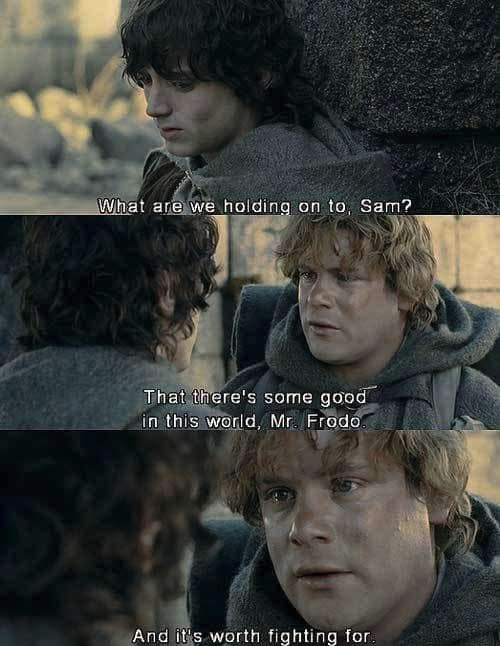
Middle Earth is a world worth fighting for, demonstrated most by the Shire and Rivendell. Samwise Gamgee even makes a speech reinforcing this point.

SAM: But in the end, it’s only a passing thing, this shadow. Even darkness must pass. A new day will come. And when the sun shines it will shine out the clearer. Those were the stories that stayed with you. That meant something. Even if you were too small to understand why. But I think, Mr. Frodo, I do understand. I know now. Folk in those stories had lots of chances of turning back only they didn’t. Because they were holding on to something.

FRODO: What are we holding on to, Sam?

SAM: That there’s some good in this world, Mr. Frodo. And it’s worth fighting for.

Westeros is a world worth fighting. It’s awful, dark, and full of murder and betrayal.

Prydain from the Chronicles of Prydain series is a world worth fighting for. There is beauty in it, and wonderful people. Even some of the more self-serving people are still inclined toward good, and then there are the forces of darkness looking to conquer it.

Warhammer 40K has no bright spot in it, no place where the soul-crushing inevitability of demise hasn’t tainted everything. It is a mad universe where the only constant is war. It is a world worth fighting.

Not Just Grimdark vs. Noblebright

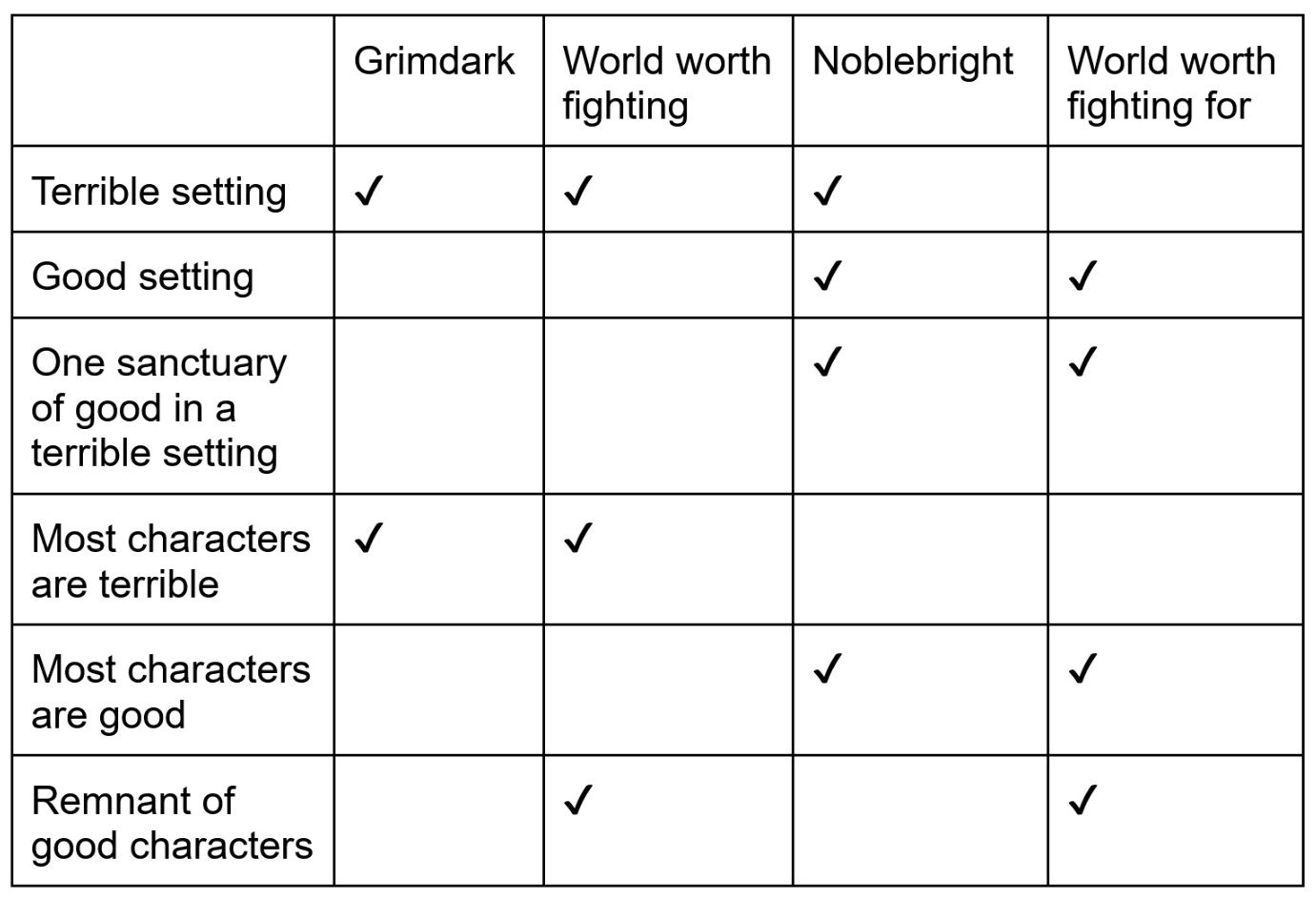
Now, I know that some people will simplify this to being the difference between the Grimdark (what is grimdark?) and Noblebright (what is noblebright?) genres. That is fair, because every Grimdark story’s setting can be summed up as “a world worth fighting.”

However, not every Noblebright story takes place in a world worth fighting for.

Take, for example, Star Wars. I would call Star Wars Noblebright because it features good triumphing over evil, and it is generally pretty clear who the heroes and villains are. Yes, recent stories in the Star Wars universe have brought in more moral ambiguity, but while the heroes may do morally questionably things on occasion, the sheer wickedness of the villains makes it clear that they are the evil ones.

But in the original trilogy, the Empire has control over everything. Making it worse, wherever the Empire doesn’t have control we get hives of scum and villainy, hostile nomadic tribes, monsters, and far-reaching criminal gangs like the Hutts.

Thus, I would argue that the Star Wars setting (true to its name) is a world worth fighting rather than a world worth fighting for. Luke Skywalker doesn’t fight for Tattooine, Yavin 4, or Hoth; he fights for those individuals he loves.

The King Arthur myth gives us a world worth fighting for: Camelot.

Sometimes what determines a world as worth fighting for is something small in it, a specific place. As I mentioned before, Middle Earth has the Shire. Harry Potter’s world has Hogwarts, which, for all its faults, becomes his bastion against the evils of the rest of the world (both the Muggle world and the Wizarding world). In the film Willow, it’s the Nelwyn village, to which Willow wants to return so that he can see his family again.

I would also argue that it could be possible to write a Grimdark story, but make it a world worth fighting for if the hero has some place in it where he can be at peace with his loved ones.

Depending on how you play it, Fallout 4 could be an example of this. The world surrounding the main character is full of mutants, radiation, violent robots, and murderous people. However, in that game you have the option to build places of sanctuary (literally starting with a neighborhood called “Sanctuary Hills”). The sanctuary you build can bring hope to an otherwise desolate wasteland, turning the post-apocalyptic setting into a world worth fighting for.

Where does your story fit?

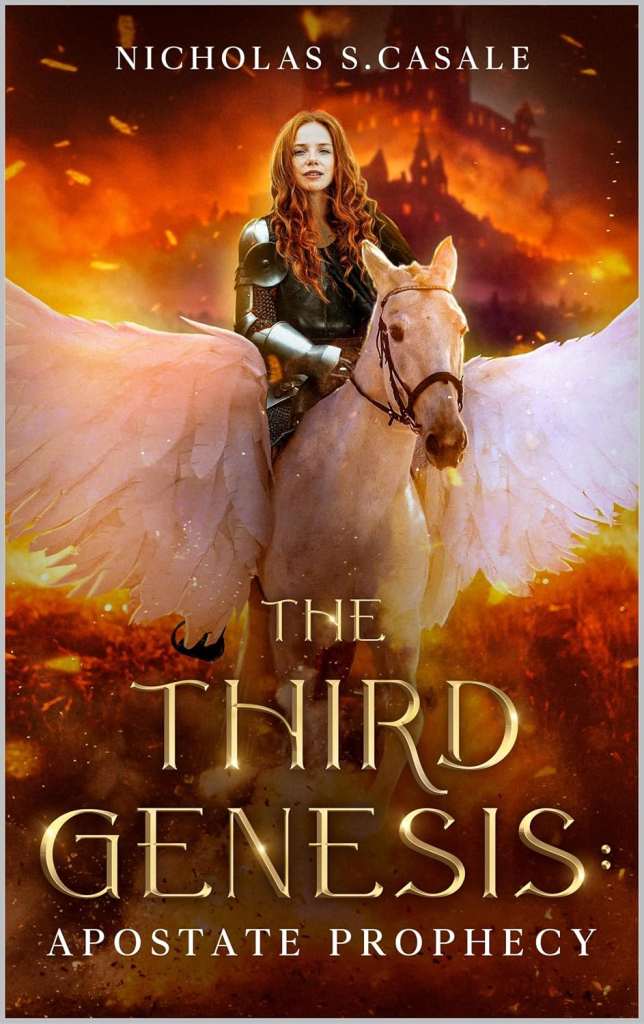
This forced me to take a look at my own epic fantasy series: The Third Genesis. I had to ask myself if the world of Ymir where the story takes place is a world worth fighting or a world worth fighting for.

It is a world where false gods with space age technology have genetically-engineered an ecosystem made up of mythical creatures in order to exploit the planet Ymir’s unique resources. These false gods pit the people and creatures they’ve created against each other, and there are inquisitions, crusades, and holy wars. At first, I thought this made it a world worth fighting. But then I remembered that the people of Ymir live with the promise of the Third Genesis: a day when the false gods shall be defeated and the True Deity, The One, will reign. Thus, I realized that the world of Ymir is a world worth fighting for.

This also got me to examine the Bible to assess the world we live in according to the Good Book. Does the Bible speak of this world as one worth fighting or worth fighting for? While there are many places in Scripture that speak to the corruption of this world, and even places where it is implied that the Devil has dominion over the physical realm, we cannot forget the LORD’s promises of a day when He will wash away that corruption. And we cannot forget John 3:16, the most famous Bible verse of all, “For God so loved the world that He gave His only begotten Son, that whoever believes in Him should not perish but have everlasting life.”

The Supreme Being has declared this world worth fighting for. So, let us do so every day, and ensure that we always follow the orders of our King when we do.

About Nicholas S. Casale

Nicholas is a prolific author who has written mostly westerns, but his true passion is for fantasy novels. Starting from the age of six (with stories about a mouse wizard named “Mousey”), he has honed his craft through years of dedicated writing.

His studies in history, religion, mythology, folklore, and classical literature have informed his works. Each of Casale’s works hit emotional notes and raise fascinating questions about the nature of life, love, morality, and existence.

Try Casale’s Fantasy Novel


Hi, I’m Caylah Coffeen, a freelance editor and marketer of sci-fi and fantasy books. I love reading and writing and am a follower of Jesus Christ.

I’ve worked for Monster Ivy Publishing and Eschler Editing, and am currently a weekly editor with Havok Publishing. Reach out to chat about books and publishing!

Thanks for stopping by my website! I hope you’ve found some helpful resources about reading, writing, and publishing. If you liked this article, here’s some more free content…

Book Review: The Blade Itself (The First Law #1) by Joe Abercrombie

Rating: 4/5 stars

A grimdark, character-driven adult fantasy tale full of morbid wit and deft turns of phrase, but too many POV characters which make the pacing suffer.

Summary

A war hero turned crippled torturer. A barbarian war leader turned refugee. A fop turned unworthy fencing champion. Three extremely different men face wars past and present, uncover political schemes, and get dragged around by the machinations of an entitled old wizard.

Characters: 4/5 stars

This book follows 3 POV characters for the first half of the book and then eases in 3 more in the second half. Glokta, the Inquisitor, is cynically hilarious and a refreshingly realistic take on the “tortured survivor turned torturer” trope. Logan Ninefingers is your lonesome barbarian, trying to find redemption after a very bloody life. Luthar, a noble fencing fop, is insufferable and I wondered why we had his POV at all.

Of the 3, only Glokta gets a real character arc. The problem with stories with so many POVs is that often the first book can feel like only the first act of every character’s story. That’s mostly what this book felt like.

The modern reader will also likely feel dissatisfied with the lack of female representation. The only female character in the first half is the object of Luthar’s sexual fantasies. A vengeful warrior woman is introduced much later, but that’s 2 total women we follow across 3 continents of characters.

Plot: 3/5 stars

I love a character driven story (which this is), but there really isn’t much plot in this book except in Glokta’s arc. The problem mostly lies in the fact that all the characters are in different parts of the world or are introduced before they really become relevant to the plot.

Logan spends the entire book traveling from over the mountains to the main city (where Glokta and Luthar are), thinking about his past and getting caught up in petty fights on the way. If this book was told only from his POV, everything that happens to him in this book would take up only a third of a standalone book.

Similarly, Luthar is a shallow narcissist who spends the whole book sort of fencing and really drinking. He’s the frat boy we know must eventually mature, but it would have been perfectly fine plot-wise to introduce him an entire book later, so little does his POV do for the story (besides irritate us). Glokta gets to chase mysteries and rediscover a friendship he thought lost, which was genuinely moving.

Worldbuilding: 3/5 stars

Nothing special. All the familiar late-medieval/renaissance era equivalents. Faux Viking barbarians in the north. Faux European castles and trade guilds, full of infighting and politicking. Faux “evil Muslims” in the south. Wizard orders and tales of old world demons and magic.

There are some interesting focal points in the soft magic system – the laws forbidding certain practices (hence the title of the series – The First Law), but I won’t spoil that. 😉

Writing: 5/5 stars

I was the most impressed by Joe Abercrombie’s writing style which is truly masterful! It’s why I kept reading. I usually can’t stand books with over 3 POV characters, but he managed them so deftly that I quite enjoyed it. He is an expert at pacing. That may sound strange since I said the plot was slow, but on a scene-by-scene level, Abercrombie is excellent at starting and ending in just the right places.

Everything that needs to happen in a chapter happens – no more, no less. Each segment feels like a full part of the character’s journey, not just a step to get somewhere else. He uses, but does not abuse cliffhangers. He switches between POVs at natural places in a way that doesn’t make the reader distracted and frustrated waiting to get back to them.

We receive just enough information about the characters’ pasts and mysterious plot points to keep us aching for more, and he then reveals the next piece in quite an enjoyable way. His sentence structure and style itself is quite refreshing, not bloated like that of many modern fantasy authors. Great turns of phrase, humor, purposeful descriptions that don’t take a full page to get through, and a great clip at the sentence level.

I went on to complete the trilogy because of how much I enjoyed Abercrombie’s writing style.

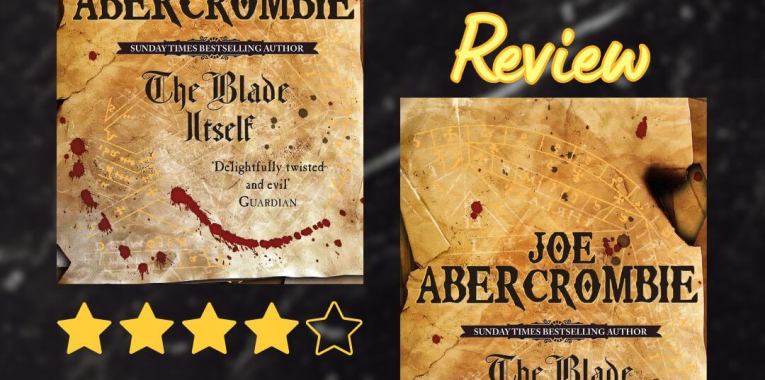
The Blade Itself cover: a piece of parchment depicts strange ruins and geometric diagrams, with splatters of blood across the page.

Logen Ninefingers, worn down by years of feuds and bad luck, flees the North with more enemies than allies.

In the civilized Union, Jezal dan Luthar coasts on privilege towards a fencing tournament, while Glokta—once a proud soldier himself, now a crippled torturer—cuts through thickening treason cases.

When old Magus Bayaz pulls all three men into his schemes, their paths collide amid political rot and rising conspiracies which threaten the fate of kingdoms.

CONTENT WARNING: Readers may like to know that the book is very R-rated for graphic violence, swearing, and sexual content, in that order of frequency.


Hi, I’m Caylah Coffeen, a freelance editor and marketer of sci-fi and fantasy books. I love reading and writing and am a follower of Jesus Christ.

I’ve worked for Monster Ivy Publishing and Eschler Editing, and am currently a weekly editor with Havok Publishing. Reach out to chat about books and publishing!

Thanks for stopping by my website! I hope you’ve found some helpful resources about reading, writing, and publishing. If you liked this article, here’s some more free content…