By Caylah Coffeen
I’d argue that in this day and age, pacing is the number one element authors must nail in their books. Yes, you need quality characterization, writing, and a fun plot. But pacing is what makes the actual process of reading fun.
There’s nothing new under the sun. I’ve read books with the same tropes, archetypes, and types of characters over and over again. What makes them stand out, at a certain point, is style. The “what” matters less than the “how.”
I’ve put down books with great worldbuilding and my favorite kinds of characters because they were too dense, the chapters dragged, they abused cliffhangers, or they handled events and my emotions clumsily.
But how many times have you loved a book with somewhat generic characters and plot simply because the author expertly guided your thoughts and emotions and took you for such a great ride that you “just couldn’t put it down?”
An author’s unique voice can contribute a lot to this feeling, but pacing is what really makes the nitty gritty mechanics of a book come together into an enjoyable experience! To write a well-paced story, there are several things you need to understand:
What is Story Pacing?
What makes for “good” story pacing, and how can you ensure your novel has it?

Story pacing has to do with the tempo, energy, and timing of certain story elements, and how you arrange all of these elements together. Both are vital.
Think of one of your favorite songs. I bet there’s a mix of loud and soft moments, major and minor keys, sustained and brief notes. The variety in itself is enjoyable, but the timing is perhaps even more important! We get bored by a song that takes way too long before the first beat drops, and we’ll feel disappointed if there’s not a roaring crescendo at the end.
Check out this image taken from a video editing program – it reveals the “pacing” of the first movement in Beethoven’s famous 5th.
You can see both variety and consistency in the waveforms of the sound itself!
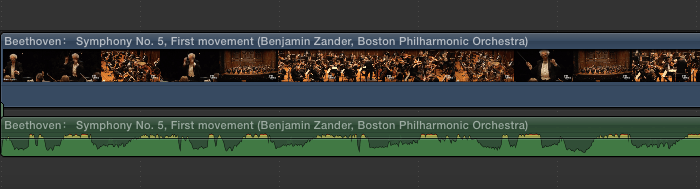
So too, a great story needs a variety of emotional beats, balance between quiet moments and conflict, and careful timing of plot points. So let’s jump in!
3 Types of Story Pacing
There are three main types of pacing and an author must master all of them for a great story.
1. Macro-level Pacing
How well do you pace your entire novel and plot? This is macro pacing. Big picture organization and structure is what most affects pacing at the macro level. I recommend using the 3-Act story structure or the 15 beats method to plan your plot.
These frameworks help you balance how much time you spend in different parts of your story and how you connect scenes and conflicts. They can help you spot if you’re missing something big – like an active villain, relevant side characters, or believable setbacks for your protagonist.
Here are some things to keep in mind as you outline your plot and refine the macro pacing of your story:
Tip 1: Balance act lengths
Is one story act or series of plot points considerably shorter or longer than another?
A long opening can make your book feel slow. An overly packed middle can leave readers confused or bogged down with too much information and too many plot threads. Too abrupt of a denouement can leave readers emotionally unsatisfied.
Tip 2: Vary energy levels
Do you have enough variety between high and low energy moments?
Of course, a detective story or thriller will contain more action scenes than a drama or romance. But you still want to make sure that your reader experiences multiple types of satisfaction. A book that’s “go, go, go,” may miss out on some moments of deeper emotional impact or character growth, while a more cerebral novel can risk feeling repetitive and detached.
Tip 3: Connect plot and emotion
Do your plot threads and emotional threads build upon one another or clash against each other?
It’s hard to weave all the elements of your story together in a way that makes them complement each other, especially when you get into subplots and character relationships. Sometimes an emotional confrontation is more effective after a high-stakes action scene, while other times readers may need to see the main character alone with their thoughts.
There is no perfect formula and it can take a lot of practice and juggling when organizing your book as a whole. But it is vital for the emotions and events to become inseparable from one another.
Think again of Beethoven’s 5th symphony. He doubtless tested countless iterations before he settled on his unforgettable opening. Other arrangements could have worked well, but might not have left the same lasting impact.
Story pacing is about reader experience
In the end, it’s all about the experience of reading your story. What makes someone devour a book in one sitting vs. taking a few weeks to get through it? This kind of pacing is kind of like an “it” factor.
It’s hard to define exactly what makes a book have great pacing, but you know it when you see it. Enticing pacing will make a “good” story “great” and can even make a poor book wildly popular!
Stephanie Meyer’s Twilight series is a prime example of this. The plot is nothing special, and the characters are perhaps deliberately 2-dimensional, but the way Meyer introduces new characters and problems, balancing action scenes and emotional moments, is masterful – like a catchy pop song you can’t get out of your head. And unsurprisingly, the second book in her series, which had the least variety in pacing, was the worst received by fans.
2. Medium-level Pacing
Medium pacing looks at a slightly smaller scale – your chapters. Your novel could have good pacing overall, but if your chapters struggle to work well internally, your book may still fall flat with readers. A multi-course meal may be expertly planned, but will it matter if you don’t knock each dish out of the park?
You’ve likely experienced chapters that felt so long you flipped forward to see how many pages were left. Or you may have been frustrated that some chapters end right as something exciting finally starts to happen – only to switch to a different POV!
Chapter structure can vary more drastically than overall novel structure. One chapter may cover 10 years using a combination of exposition and vignettes, like in Robin Hobb’s Assassin’s Apprentice. YA novels may cover only a few hours or less in a whole chapter. One book may use all these methods in different chapters. And that may be just what that story needs to create an enjoyable pace for readers.
Chapters are composed of scenes, so to create well-paced chapters, it’s important to consider how you piece certain scenes and elements together.
Scenes involve 4 elements that most affect pacing: talking, thinking, movement, and time. So let’s look at some important pacing tactics for each.
Talking:
Tip 1: Emphasize dialogue
Dialogue is one of the most engaging ways to move a scene along. Stories are about people, and plot is created through conflict and changing dynamics between them. But make sure not to dump too much info through your dialogue. Try not to cover too many topics in one conversation to avoid making it feel drawn out.
Tip 2: Minimize monologues
Minimize monologues, except when it’s relevant to your character’s identity. Perhaps your character is a narcissist, a king, or a teacher – yeah, they’ll monologue a lot. And your other characters will probably endure it with mixed grace. That’s part of the story. Otherwise, keep the speeches to a minimum. Back and forth conversations are much more interesting.
Tip 3: Don’t overuse or underuse any one emotion
Readers want to laugh, and cry, and fume. Let us do all of those things through a variety of character interactions! It’s your job to take our emotions in hand and guide us through them.
Tip 4: Crowd control
Keep in mind how many characters you cram into one scene. Readers don’t want to sit through the Council of Elrond in every chapter.
Thinking:
Tip 1: Show don’t tell
If you can demonstrate what a character is thinking and feeling, rather than having them sit around musing about it, you probably should.
Tip 2: Build in quiet moments
Characters need time to themselves – don’t neglect quieter moments where they have to reflect upon their actions and circumstances. But be wary of having too many moments back-to-back where a character is just sitting around staring into space.
Movement:
Tip 1: Characters need to interact with their settings
Your character need to physically move and interact with each other and their surroundings. My favorite writing instructor liked to test this by “turning down the sound.” She also was an expert in theater.
She liked to say, if you were watching a scene in a movie or play, and you couldn’t hear the dialogue, would you be able to understand what was going on? A bunch of talking heads don’t make for good pacing. Changes in scenery, body language, and objects they can interact with can highlight different features of a character and offer new details for readers to fix on.
Imagine an argument that takes place between two characters in a sitting room. Compare that to one that starts in a castle bedroom before character A storms out. Character B must chase them down the hallway, lowering his voice as servants stare. They enter the kitchens, where character A finds something new to be angry about. The fight’s not actually about their lunch platter, but there’s all sorts of ammunition available. Which scene would you rather read?
Tip 2: Spread out action (battles, suspense)
If you’re writing a genre that involves actual physical conflicts, try to spread out your action scenes. Do you want to eat three dishes in a row that are dripping with hot sauce? Maybe. But most people would like a nice soft roll or a sip of a sparkling drink between them.
Incorporate reflection, emotional beats, and character development between action scenes to build upon the conflict characters have just faced.
Time:
Tip 1: Reader time
There are two types of time in a story – the time your characters experience, and the time your reader experiences. You need to be aware of both – readers don’t want to wait too long to get to the “good stuff,” but they need moments to breathe after high energy moments like deaths, fights, and intense exposition.
Tip 2: En media res
En media res (“in the middle of it”) refers to a technique where you start in the middle of the action. Introducing a character as they wake up in the morning and get ready for work can feel boring and predictable. Starting closer to a conflict – like showing how they respond to a car crash on the way to work, or to their boss barging into their office, can be a lot more compelling.
If you can start a chapter or scene later, or end it earlier, it’s a great idea to try it. However, be careful not to abuse this method. You risk wearing your reader out by never taking a break from the “go, go, go” pace.
Tip 3: Time skips
Time skips and flash backs are popular for a reason. If you don’t feel a compelling reason to show something on the page, try skipping it. Flash backs help you avoid having to hit every step in chronological order.
If you use multiple POV characters, this gets trickier. It could take a reader over a hundred pages to get back to someone, by which point a lot of time has passed, and the dramatic tension has faded.
Ask hard questions of your readers
Some elements of pacing are difficult to judge by yourself. It’s vital to get an outside perspective by asking your critique partners or beta readers specific questions like:
- Does this dialogue drag on or feel confusing?
- Are my chapters too long? Too short? Do they feel like they end in the right place?
- Are you engaged with all my POV characters, or does switching perspectives between chapters frustrate you?
Consider this: if you removed an element of a chapter, would it change the overall story or characters? If not, why is it there? Keep in mind the emotional beats you want to hit in each scene and chapter. Cut away anything that distracts from or doesn’t help achieve that goal.
3. Micro-level Pacing
Micro pacing involves the sentence level. This is perhaps the hardest type of pacing to control, as it requires a greater mastery of sentence structure and the ability to vary your writing to reflect different emotions.
The sentences which make up an action scene should not read the same as those that describe scenery or piece together dialogue. Varying the length of paragraphs and sentences and selecting different word choices will change how your readers experience the energy of a scene.
Try reading your work out loud to get a sense of how sounds and transitions physically combine to create different effects.
Here are some questions to consider while writing at the sentence-level:
Tip 1: Sentence length
What is the average length of your sentences? Short or long? Full of multiple clauses and prepositional phrases, or simple?
Long, complex sentences can make your readers feel more leisurely and thoughtful, while clipped, straightforward sentences can make your readers feel urgency. The latter is great for action scenes!
Tip 2: Sentence variety
How many of your sentences start with the same word (He-, She-, The-)? Starting your sentences with the same structure can result in rather homogenous writing which, at worst, can become distractingly repetitive to your reader, or at best, fail to convey any change in emotion between moments.
Tip 3: Timely descriptions
Make sure to vary your descriptions depending on the type of scene. If a character has just arrived at a new city, a lengthy description is far more appropriate than during a quarrel or fight scene. Most people don’t stop to note architectural details when they’re dodging arrows or yelling at their lover.
A long description can bog down the story, and a missing description can confuse the reader. There is a time and a place for both.
Tip 4: Character-appropriate descriptions
You might be tempted to pause and describe an amazing bit of worldbuilding, but if your character could care less about their city’s waterworks, you should probably skip it. Even if your character is an engineer, if their best friend just died, they might not be dwelling on the scenery. Or their typically complex vocabulary might break down a little.
Sometimes pacing problems are caused not just by “what,” but by “when.” Just moving a description to a different place can often fix the issue completely!
Make sure your descriptions, down to the sentence level, fit your character and their emotions in each scene. Maintain a distinction between the word choices of the “narrator,” if you use one, and your POV character.
Tip 5: When to use exposition
Writers are told to “show, don’t tell,” but there is a time to tell. If you showed every second of an army marching, your story would have atrocious pacing. Sometimes, you need to summarize the actions of a group, past events, or time passing.
Long chunks of exposition get boring quickly, but you can convey a lot in a couple sentences. Examine how much time you dedicate to transitions such as shifts in time, location, or POV, and see if there are ways to trim this down.
You’ll be amazed how much the pace of your entire book improves if you trim a handful of mechanically busy sentences from every chapter!
Study Language Construction
In my experience, writers have the most difficulty employing strong pacing at the sentence level when it comes to action scenes. Writing Mastery has one of the most succinct and useful exercises on refining the pacing of a fight scene that I’ve encountered – check it out!
Reading poetry is another great way to push your understanding of language construction. Every word and arrangement in a poem is deliberate. Again, try reading a poem out loud to get a sense of how the sounds, positioning, and lengths of words and phrases can affect your experience as a reader.
Trust your instincts, but get feedback
Writing a story with great pacing requires time, effort, and good instincts. Sometimes, you’ll just have a “feeling” that a scene or draft isn’t quite right. Trust those instincts and keep experimenting.
Don’t do so in the dark, though. Critique partners and beta readers are invaluable when it comes to analyzing pacing. You may think you’ve achieved one effect, while your readers may experience another.
It’s important to find enough readers so you can determine what feedback is consistent, and what comes down to preference. It’s up to you to decide on your book’s pacing style. Stephen King’s books read much differently than dystopian YA, and both fully lean into their own unique tempo and energy.
Happy Writing!

Hi, I’m Caylah Coffeen, a freelance editor and marketer of sci-fi and fantasy books. I love reading and writing and am a follower of Jesus Christ.
I’ve worked for Monster Ivy Publishing and Eschler Editing, and am currently a weekly editor with Havok Publishing. Reach out to chat about books and publishing!
Thanks for stopping by my website! I hope you’ve found some helpful resources about reading, writing, and publishing. If you liked this article, here’s some more free content…
- Learn how multiple point of view characters can complicate story pacing
- Send me an email to receive a free sample edit on the first 5 pages of your story
- Subscribe for future posts