

Being an author is a super difficult journey, and so is being a mom! So how can we do both (and well)? I’m not a mother myself (yet!), but I just spent a precious 2 weeks with my newborn nephew, and have been pondering what my future will look like.
So I reached out to over 20 writer moms to hear how they parent and write at the same time! They offered some specific wisdom, compassion, and anecdotes which I wanted to share with you too. Be sure to check out their books or social pages to support author moms!
Dedicated to my dear friend Stephy (who is an adorable mom!): I know you’ll publish your stories one day! I’m rooting for you!
- Be gracious to yourself
- Dedicate yourself fully to each season in your life
- Write while the kids are in bed
- Stick to a schedule
- Multitask (“drive-by writing”)
- Surround yourself with supportive people
- Try dictation
- Have a backup plan
- Include your kids
- Take a break from the kids
- Take care of yourself
- Your stories still matter!
Be Gracious to Yourself (God Sure is)!

“Just rethink what counts as writing, honestly. Absorbing fiction books to store away ideas for later is writing. Reading craft books is writing. Having a newborn is exhausting and time consuming, and a huge learning curve. Be kind to yourself, and remember this is only a season, it will be over way too soon. Also remember that your fellow writers understand. Nobody is expecting a new mom to publish anything right away.”
“This is a verse that came to me back in fall 2023, while I was writing one of my novels. Rev 21:5: “He who was seated on the throne said, ‘I am making everything new!’ Then he said, ‘Write this down, for these words are trustworthy and true.'” God renews us. He makes everything new. That meant even on my weariest and most stressful of days, he could still do things with me and my writing. So that’s a verse that has given me incredible hope.”
Dedicate Yourself Fully to Each Season in Your Life
“There is a time for everything, and a season for every activity under the heavens: a time to tear down and a time to build, a time to weep and a time to laugh, a time to search and a time to give up, a time to be silent and a time to speak.”
Ecclesiastes 3

“I wrapped my identity a little around being a writer as a young woman, but marrying a Marine, having a kid, moving around out of my “safety net” of being close to family so I often had to do things alone… I took a very long break. But when it was time to get started again, when the season was right, and I was just like, “Okay, now,” it rose to meet me. Sometimes we’re not in the season we want or we want it all at once. It’s good to embrace the pauses as well as the progress.”

“Invest in your family and marriage. Writing will always be there, but your kids will not. You don’t want to miss out on your little ones growing up, or even worse, your kids believing that writing took you away from them. Find balance. Write during naps, early mornings, or after bed. Limit your words to 500 a day so you can be present with your family. Put off publishing until they are older (I did this).
And don’t forget your spouse. If you want a thriving marriage, don’t put your spouse on the back burner. The worst thing is to achieve all you desired as a writer, only to look around and realize you’re alone. Yes, some sacrifices must be made to become a writer. Don’t let your family be one of them.”

“I keep telling myself this is a season, and someday I will have more time to write again. Right now, my babies need me more than I need to write, so for now, I am content with that. But I keep writing down ideas and brainstorming and daydreaming and hope that in those moments of writing, no matter how few and far between or close together, that all the mental plotting will pay off as I get words on the page.”
“I have three kids aged 3 and under and I’m still figuring this out. It’s helped me to become okay with being in a season where I don’t write much if at all sometimes. Right now, I write for joy when I can. Lately it’s worked really well to get up early, have my coffee and read the Bible, and then write until the kids wake up.”
Rosemary Johnson
Write When the Kids are in Bed!
“For me, I usually post social media posts before my girls wake up in the morning (I usually don’t get up that much earlier, but it helps me feel productive as a writer first thing). I have a 5.5 and a 2 year old, so my oldest does go to school for half days. When she is at school and my youngest naps, I use that time to write or edit (if im lucky that’s 2 hours every afternoon). Then my girls go to bed at 7pm, so I usually try my best to write or read every evening (usually another 2ish hours).
On the weekends, my husband and I take turns being productive/watching the girls so the other can have a longer period to be productive. I usually try not to work on writing or author stuff while my girls are awake. That’s a personal decision tho haha and it changes and depends on the age of your babies. I get a ton of writing done with a newborn, but I know that’s not the same for others haha.”
Whatever your hand finds to do, do it with all your might, for in the realm of the dead, where you are going, there is neither working nor planning nor knowledge nor wisdom.
Ecc 9:10
“I’m going to come back and edit this comment once I’m done cooking dinner, lol!
EDIT: I am finally back (made/cleaned up dinner, chasing kids, getting ice cream with my bro who is in town for work, and feeding a baby…phew!).
I have two kiddos, one is 2.5, the other is almost 4 months. It’s hard to get anything done. My toddler likes to follow me everywhere, and while my baby is amazing, she is still a baby. I don’t know that I have any of this figured out yet, but right now, I typically write at night once they’re in bed, so my writing time can range from 10 min – 2 hours depending on how tired I am. It’s very slow going right now, but I’m trying to get back into typing on my phone while putting the baby to sleep.”
“Do you see someone skilled in their work? They will serve before kings; they will not serve before officials of low rank.”
Proverbs 22:29
Stick to a Schedule!
“I’m a homeschooling mom of three kids, ages 12, 8, and 3. I’ll be fully honest. It was pretty overwhelming to be pregnant or dealing with a younger baby and write at the same time, so I took a lot of breaks during those seasons. Otherwise, my older kids would buddy up to play outside, and I wrote while my youngest napped. I keep my kids on a routine/schedule so that they sleep roughly about the same time every night. This allows me to do at least 1-1.5 hours of writing/editing every morning before anyone else is up.
I used to live near my parents, who could provide childcare, and that allowed me to get even more writing done. But now that I’ve moved across the country, my writing time is pretty scarce. All the more critical that I stay on my schedule.”
“For me, early mornings are non-negotiable if I want to get anything done. I go to bed early and get up around 4:30 or so. I struggle with brief sprints, so I really treasure having a solid 1.5 hours or so to sit and focus on writing. I can get a decent amount done, and it makes me feel so “free” throughout the rest of my crazy mom/homeschooling day.
Proverbs 31 is a great chapter to look at for moms who are also writers! We can be industrious while still taking care of our homes and families. It can be tough to balance, but I’m thankful Scripture makes it clear that it’s possible to do both well.”
“She is clothed with strength and dignity; she can laugh at the days to come.”
Proverbs 31:25
Multitask or “Drive-By Writing”
“Our dining room was in the exact center of the house. I put my laptop on the table and made a rule for myself that I had to write 1 sentence every time I passed it. That got me to my 1000 words a day goal and I never stopped to work for more than a minute or two.”
“I first started writing seriously again when I had a nine month old and a 4 year old. Now they’re 17 and 14 and … usually are ignoring me. I basically just wrote whenever I could. As they got a little older, were sleeping through the night, and had a said bedtime, I’d usually put them to bed at 8 and then write for an hour every night. I also wrote waiting for their gymnastics class to end, in doctor’s waiting rooms, on park benches… You just have to grab the time you’re given and go for it.”

“lol I do drive-by writing. I usually have google docs open on my phone and will work on a scene through the day. Most of my writing time is with kids on me or near me. I usually keep my goals low at around 500-1000 words a day. It all adds up.”
“I do drive-by writing! My kids are older (8+), but my laptop and charger live on the counter. If I can squeeze in 15 minutes a few times a day while they’re awake, I call it a success. After food and conversation works best! That goes for all ages.”
Stacey Yaroszeufski

“I did a lot of world building and brainstorming while doing dishes. Especially when listening to inspiring music. 🥰 And while nursing I’d read, critique, chat with other writers, or check social media on my phone. And once the kids were in bed I’d sit with my laptop and type, next to my husband while he played video games or watched a show.”
“Whatever is true, whatever is noble, whatever is right, whatever is pure, whatever is lovely, whatever is admirable—if anything is excellent or praiseworthy—think about such things.”
Phil 4:8
“I always keep notes on my phone whenever the muse strikes so that when I do get to my writing time, I’ve got a list of ideas ready to go. I find I get more done in short focused bursts than when I have a whole day to write. I’m more creative when I’m forced to do it quickly. Driving time is also great to think through scenes or identify plot holes.”
Surround Yourself with Supportive People

“I have a 14, 11, and 9 year old at home, and most of my writing these days is done on my weekly writing nights with RJ Conte—basically we do word sprints for an hour or two and check in with each other to share word counts and snippets of what we’ve written. At the end of the evening we call and read each other what we wrote (if we feel ready to share it). It’s the best!! Doing it once a week is very low pressure but I still get some consistent (slow) progress on projects, and sometimes it gets my momentum going so that I want to keep working on it for days afterward!
I’m by no means a full-time writer. I consider myself more of an artist-hobbyist. But I’m glad to keep creating anyway—I couldn’t create as much as I do without supportive friends!  So my advice is to pick a consistent day/time and have an accountability partner or two to team up with. It’s satisfying to at least have some progress each week even in the middle of busy parenting and work!”
“My husband is very supportive of me and helps so much! Find a couple good friends to cheer you on and champion you. It makes a world of difference.”
“I rely on my husband or outside help like occasionally my mom or one of my brothers to take the kids so I can get more time. I’m lucky that my husband works from home 7-3 and gets the full government parental leave offered here in Canada. Things are a bit hectic right now with a newborn and three other little kids but I fully anticipate lots of writing time later on over the course of his leave.”
Try Dictation (Voice to Text)
“Out of desperation I tried something totally different. Voice to text has been a big help. Then I take 10 to 15 minutes at night to organize it into sections, but I’m still in the planning stage. I have the story outlined, specific dialogue for important scenes, extensive world building, and character sketches. I should be ready to start compiling and do the actual writing next week.
It’s far different than the ways I’ve written before, but I’m in a much better place than I’ve ever been. I’m feeling confident that I can actually finish a WIP for the first time. This is working for me, but you do what works for you.”
“I know a lot of moms who use dictation and get a lot of writing done while they’re doing chores around the house! I’ve done that a little bit, I’m dictating this comment right now while pumping breast milk, haha. It will take practice for me to use it more for my actual drafting! But I know others who have had success doing that. I have definitely done it here and there though, a few times dictating for example while making supper in the kitchen or something. Multitasking!”
Have a Backup Plan

“Try to have a backup plan to help get around especially chaotic days. For example, I identify my writing time for the day, as well as two potential backup options. This way, if my plans go sideways, I know I have another opportunity waiting for me (even if that’s after they’ve gone to bed). Then I just aim to write for at least 10 minutes, which usually goes a bit longer.”
Include Your Kids in the Journey

“I’m a mom of three under 7 and all have varying special/medical needs as well. It is very overwhelming, but also an enormous joy. I try to incorporate the kids in whatever I am doing, from acting out scenes, to listening to a passage, to working on artwork. They are so excited and proud to “help mommy write.” I actually just gave each of them a copy of my latest and signed a message to them thanking them for being my helpers.
They have taken that honor so seriously. And coffee. Coffee is amazing.  “
“

“I homeschool my 10 yr old son and (since he’s full of stories too) we have a section of his school day that is writing a story. I squeeze some words into a notebook then along with him. We also attend a local writer’s group together. “
“Oh, that my words were written! Oh, that they were inscribed in a book! That they were engraved on a rock with an iron pen and lead, forever! For I know that my Redeemer lives, And He shall stand at last on the earth.”
Job 19:23-25
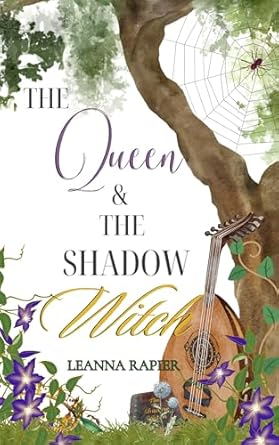
“It’s been really great writing with kids. They are my inspiration. I warned them anything snarky they say can be used in a book. My teen daughter writes too now. She’s working on her third novel.
The theme of my book is Psalm 42:11–“Why art thou cast down, O my soul? and why art thou disquieted within me? hope thou in God…” And it’s an especially important truth to remember when raising children.
There’ll be times when you’re overwhelmed and need wisdom. So even though the book is fantasy, there are elements of truths I’ve learned along the way in my own life.”
Take a Break From the Kids
“For the first time ever, I am spending the night in a hotel room to get some writing done. I checked in at 3 PM, wrote for about three hours. Drove to band practice because it’s not far from the hotel I’m staying at, and then when I got back, I wrote for another three hours. The time went by so fast it’s already after midnight. I wrote over 6,000 words in two sittings. I have no one to worry about but myself.
I really needed this break because my kids have special needs (they have autism and genetic deletions). I think maybe I need to do this every year for NaNoWriMo. I am astonished at how much I wrote and how the lack of distractions worked on me. Now I must admit, most of the writing is painfully bad but at least I’m writing!”
Alexandra Owen
“My daughter is nearly four. What I have learnt to do is if we do something fun (like lunch out), the deal when we get back is we both get “calm time.” This means she can watch cartoons or play in her room for an hour. I’ve phrased it as part of the deal of getting a treat out.
I’ve found if I say I’m doing work, she’ll want my attention for everything. If we are both having calm time, then she seems quite happy to amuse herself.”
Rachael Marie
“I focus on teaching independence to my kids to give myself extra breaks.”
Take Care of Yourself
“Personal nutrition is key for having the brain/energy capacity to write. I absolutely have to make sure I eat enough protein if I’m going to have the brain power to write and be creative, which surprisingly at this stage, I often do. I have to take care of my body to take care of my mind…”
Your Stories Still Matter (Hugely)!
“One bible verse I like to reflect on is Matthew 13:34: ‘All these things Jesus spoke in parables to the multitudes: and without parables he did not speak to them.’ Jesus was the ultimate storyteller and this verse proves the value of storytelling!”

“My kids are 2 and almost 4 and writing makes me feel sane, and healthy, and more myself which makes me a better wife and mother and more balanced person. I love that!”
“Truly loving what I do keeps me going. It is a calling for me that I really see the Lord blessing, so writing brings me joy — even when I’m dead tired. My goal is that when someone is reading or hearing something I write, ‘many will see it and fear, and will call upon the name of the LORD.’ This is the desire and motivation that keeps me going, even through the little years of parenting. Whether I’m penning fiction, gospel encouragement, or anything else, I want it to be for His praise, and so that others see Him reflected in whatever I write.”
What are your writing/momming tips?
Comment below with your own advice to support fellow writer moms! Or message our team if you’d like your suggestions and book to be featured!

Hi, I’m Caylah Coffeen, a freelance editor and marketer of sci-fi and fantasy books. I love reading and writing and am a follower of Jesus Christ.
I’ve worked for Monster Ivy Publishing and Eschler Editing, and am currently a weekly editor with Havok Publishing. Reach out to chat about books and publishing!
Thanks for stopping by my website! I hope you’ve found some helpful resources about writing and publishing. If you liked this article, here’s some more free content…
- Discover the pros and cons of traditional, indie, or self-publishing
- Send me an email to receive a free sample edit on the first 5 pages of your story
- Subscribe for future posts

