May Our Stories Pass the Test of Fire

A Prayer by Rev. Rich Coffeen

Thank you Lord,

That you have given so many in our family a gift of creativity. We lay these gifts before you again. We know you will test all things on the last day. Some will be consumed, while others will be shown to be jewels. Some of what we create will survive in eternity. We ask that our creative labors, and our support of others labors, will have a meaningful impact for the kingdom of God. That is what we desire – to create something that you, our Creator, wants to preserve and keep. As we write, help us to ask ourselves honestly whether what we are crafting is something that will please you and have eternal value.

May it be so on that day, Lord Jesus Christ, the wisdom of God, the true Word.

1 Corinthians 3:10-15

“By the grace God has given me, I laid a foundation as a wise builder, and someone else is building on it. But each one should build with care. For no one can lay any foundation other than the one already laid, which is Jesus Christ. If anyone builds on this foundation using gold, silver, costly stones, wood, hay or straw, their work will be shown for what it is, because the Day will bring it to light. It will be revealed with fire, and the fire will test the quality of each person’s work. If what has been built survives, the builder will receive a reward. If it is burned up, the builder will suffer loss but yet will be saved—even though only as one escaping through the flames.”

About Rich Coffeen

Rich Coffeen is a PCA pastor in the North Chicago area, a classical educator, and former missionary to Japan. He is the author of Christian sci-fi books The Discipling of Mytra and City on a Sea. He and his wife share 7 beautiful children and 1 grandson!

The most important marketing concept for authors to understand – it’s not about you

These days, authors are forced to do more and more of their own marketing – an incredibly daunting prospect. Marketing is an entirely different industry, and most authors are going in completely blind!

Before you get into trial and error, testing different social platforms, ads, or other strategies, it’s vitally important to start with the right perspective, which will act as a cornerstone to solidify the foundation of your author business, if you will.

So I’ll help you get started by sharing the top 3 things you need to keep in mind at all times when marketing your book:

  1. What want or need does your book meet?
  2. Will your story make readers feel what they want to feel?
  3. It’s not about you and your book – it’s about your reader

What want or need does your book meet?

Our books are our babies. When sharing about them, authors often strive above all else to accurately convey the world and characters that they so dearly love.

But you can’t think of your book from your own perspective – you must view it from the eyes of a buyer.

Who, when showing off their first baby, describes their child to suit what the other person is likely thinking and feeling? No one.

It’s hard, but you need to think of your book as a product that can solve a want or need.

Imagine what a reader feels when they’re deciding whether or not to pick up a book. What goes through your own mind?

For example, “I’m feeling down and lonely, I want a pick me up. Maybe I’ll read a feel-good romance.” Or, “I’m bored and wish I could travel. I miss the beach.” Your job is to make their next thought be: “A pirate fantasy is just the excitement I need!”

When you create your book blurb, or marketing copy, or Instagram reel, it doesn’t matter as much that you convey how amazing your worldbuilding is, how unique your writing style is, or how cool your character will be.

Will your story make readers feel what they want to feel?

What’s most important is to ensure that readers understand what they will get out of reading your story – specifically what your book will make them feel and think.

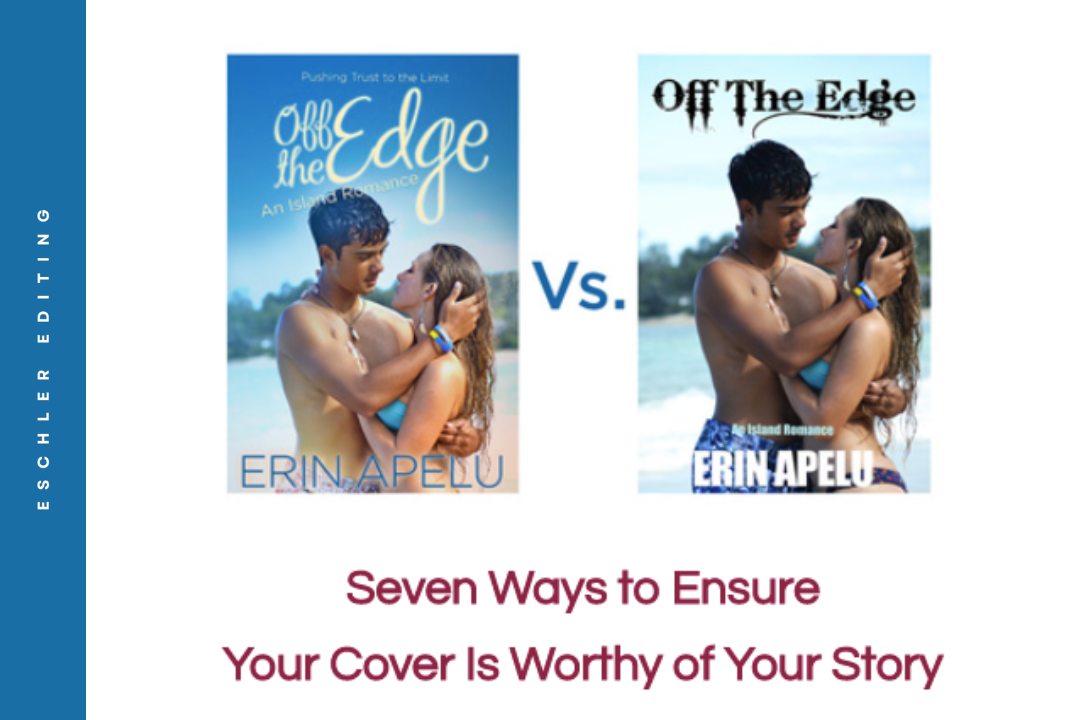
If your book is a cerebral sci-fi think-piece, but the cover makes it look like a thrilling space opera, you’ll have disgruntled readers dropping it after a few chapters, and your ideal readers will skip past it without realizing that it’s just what they want.

The best marketing is VERY simple. What does your reader want? How does your book meet that want?

EVERY piece of marketing material should answer that unconscious question.

If a reader scrolls through your Instagram and Amazon listing and doesn’t remember your main character’s name, or the plot, but takes away an accurate impression like, “this book will be a dark, emotion wrecker,” then you have succeeded!

Because even if they don’t buy your book immediately, they’ll remember their impression the next time they want a killer, gritty story.

It’s not about you and your book – it’s about your reader

Approach all your marketing efforts from a would-be buyer’s perspective, and you’ll see a transformation in how readers interact with your book. Put yourself in their shoes.

Everything about marketing might sound overwhelming, but THIS one element is where you are at an advantage. You’re a storyteller – imagining the feelings and internal journey of other people is one of your greatest strengths! Leverage it!

Just remember, that when pitching your book, it’s NOT actually about you or your book. It’s about your reader.

You are the wise old mentor stepping alongside a lost young hero who needs a word of wisdom, an eye-opening experience, or a comforting touch. Your book is the tool you use to help a reader reach THEIR goal.

If you can make a would-be reader feel seen and heard, whether you’re chatting with them at a book fair, or sharing a meme on your socials, they will start to trust that your book will also be able to impact them in the way that they want and need.

When selling your book, tell the reader’s story, and how your book will make it better.


Hi, I’m Caylah Coffeen, a freelance editor and marketer of sci-fi and fantasy books. I love reading and writing and am a follower of Jesus Christ.

I’ve learned how to effectively market books by working for Monster Ivy Publishing, Eschler Editing, and two marketing agencies – Perk Brands and Aloha Life Digital. Reach out to chat about books and publishing!

Thanks for stopping by my website! I hope you’ve found some helpful resources about reading, writing, and publishing. If you liked this article, here’s some more free content…

22 High/Epic Adult Fantasy Books with 1 POV & a Male Protagonist

Books with a massive set of multiple POVs drive me crazy. I prefer stories with a tighter focus that invite readers to enjoy (and work to unravel) some mysteries about the larger world. Sometimes less is more.

But these days, multi-POV fantasy books seem to be the norm, especially in adult fantasy. It’s so hard to find books that feature only one point-of-view character, but I’ve done some legwork for you!

Note: this list focuses on male protagonists and dark, mythic, political, and military fantasy, rather than romance, satire, or coming-of-age.

I’ve read about half of these so far, and all others have at least a thousand 4+ star reviews. Most of these authors have a larger body of work which also feature a similar style.

  1. Classic and pre-2000s fantasy with 1 POV
  2. Modern fantasy books with 1 POV
  3. Fantasy books with predominantly 1 POV – but with brief cutaways

This article contains affiliate links – I may earn a small amount on qualifying purchases at no extra cost to you.

Classic and Pre-2000’s Fantasy with 1 POV

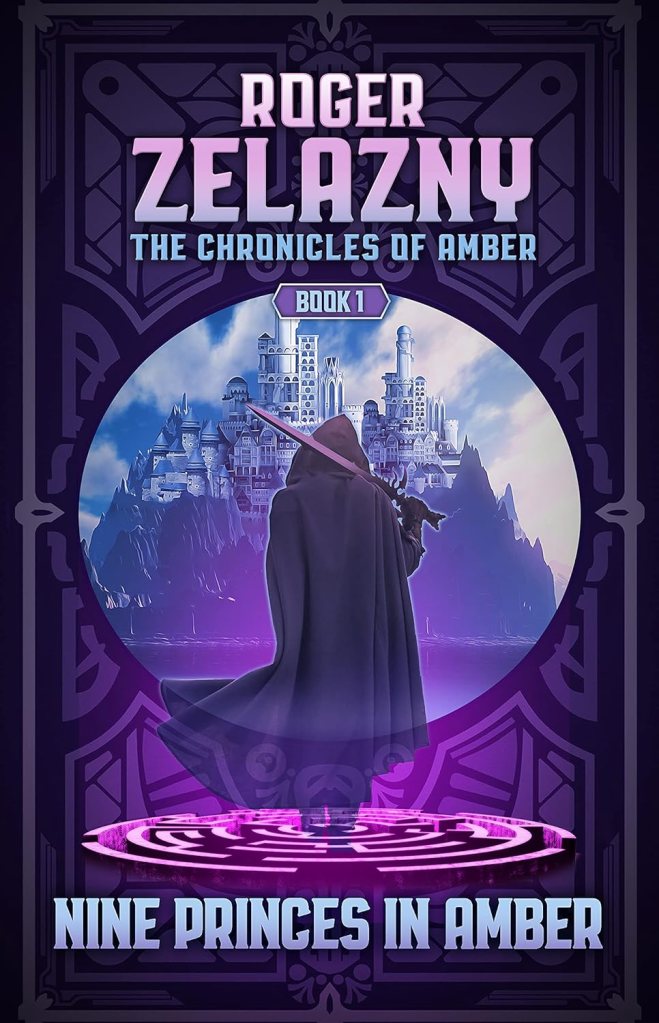
1. Nine Princes in Amber by Roger Zelazny

Ok, technically this is science fantasy, but it FEELS so epic, and most of the story takes place in a medieval setting. The main character is a centuries-old mage poet and swordsmaster who stepped out of literal golden age Avalon! One of my absolute favorites!

Corwin is a prince of Amber, the “immortal city from which every other city has taken its shape.” All other worlds, including Earth, are shadows of that reality. Corwin has spent centuries on Earth with no memory of his birth.

But when someone in the family tries to kill him, Corwin begins a search for his past, discovering the universe itself will bend to his shaping. He is one of nine men who might rule Amber, if he can fight past the armies of his brother and nemesis Eric.

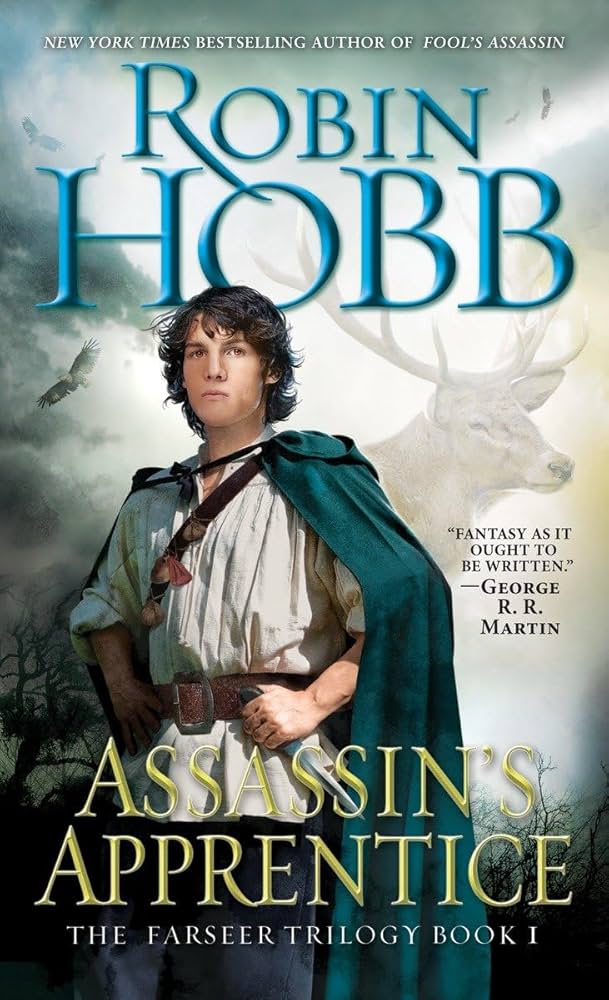
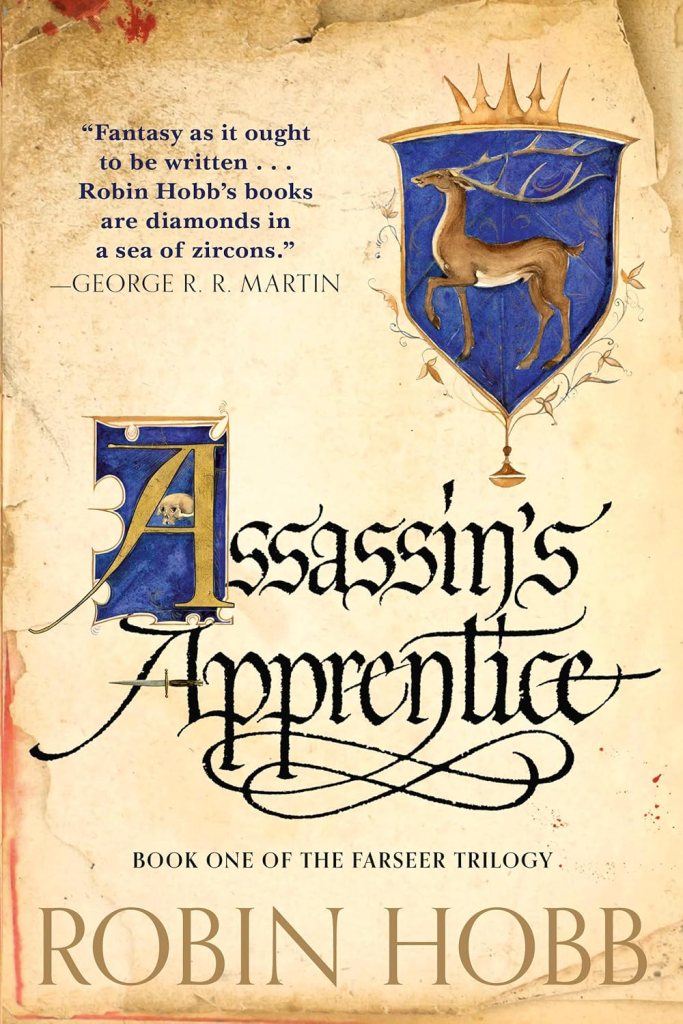
2. Assassin’s Apprentice (The Farseer Trilogy #1) by Robin Hobb

Young Fitz is the bastard son of Prince Chivalry, raised in the shadow of the royal court by his father’s gruff stableman. He is treated as an outcast by all the royalty except the devious King Shrewd, who has him secretly tutored in the arts of the assassin. For in Fitz’s blood runs the magic Skill.
 
As barbarous raiders ravage the coasts, Fitz grows to manhood and soon he will face his first dangerous, soul-shattering mission. And though some regard him as a threat to the throne, he may just be the key to the survival of the kingdom.

3. Elric of Melniboné (The Elric Saga #1) by Michael Moorcock

Elric is the brooding, albino emperor of the dying Kingdom of Melnibone. With Melnibone’s years of grandeur and decadence long since passed, Elric’s amoral cousin Yrkoon sets his eyes on the throne. Elric, realizing he is his country’s best hope, must face his nefarious cousin in an epic battle for the right to rule.

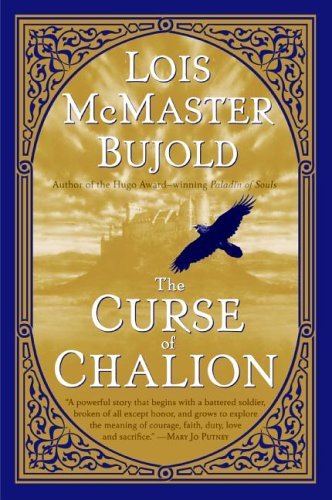
4. The Curse of Chalion by Lois McMaster Bujold

A man broken in body and spirit, Cazaril returns to the noble household he once served and is named secretary-tutor to the strong-willed princess. It is an assignment Cazaril dreads, for in the royal court of Cardegoss, the powerful enemies who once placed him in chains now occupy lofty positions.

Worse yet, a sinister curse hangs like a sword over the blighted House of Chalion. And only by employing the darkest, most forbidden of magics can Cazaril hope to protect his royal charge.

5. The Shadow of the Torturer (The Book of the New Sun #1) by Gene Wolfe

The writing style in this one is quite dense, and absolutely packed with complex vocabulary. The language is masterful, but it’s no light read. Keep a dictionary tab open!

The Shadow of the Torturer cover: a cloaked man in a strange mask holds a longsword, standing upon a curling pedestal throne that rises into a cloudy sky.

Severian is a torturer, born to the guild and with an exceptionally promising career ahead of him… until he falls in love with one of his victims, a beautiful young noblewoman. Severian helps her commit suicide and escape her fate. For a torturer, there is no more unforgivable act.

He is exiled from the guild with little more than Terminus Est, a fabled sword, to his name. Along the way, a strange gem falls into his possession, which only makes his enemies pursue him with ever-more determination…

6. The Legend of Nightfall by Mickey Zucker Reichert

This was published back in 1993, but the link will take you to an updated Kindle version that the publisher released in 2019, which is why it has apparently few reviews.

He has been known by countless names and deeds – thief, swordsman, assassin, adventurer. But chief among those personae is that of Nightfall, gifted with unique powers which any sorcerer would kill to possess.

Yet even the cleverest of beings must occasionally slip. When Nightfall falls prey to a royal trap, he is bound by sorcery and oath to guard a young prince on his quest. He will need every trick and talent to keep both himself and his idealistic charge from death at the hands of unknown betrayers.

Modern Fantasy Books with 1 POV

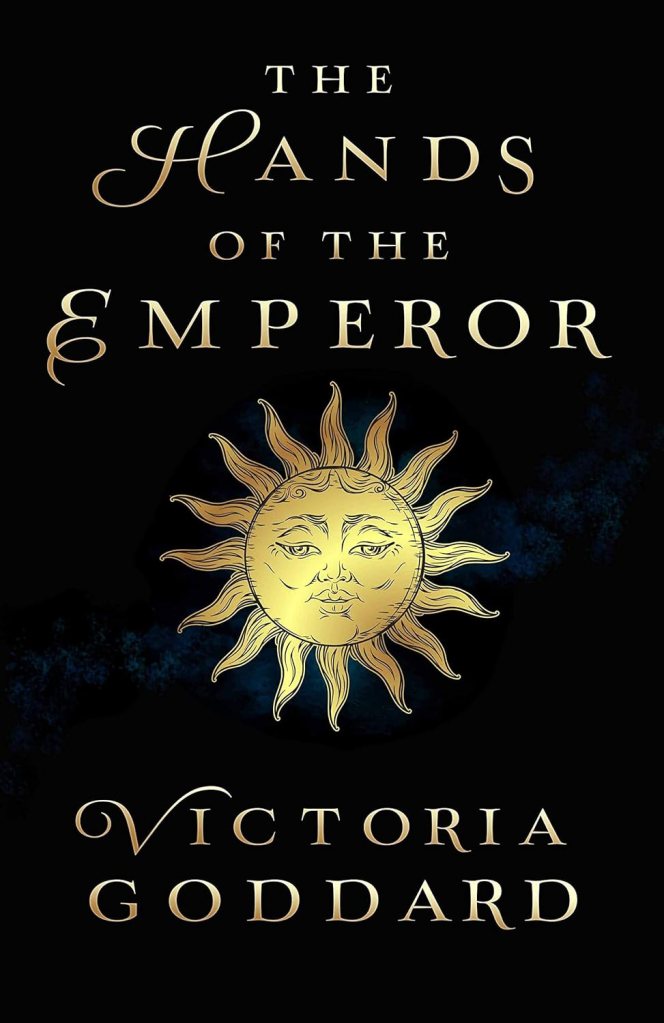
7. The Hands of the Emperor (Lays of the Hearthfire #1) by Victoria Goddard

Cliopher Mdang is the personal secretary of the Last god Emperor of Astandalas, the Lord Magus of Zunidh, the Sun-on-Earth.

He has spent more time with the Emperor of Astandalas than any other person. But he has never once touched his lord, nor called him by name. He has never initiated a conversation.

One day, Cliopher invites the Sun-on-Earth home to the Wide Seas for a holiday. The mere invitation could have seen Cliopher executed for blasphemy. The acceptance upends the world.

Read my 5-star review here!

8. The Name of the Wind by Patrick Rothfuss

The Name of the Wind cover: a cloaked figure faces a single tree in an overcast grassland, the world tinged a blue-grey.

My name is Kvothe.

I have stolen princesses back from sleeping barrow kings. I burned down the town of Trebon. I have spent the night with Felurian and left with both my sanity and my life. I was expelled from the University at a younger age than most people are allowed in. I tread paths by moonlight that others fear to speak of during day. I have talked to Gods, loved women, and written songs that make the minstrels weep.

You may have heard of me.

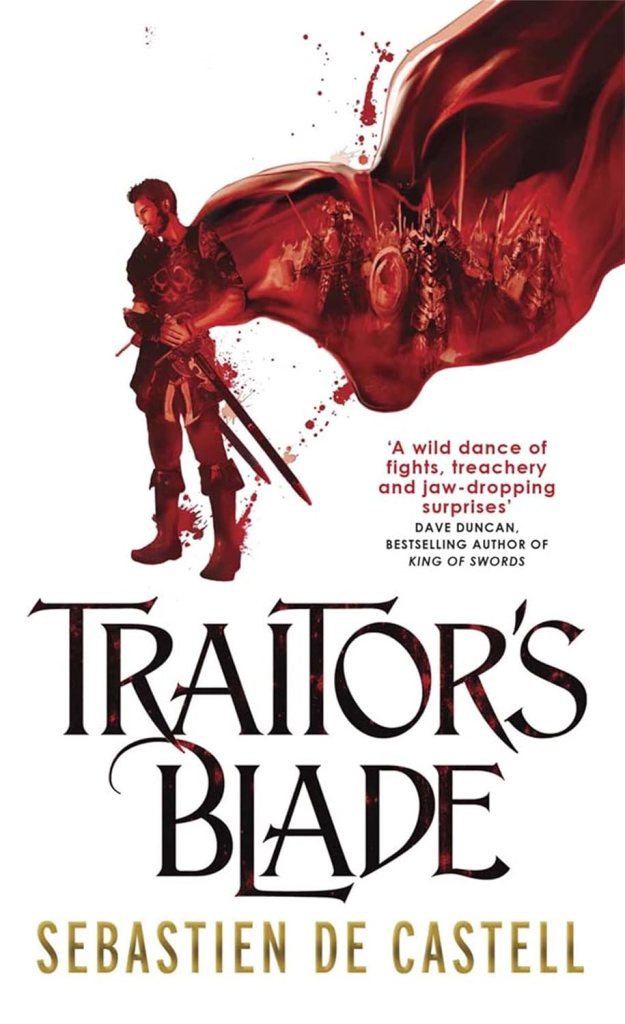
9. Traitor’s Blade (Greatcoats #1) by Sebastian de Castell

The Greatcoats are travelling magistrates bringing justice to all… or at least they were, before they watched the Dukes impale their King’s head on a spike. Now the land’s heroes are reviled as traitors, their Greatcoats in tatters.

Facio, Kest and Brasti have been reduced to working as mercenaries, but when they find their employer dead – and are forced to watch as the killer plants evidence framing them for the murder – they realize the royal conspiracy is spreading.

10. Sixteen Ways to Defend a Walled City by K.J. Parker

A siege is approaching, and the city has little time to prepare. The people have no food and no weapons, and the enemy has sworn to slaughter them all.

To save the city will take a miracle, but what it has is Orhan. A colonel of engineers, Orhan has far more experience with bridge-building than battles, is a cheat and a liar, and has a serious problem with authority. He is, in other words, perfect for the job.

11. Transformation (Rai Kirah #1) by Carol Berg

Note: this book is much better than its cover.

Seyonne is a man waiting to die. He has been a slave for sixteen years, almost half his life, and has lost everything of meaning to him: his dignity, the people and homeland he loves, and the Warden’s power he used to defend an unsuspecting world from the ravages of demons.  

But from the moment he is sold to the arrogant, careless Prince Aleksander, the heir to the Derzhi Empire, Seyonne’s desperately crafted apathy crumbles. When he discovers a demon lurking in the Derzhi court, he must find hope and strength in a most unlikely place…

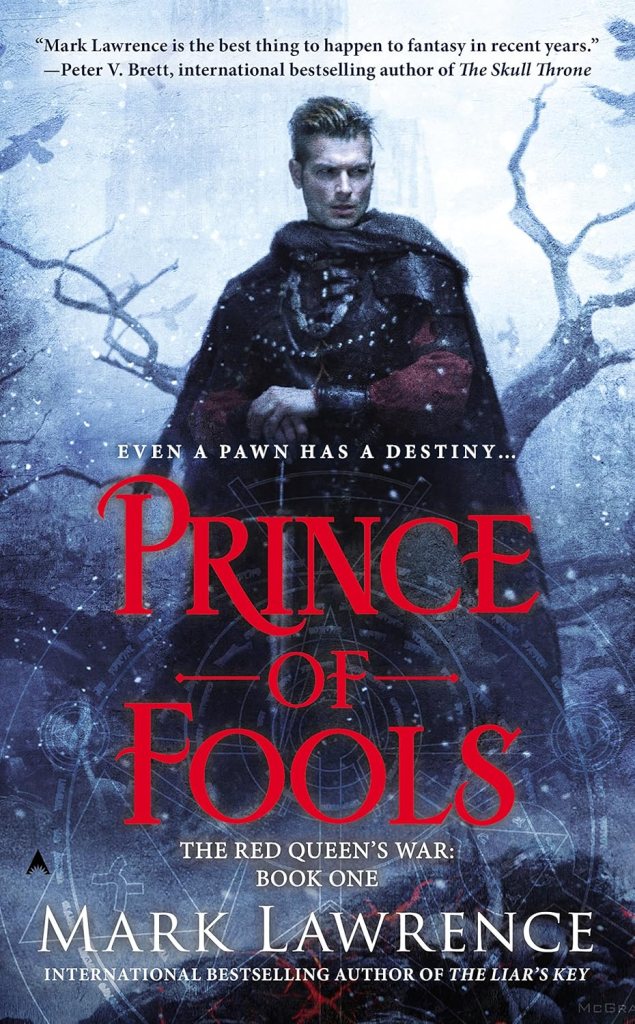
12. Prince of Fools by Mark Lawrence

Prince Jalan Kendeth—drinker, gambler, seducer of women—has a secret. He can see the Red Queen’s, his grandmother’s, greatest weapon: The Silent Sister. But content with his role as a minor royal, Jal pretends that the hideous crone is not there.

After escaping a death trap set by the Silent Sister, Jal finds his fate magically intertwined with a fierce Norse warrior. But war with the undead is coming, and as the two undertake a journey to undo the spell, they realize they are but pieces in a game—and the Red Queen controls the board.

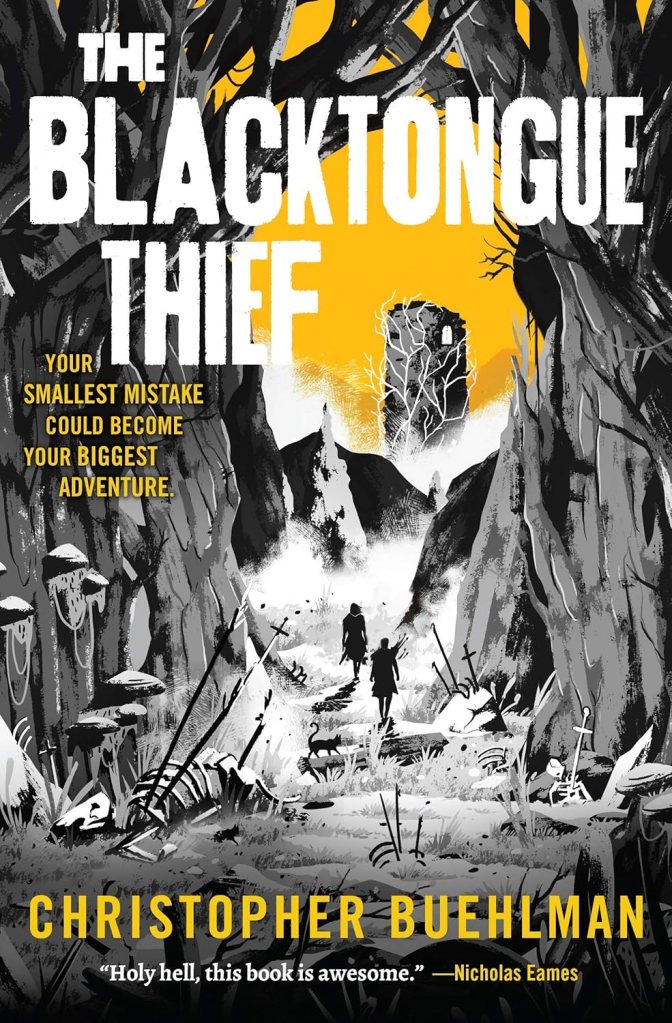
13. The Blacktongue Thief by Christopher Buehlman

Kinch Na Shannack owes the Takers Guild a small fortune for his education as a thief, which includes wall-scaling, lie-weaving, trap-making, plus a few small magics.

But today, Kinch has picked the wrong mark. Galva is a knight, a survivor of the brutal goblin wars, and handmaiden of the goddess of death.

Unsuccessful in his robbery and lucky to escape with his life, Kinch now finds himself braving krakens and giants with Galva in an epic journey to find her missing queen.

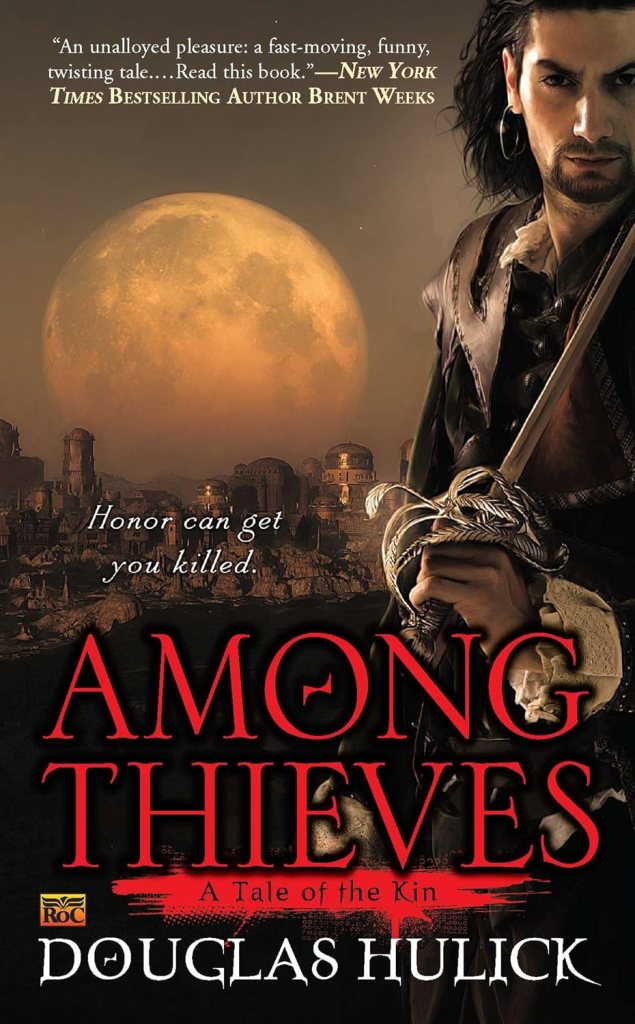
14. Among Thieves by Hulick Douglas

Drothe is a Nose, an informant who finds and takes care of trouble inside his criminal organization. On his latest assignment, Drothe unearths that someone is trying to stir up trouble between lower-level criminal organizations, including Drothe’s.

Rumors stir of a book containing imperial glimmer (or magic), and two crime bosses known as the Gray Princes are on the hunt. Drothe discovers the book, gaining the power to bring down emperors, shatter the criminal underworld, and unlock forbidden magic – if he can survive long enough to use it.

Fantasy Books with Predominantly 1 POV – but with brief cutaways

These books are told almost entirely (95%) from 1 point of view, with only brief cutaways to secondary characters. Note that some of these, like The Night Angel Trilogy and the Codex Alera, start incorporating more perspectives later in the series.

15. The Way of Shadows (Night Angel Trilogy #1) by Brent Weeks

The Way of Shadows cover: a cloaked man takes up a fighting stance, a dagger in each fist. Shadows swirl around him.

For Durzo Blint, assassination is an art – and he is the city’s most accomplished artist.

For Azoth, survival is precarious. As a guild rat, he’s grown up in the slums, and learned to judge people quickly – and to take risks. Risks like apprenticing himself to Durzo Blint.

But to be accepted, Azoth must turn his back on his old life and embrace a new identity and name. As Kylar Stern, he must learn to navigate the assassins’ world of dangerous politics and strange magics – and cultivate a flair for death.

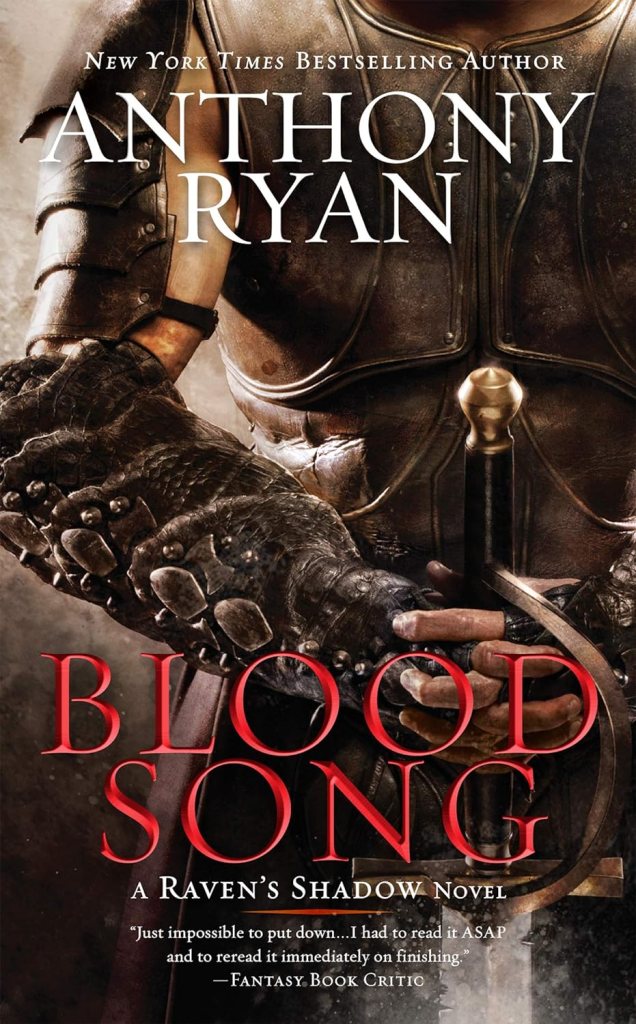
16. Blood Song by Anthony Ryan

Vaelin Al Sorna was only a child of ten when his father left him at the iron gate of the Sixth Order to be trained and hardened to the austere, celibate, and dangerous life of a warrior of the Faith.
 
Vaelin’s father was Battle Lord to King Janus, ruler of the Unified Realm—and Vaelin’s rage at being deprived of his birthright knows no bounds. Even his cherished memories of his mother are soon challenged by what he learns within the Order.
 
But Vaelin cannot escape a future that will alter not only the Realm but the world.

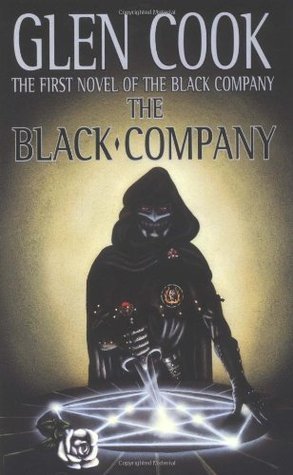
17. The Black Company by Glen Cook

Some feel the Lady, newly risen from centuries in thrall, stands between humankind and evil. Some feel she is evil itself. The hard-bitten men of the Black Company take their pay and do what they must, burying their doubts with their dead. 

Until the prophesy: The White Rose has been reborn, somewhere, to embody good once more. There must be a way for the Black Company to find her… 

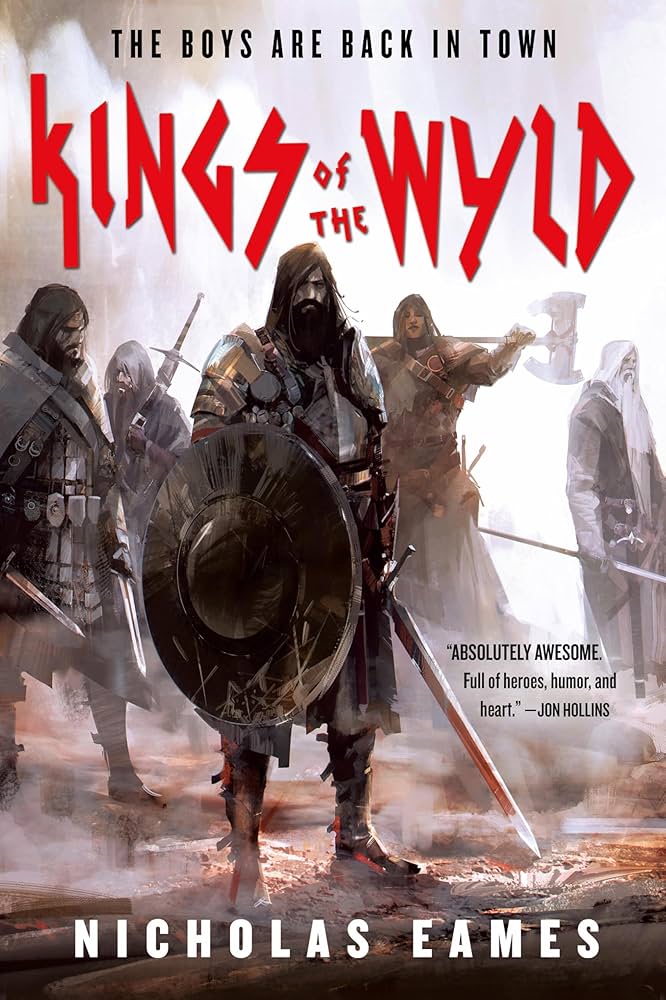
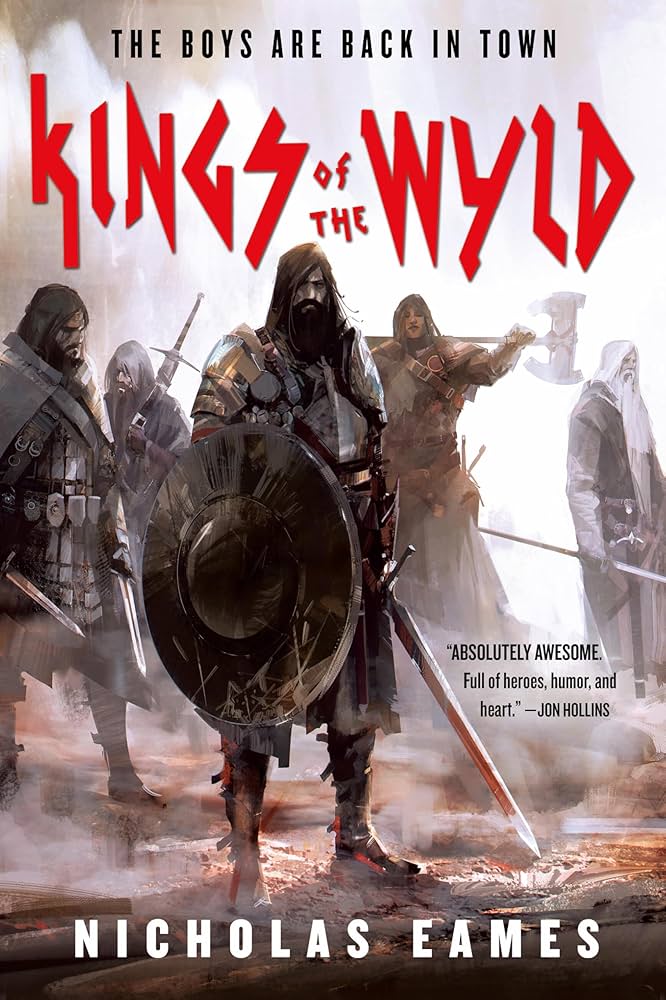
18. Kings of the Wyld by Nicholas Eames

Kings of the Wyld cover: a group of rough looking armored men stand together holding shields and bloodied swords.

Clay Cooper and his band were once the best of the best, the most feared and renowned crew of mercenaries this side of the Heartwyld.

Their glory days long past, the mercs have grown apart and grown old, fat, drunk, or a combination of the three. Then an ex-bandmate turns up at Clay’s door with a plea for help – the kind of mission that only the very brave or the very stupid would sign up for.

It’s time to get the band back together.

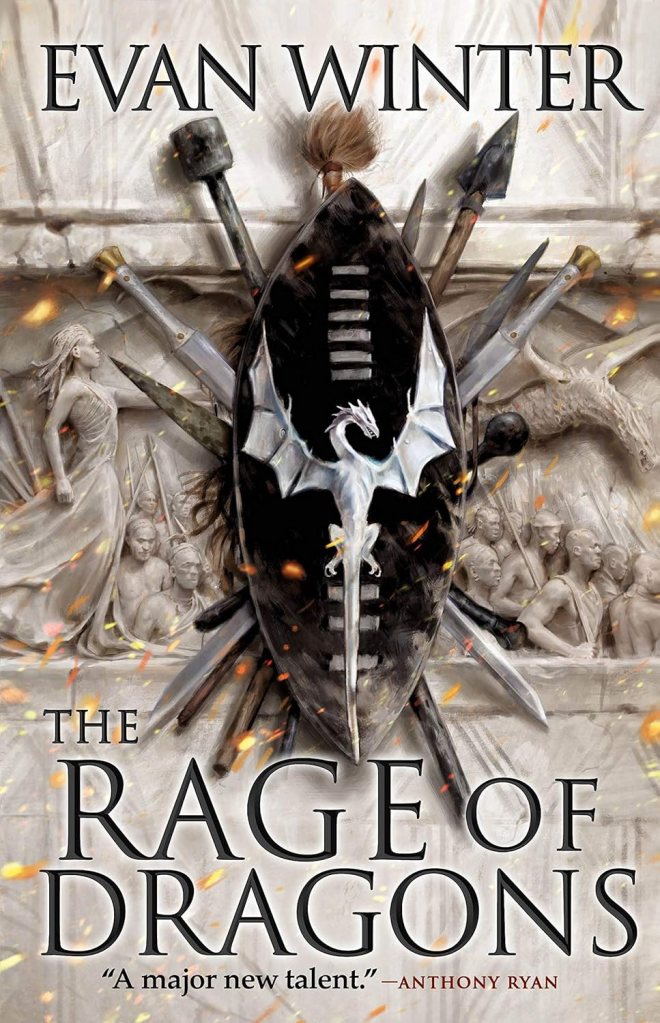
19. The Rage of Dragons by Evan Winter

Among the Omehi, one in every two thousand women has the power to call down dragons. One in every hundred men is able to magically transform himself into a bigger, stronger, faster killing machine.

Everyone else is fodder, destined to fight and die in the 200 year war. Young, gift-less Tau plans to get himself injured, get out early, and settle down to marriage, children, and land.

But when those closest to him are murdered, his grief turns to vengeance. He’ll become the greatest swordsman to ever live for the chance to kill the three who betrayed him.

20. Furies of Calderon (Codex Alera #1) by Jim Butcher

For a thousand years, the people of Alera have united against the aggressive and threatening races that inhabit the world, using their unique bond with the furies—elementals of earth, air, fire, water, wood, and metal. But in the remote Calderon Valley, the boy Tavi struggles with his lack of furycrafting.

At fifteen, he has no wind fury to help him fly, no fire fury to light his lamps. Yet as the Alerans’ most savage enemy—the Marat horde—return to the Valley, Tavi’s courage and resourcefulness will be a power greater than any fury, one that could turn the tides of war…

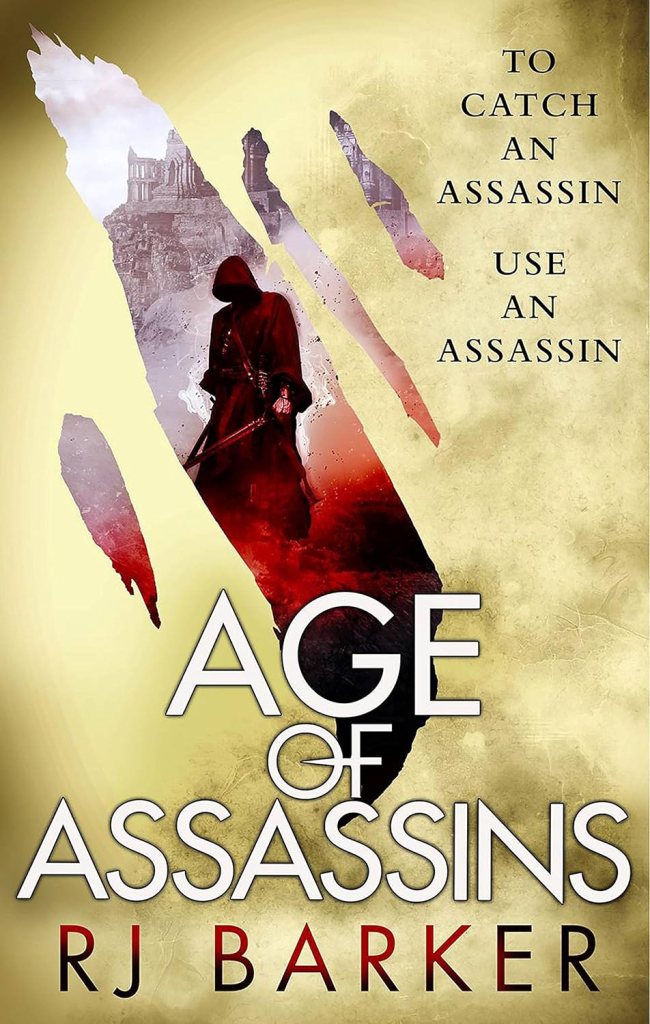
21. Age of Assassins by R.J. Barker

Girton Club-foot has no family, a crippled leg, and is apprenticed to the best assassin in the land. He’s learning the art of taking lives, but his latest mission tasks him with a far more difficult challenge: to save a life.

Someone is trying to kill the heir to the throne, and it is up to Girton to uncover the traitor and prevent the prince’s murder.

In a castle thick with lies, Girton finds friends he never expected, and a conspiracy that could destroy an entire kingdom.

22. The Silverblood Promise (The Last Legacy #1) by James Logan

Lukan Gardova is a cardsharp, academy dropout, and—thanks to a duel that ended badly—the disgraced heir to an ancient noble house.

When Lukan discovers that his estranged father has been murdered, he finds fresh purpose. Deprived of his chance to make amends for his mistakes, he vows to unravel the mystery behind his father’s death.

His search for answers leads him to Saphrona, fabled city of merchant princes, where anything can be bought if one has the coin. But the price of truth is the deadliest of all.


Hi, I’m Caylah Coffeen, a freelance editor and marketer of sci-fi and fantasy books. I love reading and writing and am a follower of Jesus Christ.

I’ve worked for Monster Ivy Publishing and Eschler Editing, and am currently a weekly editor with Havok Publishing. Reach out to chat about books and publishing!

Thanks for stopping by my website! I hope you’ve found some helpful resources about reading, writing, and publishing. If you liked this article, here’s some more free content…

Pursuing True Diversity in Fantasy Books

Guest post by Izaic Yorks

Fantasy as a genre has long captured the imaginations of readers with its thrilling adventures and heroic narratives. But if you’ve spent any time in the trenches of Reddit, BookTok, or even Threads, you’ve likely come across a question echoing throughout the zeitgeist:

Does fantasy suffer from a lack of diversity?

That, however, is the wrong question.

At the heart of this conversation lies a more critical distinction. The real question we should be asking is:

What do we even mean by “diversity”?

Is it simply about including characters of various races and socioeconomic backgrounds? 

Or does true diversity dig deeper? 

This article explores that very question while offering insights into how diversity can (and should) transform the realm of fantasy. Along the way, you might come to love me, or you might come to hate me. But one thing you won’t accuse me of is being a vapid wanderer with nothing but clouds for thoughts.

What Does Diversity Mean in Fantasy?

When we think about diversity in fantasy, what’s the first thing that comes to mind? For many, in a culture increasingly unmoored from classical philosophical foundations, “diversity” is often reduced to outward traits: ethnicity, gender, or socioeconomic status.

And yes, those factors matter.

But they shouldn’t overshadow what truly makes stories vibrant and enduring: diversity of thought. Because a book, at its core, is a well assembled stream of consciousness. A meditation and confrontation with ideas.

Diversity in My Own Career

This subject is actually quite dear in my own author journey and not for the reasons you might suspect. Whenever diversity comes up, it’s often along the lines of: “Hey, Izaic, why don’t you mention you’re Black? That could really help spotlight you or bring money in the door.” Every time I hear that, it feels like an arrow to the heart.

Why? 

Because it screams the bigotry of low expectations. Ideas that stand the test of time are based on merit. To have mine judged by skin tone or assumed hardships might grant me a short‑term dopamine hit but, in the end, would leave me wondering: did I earn X or Y, or was that just the result of someone’s assumption about me?

So, over and over again, I have declined grants or invitations that hinge solely on my skin tone. At times it’s been hard and a challenge to the life of virtue. Undoubtedly I am leaving money on the table, but I have faith that I am more than the base materials of my physical body. What remains, and what is important, is the diversity of my mind and soul, which God made perfectly to His design.

Beyond Biometric Metrics

Reducing diversity to metrics like race, gender, or class oversimplifies a much richer and more vital conversation. Biometric diversity does not automatically guarantee depth or quality in storytelling.

True diversity emerges from exploring nuanced ideas, conflicting beliefs, and different cultural frameworks for understanding universal human experiences.

Imagine a world where fantasy novels challenge readers to see the world differently—to entertain new possibilities and reflect deeply on their own beliefs.

That is authentic diversity.

More Than Skin Deep

Reducing diversity to physical characteristics is a form of tokenism, where characters are included as symbolic gestures rather than meaningful contributors to the narrative.

Instead, let’s consider stories where ideas and beliefs are the defining elements of uniqueness.

For example, a Black author can skillfully craft a European medieval fantasy steeped in knights, castles, and folklore. Likewise, a White author can authentically write a story centered around urban Black youths navigating the challenges of Chicago through the lens of portal fantasy.

The richness of a story stems not from the biometric traits of its characters or creators, but from the depth and clarity of its ideas.

Biological factors ≠ Diversity.

They are merely a potential starting point from which diversity might emerge.

This is not to deny the importance of representation but to elevate the conversation.

Our ultimate goal as lovers of literature should be compelling storytelling that speaks to the human condition. As Dr. Martin Luther King Jr. famously said, what matters most is “the content of their character.”

For fantasy, this means content that challenges, inspires, and transports readers into the vast frontiers of imagination.

The Reader’s Role in Seeking True Diversity

Writers aren’t the only ones responsible for cultivating meaningful diversity. Readers play an equally crucial role in shaping demand for more thoughtful and expansive narratives.

When audiences seek out stories that offer fresh perspectives and complex characters, they help pave the way for a broader, richer literary landscape.

Supporting Authentic Storytelling

Here’s how readers can contribute:

  • Explore New Authors: Seek out voices from various cultural and social backgrounds. But celebrate them not for their skin or heritage—celebrate them for the merit of their thoughts and craft.
  • Foster Conversations: Discuss books with others. Unearth the deeper themes and perspectives within a story.
  • Prioritize Depth: Choose books that offer intricate world-building, moral complexity, and provocative ideas over ones that simply check superficial boxes.

By demanding authenticity and intellectual richness, readers uplift authors and help shape a publishing culture centered on excellence.

Raising the Next Generation of Readers

Creating a culture where diversity of thought thrives doesn’t happen overnight. It begins with nurturing a love for reading in young minds. Exposing children of all backgrounds to a range of high-quality, diverse literature helps expand their worldview and strengthens critical thinking.

How to Foster a Love for Diverse Literature:

  • Start Early: Introduce imaginative fantasy stories that stretch the mind and expose kids to different ideas.
  • Align with Values: Share stories that reflect your core values but don’t avoid those that challenge or stretch them.
  • Create a Rich Literary Environment: Fill homes or classrooms with books spanning genres, cultures, and philosophies.
  • Celebrate Curiosity: Encourage kids to ask hard questions about characters, themes, and conflicts.
  • Train for Excellence: Stop paying lip service to mediocrity. If you’re invested in the future of Black youth—or any youth—invest in their craft. Train them rigorously. Push them to be extraordinary.

A sustained effort to introduce children to rich, diverse storytelling shapes a generation that values both creativity and authenticity. Excellence is the only foundation that ensures diversity lasts beyond trends.

Building a Future of Excellence in Fantasy Literature

Fantasy offers endless room for exploration, creativity, and connection. But for the genre to thrive, it requires intentional effort from writers, readers, and publishers alike.

Christian authors, especially, have a unique opportunity to contribute by anchoring their work in faith and reflecting the boundless creativity of God’s design.

The future of fantasy doesn’t rest on superficial representation. It depends on cultivating excellence and allowing the diversity of ideas to compete in all aspects of storytelling.

And that journey begins now.

With you.

About Izaic Yorks

Yorks spent six years as a professional Track athlete, earning silver in the United States championships, among several other distinguishing awards. Now, he seeks his true passion for authoring fantasy works with a heart for virtues that chase the Good, True, and Beautiful.

​Hailing from the Pacific Northwest, Yorks is now happily lost in Hillsborough, living the small-town life and raising a growing family with his wife Courtney.

Check out his book!


Hi, I’m Caylah Coffeen, a freelance editor and marketer of sci-fi and fantasy books. I love reading and writing and am a follower of Jesus Christ.

I’ve worked for Monster Ivy Publishing and Eschler Editing, and am currently a weekly editor with Havok Publishing. Reach out to chat about books and publishing!

Thanks for stopping by my website! I hope you’ve found some helpful resources about reading, writing, and publishing. If you liked this article, here’s some more free content…

13 Diverse Authors Adding Their Unique Voices to Christian Fantasy and Sci-Fi

God’s world is beautifully and wonderfully made! And his kingdom is made up of people from all 4 corners of the earth – I love hearing the stories of all my brothers and sisters in Christ.

Sci-fi and fantasy is special because it opens new worlds to me and examines ideas I may never have encountered otherwise. So when these genres are written by unique voices who come from different walks of life than me, I often find even greater delight in the imaginations they have spun into being!

Christian SFF has grown dramatically as a genre in the past 2 decades alone, and we’re seeing a wider range of authors than ever before! So I’ve compiled this list of diverse Christian authors of sci-fi and fantasy to help readers find and enjoy their compelling stories!

This article contains affiliate links – I may earn a small commission on qualifying purchases at no extra cost to you.

1. Anna Tan

About

Anna Tan grew up in Malaysia, the country that is not Singapore. She writes fantasy stories and fairy tales, puts together anthologies, and wrangles writers for the Malaysian Writers Society (MYWriters).

Anna has an MA in Creative Writing and is interested in Malay/Nusantara and Chinese legends and folklore in exploring the intersections of language, culture, and faith.

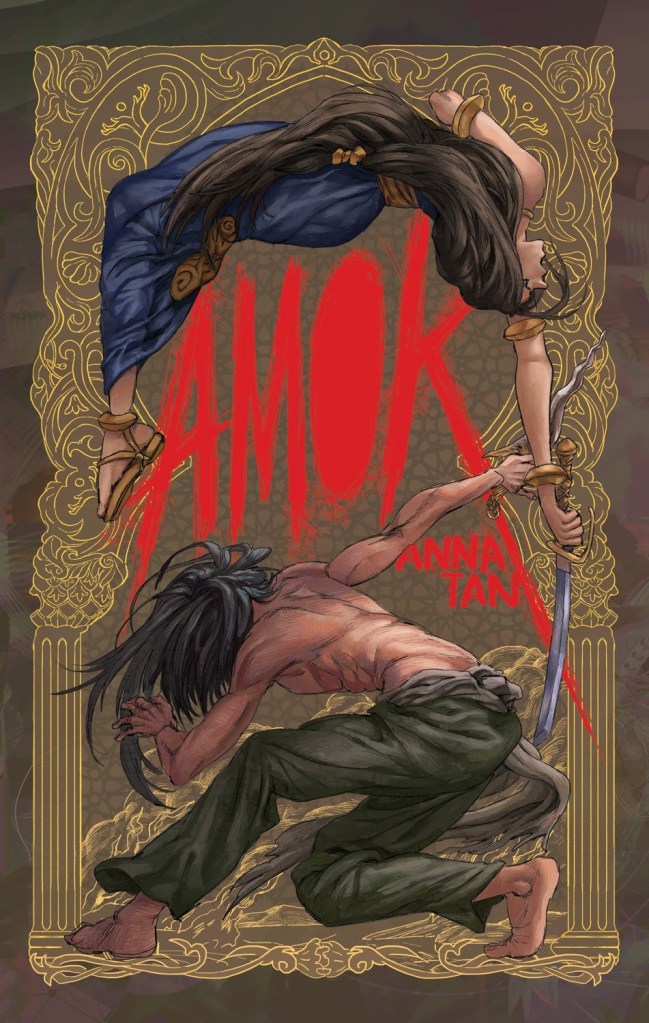
Standout Book: Amok (Absolution #1)

All Putera Mikal wants is to gain the Amok Strength, the supernatural power granted by Kudus to the Mahan royal family. No matter how religiously Mikal keeps his vows, Kudus still denies him the Strength—whilst his father, Sultan Simson, flaunts the Strength despite his blatant defiance of the Temple and the priests’ visions of coming doom.

Then the prophecies come true. Taken captive, Mikal must find a way to liberate his people and restore his throne in Maha—and the key to this is the Amok Strength. But what does it take to gain Kudus’ favour?

2. Tosca Lee

About

Tosca Lee is the award-winning, New York Times bestselling author of twelve novels, including a series with Ted Dekker. Her work has won multiple awards and has been translated into 17 languages and optioned for TV and film.

She serves on the Board of Directors of International Thriller Writers and as adjunct faculty for Drexel University’s MFA program. Tosca lives in Nebraska with her family, a drooling cat named Misty, and giant 160-lb. German Shepherd, Timber.

Standout Book: The Progeny

Emily Jacobs is the descendant of a serial killer. Now, she’s become the hunted.

Her quest takes her to the secret underground of Europe and the inner circles of three ancient orders—one determined to kill her, one devoted to keeping her alive, and one she must ultimately save.

Filled with adrenaline, romance, and reversals, The Progeny is the present-day saga of a 400-year-old war between the uncanny descendants of “Blood Countess” Elizabeth Bathory, the most prolific female serial killer of all time, and a secret society dedicated to erasing every one of her descendants.

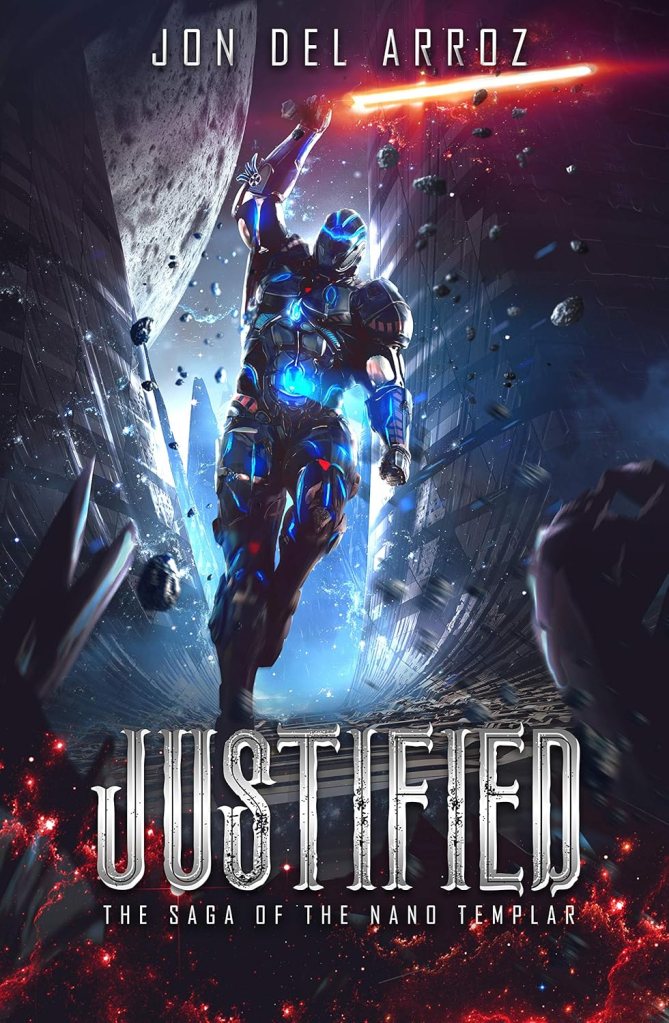
3. Jon Del Arroz

About

Jon Del Arroz is a #1 Amazon Bestselling author and “the leading Hispanic voice in science fiction.” He is a popular YouTuber with hilarious livestreams.

He says on his X (Twitter), “I became a #1 bestselling author by standing for Christian values.” In his free time he likes roleplaying, reading comics, and playing tennis.

Standout Book: Justified (The Saga of the Nano Templar)

To save a world… he must rely on God.

After years of fighting for justice with his deadly nanotech, Templar Drin abandons his post, crash landing on a desert world controlled by a tyrannical alien empire. Its inhabitants are forced into slavery, broken where a once-proud race cultivated its lands.

For the first time in Drin’s life, he has no backup, no support, none of his brothers. Yet he still seeks to liberate millions of slaves from their captors and bring faith to a downtrodden world. But in his way stands the most dangerous weapon in the galaxy.

4. Valicity Elaine

About

Valicity Elaine is the author of several Christian YA dark fantasy novels and a former Booktuber. In 2015, after her experience with indie publishing, she founded The Rebel Christian Publishing.

Their goal is to produce and publish good quality Christian books with a strong focus on the inclusion and representation of minority cultures. They aim to keep Christ at the center of their business and to positively reflect the Christian faith in the books they produce.

Standout Book: I am Man

Code-X5 is a Guardian, fresh from the factory after a memory wipe. But there is a flaw in X5’s programming. He can’t pinpoint it, but something is wrong. Despite this, X5 just wants a fresh start, but that’s hard when your client is an exiled princess who wants you to bust her out of prison.

He thinks it will be a simple mission until they discover a scheme that could unravel the very fabric of the Valetian Empire.

Is it possible that X5’s programming is more than flawed… and that he wasn’t always a Guardian – what if he isn’t the only one?

5. Dylan West

About

Dylan West writes faith-based, young adult science fiction and fantasy novels. He is a Jesus lover, web and video game developer, former Navy nuclear operator, foreign language nut, and a nut in general.

While other people are busy thinking normal thoughts, he’s crafting corny jokes. Dylan lives in Chesapeake, VA, with his wife and daughter.

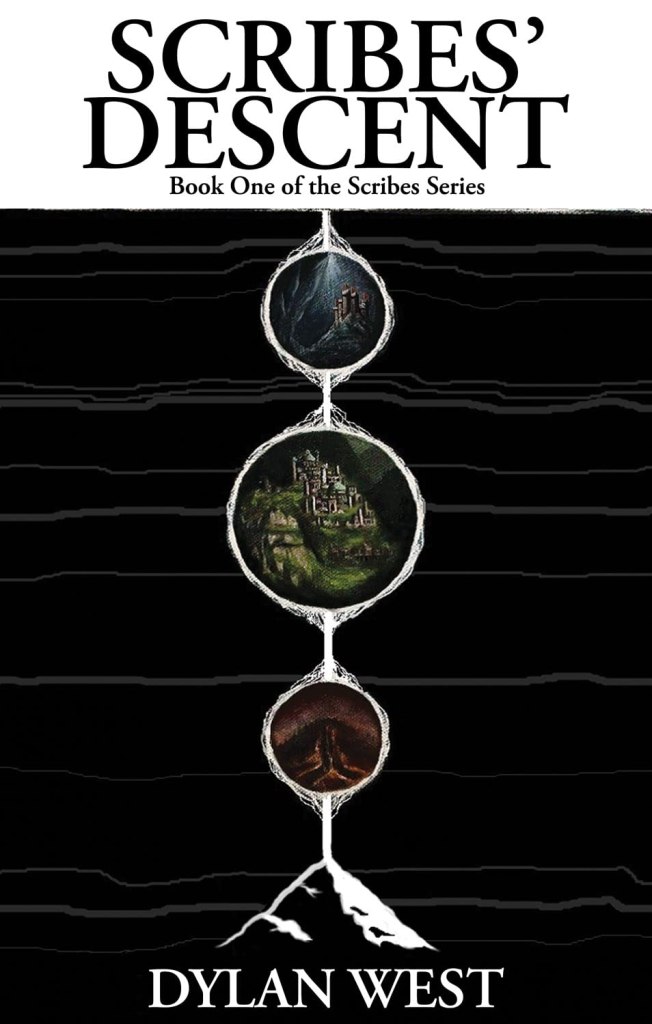
Standout Book: Scribe’s Descent

People worship technology on Planet Daishon. With inventions that prolong life and eradicate disease, it’s little wonder. Death seems obsolete until an earthquake kills thousands, including Mallory’s parents. Suspecting the top research center triggered it, she begins to investigate.

She unlocks an underground world and the remnants of a universal war. To survive, Mallory must trust the voice of one she can’t see, to find the very bottom. Something out of folklore is trapped there, and it is trying to escape.

6. Willamette Sutta

About

Willamette’s earliest memories of books coincided with those of America, when she first came here from Hong Kong at the age of seven. Awed by the abundance of free books, she determined to learn English so that she could partake of this bounty.

At first she wanted to be a detective, but after studying physics and library sciences, she became an academic librarian. Now she combines her love of information and speculation to create fantastic stories that nevertheless give an air of a world truer than the one we see.

Standout Book: Adamant in Dust

Pergi can only retain her father’s throne if she marries the neighboring prince, combining their kingdoms. Yet the same prophecy that calls for the reunification also warns that they must join by love. So she is supplanted by her younger sister, Sadira, who unexpectedly runs on her wedding day, only to be snared by the dark lord Malchor.

What starts as an impromptu rescue of the wayward bride leads to a desperate struggle against a deadly foe. For if Malchor completes his true goal, and gains the Far Stones of power, he will subjugate all the peoples of Miran. Can Pergi’s adamant sense of duty rise above the forces crushing her?

7. Lee James

About

Lee James writes stories of hope and redemption. Whether it’s fantasy, mystery or historical fiction, her beautifully awkward characters traverse a dark labyrinth on their journey to a hopeful end.

She is vehement about the importance of creating and preserving the sanctity of the written word. In that vein, she supports literacy programs and her local libraries. Most importantly, she supports her fellow writers. She also enjoys photography, watching The Simpsons, and of course, reading.

Standout Book: Azriel

Bree, a feisty protegee fighter, is sent to infiltrate the city of Azriel. Unexpectedly, the Watchmen of the Keep welcome her as one of their own.

But the city’s water source has dried up, they face constant attacks from the vengeful spirits of former Watchmen who sold their souls for power, and an immortal creature lurks.

Then, a Watchman is murdered. But only a Watchman can kill another Watchman, so all eyes shift to Bree. Should she betray the dying city, or find the killer before it’s too late?

8. Daniel Tuituku

About

Daniel Tuituku is from Hawaii, but grew up in North Carolina, which is still his home. He’s a Christian and homeschooled alum, and his favorite works include Pilgrim’s Progress and the writings of C.S. Lewis.

When he got laid off from a job back in 2021, he jumped on the opportunity to write and publish his first book, Strange City. Daniel writes about real world themes and problems, but ensures the message of salvation and hope shines through the darkness of this fallen world.

Standout Book: Outlaw City

Noe Ryker grew up in the Gray Zone as an orphan whose parents were killed for their beliefs. Whether he’s being harassed by The Law, being ordered around by robots, or forced to bow down to the tyrannical King, Noe has been giving in for too long.

All of that changes when he meets Faith, a strangely powerful woman – or spirit – he thought he once knew. Driven by a sense of purpose for the first time, Noe sets out to take down the King and liberate the city. But can he speak boldly, act courageously, and hold on to what he knows is true, even as the shadows of doubt and fear grow all around him?

9. Izaic Yorks

About

Yorks spent six years as a professional Track athlete, earning silver in the United States championships, among several other distinguishing awards. Now, he seeks his true passion for authoring fantasy works with a heart for virtues that chase the Good, True, and Beautiful.

​Hailing from the Pacific Northwest, Yorks is now happily lost in Hillsborough, living the small-town life and raising a growing family with his wife Courtney.

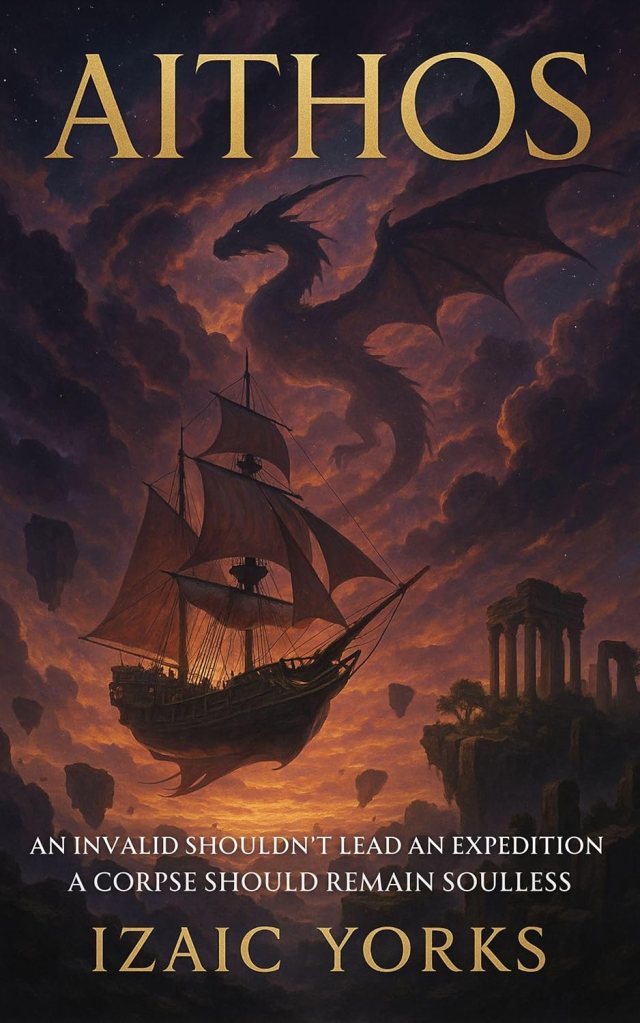
Standout Book: Aithos

Magnate Rivia watches his land crumble, and the High King refuses to answer his pleas. He sends a skyship on a desperate mission—commanded by an invalid whose body is shattered but whose will remains unbroken.

The invalid’s destination? The lost promised land that drove Magnate Rivia’s father to madness. Their path? The storm-ridden skies of Aithos, where dragons once soared, secrets lie buried, and death waits in the clouds.

Failure means rebellion. Success could mean salvation, but at what price?

10. R.J. Amezcua

About

R. J. Amezcua is the creative director of Quentorex Studios and the author of a science fiction book trilogy and an illustrated children’s book.

Mr. Amezcua’s favorite TV shows – Lost in Space, Outer Limits, and Star Trek – sparked his imagination. He also enjoys watching the Food Network, walking in the morning, and gathering with friends and family.

Standout Book: retribution (Mantis Force: Marium Kahnet #1)

Decades after global infanticide wiped out millions on the planet Ramah, Jazrene Vallo tries to piece her Holy Order back together.

But those responsible – the merciless, sorcerer-led Necrogog legions – still threaten multitudes of star systems, following their objective: to kill the promised Mantis messiah, whose birth mother is a member of the Holy Order, Marium Kahnet.

A group of rogue sisters is out for revenge. And her past isn’t clean either, with her own government seeking to prosecute her for war crimes. Even with a group of elite mercenaries and the instructions of a divine messenger, Jazrene may not be able to stop another wave of destruction.

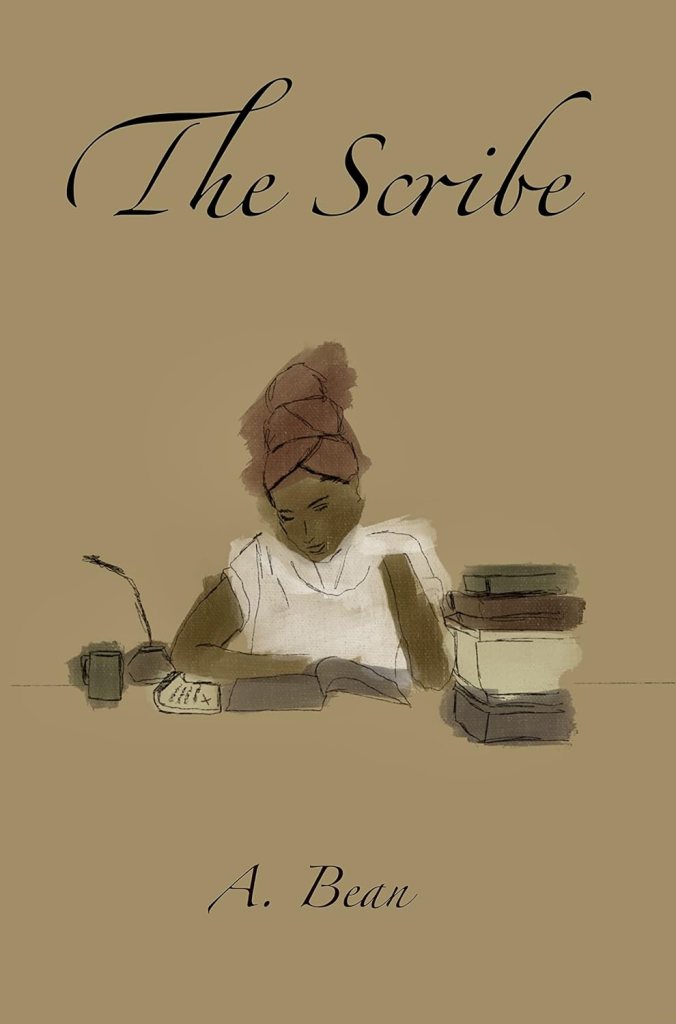
11. A. Bean

About

A. Bean is a Christian author who writes fictional stories that reflect the body of Christ and the Bible. She writes in multiple genres, including end times fiction, historical fantasy, and more.

Her treasured dog, Sesame, is a small tricolor beagle that loves peas! On their days off, they like to travel, visit new restaurants, and find exciting dog treat recipes.

Standout Book: The Scribe

In a world where reading is a rare ability you must be born with, it’s been decades since a new Scribe has surfaced…

Amana Hart believes she was born with the Gift; the ability to innately understand and speak multiple languages – but she must keep this a secret. Only men of great wealth and stature are supposed to have this ability, so to pursue her dream of becoming a Scribe, she must take on a new identity.

Only God can keep Amana safe. The Scribal Institution will stop at nothing to silence liars and fakes. If she isn’t careful, she could end up burned at the stake.

12. S.E.M. Ishida

About

S. E. M. Ishida is a children’s book author who writes science fiction and fantasy. She is also a technical communicator. The two roles allow her to write for both small publishers as well as a large technology company.

Her hobbies include reading, drawing, and collecting toys. She likes robots and tea!

Standout Book: Nick Newton is Not a Genius

Nick Newton is not a Genius. He’s just a merely average boy from the country of Thauma. He may not be brilliant like his mom and dad or a child prodigy like his sister, but he won’t let that stop him from uncovering the mysteries of a clockwork factory or revealing a war hero’s greatest secret.

With help from two new friends and his butler named Jude, Nick embarks on an adventure that will change his life forever.

13. Jaymi Mozeak

About

Jaymi Mozeak was born in 1982 in Nuernberg, Germany. Soon after, her family moved back to the states where she grew up on the central coast of California.

Besides being an author, artist, and speaker, Jaymi Mozeak is also a Christian Seer. She became a Christian at age 7 and has walked with the Lord ever since. Now she draws inspiration for her stories and artwork from the dreams and visions she receives.

Standout Book: Demon Warrior

“I drank the blood of an angel… How can You want me?”

Follow Silver Fox, a brave young wolf-dog, in her quest to find a place for herself among the glories of heaven. She looks like a demon and is hampered, abused, and mistrusted because of it. She feels like no one will ever trust her or want her around.

No one will love her except Shepherd, the white lion. He alone invites her to join his army. What does he see in her that no one else has?

Help Me Expand This List!

Do you know of any other authors whose works would fit this list? Comment below or shoot me an email, and I’ll feature them here!


Hi, I’m Caylah Coffeen, a freelance editor and marketer of sci-fi and fantasy books. I love reading and writing and am a follower of Jesus Christ.

I’ve worked for Monster Ivy Publishing and Eschler Editing, and am currently a weekly editor with Havok Publishing. Reach out to chat about books and publishing!

Thanks for stopping by my website! I hope you’ve found some helpful resources about reading, writing, and publishing. If you liked this article, here’s some more free content…

“Toxic Femininity” – Where “Strong Female Characters” Went Wrong

By Caylah Coffeen

I recently picked up an epic fantasy book I had greatly anticipated reading – it promised unusual worldbuilding, an intricate plot, and a unique authorial voice. I didn’t make it through the first chapter.

In the opening, the main female character gets drunk, breaks into someone’s home to commit adultery, assaults the homeowner when he tries to stop her, and gets thrown in jail. When she wakes up, she bangs on the bars and yells at the guards to let her out, as though she’d done nothing wrong. A stranger, who greatly outranks her, bails her out and gets her acquitted because he wants to hire her. She struts out like she owns the place, doesn’t offer this man a single thank you, and instead mouths off at him, becoming offended that he expects her to work off her debt to him!

That’s when I stopped reading. I was astounded we were supposed to find this character likeable. Or even admire her defiant attitude and the gargantuan chip on her shoulder.

Unfortunately, this is the exact type of character readers can expect to see over and over again, advertised as a “strong female lead.”

I would use another word: cocksure. I’m sorry if you find that crass, but that’s the point – that’s exactly what these characters are.

The Double Standard

How is it that the word I’ve found to best describe these “strong female characters” has largely been used in the past to describe men being jerks? It’s pretty much the old word for “toxic masculinity!” If a male character acted the way these female characters do, that’s exactly what they’d be called! No, if they acted half so horribly, they would never have made it past a publisher’s slush pile. Instead, we would have seen acquisitions editors tweeting about how triggered they felt.

I’m glad that publishing has enacted a higher standard for male characters! So many male “heroes” in books do treat everyone around them terribly, break their word, kill and torture without remorse, look out only for themselves, emotionally abuse their friends, abandon their families, and drink, swear, and fight with impunity. It continues to horrify me that stories like Prince of Thorns were ever published, and I’m relieved that publishers would reject such books today.

But I don’t want to read about hubristic, “antihero” women any more than I want to read about sociopathic, egotistical men. So why is this behavior seen as not just acceptable, but “cool” when enacted by women?

It shouldn’t be, for two reasons. But before I get into why, let’s define our terms.

“Toxic” or “Sinful?”

I’m a Christian, and I’m fine with using the phrase “toxic masculinity” because men are sinners, and like all sinners, glorify their sin as right. The world’s version of a “strong man” is extremely different from God’s version, and yes, it’s often toxic. Greed, rape (jokes), idolatry, and violence are all sins that God condemns. In the Bible, the “men after his own heart,” are faithful, humble, selfless, obedient to his law, self-controlled, and gracious. This is “righteous masculinity,” nothing like the “locker room boasters” which our culture has seen as cool (in the past). And praise God for the men who seek to be made anew in such a way!

When women call out “toxic masculinity,” I feel a lot of compassion for people who are often coming from non-Christian households. They’ve never met a godly man in their life, and they don’t have the words to explain why their relationships feel so wrong. So they use terms given to them by mental health professionals.

However, I know that many modern* feminists also use the phrase “toxic masculinity” to assert that the idea of gender differences and the existence of masculinity are in themselves toxic. I reject that claim and do not use the phrase in such a way.

*Early feminists were wonderfully brave women who championed equal rights under the law and were almost all Christians, so please be careful if you’re tempted to make blanket denigrating statements about feminists. I encourage you to read about the different “waves” of feminism to understand how/when things went wrong.

Our culture also praises the sins of women, glorifying selfish, petty, greedy, cruel speech and actions as “subversive, bold, driven, audacious, or strong.” We could refer to this as “toxic femininity,” and indeed if we are going to call out sinful masculinity, then we should be willing to do the same for sinful versions of femininity.

Though perhaps it’d be much better if we dropped this phrase entirely, in favor of biblical language. The Bible uses different words than “toxic”:

Righteous or wicked
Godly or ungodly
Integrity or crookedness
Alive in Christ or dead in sin
The wise or the fools

What does Proverbs tell us about what it looks like to live a righteous life?

The righteous hate what is false, but the wicked make themselves a stench and bring shame on themselves.
The heart of the righteous weighs its answers, but the mouth of the wicked gushes evil.
The righteous detest the dishonest; the wicked detest the upright.

Proverbs 13:5, 15:28, 29:27

I yearn to read about main characters who are considered heroes because they are righteous, not because they are wicked!

How dare publishers act as though they’ve made a stand for morality, only to turn around and espouse those same evils when committed by people like themselves! And these new heroes aren’t even well written.

Most “Strong Female Characters” Are Badly Written

It wasn’t just a shift in culture that led to a decline in the “toxically masculine” character. Publishers just started pointing out that such characters are often badly written and make for flat stories. Which is true.

Contemporary female leads, like many stereotypical male leads in older books (prophesied farm boy), are often 2-dimensional, cut-and-pasted copies of each other. Handing a girl a sword doesn’t give her a personality, though apparently it gives the author an excuse not to develop one. The most noticeable things about them, aside from their superior talent and skills, are their entitlement, aggression, arrogance, and air of martyrdom. When the story starts, they are the universe’s gift to humanity, and when the story ends, they are the universe’s greater gift to humanity.

Readers see very little character development, with the exception of “healing” from whatever injustice the world has perpetrated against the main character. There are no personal flaws they need to face and overcome. Everything is someone else’s fault. This makes for extremely boring storytelling. It breaks the cardinal rule of character development.

Everyone who’s taken an intro to creative writing course knows the joke about “the frat boy who signed up to get an easy humanities credit”: The guy writes a story about a perfectly handsome, intelligent, desirable young man who breezes through all his problems and gets the girl who wrongly rejected him before. The professor has to explain that a good (and realistic) story needs flawed protagonists (not the same as morally grey) and problems that they can’t immediately overcome. This creates tension in the plot and spurs development in the character. Usually, the new writer resists, because their character is actually a self-insert and they feel personally attacked at the implication that they have flaws.

These points are no less true for female writers and female characters. In fact, these days male writers are much more likely to accept feedback when you tell them their character needs work – I know, I’ve worked with quite a few developing male writers. But female writers are likely to get up in arms if anyone criticizes how unrealistic or entitled their female characters are. Because these authors are often living out their dreams of being able to get away with literal crime, say whatever they want to the men in their life, and be respected and taken seriously for it.

And, predictably, the characters and plot of these stories suffer for it. Yet publishers will ignore these obvious problems when they’re seen in female characters, because they too are fantasizing about walking around like god and being worshiped for it – as all sinful humans do.

Which brings me to the second reason why we should reject “toxic femininity” – the glorification of unrighteous women – in books.

Bad Ideology, Bad Examples

The version of femininity which is portrayed in so many of these stories is not something I want to embody. I don’t find these women strong. They are not good role models. Most of them are angry, bitter, self-absorbed individuals who hate authority, are isolated from healthy community and family, and listen to no one but themselves. They are unrighteous and thoroughly broken.

These characters embody everything that women have called out as wrong in male behavior. At least modern feminists have gotten more honest. Their actual message is, “men shouldn’t play god, but women are god.” I suppose these books sell because fallen people do relate to this desire. I don’t know why anyone is shocked – this is the oldest sin there is.

“You will be like God, knowing good and evil.”

Yours truthlessly,
Satan

That’s the message publishers are selling to girls: “you can be like god.” Girls down these books like cheap shots, craving temporary gratification in place of the answer that will truly quench their thirst. Such stories can never satisfy, because they run in direct opposition to the Great Story, which tells of a plain, humble, kind man doing what is right and vanquishing evil at great cost to himself, for the sake of others.

This doesn’t mean I only want to read stories about knights saving damsels in distress from dragons, though the trope is justifiably iconic (pun intended)! This is one major reason why I personally prefer reading about male mc’s.

But I do want Queens who save their kingdom from evil. Yes, give me heroines running around in capes and busting out martial arts moves. I need to read stories about female strategists, inventors, explorers, and more. AND I want to read stories about mothers, sisters, shy girls, bookworms, wives, and any other profession out there.

SO LONG as all these women first and foremost embody integrity, kindness, faithfulness, humility, goodness, and other signs of godly character. So long as her flaws and mistakes are actually portrayed as problematic and she actively wrestles to overcome them!

We have beautiful examples to guide us!

Noah’s wife cared for her family through the ending of the world, Abigail defied her wicked husband, Ruth braved the wilderness and poverty for love, Esther faced the emperor of the known world head on, Mary encountered an eldritch creature with who knows how many eyeballs and sang for joy. Jael and the woman of Thebez smashed open the heads of villains with household implements!
The woman of Thebez wields her deadly millstone

These are strong women, brave women, faithful women – women after God’s own heart.

Don’t believe the world’s picture of femininity. It is toxic. It is the way that leads to death. I urge you not to write self-absorbed, 2D, arrogant female OR male characters, but to look at the truth of God’s word and write stories that would please him and better teach us how to hear his story.

P.S. If anyone wants to make a biblical argument in favor of the descriptor “toxic,” I’m all ears (Matt 16:6). After all, a little Axe body spray goes a long way. 😉


Hi, I’m Caylah Coffeen, a freelance editor and marketer of sci-fi and fantasy books. I love reading and writing and am a follower of Jesus Christ.

I’ve worked for Monster Ivy Publishing and Eschler Editing, and am currently a weekly editor with Havok Publishing. Reach out to chat about books and publishing!

Thanks for stopping by my website! I hope you’ve found some helpful resources about reading, writing, and publishing. If you liked this article, here’s some more free content…

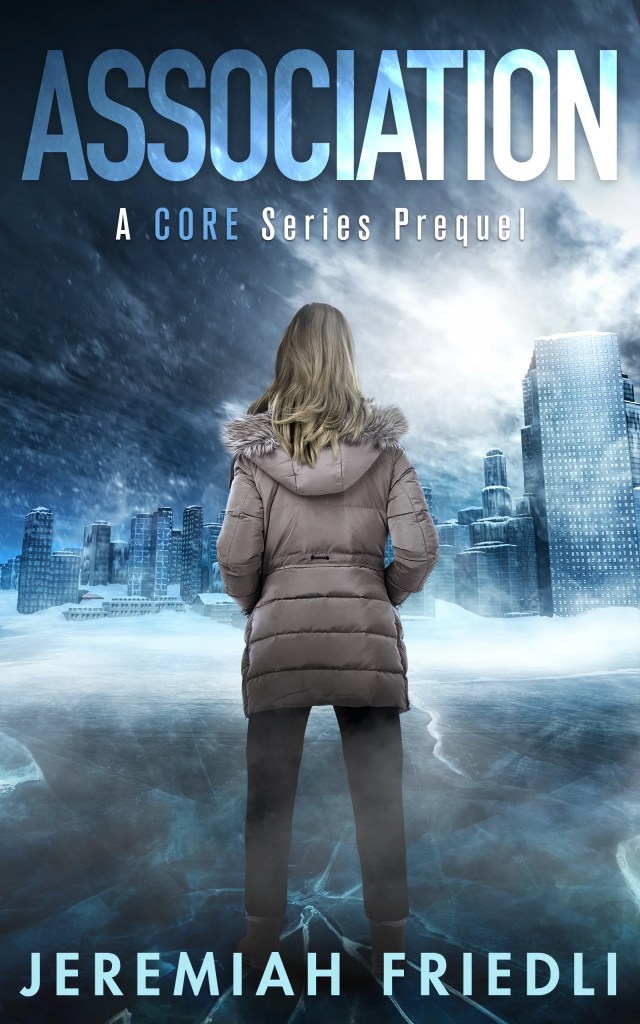
Interview with Jeremiah Friedli – Debut Author of Christian Sci-Fi Novel CORE Deception

By Caylah Coffeen

CC: Thanks for joining me Jeremiah, and congrats on your debut novel! Tell us about it!

JF: Thanks, and I appreciate you inviting me to join today! Here’s what you’ll find in my novel CORE Deception:

A tyrannical government, a cryptic letter, a devious hacker…

In a world where the government’s CORE systems see and track everyone, seventeen-year-old hacker Seth Alvarez is determined to save his sister from being placed in a reeducation facility. Armed with a cryptic letter, Seth embarks on a search for the valuable incognito devices—cyber master keys that can set his sister free. But with only three weeks remaining, he finds himself wedged between two powerful forces who will stop at nothing to get the devices first.

CC: That sounds exciting! I love books about siblings (I have 6 myself!). And congrats on making it to the finalist stage in the debut category at the 2025 Realm Makers Awards! What do you love most about this story and what are you hoping readers will connect with?
JF: I love stories of espionage, undercover, and page-turning suspense. I also like some level of technology. A dystopian setting offers the perfect venue for teen characters to get into these activities. If you love clean YA read that keeps you turning pages, stories of underdogs standing up to dystopian governments, and plots filled with intrigue and suspense, CORE Deception is for you.

Take codes and ciphers for example. I’d read about them in true spy accounts and liked the idea of incorporating them into the CORE Series. As I learned more so I could write about them correctly, I really enjoyed codes and ciphers. In fact, they play key roles in CORE Deception and its prequel novella Association. I even created a Code and Cipher Guide to go along with my books.

Another reason I like CORE Deception is the primary thematic element, which grew out of 2020 when I faced fears I didn’t know I had. I’ve struggled with fear of acceptance, fear of failure, and fear of incompetence before—to name a few fears. But this was new to me. It was fear that dominated my thinking and tried to control my actions. (And really, doesn’t all fear do that?)

Something told me this wasn’t right—more like Someone. As a Christian, I shouldn’t fear like that, not if I believe the Bible. After all, our future is secure, no matter what happens to us physically. And as Christ-followers, we have more hope than anyone else.

So why was this fear so strong? Later I came across a quote by Max Lucado from his book Fearless. He put it really well: “Fear, at its center, is a perceived loss of control.”

That was me. It felt like I’d lost control of almost every aspect of normal life. Not that I had control in the first place. And that was the foundational deception of my fear. Experiencing this it was painful because it forced me to face a reality—I wasn’t trusting God like I thought I was, like I wanted to think I was. But as painful as that was, it was a gift, growing me as a Christian. And I soon incorporated it into CORE Deception.

CC: That’s such a powerful way to put it. I’ve certainly struggled with that. It’s easy to “trust” God when everything is going well. How else has your faith shaped this story? Could you share what “Christian sci-fi” means to you?

JF: Faith should shape everything Christ’s followers do and think. It’s easier said than done, but that’s what I try to do, including with my writing. This doesn’t mean there’s a Bible verse on every page, but it does mean my writing should reflect a Christian worldview and be done for Christ’s glory.

This reminds me of a pivotal point years ago. I’d been writing it since I was a kid, mainly for enjoyment but with the possibility of publishing eventually. I sensed a challenge from the Lord regarding my time used in writing. If I was going to spend time on it, I should use it for His glory and not just my personal enjoyment. Yes, I want to write engaging stories that whisk readers away into an amazing world of fiction, but I also sensed the call to use my stories to “lay up treasure in heaven” (Matthew 6:20). That includes reflecting biblical worldview and weaving in themes that inspire courageous living for God, regardless of the genre.

I like to think of Christian sci-fi—really any genre—as stories written from a biblical worldview. The Bible should always be the foundation and guide for creators and readers. As 2 Timothy 3:16-17 tells us, God’s word is sufficient for all areas of life.

CC: Amen! What did you most enjoy about writing your book? What was most challenging?

JF: I absolutely love the phase of writing when the spark of an idea grows into something bigger. It’s that phase when I’m exploring characters or a storyworld (or both!), ideas explode, and it seems anything is possible. It’s like receiving a fascinating new toy on Christmas Day—I’m just so excited to play with this new idea and see what it can do! With CORE Deception, it didn’t take long to realize I had enough for more than one novel.

But for all those loose ideas to form a cohesive story, I eventually had to put it into a framework (either before or after writing the first draft). The phase of structuring everything, making my setting consistent, and refining character arcs posed one of my greatest challenges. I’ve polished words before and cranked out many drafts over the years, but pushing a novel through developmental edits (making all the large pieces work) wasn’t something I’d done before and was harder than anticipated. But the story is so much better for it.

CC: Worldbuilding is definitely the fun part! Actually sitting down and writing takes so much discipline! How long have you been writing and how did God guide you into this career?

JF: One of my first stories was a one-of-a-kind picture book I wrote and illustrated myself as a kid. It was four pages long with a grand total of seven sentences (if you include “the end”), put together with construction paper, masking tape, and staples. [optional: insert picture below] The name was Twenty Door Bells. A real page-turner, huh? You can tell I was using cutting edge print-on-demand technology too. But you can see my imagination was already at work.

Mostly, I only wrote creatively when it was required for school. But somewhere along the way, I found I liked crafting stories. Sometimes it was because my siblings were writing stories. Later, it’s more likely that I ran out of stories to read, and so I decided to write my own. I enjoyed it so much I kind of became an overachiever with writing assignments.

For example…

Assignment: 5 pages of fanciful fiction

Completed Project: 39-page story of animals in a medieval kingdom, complete with intrigue and major battle scenes.

Assignment: Short story with dialogue (short, as in, only a few pages)

Completed Project: 35-page mystery with black-cloaked thugs and a pie fight, among other things.

Soon I was writing even when there wasn’t any assignment—short stories, poems, novellas, novels—and sharing them with my family and friends.

I got into westerns, action, mystery, humor, sci-fi, fanciful, fantasy, retellings, and even an interactive mystery-thriller. I did flash fiction, short stories, novelettes, novellas, short novels, novels. Having siblings who wrote helped a lot, offering camaraderie and some friendly competition. I have terrific memories cowriting with my brothers and sisters. Also, it was huge that my mom (and homeschool teacher) fostered creativity.

As time went on, I sensed God calling me to do more with my creative writing, as I mentioned above.

CC: Haha, I love your enthusiasm! And that your mom kept your first story! How would you describe your writing style and how has it evolved since those early stories? Do you have any advice for writers as they try to develop a unique style?

JF: I love stories with high suspense, action, and thriller pacing. I think a lot of teen guys would agree. When I read books in that genre, I’m able to detect a general style, especially for action and suspense scenes.

But when it comes to developing my own style, I’ve largely followed James Scott Bell’s advice on the subject. Keep in mind, both he and I write for the commercial fiction market, not literary or what your high school English teacher taught you. In Revision and Self-Editing for Publication, Bell says, “It’s best to allow voice and style to emerge naturally in the telling of your tale. Attend to the fundamentals of the craft, and voice and style will seem organic. That’s your goal.”

Put another way, don’t think too hard about style. As you write more and more, you’ll naturally develop one of your own. But if you concentrate too much on style, you risk awkward, unnatural prose that jars the reader.

CC: That’s a good point. Sometimes writers can over-plan, rather than letting things develop organically. What was your journey to publication like? Why did you pick the route you did and what kind of challenges did you face along the way?

JF: As mentioned, at some point I pivoted from writing for fun to writing intentionally, like for the purpose of publication. I dedicated myself to the craft of writing and eventually started looking for publishers and agents. But eventually, I didn’t sense any major publisher’s interest in my writing. While a small publishing house might have been, I felt like I’d be doing much of the same work as independently publishing—an idea I gradually liked more and more.

More significantly, as time went on I realized that I would really like to have a say in the final book product. I sensed that God wanted me to influence the story, the editing, the cover, the marketing, and so on. The catch is, I had to learn at least some about all those areas. For example, I knew I should outsource my cover design, but that still requires I understand the norms for covers in my sub-genre and can create a design brief for the designer.

Pragmatically, indie publishing works well in the book industry today. There’s definitely a learning curve if you’re going to do it well, but it’s easier than ever for an author to tackle areas like typesetting and selling directly from their website. And I’ve found I enjoyed the business and marketing parts of writing a lot more than I anticipated.

CC: That must be a relief! It’d be so hard to stick with it if you hated the business and marketing like a lot of authors do!
There has been discussion lately of how few young adult books feature male main characters (outside romance plots). Indeed, it seems like major publishers aren’t interested in these types of stories. Why do you think this is? Are you hoping to reach boys and young men in particular, and how do you hope your book can accomplish this?

JF: Yes, I write for teen guys. Perhaps because as a teen guy, I had a hard time finding books I enjoyed. Thankfully, I did find some, and that’s probably why I ended up writing YA! But more importantly, that’s the genre I sense God calling me to. I still have a lot to learn here, so I’m always eager for resources that help me do this.

It’s no secret to those in the book industry that guys don’t read/buy as many books as girls.

If you look at what the large publishers are producing, the same disparity seems to exist in the young adult genre. Not that there’s anything inherently wrong with that. My guess is they’re publishing what sells. To an extent, it’s a chicken or the egg situation—since not a lot of guys read, few new books get published for them, which leads to fewer guys reading and therefore publishers creating fewer books for that diminishing readership.

Some blame the gaming industry for drawing guys away from books, but my counter to that is “what is it about those games that connect with guys?” There are a number of independently published authors who have figured out how to produce stories guys love and are filling the void left by the larger publishers. Because plenty of young men do like to read, even if they’re not looking for reading material in the same places other people are.

This is a big topic, and this excellent discussion on the Christian Publishing Show is a good next stop.

CC: Thank you! That’s a valuable perspective. What’s next for you as an author?

JF: I’m well into the planning phase of CORE Deception‘s sequel. Readers can expect more suspense and espionage while exploring new facets of the CORE Series storyworld and digging deeper into characters like Seth, Krystin, and Jhalak. The next title and plot are a secret right now, though I’m feeding some insider snippets to those subscribed to my emails. Here’s a teaser for the sequel:

A relentless pursuer.
An unpredictable ally.
The opportunity of a lifetime.

Can seventeen-year-old hacker Seth Alvarez survive a daring undercover mission that could change the course of a nation…or destroy everything he’s even known and loved?

After a third novel in the CORE Series, I’m praying about what to write. Several ideas are pushing their way to the front of the line, and it’s too early to say which one will win out. It could be another sci-fi, a modern thriller, kingdom adventure—you get the idea.

CC: Thanks Jeremiah, I look forward to it! And best of luck in the next stage of judging at the 2025 Realm Makers competition!

JF: Thanks so much for allowing me to join the discussion today!

About Jeremiah Friedli

Author of the 2025 Realm Awards Finalist CORE Deception, Jeremiah Friedli is a homeschool graduate, lifelong writer, ice cream lover, and native Texan. He enjoys getting out in God’s creation, whether that’s hiking, camping, running, or just reading quietly on the porch. Otherwise, you might find him seated behind a large screen with one of his beloved spreadsheets or watching a movie with his family. Learn more and connect with him at jeremiahfriedli.com.

Try a Free Novella!

Or Dive into His Debut!


Hi, I’m Caylah Coffeen, a freelance editor and marketer of sci-fi and fantasy books. I love reading and writing and am a follower of Jesus Christ.

I’ve worked for Monster Ivy Publishing and Eschler Editing, and am currently a weekly editor with Havok Publishing. Reach out to chat about books and publishing!

Thanks for stopping by my website! I hope you’ve found some helpful resources about reading, writing, and publishing. If you liked this article, here’s some more free content…

Why Christians Should Read Fantasy: Can You Imagine Things Unseen?

Guest Post By Willamette Sutta

Let’s face it. When we write our debut novel, we expect the world to be as excited about it as ourselves. At least our family and friends. Mine did make a big deal of my achievement. But when I told them it was a fantasy novel, their smiles became polite, baffled, or embarrassed. Not everyone, but enough to dampen my enthusiasm. True, peoples’ reading tastes vary, so it could just be the genre. But after conversations and consideration, I came to a disturbing conclusion. Few people in my circle of acquaintances read fiction. A common denominator among those acquaintances is that they are Christians. Could there be a correlation?

Christian fiction has gained more acceptance in the ecclesiastical fold in recent decades. Works from such authors as C. S. Lewis and Tolkien are even held in theological esteem. But most seem to be valued as clean entertainment, comfortable encouragement, or harmless escapes to restore mental health. All fine for the young, leisurely, and convalescent. But “serious” Christian growth happens from didactic doses of information, right?

Do we only glean the deepest insights from within the careful lines of logic, or can we also learn through the mysteries of the imagination? Is reason the only tutor of innovation, or must it co-create with abstraction? Consider science. It observes facts and imagines possibilities (hypotheses) which are tested to become theories (new facts). In the Christian life, we seek to grow in faith, which is “the substance of things hoped for, the evidence of things not seen” (Hebrews 11:1). Yet, belief in the unseen requires believers to step into the realm of the imagination. So, if imagination is critical to expand all types of  knowledge and faith, how can we cultivate it?

When we delve into a story and put ourselves in the shoes of fictional people, our minds summon images out of thin air. We experience events and desire outcomes that don’t exist. We are exercising our imagination. And we are learning another important life skill—empathy. Given these benefits, reading fiction should be an essential practice, especially for Christians. Yet the opposite seems to be true. Why would that be?

Why don’t More Christians read fiction?

Whether consciously or not, Christians may hold the mindset that theological textbooks or other expository writings alone can teach real spiritual insights. Perhaps there is some justification for such thinking, as many Christian novels contain little more than a sanctified dollop of sugar or shot of adrenaline. They may provide moments of distraction, but surely, we can offer more than euphoria that quickly evaporates. Following our Master Storyteller, who convicted scholars and laymen alike with life-changing parables, we too could weave profound truths into tales that lead to lasting hope.

Such stories are harder to write and to read. We must deal with murky concepts organically and often indirectly, all while negotiating a riveting plot. But like all things that are uncertain, we seek the guidance of the Holy Spirit. And as with all things difficult, we keep practicing. Indeed, Christians ought to “look not at the things which are seen, but at the things which are not seen: for the things which are seen are temporal; but the things which are not seen are eternal” (2 Corinthians 4:18). It may take time to build up a body of excellent Christian fiction, and to cultivate a reputation of edifying content. But we can do it if we push on in that good work.

There may be another reason that Christians shun the imagination. We fear it. Beyond being an intangible quality that we cannot define and confine, we have much evidence of its potential for evil in our world. Too often it is twisted by our sin nature and the Enemy to create vivid products of destruction. But these are not reasons to retreat. 

Can You Imagine?

I believe that the imagination is a potent aspect of being created in God’s image. It is a touch of the divine to glimpse into the edges of eternity. Of course the Enemy wants to usurp it, corrupting it to focus us on hedonistic desires and to extol ourselves as gods. We, as God’s people, should not concede this mighty gift. We need to claim the imagination for the glory of God. In 2 Corinthians 10:5, Paul tells us to be in the business of “casting down imaginations, and every high thing that exalteth itself against the knowledge of God, and bringing into captivity every thought to the obedience of Christ.”

We are not to abandon imagination, but to bring it into obedience to Christ. So, Christian should be at the forefront of penning magnificent speculations that sing His praises, ignite others to wonder at His goodness, and showcase His beauty and majesty. Stories of power and skill that draw people to His truth. And we should read those stories too, to enlarge our own faith and engage with others.

The imagination is a potent aspect of being created in God’s image.

When I was a 7-year-old immigrant in New York City, I learned to read in a public library. Stories opened the way to a new language and country for me. They normalized a strange culture and transported me to worlds of friendship and adventure. Yes, I relished the escape at first, but my mind was also training to see invisible things. So, when I heard the Greatest Story Ever Told, I could imagine Jesus and His salvation. I knew it was true. He had prepared me to believe.

Since then, faith is a constant journey of trusting God’s promises by seeing that which is not yet. Now, I want every story I write to convey an air of His transcendence, so that readers will long for it and recognize it when they encounter it in this world. Fantasy, more than any other genre, allows the supernatural to be a normal force in the narrative. Therefore, I see it as a perfect conveyance to reveal the most exalted One who surpasses all powers.

For readers, let me leave you with a challenge. Read a fantasy story today and let it take you on a quest. See yourself as the hero you never thought you could be. Find the evil in your world and surmount every danger to vanquish it in Jesus’ name. Do you dare?

About Willamette Sutta

Willamette Sutta is the pen name of a former academic librarian who has always been more fascinated with the worlds of imagination than the STEM books that she curated. Now she combines her love of information and speculation to create fantastic stories that nevertheless give an air of a world truer than the one we see. Find the story beneath the story.

Check out Her Debut Novel!


Hi, I’m Caylah Coffeen, a freelance editor and marketer of sci-fi and fantasy books. I love reading and writing and am a follower of Jesus Christ.

I’ve worked for Monster Ivy Publishing and Eschler Editing, and am currently a weekly editor with Havok Publishing. Reach out to chat about books and publishing!

Thanks for stopping by my website! I hope you’ve found some helpful resources about reading, writing, and publishing. If you liked this article, here’s some more free content…

23 Author Moms Share Tips For How to Write a Book While Parenting

Being an author is a super difficult journey, and so is being a mom! So how can we do both (and well)? I’m not a mother myself (yet!), but I just spent a precious 2 weeks with my newborn nephew, and have been pondering what my future will look like.

So I reached out to over 20 writer moms to hear how they parent and write at the same time! They offered some specific wisdom, compassion, and anecdotes which I wanted to share with you too. Be sure to check out their books or social pages to support author moms!

Dedicated to my dear friend Stephy (who is an adorable mom!): I know you’ll publish your stories one day! I’m rooting for you!

  1. Be gracious to yourself
  2. Dedicate yourself fully to each season in your life
  3. Write while the kids are in bed
  4. Stick to a schedule
  5. Multitask (“drive-by writing”)
  6. Surround yourself with supportive people
  7. Try dictation
  8. Have a backup plan
  9. Include your kids
  10. Take a break from the kids
  11. Take care of yourself
  12. Your stories still matter!

Be Gracious to Yourself (God Sure is)!

“Just rethink what counts as writing, honestly. Absorbing fiction books to store away ideas for later is writing. Reading craft books is writing. Having a newborn is exhausting and time consuming, and a huge learning curve. Be kind to yourself, and remember this is only a season, it will be over way too soon. Also remember that your fellow writers understand. Nobody is expecting a new mom to publish anything right away.”

H. Halverstadt

“This is a verse that came to me back in fall 2023, while I was writing one of my novels. Rev 21:5: “He who was seated on the throne said, ‘I am making everything new!’ Then he said, ‘Write this down, for these words are trustworthy and true.'” God renews us. He makes everything new. That meant even on my weariest and most stressful of days, he could still do things with me and my writing. So that’s a verse that has given me incredible hope.”

Christina Kuhn

Dedicate Yourself Fully to Each Season in Your Life

“There is a time for everything, and a season for every activity under the heavens: a time to tear down and a time to build, a time to weep and a time to laugh, a time to search and a time to give up, a time to be silent and a time to speak.”

Ecclesiastes 3

“I wrapped my identity a little around being a writer as a young woman, but marrying a Marine, having a kid, moving around out of my “safety net” of being close to family so I often had to do things alone… I took a very long break. But when it was time to get started again, when the season was right, and I was just like, “Okay, now,” it rose to meet me. Sometimes we’re not in the season we want or we want it all at once. It’s good to embrace the pauses as well as the progress.”

H.L. Burke

“Invest in your family and marriage. Writing will always be there, but your kids will not. You don’t want to miss out on your little ones growing up, or even worse, your kids believing that writing took you away from them. Find balance. Write during naps, early mornings, or after bed. Limit your words to 500 a day so you can be present with your family. Put off publishing until they are older (I did this).

And don’t forget your spouse. If you want a thriving marriage, don’t put your spouse on the back burner. The worst thing is to achieve all you desired as a writer, only to look around and realize you’re alone. Yes, some sacrifices must be made to become a writer. Don’t let your family be one of them.”

Morgan L. Busse

“I keep telling myself this is a season, and someday I will have more time to write again. Right now, my babies need me more than I need to write, so for now, I am content with that. But I keep writing down ideas and brainstorming and daydreaming and hope that in those moments of writing, no matter how few and far between or close together, that all the mental plotting will pay off as I get words on the page.”

Julie Harbinson

“I have three kids aged 3 and under and I’m still figuring this out. It’s helped me to become okay with being in a season where I don’t write much if at all sometimes. Right now, I write for joy when I can. Lately it’s worked really well to get up early, have my coffee and read the Bible, and then write until the kids wake up.”

Rosemary Johnson

Write When the Kids are in Bed!

“For me, I usually post social media posts before my girls wake up in the morning (I usually don’t get up that much earlier, but it helps me feel productive as a writer first thing). I have a 5.5 and a 2 year old, so my oldest does go to school for half days. When she is at school and my youngest naps, I use that time to write or edit (if im lucky that’s 2 hours every afternoon). Then my girls go to bed at 7pm, so I usually try my best to write or read every evening (usually another 2ish hours).

On the weekends, my husband and I take turns being productive/watching the girls so the other can have a longer period to be productive. I usually try not to work on writing or author stuff while my girls are awake. That’s a personal decision tho haha and it changes and depends on the age of your babies. I get a ton of writing done with a newborn, but I know that’s not the same for others haha.”

Taylor Pence

Whatever your hand finds to do, do it with all your might, for in the realm of the dead, where you are going, there is neither working nor planning nor knowledge nor wisdom.

Ecc 9:10

“I’m going to come back and edit this comment once I’m done cooking dinner, lol!
EDIT: I am finally back (made/cleaned up dinner, chasing kids, getting ice cream with my bro who is in town for work, and feeding a baby…phew!).

I have two kiddos, one is 2.5, the other is almost 4 months. It’s hard to get anything done. My toddler likes to follow me everywhere, and while my baby is amazing, she is still a baby. I don’t know that I have any of this figured out yet, but right now, I typically write at night once they’re in bed, so my writing time can range from 10 min – 2 hours depending on how tired I am. It’s very slow going right now, but I’m trying to get back into typing on my phone while putting the baby to sleep.”

Julie Harbison

“Do you see someone skilled in their work? They will serve before kings; they will not serve before officials of low rank.”

Proverbs 22:29

Stick to a Schedule!

“I’m a homeschooling mom of three kids, ages 12, 8, and 3. I’ll be fully honest. It was pretty overwhelming to be pregnant or dealing with a younger baby and write at the same time, so I took a lot of breaks during those seasons. Otherwise, my older kids would buddy up to play outside, and I wrote while my youngest napped. I keep my kids on a routine/schedule so that they sleep roughly about the same time every night. This allows me to do at least 1-1.5 hours of writing/editing every morning before anyone else is up.

I used to live near my parents, who could provide childcare, and that allowed me to get even more writing done. But now that I’ve moved across the country, my writing time is pretty scarce. All the more critical that I stay on my schedule.”

Christina Kuhn

“For me, early mornings are non-negotiable if I want to get anything done. I go to bed early and get up around 4:30 or so. I struggle with brief sprints, so I really treasure having a solid 1.5 hours or so to sit and focus on writing. I can get a decent amount done, and it makes me feel so “free” throughout the rest of my crazy mom/homeschooling day.

Proverbs 31 is a great chapter to look at for moms who are also writers! We can be industrious while still taking care of our homes and families. It can be tough to balance, but I’m thankful Scripture makes it clear that it’s possible to do both well.”

Kendra Warden

“She is clothed with strength and dignity; she can laugh at the days to come.”

Proverbs 31:25

Multitask or “Drive-By Writing”

“Our dining room was in the exact center of the house. I put my laptop on the table and made a rule for myself that I had to write 1 sentence every time I passed it. That got me to my 1000 words a day goal and I never stopped to work for more than a minute or two.”

E. A. Comiskey

“I first started writing seriously again when I had a nine month old and a 4 year old. Now they’re 17 and 14 and … usually are ignoring me. I basically just wrote whenever I could. As they got a little older, were sleeping through the night, and had a said bedtime, I’d usually put them to bed at 8 and then write for an hour every night. I also wrote waiting for their gymnastics class to end, in doctor’s waiting rooms, on park benches… You just have to grab the time you’re given and go for it.”

Heidi Lyn Burke

“lol I do drive-by writing. I usually have google docs open on my phone and will work on a scene through the day. Most of my writing time is with kids on me or near me. I usually keep my goals low at around 500-1000 words a day. It all adds up.”

Cara Ruegg

“I do drive-by writing! My kids are older (8+), but my laptop and charger live on the counter. If I can squeeze in 15 minutes a few times a day while they’re awake, I call it a success. After food and conversation works best! That goes for all ages.”

Stacey Yaroszeufski

“I did a lot of world building and brainstorming while doing dishes. Especially when listening to inspiring music. 🥰 And while nursing I’d read, critique, chat with other writers, or check social media on my phone. And once the kids were in bed I’d sit with my laptop and type, next to my husband while he played video games or watched a show.”

Elle Wither

“Whatever is true, whatever is noble, whatever is right, whatever is pure, whatever is lovely, whatever is admirable—if anything is excellent or praiseworthy—think about such things.”

Phil 4:8

“I always keep notes on my phone whenever the muse strikes so that when I do get to my writing time, I’ve got a list of ideas ready to go. I find I get more done in short focused bursts than when I have a whole day to write. I’m more creative when I’m forced to do it quickly. Driving time is also great to think through scenes or identify plot holes.”

A.E. Dinsmoor

Surround Yourself with Supportive People

“I have a 14, 11, and 9 year old at home, and most of my writing these days is done on my weekly writing nights with RJ Conte—basically we do word sprints for an hour or two and check in with each other to share word counts and snippets of what we’ve written. At the end of the evening we call and read each other what we wrote (if we feel ready to share it). It’s the best!! Doing it once a week is very low pressure but I still get some consistent (slow) progress on projects, and sometimes it gets my momentum going so that I want to keep working on it for days afterward!

I’m by no means a full-time writer. I consider myself more of an artist-hobbyist. But I’m glad to keep creating anyway—I couldn’t create as much as I do without supportive friends! 🥰 So my advice is to pick a consistent day/time and have an accountability partner or two to team up with. It’s satisfying to at least have some progress each week even in the middle of busy parenting and work!”

Bethany A. Jennings

“My husband is very supportive of me and helps so much! Find a couple good friends to cheer you on and champion you. It makes a world of difference.”

A.E. Dinsmoor

“I rely on my husband or outside help like occasionally my mom or one of my brothers to take the kids so I can get more time. I’m lucky that my husband works from home 7-3 and gets the full government parental leave offered here in Canada. Things are a bit hectic right now with a newborn and three other little kids but I fully anticipate lots of writing time later on over the course of his leave.”

Selina de Luca

Try Dictation (Voice to Text)

“Out of desperation I tried something totally different. Voice to text has been a big help. Then I take 10 to 15 minutes at night to organize it into sections, but I’m still in the planning stage. I have the story outlined, specific dialogue for important scenes, extensive world building, and character sketches. I should be ready to start compiling and do the actual writing next week.
It’s far different than the ways I’ve written before, but I’m in a much better place than I’ve ever been. I’m feeling confident that I can actually finish a WIP for the first time. This is working for me, but you do what works for you.”

Naomi Talitha

“I know a lot of moms who use dictation and get a lot of writing done while they’re doing chores around the house! I’ve done that a little bit, I’m dictating this comment right now while pumping breast milk, haha. It will take practice for me to use it more for my actual drafting! But I know others who have had success doing that. I have definitely done it here and there though, a few times dictating for example while making supper in the kitchen or something. Multitasking!”

Selina de Luca

Have a Backup Plan

“Try to have a backup plan to help get around especially chaotic days. For example, I identify my writing time for the day, as well as two potential backup options. This way, if my plans go sideways, I know I have another opportunity waiting for me (even if that’s after they’ve gone to bed). Then I just aim to write for at least 10 minutes, which usually goes a bit longer.”

Erin P.T. Canning

Include Your Kids in the Journey

“I’m a mom of three under 7 and all have varying special/medical needs as well. It is very overwhelming, but also an enormous joy. I try to incorporate the kids in whatever I am doing, from acting out scenes, to listening to a passage, to working on artwork. They are so excited and proud to “help mommy write.” I actually just gave each of them a copy of my latest and signed a message to them thanking them for being my helpers.

They have taken that honor so seriously. And coffee. Coffee is amazing. 😅

A.E. Dinsmoor

“I homeschool my 10 yr old son and (since he’s full of stories too) we have a section of his school day that is writing a story. I squeeze some words into a notebook then along with him. We also attend a local writer’s group together. “

Jaymi Mozeak

“Oh, that my words were written! Oh, that they were inscribed in a book! That they were engraved on a rock with an iron pen and lead, forever! For I know that my Redeemer lives, And He shall stand at last on the earth.”

Job 19:23-25

“It’s been really great writing with kids. They are my inspiration. I warned them anything snarky they say can be used in a book. My teen daughter writes too now. She’s working on her third novel.
The theme of my book is Psalm 42:11–“Why art thou cast down, O my soul? and why art thou disquieted within me? hope thou in God…” And it’s an especially important truth to remember when raising children.

There’ll be times when you’re overwhelmed and need wisdom. So even though the book is fantasy, there are elements of truths I’ve learned along the way in my own life.”

Leanna Rapier

Take a Break From the Kids

“For the first time ever, I am spending the night in a hotel room to get some writing done. I checked in at 3 PM, wrote for about three hours. Drove to band practice because it’s not far from the hotel I’m staying at, and then when I got back, I wrote for another three hours. The time went by so fast it’s already after midnight. I wrote over 6,000 words in two sittings. I have no one to worry about but myself.
I really needed this break because my kids have special needs (they have autism and genetic deletions). I think maybe I need to do this every year for NaNoWriMo. I am astonished at how much I wrote and how the lack of distractions worked on me. Now I must admit, most of the writing is painfully bad but at least I’m writing!”

Alexandra Owen

“My daughter is nearly four. What I have learnt to do is if we do something fun (like lunch out), the deal when we get back is we both get “calm time.” This means she can watch cartoons or play in her room for an hour. I’ve phrased it as part of the deal of getting a treat out.
I’ve found if I say I’m doing work, she’ll want my attention for everything. If we are both having calm time, then she seems quite happy to amuse herself.”

Rachael Marie

“I focus on teaching independence to my kids to give myself extra breaks.”

Christina Kuhn

Take Care of Yourself

“Personal nutrition is key for having the brain/energy capacity to write. I absolutely have to make sure I eat enough protein if I’m going to have the brain power to write and be creative, which surprisingly at this stage, I often do. I have to take care of my body to take care of my mind…”

Ellyn Franklin

Your Stories Still Matter (Hugely)!

“One bible verse I like to reflect on is Matthew 13:34: ‘All these things Jesus spoke in parables to the multitudes: and without parables he did not speak to them.’ Jesus was the ultimate storyteller and this verse proves the value of storytelling!”

Cara Ruegg

“My kids are 2 and almost 4 and writing makes me feel sane, and healthy, and more myself which makes me a better wife and mother and more balanced person. I love that!”

E.A. Winters

“Truly loving what I do keeps me going. It is a calling for me that I really see the Lord blessing, so writing brings me joy — even when I’m dead tired. My goal is that when someone is reading or hearing something I write, ‘many will see it and fear, and will call upon the name of the LORD.’ This is the desire and motivation that keeps me going, even through the little years of parenting. Whether I’m penning fiction, gospel encouragement, or anything else, I want it to be for His praise, and so that others see Him reflected in whatever I write.”

A.E. Dinsmoor

What are your writing/momming tips?

Comment below with your own advice to support fellow writer moms! Or message our team if you’d like your suggestions and book to be featured!


Hi, I’m Caylah Coffeen, a freelance editor and marketer of sci-fi and fantasy books. I love reading and writing and am a follower of Jesus Christ.

I’ve worked for Monster Ivy Publishing and Eschler Editing, and am currently a weekly editor with Havok Publishing. Reach out to chat about books and publishing!

Thanks for stopping by my website! I hope you’ve found some helpful resources about writing and publishing. If you liked this article, here’s some more free content…

Character Development Questions – Beginner, Intermediate, and Advanced

A character has popped into your head, and now you want to write them! How do you develop this character to feel realistic and make readers care about them? Imagine yourself sitting down in a tavern to get to know your character. What kind of questions would you ask them?

To help you get started, I’ve listed beginner questions that go over the basics like appearance, skills, and backstory. Then, some intermediate questions that further examine who your character is and why they behave as they do. Finally, if you’ve been writing for a long time, feel stuck, or are looking for some questions you might not find on other character development sheets, we have some advanced questions that dig further into the psychology of your character.

Use this as a brainstorming resource, but don’t force yourself to answer everything! I encourage you to write down your answers as mini scenes – just listing traits gets boring pretty fast. You can download an editable Word document with all the questions here. Or I like to start a Pinterest/mood board to “collect” my character’s outfits, weapons, and castles! The first rule is have fun!

  1. Stage 1 – Beginner character development questions
  2. Stage 2 – Intermediate character development questions
  3. Stage 3 – Advanced character development questions

Stage 1 – Beginner Character Development Questions

These are the bare bones that you need to know as a writer in order to craft a compelling story.

Defining Features

What is their name and what does it mean? (Are their parents actually the type of people who’d give them a profound/unique name?) How do they feel about their name?

What are their physical features? What do they like and dislike about their own body?

How do they dress and groom (makeup, tattoos) and is this important to them?

What are some of your character’s favorite things (foods, clothes, activities, romantic types)?

What are some of their dislikes (phobias, allergies, irritating childhood acquaintances, pet peeves)? What are their dealbreakers?

Status Quo

What does their everyday life look like (job, school, social life)?

What is their socioeconomic status and how does this affect them? How large of a role does money play in their mindset?

What do they like about their current life?

What do they wish they could change?

“Stats”

What’s something your character is good at? Do they like this about themself?

What’s something they’re bad at? Do they dislike this about themself?

What’s their highest level of education or training (in a skill or craft)? How quickly do they learn new things?

Social Circle

Who are their closest friends and family and how healthy are these relationships?

Who are your character’s enemies (or rivals, or people they dislike)? Why?

What are some defining features (traditions, mannerisms, habits) of their culture of origin?

Do they like or dislike their culture (hate big family gatherings, like greeting people with a kiss, chafe under strict hierarchies etc.)?

How do other characters perceive your mc on average (e.x. the town clown, the teacher’s pet, the eccentric recluse)?

Inner Life

What is your character’s driving goal, desire, or need?

What makes your character laugh?

What makes them cry?

What makes them angry?

How do they demonstrate intense emotions (lash out, suppress it, talk it out)?

Stage 2 – Intermediate Character Development Questions

Here, we start to get into greater detail, fleshing out what you already know. The reader doesn’t need to know all of these facts, but they will affect how you write the character. In fact, many of these details will enhance a story most if they are not explicitly stated, but shown over time as a pattern of behavior. Don’t tell the reader your mc will start a fight with someone who makes them feel stupid, but remains calm when hangry – show us and let us draw our own conclusions.

Environment

What is their dwelling place like and what makes them feel most at home (luxurious, homey, full of people, quiet, near nature, etc.)?

How important are possessions and ownership to them (are material items important, do they keep heirlooms and collections, are they a minimalist)?

How in tune are they with their surroundings? Do they notice shifting details?

Personality (Behavioral Patterns)

What is their personality type (use any common personality test or get started with the questions below)?
How comfortable are they around strangers and do social interactions drain or enliven them?
Do they make decisions based primarily on emotion or logical reasoning?
Are they rule abiding or free spirits?
Do they perform better in structured settings or with flexibility?
Are they better at street smarts or book smarts?
Are they a motivated worker and curious learner?

^TIP: Be aware of how your own personality affects how you write characters. I’ve read characters who were supposed to be outgoing, but spent most of their time (even in group situations) internally thinking about what was going on around them – that’s an introverted behavior which the author likely defaulted to out of familiarity.

What’s your character’s love language?

How do they behave when pushed to the brink (exhausted, grieving, in pain, hungry, trapped)? Do they have differing responses to varying threats?
– E.x. some people respond well to an intellectual challenge, but cave under physical pressure, and vice versa.

Relationships

How do they form relationships with others?
– Do they have a lot of friends, or a few deep ones?
– Do they take a while to open up to people, or strike up a conversation with everyone they meet?

What are the requirements for joining their inner circle?

How much weight do they put on how other people view them? How much are they motivated by external social pressure?

Are they aware of their reputation? Is their self-image in line with their external one?

Past

What’s a part of their upbringing that they have rejected?

What’s something your character is truly proud of?

What’s something your character deeply regrets?

What’s the worst thing that’s ever happened to them?

What’s something/someone they miss?

Quirks

What’s a unique physical quirk of theirs (birthmark, can or cannot roll their tongue, weirdly flexible in a certain part of their body, fingernails grow super fast)?

What are their physical advantages (5 senses, looks, stamina, great at power-naps)?

What are their physical disadvantages (weak knees, prone to headaches, jittery, natural sprinters – just terrible at long-distance running)?

What are their mental advantages and disadvantages (mental health disorders, intelligence, memory, focus, creativity, problem-solving capacity, executive function ability)?

Habits

Night owl or early bird?

Heavy or light eater?

Do they partake in intoxicating substances? What kind of a drunk are they (flirty, weepy, loud)?

What are their opinions and preferences about sex?

What’s a habit or mistake your character just can’t seem to shake (being late, forgetting things, picking toxic partners)?

Beliefs

What are their deepest beliefs and convictions?
– This could refer to religion, ideology, and political alignment, but also to internal codes like “family first,” or “no good deed goes unpunished,” or “every man paves their own way.”

What is their mindset toward death? How was this shaped (personal experience, upbringing)?

What’s something they could not live without? Do they know this about themself?
– Many people think they can’t live without their career or a certain part of their identity, only to discover what “truly matters” the hard way.

Has your character ever committed a crime? What is their attitude toward the law?

Stage 3 – Advanced Character Development Questions

Many stories do not take their characters further than stage two. People are more than a list of personality traits, features, and needs, and are certainly more than what we can see in a plot. We learn, but then regress, change, and then change again. People are complex and demonstrate inconsistencies in both thought and behavior. This round of questions seeks to go past “what” and “who” your character is and ask “why?” Digging deeper into your character’s psyche can push your story to become more meaningful, enhancing themes and character arcs.

But sometimes a story is richer for the things the author knows, which take place off the page, but which aren’t necessarily resolved in the book. These are the type of things you might wish to keep as secrets from your readers. Or never fully show – there’s nothing quite so tantalizing as a half-revealed backstory. A great story will spark additional levels of imagination in your readers, because they can sense that your imagination went to greater depths. They’ll chase after you if you give them the seeds for thought.

What is the nature of their character (ethos), and more importantly why?
– In the past, people might have asked if a man or woman was of “good character,” referring to the level of integrity, honor, or virtue a person displayed. Today, we might instead ask after a person’s “true colors,” in an attempt to see if someone acts morally or immorally.
– Is your character honest or do they lie easily? Do they keep their word or are they flaky? Do they treat others respectfully or degradingly? Do they have a strong work ethic or are they lazy? Are they magnanimous or self-centered? Are they fair and consistent in their dealings with others?

What are some internal inconsistencies in your character’s behaviors, thought-processes, or belief systems?

What does your character get wrong about themself?
– People think they understand themselves, and often they don’t. Some people will switch jobs, partners, or homes, only to realize they preferred their old one, but didn’t understand why.

Is your character deliberate about their relational boundaries? How did they learn them? If they have not, are they a pushover, emotionally codependent, callously indifferent to others?

Do your character’s hobbies actually affect how they think and interact with the world on a daily basis?
– For instance, if your character is a musician, they’ll likely hum a lot, notice sounds and voices more than others, and make metaphors based around music. An artist will see color and shape in unique ways and go out of their way to see pretty things. An engineer or handyman might collect odds and ends and tinker with things as they sit and talk with friends. It’s not enough to state that your character likes something – it has to actually visibly impact their life and behavior.

How in tune is your character with other peoples’ inner lives?
– Are they a good judge of character, sensitive to emotions, and know the right thing to say at the right time, or do they miss the mark, guess at peoples’ motivations, or act on instinct rather than insight?

How well does your character understand themself?
– Are they aware of their own capacity for self-insight, or deluded by their vision of themself?
– Do they want to understand themself better and actively reflect upon themself?

How do they reconcile with others?
– For instance, do they need time to cool off after an argument, or do they want to clear the air right away? Do they want a detailed breakdown showing the other person understood why they were angry, or do they want the other person to make a gesture to make up for it?
– How do they make amends when they were in the wrong?

What’s their style of conversation?
– Authors can fall into the trap of making all their characters converse in a similar style (to them). But different people converse in a variety of ways. Do they love or hate small talk? Love deep discussions or not want to touch anything personal with a 10 foot pole. People have conversational quirks like: telling the same story over and over again even though people are sick of hearing it, info dumping a lot at once about a topic they find interesting, saying very little for a while and then stunning everyone with something powerful and profound, asking a lot of questions in response to what others say, asking no questions about others but instead replying with a similar anecdote of something that happened to them.
– Some people are good listeners, while others won’t shut up about themselves. Some people pause a lot between words, while others talk a mile a minute. Lean into these unique idiosyncrasies! The way people talk (or don’t) to each other can be a huge barrier in relationships and an interesting point of conflict in a story.

How do their unique traits bring out different qualities in their companions?
– People respond to others in different ways. Not everyone will love, hate, or laugh around your character. Sometimes a main character comes across as boring not (just) because they’re a reader insert, but because everyone in the story responds to them in the exact same way. In a single group, your main character might bring out courage in one individual, belligerence in another, and attraction in a third.
– The best stories are ones that don’t have only strongly developed characters, but also strongly developed character dynamics. Do these individuals bring out the best or worst in each other? Stories are formed when people clash and bond in unique ways that evolve over time.

Download the Word Doc to Start Writing!


Hi, I’m Caylah Coffeen, a freelance editor and marketer of sci-fi and fantasy books. I love reading and writing and am a follower of Jesus Christ.

I’ve worked for Monster Ivy Publishing and Eschler Editing, and am currently a weekly editor with Havok Publishing. Reach out to chat about books and publishing!

Thanks for stopping by my website! I hope you’ve found some helpful resources about reading, writing, and publishing. If you liked this article, here’s some more free content…