10 Editors of Christian Fantasy, Sci-Fi, and More!

Christian speculative fiction (sci-fi, fantasy, supernatural, horror, etc.) has grown in popularity in recent years! But as an author, you might still encounter difficulty finding professionals who specialize in both niche markets. So we’ve researched 10 Christian editors, with ranged experience and specialties, who work with sci-fi and fantasy!

This is a list of independent/freelance editors who could be a great fit if you’re looking to self-publish or refine your manuscript before submitting it to publishing houses. If you’re ready to start querying publishers, check out our list of the best publishers of Christian SFF. You can find information about their in-house editors on their websites.

NOTE: Editing rates are not fixed, but change to reflect experience, inflation, and the needs of each manuscript.

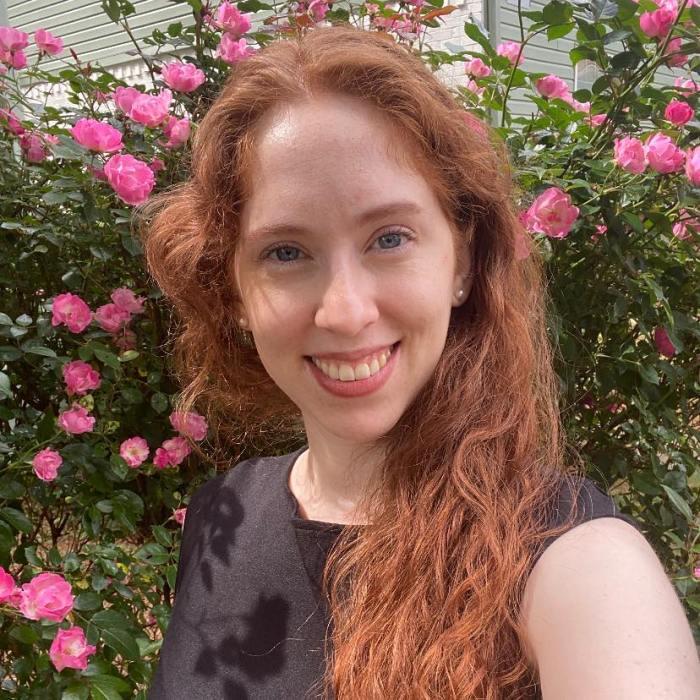
1. Caylah Coffeen – Creative Cornerstones

I’ll introduce myself first! I’m Caylah, the founder of Creative Cornerstones, a Christian, and an editor of sci-fi and fantasy. I don’t have as much experience as some of the other amazing editors on this list, so my rates are quite affordable.

The authors I’ve worked with have left wonderful testimonials for me, which I invite you to check out. I’d be delighted to partner with you on your project, but if I’m not the right fit for you, I hope you find another editor here who will bring out the best in your story!

Years of experience: 4
Has worked with: Havok Magazine, Monster Ivy Publishing, Eschler Editing, indie authors
Editing specialty: developmental editing ($0.02/word) and manuscript assessments ($0.005/word)
Primary audience: adult
Favorite sub-genres: epic and lyrical fantasy, myths, diverse worlds, space opera
Additional services: digital marketing, discount & support program for authors with disabilities
Fun facts: I’m a pastor’s kid and missionary kid (Japan!) and have 6 siblings and a brand new nephew! I love sushi, puzzles, cosplaying at conventions, and reading SFF books about bromance and rivalries.
Portfolio: https://creativecornerstones.com/about/team/about-2/

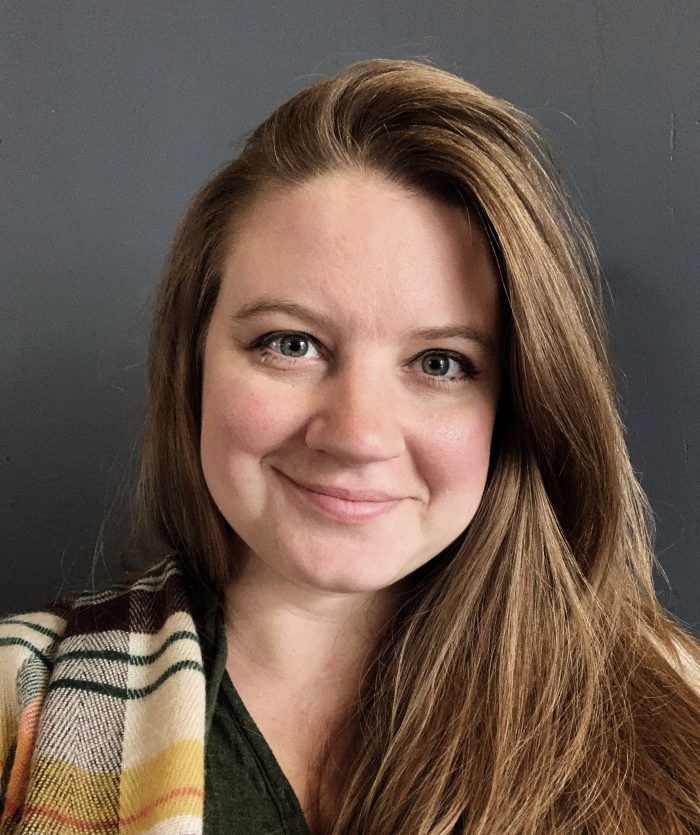
2. Gina Kammer – The Inky Bookwyrm

Years of experience: 16
Has worked with: Capstone Publishers, Amicus, Black Rabbit Books, Meredith Corp. (now Dotdash Meredith), Reedsy
Editing specialty: developmental editing ($0.033/word)
Primary audience: adult
Favorite sub-genres: epic, medieval fantasy, romantasy, paranormal, mythical/fairy tale retellings, space opera, dystopian, steampunk, cyberpunk, bureaucratic witches, and snarky robots!
Additional services: group coaching, story planning, and writing, querying, and self-editing courses
Fun facts: I met Sirs Ian McKellen and Patrick Stewart while studying in London. My more mundane proclivities include tea, traveling, oil painting, archery, and snuggling with my grumpy bunnies. I live among piles of books and antiques in Minnesota with my husband and daughter.
Website: https://www.inkybookwyrm.com/editing

3. Katie Philips – Katie Philips Creative

Years of experience: 10
Has worked with: Uncommon Universes Press, Realm Makers Award winning authors, The Author Conservatory
Editing specialty: developmental editing ($0.04/word)
Primary audience: YA
Favorite sub-genres: space opera, fantasy, diverse cultures and characters
Additional services: intermediate-advanced authors, coaching
Fun facts: I’m an INFJ and devoted plant mom. My husband and I are big foodies and live in Kansas with our daughter and son. I’ve visited over 25 countries!
Website: https://www.katiephillipscreative.com/fiction-editing

4. Sara Lawson – Sara’s Books

Years of experience: 15
Has worked with: Inheritance Magazine, indie authors
Editing specialty: line and copy combo edits ($0.02/word) – includes 2 rounds of edits
Primary audience: YA
Favorite sub-genres: fairy tale retellings
Additional services: indie publishing coaching and networking support
Fun facts: I grew up in rural California (yes, that is a thing). I also spent a year and half doing a graduate program in Jerusalem, studying and walking the land of the Bible.
Website: https://www.sarasbooks.com/rates-and-services

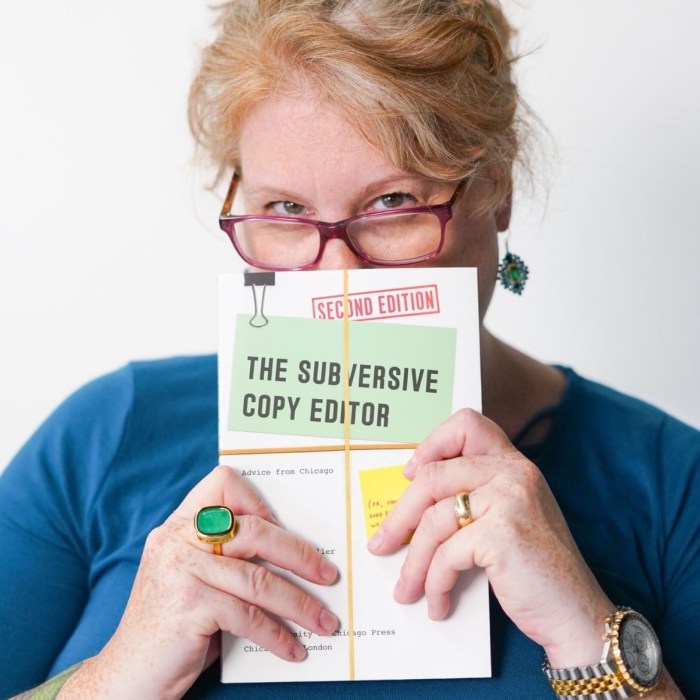
5. Kimberly Huther – Wordsmith Editing

Years of experience: 17
Has worked with: York Publishing and Zondervan
Editing specialty: proofreading ($7/page in Word)
Primary audience: adult
Favorite sub-genres: fantasy, paranormal, sci-fi, YA
Additional services: copy and line editing (same rates)
Fun facts: I’ve been an avid reader since the age of FOUR, and I’m a huge supporter of the Oxford Comma!
Website: https://www.wordsmith-editing.com/

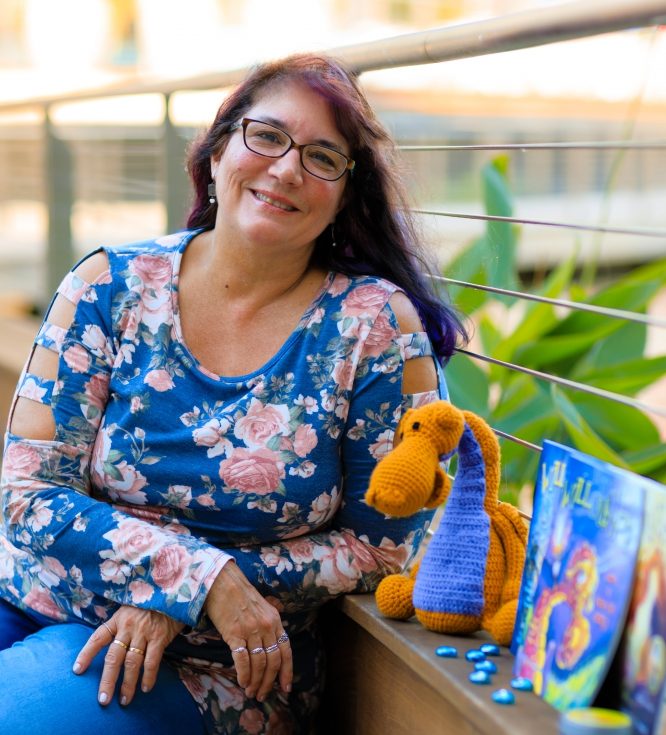
6. Pam Halter

Years of experience: 20
Has worked with: Fruitbearer Kids, Halo Publishing International
Editing specialty: developmental editing for children’s books – $200 per book for under 1,000 words, including a second look after rewriting within 2 months.
Primary audience: picture books
Favorite sub-genres: picture books don’t have sub-genres the same way
Additional services: workshops with illustrator Kim Sponaugle for picture books
Fun facts: I’m a mom and grandmother! Cooking, sewing, baking, and playing the piano all boost my creative side. I love to create my own recipes and am in three Gooseberry cookbooks and got runner-up in a Taste of Home magazine for my tomato fritters.
Website: https://pamhalter.com/editor

7. Lyndsey Smith – The Editing Forge (Horrorsmith Editing)

Years of experience: 4
Has worked with: Eerie River Publishing, Turner Publishing
Editing specialty: developmental editing ($0.038/word)
Primary audience: adult
Favorite sub-genres: horror, thriller, epic fantasy, urban fantasy, reimagined fairy tales, and romantasy
Additional services: book coaching and ghostwriting
Fun facts: My assistant is a midnight-black 23-pound Norwegian Forest Cat named Poof. I’m a military spouse of thirteen years, and we’ve lived in multiple states and countries (including three years in South Korea).
Website: https://www.theeditingforge.com/

8. Kristen Stieffel

Years of experience: 24
Has worked with: Havok Magazine, indie authors
Editing specialty: line editing ($0.035/word)
Primary audience: adult
Favorite sub-genres: light fantasy, steampunk, and science fantasy
Additional services: coaching, page design
Fun facts: I was raised by parents who were Trekkies before anyone coined the word Trekkie. I’m an avid knitter, despite living in Florida, where most sweaters are worn indoors.
Website: https://kristenstieffel.com/services/

9. Andi L. Gregory – Author Services

Years of experience: 6
Has worked with: End Game Press, indie authors
Editing specialty: copyediting ($0.02/word)
Primary audience: YA
Favorite sub-genres: fairy tales and the complex worlds of high fantasy
Additional services: Proofreading services ($0.01/word), proofreading and copyediting combo packages
Fun facts: I love being in the great outdoors, where I never fail to find an adventure. I write for the downhearted, the friendless, and the self-critic, and I’m always up for making new friends, even if I’m the introvert in the corner (with a book, of course).
Website: https://www.andilgregory.com/author-services

10. Jessica Boudreax – Refined Pen Edits

Years of experience: 2
Has worked with: So far, I have been purely freelance!
Editing specialty: Developmental Editing ($0.02/word)
Primary audience: Adult
Favorite sub-genre: epic fantasy
Additional services: line and copy editing
Fun facts: In elementary school, my teacher told my mom I had a talent for creative writing, and it kind of stuck. I’ve been writing in some way ever since. I can get very geeky over many things. Fiction is one of those things, and I am quite happy to be called a geek.
Website: https://refinedpenedits.com/services/

Authors Who Edit on the Side

A number of successful Christian sci-fi and fantasy authors also work as editors on the side, including Steve Rzasa, Janeen Ippolito, and Angela R. Watts. If there is an author you particularly admire, you can look up their website to see if they also offer coaching or editing services.

But good authors do not necessarily make good editors (and vice versa), so in this list I tried to emphasize those who work primarily as editors (though some of the above do write and publish). But every author needs something slightly different on their publication journey – trust your instincts!

And best of luck!


Hi, I’m Caylah Coffeen, a freelance editor and marketer of sci-fi and fantasy books. I love reading and writing and am a follower of Jesus Christ.

I’ve worked for Monster Ivy Publishing and Eschler Editing, and am currently a weekly editor with Havok Publishing. Reach out to chat about books and publishing!

Thanks for stopping by my website! I hope you’ve found some helpful resources about reading, writing, and publishing. If you liked this article, here’s some more free content…

3 Mini Reviews of Christian Sci-Fi and Urban Fantasy Books

Guest Post by Ted Atchley

Hi, I’m Ted Atchely, a geek who loves Jesus, and a professional computer programmer. Whether it’s crafting code or weaving tales, I’m always writing. I’ve been influenced by science fiction and fantasy written by fellow Christian authors, and am excited to share 3 mini reviews of my favorites!

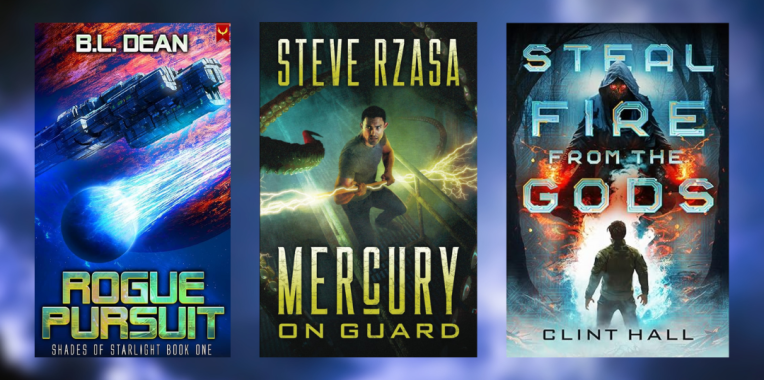
  1. Book Review: Mercury on Guard by Steve Rzasa
  2. Book Review: Rogue Pursuit by B.L. Dean
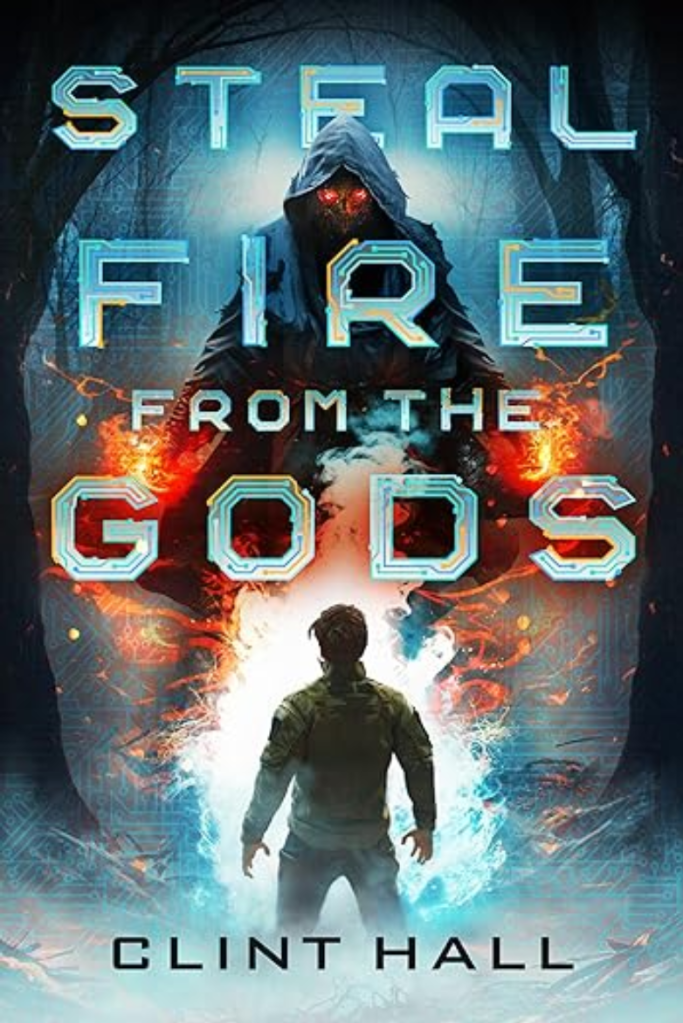
  3. Book Review: Steal Fire From the Gods by Clint Hall
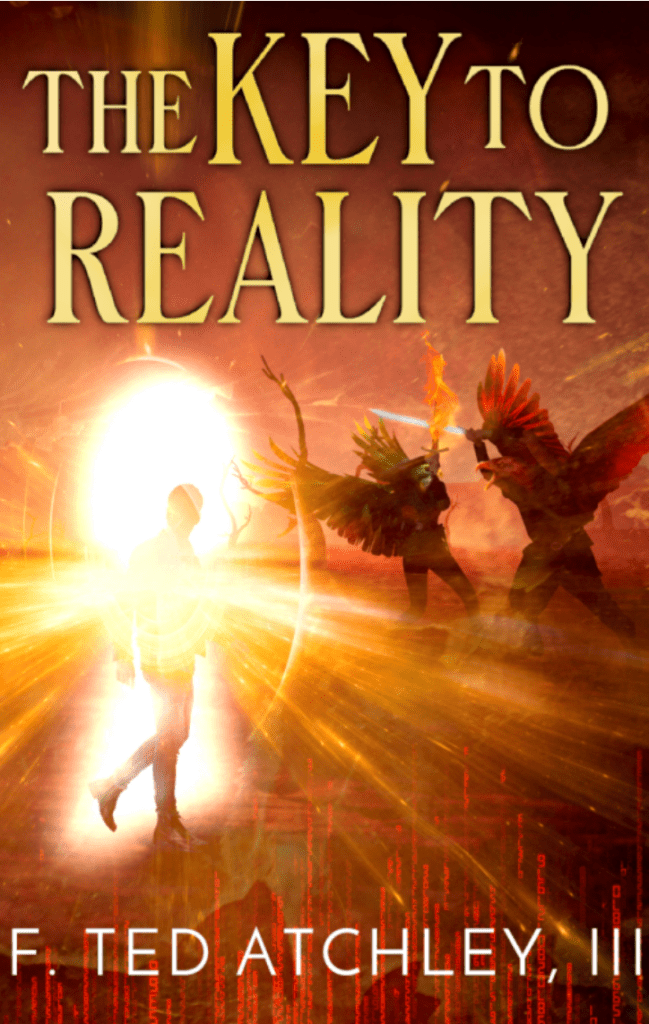
  4. Ted Atchley’s Debut Sci-Fi Novel: The Key to Reality

Book Review: Mercury on Guard by Steve Rzasa

Rating: 5/5 stars!

If you enjoy urban fantasy stories with snarky heroes slaying otherworldly beasts, then I give you my strongest recommendation to check out Mercury On Guard. This story has a lighter feel than The Dresden Files with less death and destruction, but similar stark and a bunch of monster fighting.

I’m normally a slow reader, but the pages simply melted away. The description pulls you into the action and the setting. Sometimes it feels like Mercury’s narration even breaks the fourth wall.

The characters are each distinct and feel like real people. They have their issues, but you are rooting for them the whole way. The twists catch you off guard in all the best ways, always cranking up the stakes. The story has a satisfying ending, but also leaves room for further adventures.

If this were a movie, it would probably be PG-13. There’s no adult language that I remember. No adult “situations.” There is plenty of violence, but it was never gratuitous, gory or stomach turning. A minor character consumes alcohol.

I look forward to delving into the rest of the Mercury series and Mr. Rzasa’s other works.

Book Review: Rogue Pursuit by B.L. Dean

Rating: 5/5 stars!

If you like Space Opera, you should definitely check this one out. It has great characters, creative worldbuilding, and plenty of conflict and tension on every page.

I loved how the author used color theory in the dynamics of how the wormholes work in this world. Each planet we visit is unique, with a fresh spin on familiar themes. It feels new, yet familiar.

Tai and Perrin are both well written with varying and conflicting goals and objectives. Their dynamic plus a great balance of micro and macro stakes makes for a rich and enjoyable story. I’m looking forward to seeing more of them in future books by Dean. Even the side characters are memorable and I would love to see them starring in their own spinoffs in the future.

This was a fast read, and one of my favorite reads of the year so far. I’ve already purchased the next book in the series.

Book Review: Steal Fire From the Gods by Clint Hall

Rating: 4/5 Stars

I enjoyed the story and it kept me engaged to the end. It was a fun and creative adventure. The characters are fully dimensional and relatable. This is a great science fantasy book–a blending of science fiction and fantasy that goes together like chocolate and peanut butter.

This book kept me on my toes. The story never went in the direction I thought it was going to go. The “curse your sudden, yet inevitable betrayal” moment, I never saw coming.

The book did leave me with some questions, both about the magic system, but also about the main character. There seems to be a conflict introduced in the opening chapter that I felt could have had a clearer resolution. But these questions never detracted from the enjoyment of the story.

I’m a little bummed this was a standalone. While I look forward to future works from Mr. Hall, I do hope at some point, he will decide to revisit this world and these characters.

Ted Atchley’s Debut Sci-Fi Novel: The Key to Reality

If these books sound interesting, I invite you to try my debut sci-fi novel, The Key to Reality. It tells the story of a “white hat” hacker who attempts to strike a work / life balance and fails so cataclysmically it breaks the fabric of space-time.

Or get the short story prequel, “Finding the Key,” for free when you subscribe to my newsletter. Fourteen-year-old Brandon has bounced from foster home to foster home since losing his mother. All he wants to do is reclaim a part of his old life and return to the apartment he shared with her. But the old neighborhood has changed much since Brandon last lived there, and a nasty gang runs the streets. His search won’t just be for a place to call home, but for his very survival.

About Ted Atchley

Ted lives in beautiful Charleston, SC with his wife, children, and two cats.

When he’s not writing or reading, he enjoys schooling his kids at Smash Bros, and Mario Kart, as every geeky dad should.

Check out his work at https://tedatchley.com/.


Hi, I’m Caylah Coffeen, a freelance editor and marketer of sci-fi and fantasy books. I love reading and writing and am a follower of Jesus Christ.

I’ve worked for Monster Ivy Publishing and Eschler Editing, and am currently a weekly editor with Havok Publishing. Reach out to chat about books and publishing!

Thanks for stopping by my website! I hope you’ve found some helpful resources about reading, writing, and publishing. If you liked this article, here’s some more free content…

How Do Publishers Decide to Accept or Reject a Manuscript?

Are you struggling in the query trenches? Some authors receive hundreds of rejections and spend years querying before they achieve publication. But why do publishers actually reject your manuscript, and what does it take to get an acceptance?

I trained as an editor with Monster Ivy Publishing, including with their acquisitions team, and learned how publishers choose which manuscripts to accept. I read through submitted stories and helped the team decide whether to reject, invite revisions, or accept each book. Let me share some of these insights!

  1. Top 3 Requirements for Acceptance
  2. Additional Elements of a Publishable Manuscript
  3. Press-Specific Reasons to Reject a Manuscript
  4. Rely on the Reading and Writing Community

Top 3 Requirements for Acceptance

These are the top 3 necessities in a manuscript! Each of the manuscripts our team rejected fell short on one of these elements. They are the most common reasons a story won’t be accepted.

  1. Is there a strong opening hook? Do the first few pages make readers care about this particular character and their situation?
  2. Does the author write actively, with strong verb choices, or overuse passive voice (forms of “to be”)?
  3. Does the main character have a strong goal or need and a mix of strengths and weaknesses which will drive the story?

Additional Elements of a Publishable Manuscript

Publishers regularly receive thousands of submissions. Yours really needs to stand out. Here are additional elements editors will look for when reading your story.

Unforgettable Characters

  • A cohesive character arc that takes the mc through ups and downs and make them change by the end of the book
  • A main character that has a personality and life outside the main plot – hobbies, loves, and quirks that actually affect their day-to-day behavior and thought process.
  • A diverse cast of characters
  • Rounded side characters that bring out the best and worst in the mc

Story Elements

  • Intense emotion – laughter, anger, tears – cause it all!
  • Strong pacing, with a balance of high-energy and lower-energy scenes
  • A well-structured plot that doesn’t leave readers lost, bored, or overwhelmed
  • A powerful, perhaps surprising ending that ties up both plot points and character threads

That Spark

  • A unique author voice that adds an additional perspective to your story
  • A distinct writing style that adds flair to your story

For Sci-Fi and Fantasy Manuscripts

  • Original worldbuilding that develops with the story – not too much exposition or a potentially confusing heap of names up front
  • A twist on popular tropes – perhaps satirical, perhaps a fresh spin
  • An intricately developed magic system – hard magic is all the rage these days!

Editors keep a mental checklist as they read through submissions. The more key elements of a strong story that you hit right off the bat, the higher the chance they’ll keep reading or request the full manuscript! I know it’s frustrating, but editors are overworked and underpaid, and really don’t have the time to dedicate to a story that doesn’t catch them right away.

Press-Specific Reasons to Reject a Manuscript

Sometimes a publishing house looks like an absolutely perfect fit for your story! You’ve followed them on social media, have looked up the work of their editors, and can tell you’re a great match! And then you receive a standard form rejection. Devastating!

If you’ve wondered, why, why, WHY, here are some of the private reasons a press might reject your work.

Over-Saturated Market

A press may have recently published a book quite similar to yours.

  • This book may be doing well and they don’t want to compete with their own sales.
  • This book could be doing poorly and they don’t want to take another risk with yours.

Or, there could have been a recent huge surge of books like yours. After Twilight, there was a flood of vampire romances. After Dresden, a ton of supernatural detectives. If you submit your book after the trend’s peak, publishers may already be looking ahead to the next trend. After all, depending on the size of the press, it can take between 1-3 years for your book to hit the shelves after you sign.

It’s also possible that a publisher has already hit their quota of acceptances for the year. Each team can only publish so many books in a year.

Money

If a publisher doesn’t think they’ll be able to make back their investment and also profit on sales, they won’t accept your work. Books make pennies and publishers are businesses. Smaller presses in particular have to be very careful of where they invest their funds.

Your book might have the potential to sell well, but if it caters to a niche audience rather than appealing to the mass market, it still might not be enough.

  • A Trade publisher could sell a few thousand copies of your book and consider it an abysmal failure, while an indie house could sell a few thousand copies and consider it a huge hit!
  • Try to be objective about your book’s audience. Unless you think the absolute average reader of your genre would love your book, it’s not likely a trade publisher will accept it. Indie houses are much more interested in unique stories these days.

Check out our list of pros and cons to publishing traditionally vs. indie.

Subjective Taste

The managing editor might not personally resonate with your story. Some books aren’t for everyone, and the people reading over your submission might not click with your story, even it’d be a great read for others.

  • It’s a great use of your time to research the acquisitions and managing editors of a company you’re interested in. Look at their portfolio, their manuscript wishlist, and any books they may have published to see if they’re actually a book match for your book.

Planning Ahead for Marketing

If you have little to no online presence (website, social accounts, following), it will make promoting your book that much harder. Many publishers expect authors to do a lot of their own publicity and marketing. Some even ask for your number of followers on their submissions forms.

  • Other presses will do the majority of marketing for you, so research each company to determine if the size of your brand is important to them! The more famous the press, the more important it is for you to be visible online to be considered.

Beliefs

Your story could be rejected if you as an author aren’t in line with a press’ political, religious, or social messaging. In the age of cancel culture, publishers don’t just look at your story but also at YOU.

  • Few people in the industry will admit to this one, but you’ll be one of the faces of their brand if they publish you, and they want to make sure your private life and beliefs line up with theirs. Many presses specifically list their vision and agendas on their “about” pages so research them before submitting.
  • It is absolutely possible that your book could be rejected because of an opinionated blog post or heated FB comments you left years ago. Publishers are terrified of having another J.K. Rowling.

Dicey Topics

The more content warnings your book will require, the harder it can be to find an interested party. If you handle sensitive topics like sexual assault, diversity, historical abuses, gender, disability, and more, be aware of possible roadblocks.

  • The publisher may think your depiction of the subject was problematic, not well-researched, or just too dicey. Consider investing in a sensitivity reader.
  • They may think you shouldn’t write from the POV of a demographic unless you are part of it.

Rely on the Reading and Writing Community!

Your book is your baby. Rejections hurt! It’s hard to be objective about your story when you believe in it so much. And you should!

But publishing is a business, and it can save you a lot of time and heartache if you ask the hard questions of your community before you try to publish.

Try asking your beta readers and critique partners questions like:

  • What star rating would you give this book right now?
  • How wide of an audience do you think exists for a story like this (a select niche, an average crowd, or almost every reader in this genre)?
  • Do you think this story is ready for publication? If no, what do you think most needs to change?
  • Would you spend money on this book?

If you think your friends and family would feel uncomfortable answering truthfully, you could send them an anonymous feedback form. It’s difficult, but not impossible, to determine whether you’re receiving rejections because of in-house reasons that are out of your control, or writing reasons, which you can control.

You may be sitting on a 5-star book, and just haven’t found the right fit yet. Have you heard how many rejections Brandon Sanderson received at first? Don’t lose hope, but always keep your eye out for ways to improve the quality of your work!

Good luck and happy writing!


Hi, I’m Caylah Coffeen, a freelance editor and marketer of sci-fi and fantasy books. I love reading and writing and am a follower of Jesus Christ.

I’ve worked for Monster Ivy Publishing and Eschler Editing, and am currently a weekly editor with Havok Publishing. Reach out to chat about books and publishing!

Thanks for stopping by my website! I hope you’ve found some helpful resources about writing and publishing. If you liked this article, here’s some more free content…

Now Featuring Book REVIEWS!

We’re excited to announce that our blog will now feature book reviews! We love supporting authors, and aside from buying their books, that’s the best way to do so!

There are infinite books in the world, a deliciously guilt-inducing amount piled up on our TBR lists, and more than we could possibly ever read in our lives… sigh, bookworm problems.

Unfortunately, this means we have to be selective about what we can review. So we will review our own curated list of books (that backlog though…) and accept requests for the following:

Science fiction, fantasy, and mythic and fairy (re)tellings…

  • With themes of faith or by Christian authors
  • By authors (particularly indie) located in the Southeastern US
  • With beautifully artful prose (e.x. Roger Zelazny, Madeline Miller)
  • Inspired by nonwestern places, people, and mythos
  • Anything that matches our manuscript wishlist!

These genres are open to interpretation. We’re all about genre-blending! However, we do not review apocalyptic or horror SFF or erotica.

You may request a review for your own book, on behalf of an author you like, or submit a review you’ve written yourself if it matches the above themes.

Head over to our book review page for more detailed guidelines and to submit a request.

Looking forward to reading your delightful stories!


Hi, I’m Caylah Coffeen, a freelance editor and marketer of sci-fi and fantasy books. I love reading and writing and am a follower of Jesus Christ.

I’ve worked for Monster Ivy Publishing and Eschler Editing, and am currently a weekly editor with Havok Publishing. Reach out to chat about books and publishing!

Thanks for stopping by my website! I hope you’ve found some helpful resources about reading, writing, and publishing. If you liked this article, here’s some more free content…

Is My Manuscript Ready for Professional Editing?

By Caylah Coffeen

You’ve completed your manuscript! Congratulations! That’s a huge milestone that many writers never reach. But how do you know if your book is ready for professional editing?

You may have a lot of conflicting thoughts and emotions. Authors are known for beating themselves up. You may think your work could never be good enough or that there’s no way anyone would ever buy your book. These feelings of doubt may make you think that a professional edit will never be worth it.

Or you may love your story and characters so much that you find it difficult to receive feedback or think of your book from a business angle. It’s hard to step back and ask, “is this a marketable product?” Some authors double down about making any changes to their story.

With so many emotions tangled up in your projects, how can you attain a clear perspective on the current state of your manuscript?

We’ve got a checklist for you.

But first, tell yourself two things (try saying them out loud):

  1. My story is wonderful! I am a valuable writer. I work hard to improve and can! There are readers out there who will love my book! Be kind to yourself! Everyone starts somewhere.

  2. Every book will benefit from an outside perspective and edit, no matter how talented the author. No one should complete a book in a vacuum. Stories are made for other people, and while you may not incorporate all advice you receive, feedback is invaluable.

The Checklist

The easiest way to self-assess your manuscript’s readiness is to consider how many edits you have already completed and how much feedback you’ve received from others.

Did you know that most published books undergo 8-10 edits before reaching shelves? That’s right. 8-10! And many manuscripts undergo 3-5 edits before they’re ready for a professional editor.

Here’s an editing checklist I recommend every author complete before investing in a professional edit:

  • Step 1: “The Cleanup Edit”
    Complete 1 self-edit – this will help you catch many inconsistencies or errors in your first draft and improve readability for others.

  • Step 2: “The Critique Edit”
    Find a critique partner (a fellow writer in your genre) and complete 1 edit incorporating their feedback.

  • Step 3: “The Alpha Edit”
    Find 1-3 alpha readers to provide feedback about their reading experience (what they liked, what they found confusing, when/if they lost interest) and make edits accordingly. Alpha readers perform the same tasks as beta readers, but betas often offer feedback later in the process, after a developmental edit, since their role is to offer subjective feedback about what readers experience, not editorial advice.

  • Step 4: “The Workshop Edit”
    Consider joining a writing group or workshop to receive multiple perspectives from fellow authors at once. Or exchange your manuscript with your initial, or a second, critique partner. Edit accordingly.

The Work is Worth it

We know this task list sounds daunting – it’s a lot of work! Potentially years worth of work. But don’t be too hard on yourself, as this is the case with every specialty. It takes time to perfect your craft. Doctors spend 7 years in school and residency programs before they can practice independently. Artisans spend decades in apprenticeships and working before they can be considered a master. Acclaimed photographer Henri Cartier-Bresson famously once said:

“Your first 10,000 photographs are your worst.”

Henri Cartier-Bresson

Wildly popular SFF author Brandon Sanderson says he wrote 13 novels over 8 years before he ever sold his first!

Consider this period of drafting and editing to be your “author apprenticeship.” It’s worth putting in the time to complete these 4 rounds of edits, and you will save a lot of pain and money in the long run if you do.

You may be coming off the high of finishing your first manuscript and are excited to see what an editor would think. Perhaps it feels less daunting to recruit a professional than it does to start again at the very beginning (that’s what coaching is for!). But let me assure you that a first draft is not ready for a professional edit. Likely, neither is a second.

How We Can Help

But our team here at Creative Cornerstones offers support through all of these stages! You don’t have to figure it out alone. We can suggest training resources, conferences, offer 1:1 coaching, and even help you find critique partners and alpha readers through social media or local groups.

Even if you have not completed 4 rounds of edits on your manuscript, you are always welcome to send us your first 1000 words to receive a sample edit. Email them to creativecornerstones@gmail.com.

Or schedule a free 20 min consultation over Zoom to discuss your goals and best next steps!

We want to help you achieve your dream of becoming a successfully published author!


Hi, I’m Caylah Coffeen, a freelance editor and marketer of sci-fi and fantasy books. I love reading and writing and am a follower of Jesus Christ.

I’ve worked for Monster Ivy Publishing and Eschler Editing, and am currently a weekly editor with Havok Publishing. Reach out to chat about books and publishing!

Thanks for stopping by my website! I hope you’ve found some helpful resources about reading, writing, and publishing. If you liked this article, here’s some more free content…

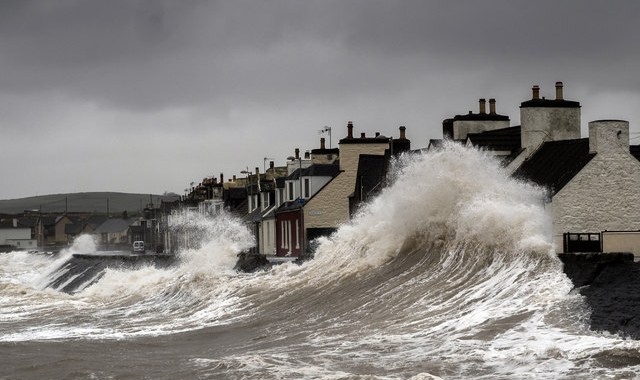
A huge wave crashes into a line of coastal houses, a stormy sky behind them.

Writing with Childlike Faith

Guest Post By Dana Bell

In 2018 I was done with writing. Being a published writer was not at all what I thought it would be, and the stress of having to complete multiple projects burned me out. The last thing I wanted to do was write.

Know why I didn’t quit? A couple reasons. My ex had tried to take everything I cared about away from me. I wasn’t about to allow him to win. The other – I couldn’t imagine doing anything else.

Rediscovering the joy of writing

So, I began a journey to re-discover the joy and fun of writing. God played a huge part in that. I put aside all professional gigs and went back to fan-fiction. This genre taught me so much about being a writer and allowed me to practice the tricks of the trade. My goal: write between 1000 to 1500 words a day. That took me about an hour. By the end of summer, I’d gotten up to 3000 a day. Not a goal I had set for myself.

But I did not make the journey alone. Even when writing fan-fiction, I would sit down at my computer and pray one of two simple prayers:

“Thank you, Dad, for letting me write” or “Hey, Dad, you want to come and play?”

“Hey, Dad, you want to come and play?”

Dana Bell

From faith to a book deal

By the end of the year I sold my first romance novella. NO ONE sells their first romance.

I continued the practice of praying before I wrote, whether I was playing in someone else’s universe or crafting my own original work.

Yet there is one more element involved. It isn’t just prayer. It is faith. Faith so unshakeable I believe that when I sit down to write God will give me the words. My fingers get going on the keys and don’t stop until I’m finished for the day, however many words I write.

Speaking of faith, I actually asked God the other day why He puts up with me. I’m not exactly the most faithful of children. I was curious. Know what the answer was? In that amused and tickled father way He answered, “Because you have the faith of a child.”

That startled me. Of all the answers He could have given, He gave me one I didn’t expect.

My ability to speak with God like this is new. I talked to Him earlier about this article and He said, “I’ll give you words.” So, I quit worrying about it and trusted He would do as He promised. Did I pray first? Of course, I did.

Prayer doesn’t have to be complicated

One thing few people teach about prayer is that it doesn’t have to be complicated. One word can be a prayer. I know. I’ve done this. As I recall, the prayer was, “Father!” I didn’t need to say more.

I have another way to pray, which I use when I have no idea what to say. Paul taught about it in the Bible, and yes, I can Speak in Tongues anytime I want. I don’t know the exact language, but I know the country and region it comes from. Since I know many Christians teach this gift is gone, I won’t go into detail. Though I could teach endlessly about the Gifts of the Spirit, all of which I’ve used at different times in my life.

Rare though it is, I walk in both the natural and supernatural world. I dream dreams and have visions. That’s Acts 2:17.

What does this have to do with writing, faith and prayer? Everything.

God had proven himself faithful all throughout my life. I was saved as a child. I even spoke in tongues, but I didn’t know what it was and quit doing it. Scared me.

He has taken care of me even when I did something stupid or didn’t deserve it. I fought off a purse snatcher when I lived in Boston. Serial rapists hunted around me when I lived in a Denver apartment complex. He sent an angel to watch over my home. I came home one night, and my neighbor told me the guys had been caught. They had lived on the second floor of my building. Recently, I almost lost my house because I had no job and no unemployment income. I went to God with my simple faith and said, “You’ve always taken care of me.” God provided, although not in the way I expected.

I still have my home. I even have a job now.

Have faith God will give you words

These are all acts of faith and the reason I place high value on them is because unless the writer believes God will give them words, their prayer won’t make any difference.

I have faith. I pray. I sit down. I write.

It is a sweet time with God. An Act of Worship.

Yes, writing is worship.

I know, normally we think of worship as church, music and some dancing. Speaking of dancing, Yeshua is a delightful dance partner. Won’t go into the story on how I know that.

Yet writing, when God is invited to be part of it, is worship. It is a father hanging out with his child, delighting in the talent he inspired and the willingness of his child to share it with Him.

I’ll add here that God has taught me a few tricks with writing. I’m a pantzer and had a horrible time finishing my earlier books. Not to mention, I work on multiple projects at once. I’ve learned to leave myself notes about unanswered questions, plot points I need to complete, or what the next scene is. For my last three books, this was a huge help.

Before I asked God to be part of my writing life, I struggled to get the words out. I thought I had to be inspired by the natural world, as many writers are led to believe. Now, I sit down, ask God to join me, and the words flow.

This is precious time with my heavenly father. Part of a rich relationship I share with Him. The Bible says to ask God for what we need. I’m bold enough to walk into His throne room and ask if can fall asleep in His lap when I have problems sleeping.

God has never said no.

My solid foundation

I will share a dream I had during a deeply troubled time.

I was in a house. Built on a rock. Right next to the ocean. It had glass windows along the side of the house and in the ceiling. Huge waves smashed into the house, over and over and over. No window broke. The house did not flood. Someone stood in the house with me. Years later I realized it was Yeshua. He just appeared in a different way than I had ever seen him before.

The dream interpretation was easy. I had my solid foundation. The waves were all the troubles I was going through. My house stood because of my childlike faith.

I recall this dream when I go through times of trouble.

Every writer needs faith. Open every writing session with prayer. Invite God to come and join you in your time of Worship.

About Dana Bell

Owned by a demanding Ocicat named Taj, Dana Bell lives in Colorado and enjoys writing tales about cats, places she’s lived and others she’s visited. She is the author of multiple titles including Bast’s Chosen Ones and Other Cat Adventures and Winter Awakening.

She also writes paranormal romances such as Bound by Blood: Idaho Vampires under the pen name Belle Blukat. As an editor she enjoys putting together anthologies with various themes and helping authors master their writing skills.


Thanks for stopping by my website! I hope you’ve found some helpful resources about reading, writing, and publishing. If you liked this article, here’s some more free content…

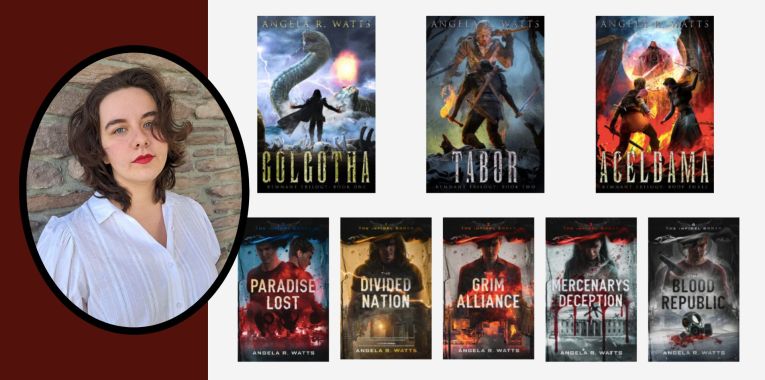
A split screen shows the portrait of a young brunette author on the left, and 2 rows of fantasy and sci-fi books on the right.

“Hope, Hope, Hope” – an Interview with Author Angela R. Watts

By Caylah Coffeen

You have a packed release schedule through January! Will you tell us about your upcoming books?

I am very excited for this year’s publication schedule. I set a personal, fun goal of launching nine books, and that number allowed for any anthology acceptances.

So far, I’ve had five releases this year, and the upcoming launches are, in no particular order of actual release:

War of the Fallen, Rogue Survivors #1 (space opera)

Icarus is Burning, Rogue Survivors #2 (space opera)

Of Fallen Gods, Rogue Survivors #3 (space opera)

Up From the Ashes, Glory Epoch Books #1 (post-apocalyptic, a series continuation from my bestselling and award-nominated series, The Infidel Books)

How to Campaign Your Book: A Simple Guide for Authors (nonfiction)

I might have more releases this year, but we’ll see. I also have a very solid launch schedule for 2024, too! Next year, I have multiple middle grade and adult titles set for release.

What do you love most about your new stories that you’re excited to share with readers?

Hope.

Hope, hope, hope.

I write fiction that shows hardships, trials, pain, sorrow, etc, but throughout the insanity, there is hope. My stories are intended to encourage. Inspire. And I pray that they offer readers a good story, with a lot of comfort.

I’ve gone through a great deal in my life. I could have given up. I could have turned away from the light. I could have, I could have…

I try to write stories with characters that face absolute chaos, but still, in the end, overcome. They live. They love. They hope. They do not stop or give up. These are themes in my stories that I cannot stop sharing… because the world is bleak, and tired, and wicked, but we do not have to be.

“They live. They love. They hope. They do not stop or give up.”

I hope my readers are inspired to live, and love, and hope, and dream, after reading these stories.

Can you share a moment when you felt being an author was incredibly satisfying?

I’m not sure if I can pick one. I find immense joy in writing, and I also am grateful for every step of the process. I find satisfaction and joy when I write, when I finish a draft, when I edit, when I format, and so forth. There’s also satisfaction, even if a bit wearisome, when a story releases into the world.

I think the one part of being an author that is always incredibly satisfying is getting a box (or two) of my own books. The feeling has not gotten old yet!

Many people have heard that being an author is difficult. What has your mental health journey been like as you stepped into this role?

I’ve never been able to relate to that perspective, so I’ll answer, but hopefully, my answer is not perceived as frivolous.

I have written since I was too young to even write: I told stories, illustrated them, and my family actually wrote the words down. Since then, I’ve never stopped writing stories. I wrote a lot of short stories and poems as a little kid.

When I was a preteen and such, one of my older sisters began to abuse me more often. During this time, I turned to fiction as a true escape. I gobbled up books, discovered anime, and of course, continued to write my own stories. I wrote some original things, and a lot of fanfiction. Writing, during this time of pain and fear, was therapy for me. I finished my first novella at age twelve, and shortly after this, the abuse stopped when the sister left.

From there, I quickly discovered the world of self-publishing. I kept writing novels, publishing them, and the like. Over the years, I’ve found my own routine, and my own pacing that works for me. I understand my routine isn’t for everyone, but writing is like breathing to me, and I write pretty much nonstop. I usually write daily, in whatever capacity, and a steady pace helps me complete stories and enjoy myself.

I do not view writing as a stressful act. I do not suffer or complain my way through the author life. It’s simply a part of me. When trials come, I conquer them the best I can, etc. I think the most difficult parts of the journey have been 1) marketing and publications do put a lot of stress on me physically, so I’ve also found a pattern and routine for this, so it isn’t too overwhelming for me and 2) many topics I research and write about are heavy, and difficult to ponder for too long, so usually, when I finish one of those scenes, I’ll give myself time to step away to mentally rest.

Overall, above everything, I keep a very close relationship with God, and pray throughout every story, every draft, every launch, and the like. God gives me these stories to watch and write out. Without His guidance, I would not be here.

How has your relationship with God shaped your career as an author and vice versa?

I’ve been a Believer since I was very, very young, and I’ve never strayed from the Lord. I do not say this to brag, but as a very simple fact, because many Believers have boat-rocking testimonies, and I’ve never had any grand “come to Jesus meeting”. My life has been difficult, yes, with multiple family issues, abuse, health diagnosis, and more, but I have clung to God throughout it all.

As I mentioned, writing is a sort of therapy, and I work alongside the Lord through every story. So I would say my relationship with Christ has strengthened throughout my author journey. Through writing, I can tackle themes, questions, situations, etc, that I might not be able to handle, or even consider, without using fiction as the catalyst. God helps me work through questions, ideas, and much more, and in the end, not only have I drawn closer to Him in the process, but that story is also able to minister to another.

I’ve had suicidal readers tell me that my stories helped them hold on. I’ve had Believers tell me that my books opened their eyes, helped them with their mental health struggles, and strengthened their faith. I’ve also had people tell me that my books have helped them through their grieving process… Or that some of my books have made them laugh and see joy again.

I remember every message my readers send me, because it’s why I publish these books. I would write whether I published or not. But when I publish, it becomes about how the story can minister to others, and it is always encouraging to hear when my books help someone. To me, publishing is a way to minister, and serve, others, and give glory to the Lord.

Is there anything else you want to share with readers or aspiring authors (perhaps something you haven’t had a chance to share in interviews before, or a recent impactful moment)?

Recently, I’ve been discussing the hypocrisy of the author community with a dear friend.

I have seen many new authors chastened for writing a story “incorrectly”. I have seen many new authors shunned for newbie “mistakes”, or for differing opinions than the “in crowd”.

Authors insist that community is important… But we must remember, there is such a thing as the wrong community.

If you are a new, or seasoned, author, and are surrounding yourself with people, whether authors or readers, that do nothing but berate you — even when they insist it is to “help you” — step back.

The creative process should not be a true community effort. If voices are engulfing you, and throttling the story inside of you, step back. Do not let anyone change your soul, do not let anyone force you into a box.

Write, and create, at your own pace, with your own soul, and do not accept abuse in the name of “community.” The right, healthy, supportive community will come, but don’t accept any less beforehand. Your voice matters. Don’t let anyone stifle it. 

A young white woman with short, curly brown hair and blue eyes leans pensively against a stone wall wearing a puffy white blouse.

ANGELA R. WATTS is the bestselling and award-nominated author of The Infidel Books and the Remnant Trilogy. She’s been writing stories since she was little, and has over 28 works published. She also writes articles for a few magazines and publishers. When she’s not writing, Angela is a freelance editor, blogger, anime-lover, and artist. She lives in Tennessee with her family and many pets. Angela loves connecting with readers, and you can follow her on social media to stay up-to-date with releases, or contact her through her website.

As an Amazon Affiliate we earn on qualifying purchases.

The Pros vs. Cons of Traditional, Indie, Hybrid, and Self-Publishing

You’ve written a beautiful book. Now how do you publish it? What are your options? Here we’ll break down the pros and cons of the 4 main publishing routes: traditional, indie, self-published, and hybrid. This is just a starting point, so make sure to do your own research as well as you decide on your best fit.

The Pros and Cons of Traditional Publishing

What is traditional publishing?

A publishing house buys the rights to your book, completes all editing, design, and distribution work, and pays you royalties after they’ve made back their investment. 

Pros:

  • Prestige
  • A large, consistent, trusting reader base
  • You are paid an advance averaging $1K-15K
  • A higher likelihood of appearing in bookstores
  • You will have an agent – your agent will go to bat for you, ensuring your proposals are professional and catch attention, and negotiating the best possible legal agreements

Cons:

  • You no longer own the rights to your work
  • The publisher has the final say on design and edits
  • *Big publishers won’t select your book unless they think they can sell many 1000s of copies
  • You don’t receive any royalties until you earn back your advance
  • Royalties are small
    • 5-8% for paperbacks
    • 10-15% for hardbacks
    • 20-25% on ebooks and audiobooks
  • Books are often sold at bulk discounts to retailers, so you receive royalties at lower than the retail price
  • Big publishers won’t invest much money into marketing new authors – you have to prove your worth to them first
  • You must submit through an agent – finding an agent is time-consuming, difficult, and costly (they receive 15% commission out of your advance & royalties)

*Here is an invaluable chart of the Big 5 Publishing companies and their imprints.

Traditional publishing could be a good fit if:

  • You’ve written a book with mass appeal
  • You want others to almost entirely handle the business side of book

The Pros and Cons of Publishing with an Indie/Small Press

What is a small or indie press?

A small or independent press is not affiliated with the Big 5 publishers, publishes less than 10 books in a year, and makes less than $25M annually. They may use a traditional publishing model, with slight variations. 

Pros:

  • They employ a professional, experienced team
  • Potentially higher royalties with room for negotiation
    • Some offer the same rates as traditional publishers: 5-25%
    • Others offer 40-60% in royalties
  • They publish way fewer books and so spend more time and effort marketing each one
  • May or may not expect agented submissions
  • They take risks on more “unusual” books rather than following formulas on what will sell
  • Growing respect, with many dedicated awards and competitions

Cons:

  • You no longer own the rights to your book
  • If they’re able to offer an advance, it’ll be small – usually you do not receive an advance
  • They have a smaller budget and team and so more limited options for distribution and marketing strategy
  • A smaller fanbase so less potential reach for your book

Here’s one searchable database of indie/small presses. Note that it is curated and their criteria for what makes a “good” press may differ from yours.

Indie publishing could be a good fit if:

  • You want a team of experts supporting you and advising you on the industry
  • But you want a greater level of creative freedom and negotiating power

The Pros and Cons of Self-publishing

How does self-publishing work?

An author arranges and pays for the publication of their work, rather than going through a publication. Note that authors have printed and distributed their own work for centuries, but online distribution platforms have made this approach more accessible than ever before.

Pros:

  • You retain all rights, creative control, and decision-making powers
  • You set your earnings with royalties ranging from 35-80% depending on the distribution platform
  • Complete flexibility on distribution and pricing strategies

Cons:

  • You must pay out of pocket for everything
  • You must build your own team for editing, distribution, design, marketing & publicity
  • You must complete extensive research about the publishing industry and wear many hats besides “author”
  • Many awards and reviewers still exclude self-published books, though more and more accept them each year

Amazon Kindle Direct, IngramSpark and Kobo are commonly used self-publishing platforms, but there are many other options.

Self-publishing could be a good fit if:

  • You’re highly motivated to learn about branding and marketing
  • You’re willing to approach your books as a business
  • You can afford to hire professionals to refine your book to industry standards

The Pros and Cons of Hybrid Publishing

What is a hybrid publisher?

A newer term, many people use the term “hybrid” interchangeably with “indie” or “vanity” publishing, leading to confusion. Hybrid publishing offers a middle ground between traditional and self-publishing. The author pays a team of professionals to edit, design, and market their book, but retains all rights to their work and so will receive 100% of profits.

Pros:

  • A professional team of publishers will create a custom plan to refine and publish your manuscript – you can choose as many or as few services as you want
  • You retain all creative power and have the last say – they are working for you
  • Unlike vanity presses, hybrid publishers actually follow through on their promises – they want to make their customers happy so they keep getting business
  • Hybrid publishers are often run by people who have, or still do work for traditional publishers – they know the industry inside and out
  • Time – you won’t have to spend time on queries or proposals, and your team will walk you through every step of the publishing process, making this potentially the greatest time-saving publishing route

Cons:

  • Cost – publishing services are expensive, and will cost more than hiring freelancers individually (as many self-published authors do)
  • You must research carefully to make sure you’ve chosen a reputable business rather than a vanity press
  • You may not make back the money you invested into your book
  • Your book will still be considered self-published and so excluded from many competitions and bestseller lists

Reputable hybrid publishers should always meet the following guidelines set forth by the Independent Book Publishers Association.

Hybrid publishing could be a good fit if:

  • Your time is worth more than your money
  • You already have an established brand or audience who will buy your book and make back your investment (e.x. influencers, businessmen).

The “right” choice is unique to YOU

There is no one right choice! Depending on your goals as an author, there is a right fit for you which may differ from what works best for your other author friends.

Unfortunately, there’s also no perfect choice. Pick your top 3 deal breakers – the 3 things which are most important for you as an author. For example: time, money, and creative freedom. Pick the publishing route which does 2 out of those 3 things the best.

Above all, trust your instinct and demand respect. No one should make you feel like a beggar, no matter their prestige.

Still have questions? Schedule a Free 15-min consultation today!


Hi, I’m Caylah Coffeen, a freelance editor and marketer of sci-fi and fantasy books. I love reading and writing and am a follower of Jesus Christ.

I’ve worked for Monster Ivy Publishing and Eschler Editing, and am currently a weekly editor with Havok Publishing. Reach out to chat about books and publishing!

Thanks for stopping by my website! I hope you’ve found some helpful resources about reading, writing, and publishing. If you liked this article, here’s some more free content…

A man kneels at the cross, silhouetted by a cloudy sunset. He palms are open, his head bowed, and a stack of books rests at the foot of the cross.

A Writer’s Prayer

Guest Post By Wayne Thomas Batson

Oh, Lord, you know
I have ideas all the time.
But I often wonder,
Which are yours and which are mine?

I toil in silence with thoughts and words,
While minutes spin and hours fly,
Wondering if it’s all worth it,
Or will be when I die.

Could I have better spent my days
With family and with friends,
Or in the mission field,
Where means justify the ends?

Could I have done something more
Than crafting stories in so many pages?
More than making up lives of fiction
That might not live on through the ages?

How can my feeble language
Capture your grace, your hope, your love?
How can the plans of a broken man
Ever be enough?

What if no one ever reads my work?
Or just to be polite, a few?
Can all these images and words
Be written just for You?

Maybe I could sow or reap,
But stories make my heart sing.
So I present to You these pages
As a private offering.

The Lord’s reply came swiftly
Over many years, hard learned.
He said, have you ever seen me waste a tear
Or from a faithful gesture turn?

Those minutes, hours, years you spend
Have already been redeemed.
Not one word written on my behalf
Will be as fruitless as it seemed.

For I do not judge by reviews or likes
Or by bestseller lists.
Your name in lights could never match
Your humble willingness.

Let me have your every word
Every sentence, every story.
I will take that meager bread
And multiply it for my glory.

Take the gift I gave you
Brook no fear nor regret.
Your good and faithful service
Will touch the world as I intend.

About Wayne Thomas Batson

A middle aged man with blue eyes and a peppered beard stands in front of a dark wood bookshelf.

Wayne Thomas Batson is the bestselling author of The Door Within Trilogy, The Myridian Constellation, and a host of other sprawling tales. A middle school English teacher of 33 years, Batson and his lovely wife Mary Lu live in a woodland home called Timbervale in the secluded hills of New Market, Maryland.


Hi, I’m Caylah Coffeen, a freelance editor and marketer of sci-fi and fantasy books. I love reading and writing and am a follower of Jesus Christ.

I’ve worked for Monster Ivy Publishing and Eschler Editing, and am currently a weekly editor with Havok Publishing. Reach out to chat about books and publishing!

Thanks for stopping by my website! I hope you’ve found some helpful resources about reading, writing, and publishing. If you liked this article, here’s some more free content…