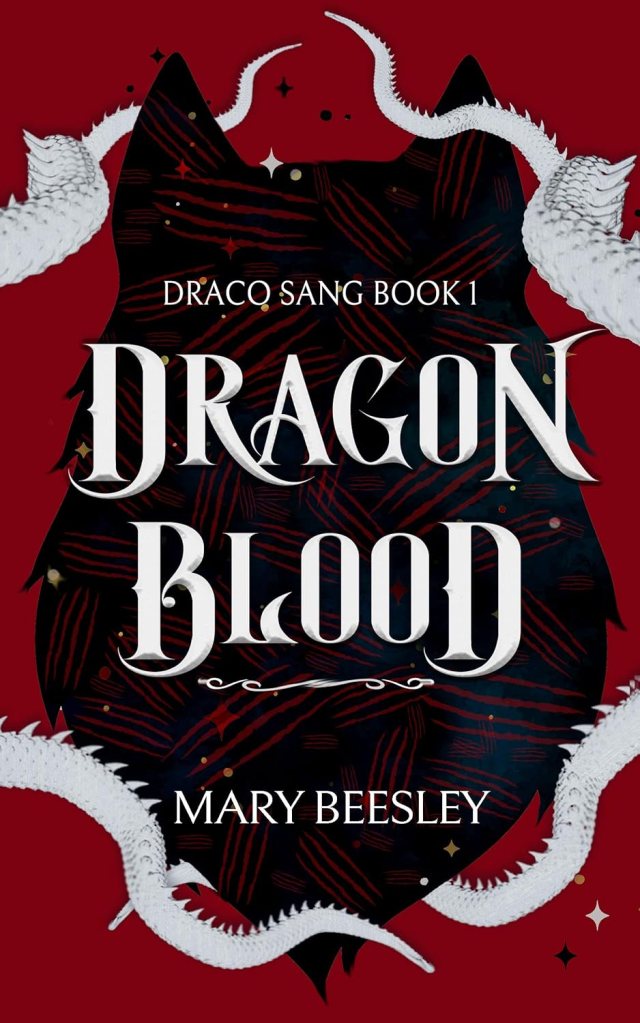
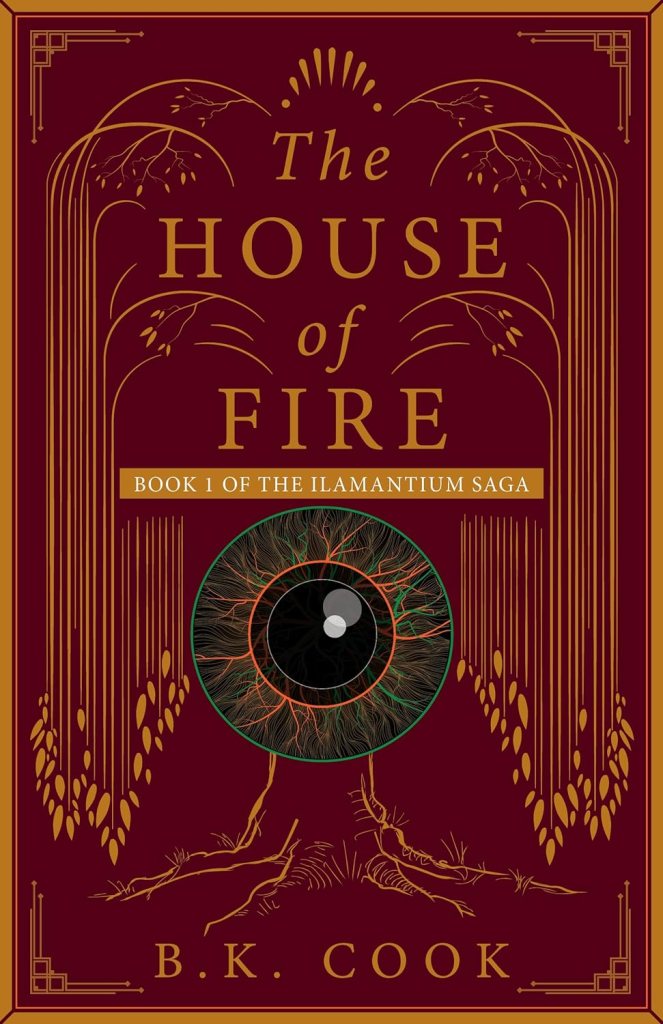
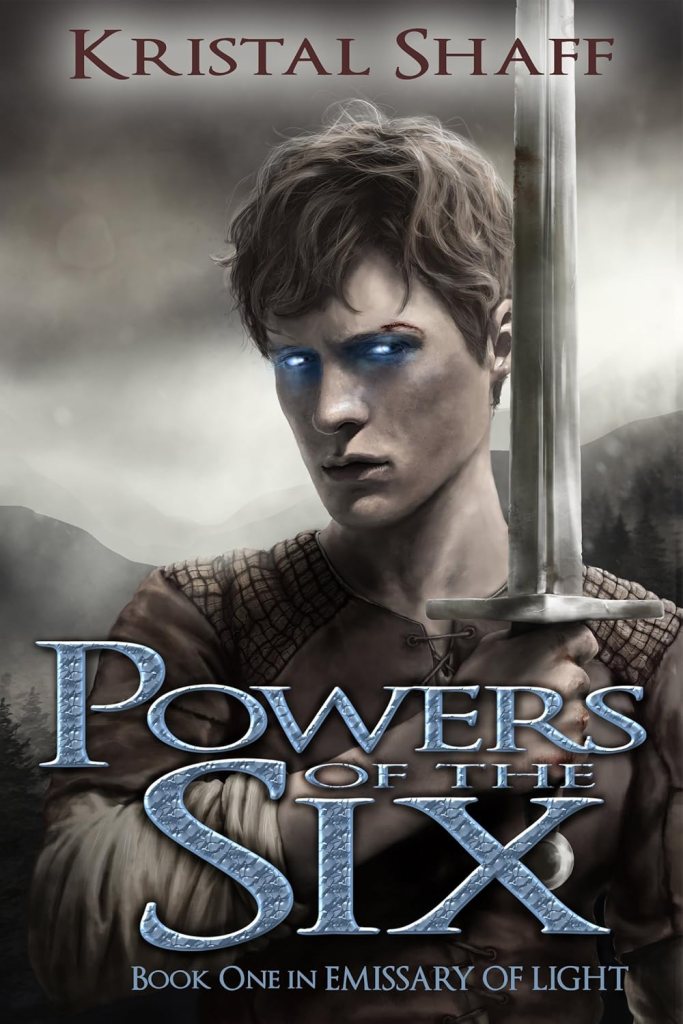
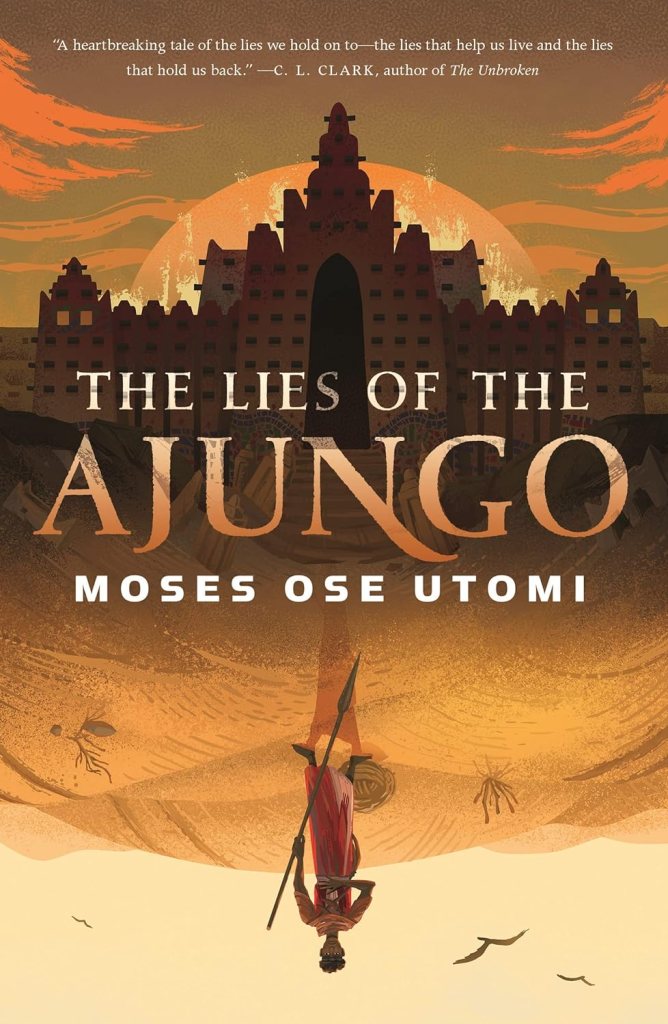
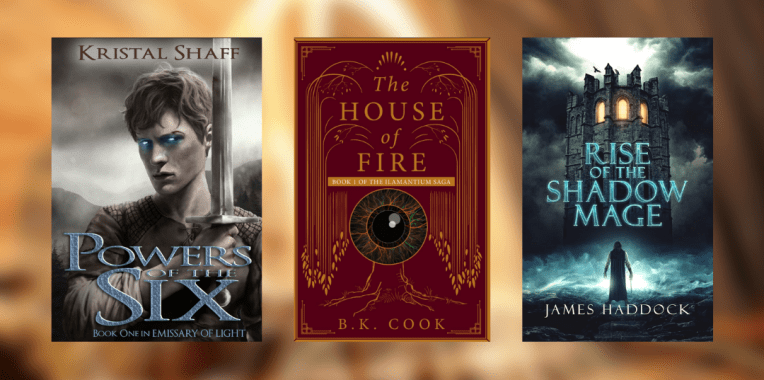
Hi, I’m Ted Atchely, a geek who loves Jesus, and a professional computer programmer. Whether it’s crafting code or weaving tales, I’m always writing. I’ve been influenced by science fiction and fantasy written by fellow Christian authors, and am excited to share 3 mini reviews of my favorites!
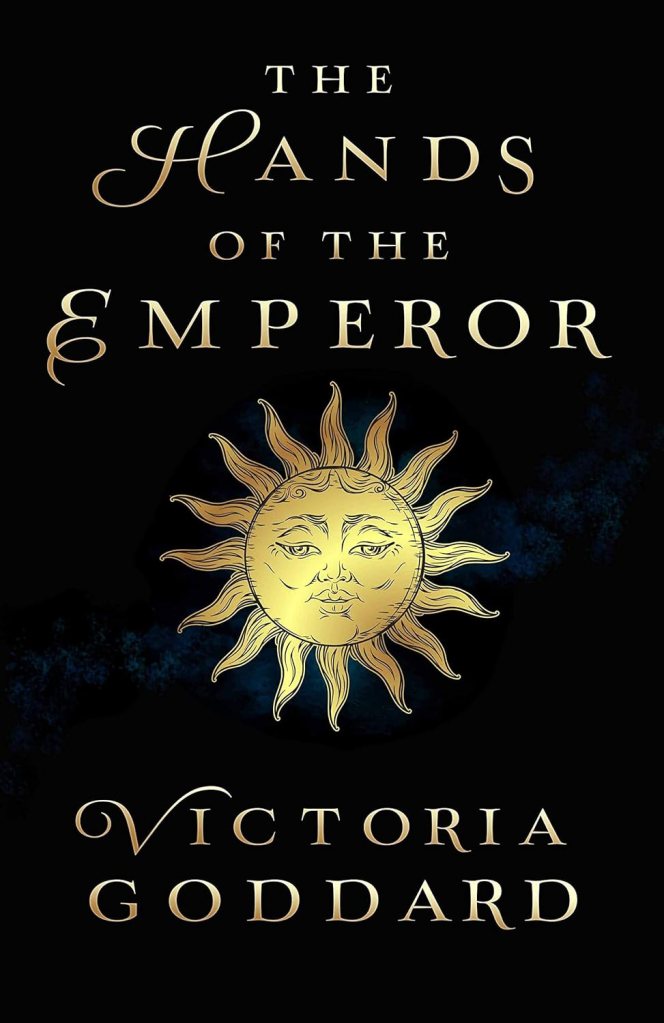
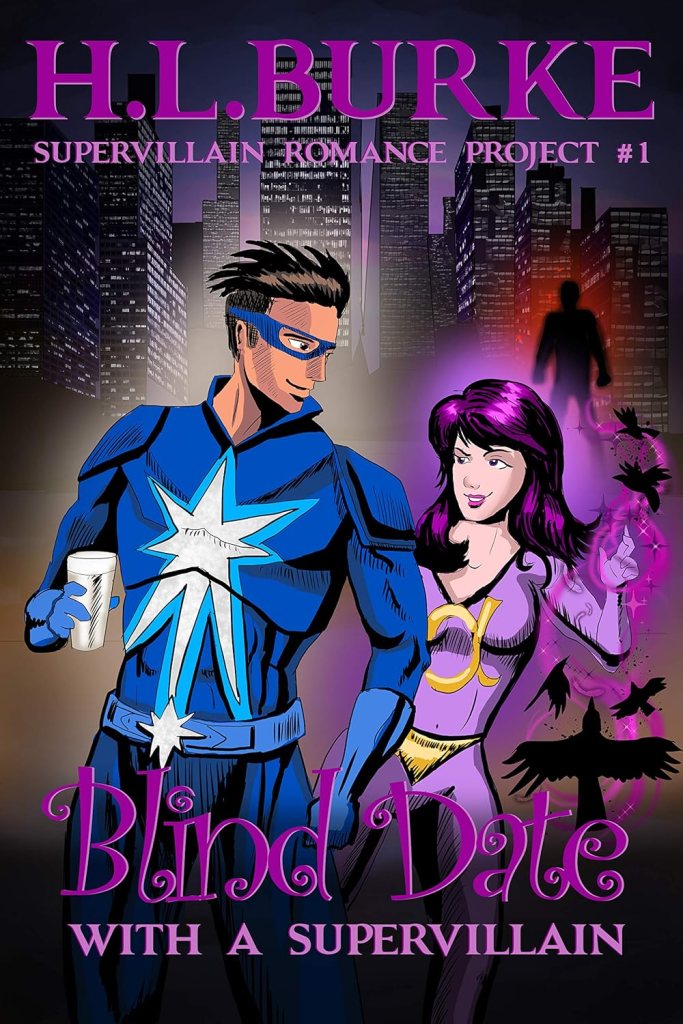
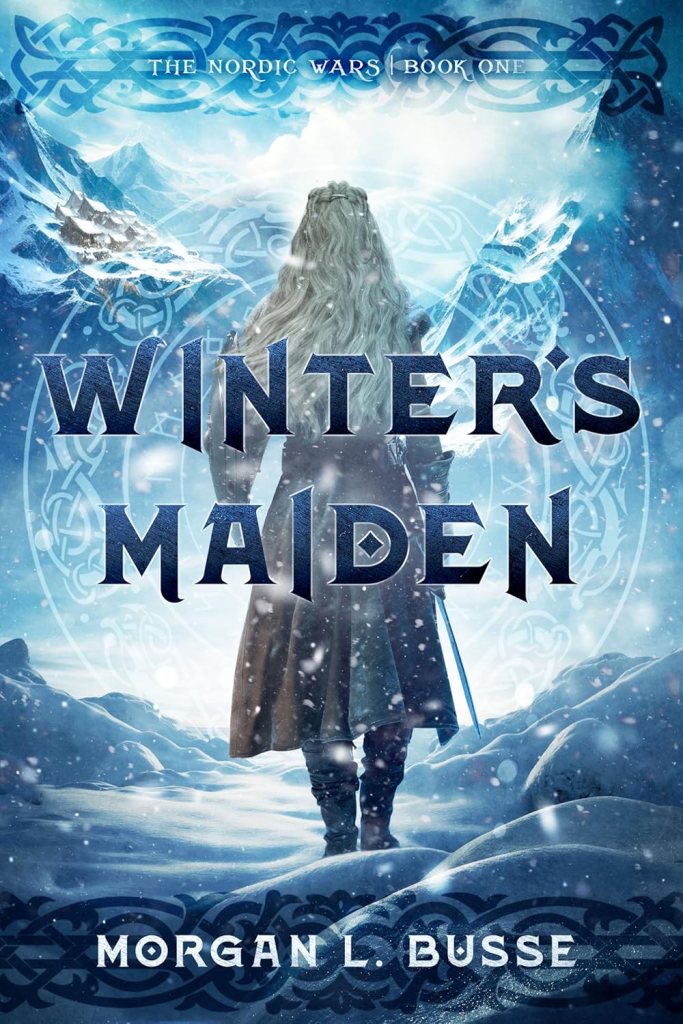
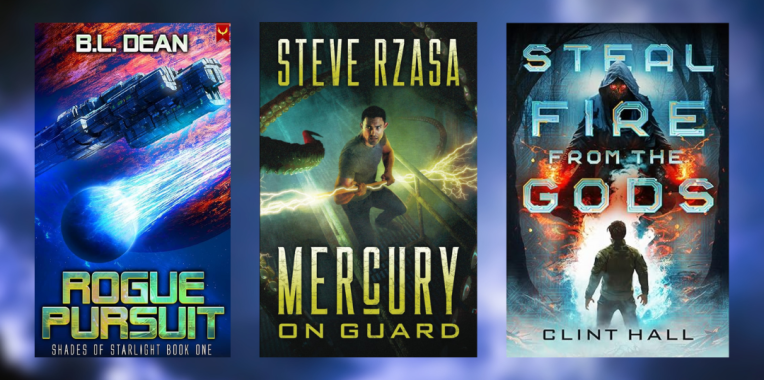
If you enjoy urban fantasy stories with snarky heroes slaying otherworldly beasts, then I give you my strongest recommendation to check out Mercury On Guard. This story has a lighter feel than The Dresden Files with less death and destruction, but similar stark and a bunch of monster fighting.
I’m normally a slow reader, but the pages simply melted away. The description pulls you into the action and the setting. Sometimes it feels like Mercury’s narration even breaks the fourth wall.
The characters are each distinct and feel like real people. They have their issues, but you are rooting for them the whole way. The twists catch you off guard in all the best ways, always cranking up the stakes. The story has a satisfying ending, but also leaves room for further adventures.
If this were a movie, it would probably be PG-13. There’s no adult language that I remember. No adult “situations.” There is plenty of violence, but it was never gratuitous, gory or stomach turning. A minor character consumes alcohol.
I look forward to delving into the rest of the Mercury series and Mr. Rzasa’s other works.
If you like Space Opera, you should definitely check this one out. It has great characters, creative worldbuilding, and plenty of conflict and tension on every page.
I loved how the author used color theory in the dynamics of how the wormholes work in this world. Each planet we visit is unique, with a fresh spin on familiar themes. It feels new, yet familiar.
Tai and Perrin are both well written with varying and conflicting goals and objectives. Their dynamic plus a great balance of micro and macro stakes makes for a rich and enjoyable story. I’m looking forward to seeing more of them in future books by Dean. Even the side characters are memorable and I would love to see them starring in their own spinoffs in the future.
This was a fast read, and one of my favorite reads of the year so far. I’ve already purchased the next book in the series.
I enjoyed the story and it kept me engaged to the end. It was a fun and creative adventure. The characters are fully dimensional and relatable. This is a great science fantasy book–a blending of science fiction and fantasy that goes together like chocolate and peanut butter.
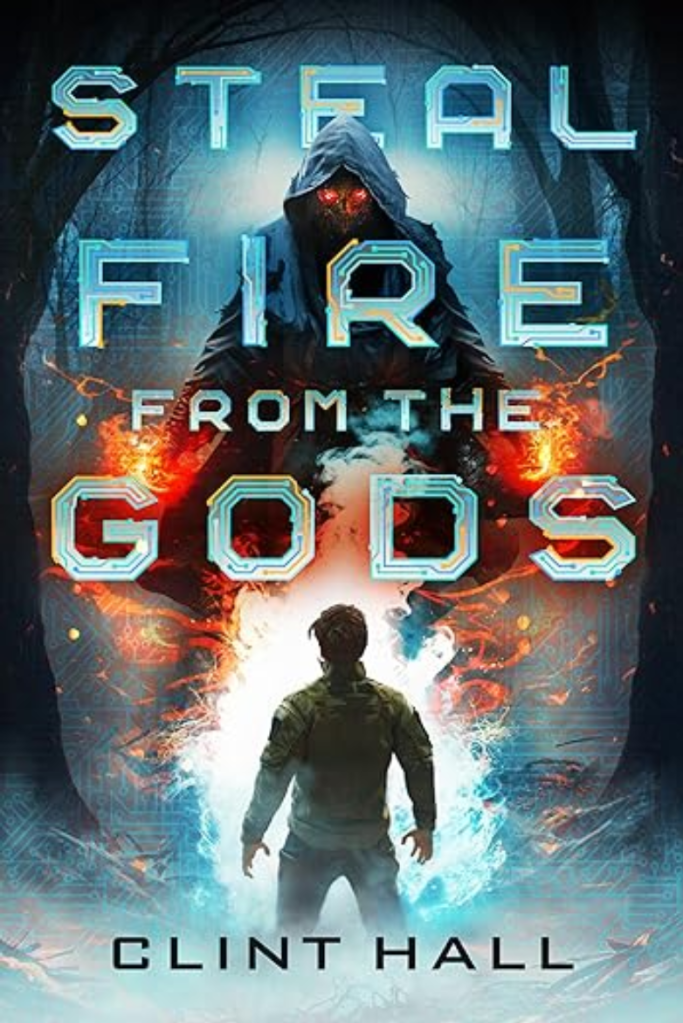
This book kept me on my toes. The story never went in the direction I thought it was going to go. The “curse your sudden, yet inevitable betrayal” moment, I never saw coming.
The book did leave me with some questions, both about the magic system, but also about the main character. There seems to be a conflict introduced in the opening chapter that I felt could have had a clearer resolution. But these questions never detracted from the enjoyment of the story.
I’m a little bummed this was a standalone. While I look forward to future works from Mr. Hall, I do hope at some point, he will decide to revisit this world and these characters.
Ted Atchley’s Debut Sci-Fi Novel: The Key to Reality
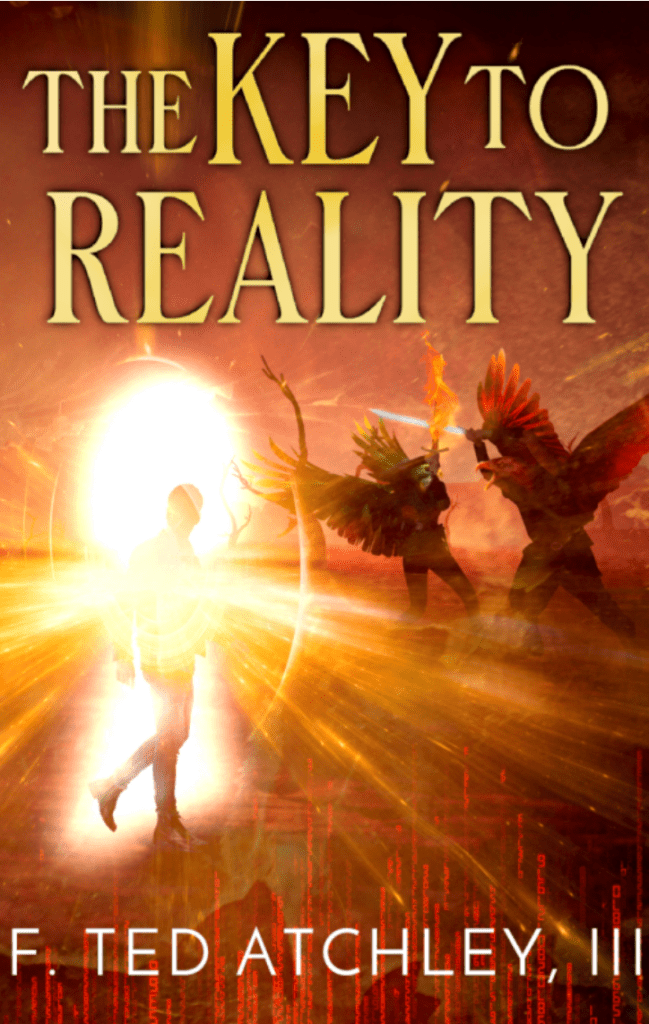
If these books sound interesting, I invite you to try my debut sci-fi novel, The Key to Reality. It tells the story of a “white hat” hacker who attempts to strike a work / life balance and fails so cataclysmically it breaks the fabric of space-time.
Or get the short story prequel, “Finding the Key,” for free when you subscribe to my newsletter. Fourteen-year-old Brandon has bounced from foster home to foster home since losing his mother. All he wants to do is reclaim a part of his old life and return to the apartment he shared with her. But the old neighborhood has changed much since Brandon last lived there, and a nasty gang runs the streets. His search won’t just be for a place to call home, but for his very survival.
About Ted Atchley
Ted lives in beautiful Charleston, SC with his wife, children, and two cats.
When he’s not writing or reading, he enjoys schooling his kids at Smash Bros, and Mario Kart, as every geeky dad should.
Hi, I’m Caylah Coffeen, a freelance editor and marketer of sci-fi and fantasy books. I love reading and writing and am a follower of Jesus Christ.
I’ve worked for Monster Ivy Publishing and Eschler Editing, and am currently a weekly editor with Havok Publishing. Reach out to chat about books and publishing!
Thanks for stopping by my website! I hope you’ve found some helpful resources about reading, writing, and publishing. If you liked this article, here’s some more free content…
Are you struggling in the query trenches? Some authors receive hundreds of rejections and spend years querying before they achieve publication. But why do publishers actually reject your manuscript, and what does it take to get an acceptance?
I trained as an editor with Monster Ivy Publishing, including with their acquisitions team, and learned how publishers choose which manuscripts to accept. I read through submitted stories and helped the team decide whether to reject, invite revisions, or accept each book. Let me share some of these insights!
These are the top 3 necessities in a manuscript! Each of the manuscripts our team rejected fell short on one of these elements. They are the most common reasons a story won’t be accepted.
Is there a strong opening hook? Do the first few pages make readers care about this particular character and their situation?
Does the author write actively, with strong verb choices, or overuse passive voice (forms of “to be”)?
Does the main character have a strong goal or need and a mix of strengths and weaknesses which will drive the story?
Additional Elements of a Publishable Manuscript
Publishers regularly receive thousands of submissions. Yours really needs to stand out. Here are additional elements editors will look for when reading your story.
Unforgettable Characters
A cohesive character arc that takes the mc through ups and downs and make them change by the end of the book
A main character that has a personality and life outside the main plot – hobbies, loves, and quirks that actually affect their day-to-day behavior and thought process.
A diverse cast of characters
Rounded side characters that bring out the best and worst in the mc
Story Elements
Intense emotion – laughter, anger, tears – cause it all!
Strong pacing, with a balance of high-energy and lower-energy scenes
A well-structured plot that doesn’t leave readers lost, bored, or overwhelmed
A powerful, perhaps surprising ending that ties up both plot points and character threads
That Spark
A unique author voice that adds an additional perspective to your story
A distinct writing style that adds flair to your story
For Sci-Fi and Fantasy Manuscripts
Original worldbuilding that develops with the story – not too much exposition or a potentially confusing heap of names up front
A twist on popular tropes – perhaps satirical, perhaps a fresh spin
An intricately developed magic system – hard magic is all the rage these days!
Editors keep a mental checklist as they read through submissions. The more key elements of a strong story that you hit right off the bat, the higher the chance they’ll keep reading or request the full manuscript! I know it’s frustrating, but editors are overworked and underpaid, and really don’t have the time to dedicate to a story that doesn’t catch them right away.
Press-Specific Reasons to Reject a Manuscript
Sometimes a publishing house looks like an absolutely perfect fit for your story! You’ve followed them on social media, have looked up the work of their editors, and can tell you’re a great match! And then you receive a standard form rejection. Devastating!
If you’ve wondered, why, why, WHY, here are some of the private reasons a press might reject your work.
Over-Saturated Market
A press may have recently published a book quite similar to yours.
This book may be doing well and they don’t want to compete with their own sales.
This book could be doing poorly and they don’t want to take another risk with yours.
Or, there could have been a recent huge surge of books like yours. After Twilight, there was a flood of vampire romances. After Dresden, a ton of supernatural detectives. If you submit your book after the trend’s peak, publishers may already be looking ahead to the next trend. After all, depending on the size of the press, it can take between 1-3 years for your book to hit the shelves after you sign.
It’s also possible that a publisher has already hit their quota of acceptances for the year. Each team can only publish so many books in a year.
Money
If a publisher doesn’t think they’ll be able to make back their investment and also profit on sales, they won’t accept your work. Books make pennies and publishers are businesses. Smaller presses in particular have to be very careful of where they invest their funds.
Your book might have the potential to sell well, but if it caters to a niche audience rather than appealing to the mass market, it still might not be enough.
A Trade publisher could sell a few thousand copies of your book and consider it an abysmal failure, while an indie house could sell a few thousand copies and consider it a huge hit!
Try to be objective about your book’s audience. Unless you think the absolute average reader of your genre would love your book, it’s not likely a trade publisher will accept it. Indie houses are much more interested in unique stories these days.
Check out our list of pros and cons to publishing traditionally vs. indie.
Subjective Taste
The managing editor might not personally resonate with your story. Some books aren’t for everyone, and the people reading over your submission might not click with your story, even it’d be a great read for others.
It’s a great use of your time to research the acquisitions and managing editors of a company you’re interested in. Look at their portfolio, their manuscript wishlist, and any books they may have published to see if they’re actually a book match for your book.
Planning Ahead for Marketing
If you have little to no online presence (website, social accounts, following), it will make promoting your book that much harder. Many publishers expect authors to do a lot of their own publicity and marketing. Some even ask for your number of followers on their submissions forms.
Other presses will do the majority of marketing for you, so research each company to determine if the size of your brand is important to them! The more famous the press, the more important it is for you to be visible online to be considered.
Beliefs
Your story could be rejected if you as an author aren’t in line with a press’ political, religious, or social messaging. In the age of cancel culture, publishers don’t just look at your story but also at YOU.
Few people in the industry will admit to this one, but you’ll be one of the faces of their brand if they publish you, and they want to make sure your private life and beliefs line up with theirs. Many presses specifically list their vision and agendas on their “about” pages so research them before submitting.
It is absolutely possible that your book could be rejected because of an opinionated blog post or heated FB comments you left years ago. Publishers are terrified of having another J.K. Rowling.
Dicey Topics
The more content warnings your book will require, the harder it can be to find an interested party. If you handle sensitive topics like sexual assault, diversity, historical abuses, gender, disability, and more, be aware of possible roadblocks.
The publisher may think your depiction of the subject was problematic, not well-researched, or just too dicey. Consider investing in a sensitivity reader.
They may think you shouldn’t write from the POV of a demographic unless you are part of it.
Rely on the Reading and Writing Community!
Your book is your baby. Rejections hurt! It’s hard to be objective about your story when you believe in it so much. And you should!
But publishing is a business, and it can save you a lot of time and heartache if you ask the hard questions of your community before you try to publish.
Try asking your beta readers and critique partners questions like:
What star rating would you give this book right now?
How wide of an audience do you think exists for a story like this (a select niche, an average crowd, or almost every reader in this genre)?
Do you think this story is ready for publication? If no, what do you think most needs to change?
Would you spend money on this book?
If you think your friends and family would feel uncomfortable answering truthfully, you could send them an anonymous feedback form. It’s difficult, but not impossible, to determine whether you’re receiving rejections because of in-house reasons that are out of your control, or writing reasons, which you can control.
You may be sitting on a 5-star book, and just haven’t found the right fit yet. Have you heard how many rejections Brandon Sanderson received at first? Don’t lose hope, but always keep your eye out for ways to improve the quality of your work!
Good luck and happy writing!
Hi, I’m Caylah Coffeen, a freelance editor and marketer of sci-fi and fantasy books. I love reading and writing and am a follower of Jesus Christ.
I’ve worked for Monster Ivy Publishing and Eschler Editing, and am currently a weekly editor with Havok Publishing. Reach out to chat about books and publishing!
Thanks for stopping by my website! I hope you’ve found some helpful resources about writing and publishing. If you liked this article, here’s some more free content…
Every reader has their “happy place,” returning to the same kind of story with similar tropes for the pure fun of it. I love books with over-powered magic users, spies and assassins, evil immortal kings, and groups/schools of mages with a system of leveling-up their powers. So here are mini* reviews of 3 quick-read fantasy books I enjoyed on Kindle Unlimited!
*I tend to write long, highly organized reviews, so these are casual/mini for me, but not suuuper short.
Nolan has hidden his gift of Accuracy to avoid the King’s compulsory draft of magic users. But when his lord captures the leader of a group of runaway mages, his comfortable life as a scribe is uprooted. He, the rebel General, and several new recruits escape, starting a journey to uncover the secrets behind the King’s centuries-long rule and the magical undead who plague their land.
Book Review
This was a pleasantly surprising find! I was looking for pure entertainment and I love books about societies of magic users, especially when there’s an element of oppression involved. The main character, Nolan, is a young man, but refreshingly different from many hot-headed heroes. He starts out as a scribe, hiding his magical ability to avoid being drafted. He’s clever, cool-headed, compassionate, and untrained in martial prowess. I deeply related to his greatest desire – to heal the rift in his relationship with his brother and save him from the life he was forced to live.
We get POV from a couple other characters too, including a more shounen-esque hot-headed male hero who Nolan pulls out of trouble. He annoyed me at first but grew on me as their friendship developed. I also loved the leader of the rebels they join, who’s an empath and former General to the King. It’s rare to see a military leader that’s depicted with more internal than external strength.
Nolan gathers quite a bit of magical power as the story progresses. It was fun to watch him level up, though it happened a bit fast. I would have enjoyed seeing him test and develop his abilities more, maybe attempting some practice missions before we get to the big showdown.
Content warning: The villain is known for sexually assaulting both male and female characters. The rapes happen off-screen but are an important part of the character arcs for two characters. I actually found this element one of the most compelling elements of the book and thought the discussion of how different people react to trauma was well-handled.
The ending was wrapped up a bit too neatly for me. I thought the conflict might last over at least a couple books. This was a quickly paced book, taking place over only a few weeks’ time. If more of the conflicts had been left open, I would have wanted to continue the series. As it was, I didn’t feel a need to pick up the next one, though I really enjoyed it.
Born to a life of drudgery and forced labor, Ward becomes the first commoner to every test positive for magic at his coming of age ceremony. Claimed by the elite military mages, he begins training for a life of protecting his country against the magical beasts who haunt their borders. But as he uncovers lies about the past, the true enemy becomes unclear.
Book Review
This book has one of the best training sequences I’ve read in a while! What a great origin story. Our hero Ward starts out as a peasant, essentially a slave, and to everyone’s shock, becomes the first commoner to ever manifest magic. Two types, at that. He and the other initiates set out at a run towards their secret training grounds (reminiscent of the Hunter x Hunter trials!) and spend months learning strategy, spy craft, hunting and tracking, swordplay, and more. High stakes “you fail one task and you’re out for good” vibe.
There’s some satisfying character development here, with Ward having to overcome his hatred of the aristocracy that’s mistreated him his whole life, and the aristocrats around him slowly coming to accept and look up to him.
There’s a mystery lurking in the background regarding the founding of their country, the motives of their immortal King and founder, and the source of the magically deformed beasts they are sworn to protect their country from. I enjoyed learning more as the story progressed, including information about Ward’s parents and the source of all magic.
I didn’t feel much of an urge to continue the story, as it verged more into “the prophesized one who’ll save the world” territory, and I had been enjoying his story for the small-scale missions and close character dynamics. I might go back to it if the mood strikes, as there’s definitely more of a mystery to unravel around several characters!
Orphaned and poor, Robert’s luck changes when he saves the second prince’s life. Chosen as the prince’s personal vassal, Robert is educated and then sent to train with a group of brutal assassins, developing his magic in secret. But after foiling the eldest prince’s murderous plans, and placing the second prince on the throne, Robert runs off to start life as a businessman. Despite his newfound success and freedom, he can’t turn his back when a new threat nearly crushes their kingdom.
Book Review
This was a fun book to read in a night, but the main character was OP to the point of being flat. He had no weaknesses, made no mistakes, had no difficulty overcoming any of his problems, and picked up skills with little to no effort. His magic was extremely powerful but had no side effects or limitations. He could use magic seemingly endlessly, and he only got a headache and had to rest from exhaustion once. That would have been a good limitation to add, but it wasn’t consistent, even when he started using his magic more heavily.
He picks up skills in such quick succession that we don’t get to enjoy them before he moves on to the next one. There is also an overuse of exposition as the author summarizes each stage of development. He doesn’t have to work at developing his magic. It all seems to come naturally, and suddenly he can kill hundreds of people back-to-back with magic without breaking a sweat.
He doesn’t have any character flaws, which makes for kind of boring dynamics. He’s smart, physically and magically talented, kind, generous, and good at business. Money falls into his hands, a gorgeous, talented girl falls into his lap, and everyone seems to like him. That’s all awesome, but it’d be more realistic and interesting if he had any flaws that he had to overcome. As it is, there was no character development here.
His magic is cool, but the fights are a letdown because no one stands a chance against him. If at least one of the enemy mages put up a good fight, and gave us a dramatic showdown, the ending would have felt more earned. Also, he spent years studying under the best spies on the continent, then immediately discovers magical items that allow him to disguise himself perfectly, so never needs his skills. What’s the point then?
Still, I loved the leveling up feel, the details of how he grows his business, and the humor of how he deals with his enemies, coming across as almost a trickster mage at points. I also enjoyed his kindness – his past doesn’t turn him into a brooding grimdark character. A brain candy read for those who love progression fantasy Webtoons!
Hi, I’m Caylah Coffeen, a freelance editor and marketer of sci-fi and fantasy books. I love reading and writing and am a follower of Jesus Christ.
I’ve worked for Monster Ivy Publishing and Eschler Editing, and am currently a weekly editor with Havok Publishing. Reach out to chat about books and publishing!
Thanks for stopping by my website! I hope you’ve found some helpful resources about reading, writing, and publishing. If you liked this article, here’s some more free content…
Traitor Son is a slow burn military fantasy romance with a satisfying civilization-building thread and a touching, relationship-focused ending. However, it ends rather abruptly without resolving any of the plot problems. The second book is scheduled to release only 6 months after the first, so I’m guessing it was split for the sake of length, and is really one story.
Synopsis
The Emperor slaughtered Remin’s family as traitors, and he wants Remin dead too, assigning him the impossible task of retaking the Andelin Valley from sorcerous invaders. But after 7 years of warfare, Remin triumphs and returns to claim his prize: the Emperor’s daughter as his wife. But the treacherous Emperor hands him a scrawny, neglected, illegitimate girl instead of the Princess Remin expected.
Ophele, who has spent her life hiding in the library from the abusive nobles who call her ward, is terrified by the new husband forced upon her. But an unexpected spark grows between them as they travel to the Andelin and begin to build the capital of Remin’s new duchy. As demonic creatures, summoned by Remin’s defeated enemies, plague the town, Remin and Ophele must decide whether or not to trust each other and face their problems with a united front.
Characters – 4/5 Stars
This is a character-driven story, based around Ophele and Remin and how they must overcome the abuse and traumas they’ve experienced in order to build a new city and life together. Basically her father, the Emperor, has ruined both their lives. Ophele is shy, sweet, and a total bookworm. It’s fun seeing her gain confidence over the course of the story and apply her book smarts to the efforts of building their new city. She’s the opposite of a morning person, which leads to many jokes I personally appreciated immensely.
Remin was a bit less interesting to me – he’s a brooding giant of a man, surly but loved by his men, distrustful and paranoid about the Emperor’s plots on his life (with good reason). He fits squarely into the “strong, silent type” who gets softened up by the girl. I felt more attached to all of his knights, who are very well developed side characters.
Plot – 3/5 Stars
This plot feels almost identical to Under the Oak Tree, and I don’t know how much of a coincidence that is. After the couple gets married and travels to Remin’s new duchy, most of the book focuses on the minutiae of how they’re planning the town (which I love – leveling up vibe!) and defending it from demons summoned by the former occupants Remin recently defeated. Otherwise, the plot centers on their relationship, or lack thereof. There’s a lot of back and forth about Remin liking Ophele but thinking she’s going to kill him on behalf of the Emperor, and acting like a total brute toward her. Then Ophele sits around feeling terrible about herself, and the misunderstanding drags on despite them both actually liking each other.
This felt rather repetitive and miserable in the second half of the book. However, Remin’s behavior is clearly shown as problematic and the conclusion centers around how they resolve the conflict in their relationship. It was a satisfying ending, except that nothing came of the Emperor’s plots. It felt rather like Chekhov’s gun – a setup that didn’t deliver. But I’m deferring judgement because I really think that this was one story split into 2 books – I’ll definitely read the second!
Worldbuilding – 3/5 Stars
Fun, but nothing super special. They have a Renaissance-level society. I think the best part of the worldbuilding was all the accurate details about the process of planning a civilization from the ground up – infrastructure, labor, moving supplies, planning for sponsoring of the arts. All of this was clearly well researched and I loved seeing the characters achieve each new step in their goals! There’s definitely more to learn about the magic system of both the Emperor’s bloodline and the sorcerers who’ve been summoning the demons. But that was all setup, leaving mostly questions.
Writing – 4/5 Stars
Pretty good – nothing gorgeous, but clear to read and not bloated. I feel like it got better as the book went on! The first few chapters had a lot of passive voice, but I stopped noticing that as I read. I might not have guessed this was a debut – it’s well organized and enjoyable to read.
Content
There are 3 sexually explicit scenes in this book between the married couple. I almost wondered if someone else wrote these scenes because of how flowery the erotic parts are – I couldn’t help but laugh. But there’s good emotional content there too.
The rest of the book reads PG-13.
I received a free advance review copy from BookSirens, and I am leaving this review voluntarily.
You can buy a copy of Traitor Son by Melissa J. Cave on Amazon when it releases on November 1st!
Fantasy and science fiction have become more unique and diverse in the past 5 years alone. As a reader, I’m delighted to see a sudden surge of genre blending, plus stories set in non-western places, by authors from all over the world! I keep picking up these books, only to put them down in frustration when the main character doesn’t live up to the concept.
In the past couple years I’ve started and dropped Throne of Glass, The City of Brass, Spin the Dawn, Jade City, The Tiger at Midnight, Empire of Sand, and more despite absolutely loving the worldbuilding and premise of all of them.
I could not resonate with any of the main characters. After trying all of these in quick succession, it occurred to me that I could swap any of the female leads, and I wouldn’t be able to tell the difference. They faced problems the same way, talked smack the same way, and reacted to people and changes with a seemingly identical script.
To those who might protest that I’ve just outgrown these characters (that was my first thought too – it’s been a while since I was 17), I’d remind you that the largest demographic for YA readers is not actually teenagers, but women in their 30s-40s!
As another disclaimer, the most common reason I will drop a book is if the characters don’t catch me. I’ve done this plenty of times with adult books. But I’ve noticed a distinct pattern to why young adult characters in particular can fall flat.
Mashing together all personality traits to maximize “reader-insert” potential
These days, large publishing houses only buy books they can mass market. This means they look for stories and characters with the greatest appeal for the greatest number of people. Unfortunately, this results in characters who seem to embody all major personality traits melded together. After all, you want any reader to be able to insert themself.
Some people love personality tests, others hate them, and most agree that there is little scientific basis to any of them. Regardless of your stance, I’m going to reference the Myers Briggs test to illustrate this point.
The Myers Briggs test breaks personalities into 4 categories where people fall along a scale between two major traits. You’re probably familiar with the scale of introversion/extroversion. Most people fall closer to one than the other. Some people fall right in the middle and call themselves ambiverts, and that’s possible for the other categories in the personality test too. This is where we see great variety in people – after all, even if you share the same “type,” no two people are the same.
But I’ve never once met someone who would say that they fall in the middle for every single trait in this (or another personality) test. But that’s just what most YA characters seem to be – an average of everything.
Let’s break down each personality category for some concrete examples. (I won’t explain the test in much detail below, as that’s not the point of this article, but you can find more information about it here.)
Introversion/Extroversion –
Most YA characters I’ve encountered lately are a bit reserved, with one or two close friends, yet they also have little problem meeting new people, engaging in large groups, or persuading strangers and influential people to their opinion. These characters have a small inner circle, or very little in the way of a social support structure, but this often seems more like a choice, as if the rest of the world is just not as cool as them. But if they only put their mind to it, of course they could be the most popular girl in the room (Katniss).
One of the major problems with this is that the character gets to experience the best of both worlds, without the downsides of either. They don’t get nervous and make awkward mistakes in big groups, and they don’t talk way too much and put people off. This makes for boring character development – a rounded character needs weaknesses. But when you average out extremes of a personality, you avoid a lot of (interesting) problems that could make their story more unique.
Book Smarts/Street Smarts (Intuitive/Sensing) –
Can you pick up knife throwing in a week and best everyone else in your party? But can you also analyze a new political landscape and design a strategy that people 30 years your senior somehow never thought of? Well, most YA characters can do both!
They’re athletic, hands on, and pick up new skills quickly, making their odds of survival great. But they’re also of above-average intelligence and are great at coming up with clever plans on the fly, even in situations they’ve never encountered before.
It’d be more interesting if these characters had one set of skills in which they excelled, and struggled with other areas. Someone who spends their whole life physically training will probably have trouble focusing on a book about the local religion and vice versa.
But while characters often make jokes like, “oh, I’m terrible at math,” or “if our wagon wheel breaks, we’ll be stranded for 3 weeks,” these supposed weaknesses never actually affect the character and plot. They still cobble together practical fixes and have no trouble budgeting their finances while on a mad dash across the kingdom.
Feeling/Thinking (what you Primarily base your decisions on) –
Teenagers are hormonal and emotional, and so many YA characters understandably make their decisions based on their feelings in the moment. Yet, likely because authors don’t want their female characters accused of being “controlled by their emotions,” they feel the need to portray their characters as perfectly aware of all logical routes and just willfully choosing otherwise.
For instance, in a book I recently started, we’re introduced to the FL as she spins a magic spell in a public square. She hates this spell and wants to deviate from her mentor’s instructions. She feels very strongly about this, but looks into her mentor’s eyes, sees the warning, remembers her teacher could abandon and leave her in poverty, or that the king could have her executed for the deviation.
She thinks through all these reasons even as she’s apparently swept up by her own emotions. Then decides, “I’m going to do it anyway.” The spell shatters and she is punished – an entirely avoidable scenario.
More and more, I see scenes like this, where the character creates problems for themselves with stupid decisions. That’s definitely something humans do ALL THE TIME. But these choices are often strangely depicted, not as stupid, but as daring or assertive.
And again, these authors are trying to have the best of both worlds – “oh, yes my character feels very deeply and just gets carried away sometimes – don’t we all? Oh, but she didn’t really get carried away – you see, she thought through every possible problematic outcome first, and just decided to face them all! It’s not like she’s foolish or incapable of controlling herself.” Um… ok?
Again, many teenagers are impulsive as a result of their rapidly shifting hormones, so it’s not too much of a stretch that many YA characters would be perfectly happy to abandon their home on short notice for a new quest. But people still tend to prefer one or the other in their life and day-to-day schedules – flexibility or consistency.
Yet so many of these impulsive characters also fit perfectly fine into more structured scenarios. I need to go undercover at a royal court, which has a rigid set of rules? No problem! I’m not bouncing on the balls of my feet all day – I can keep my cool perfectly in any situation.
Some characters are the opposite – they’ve grown up with the same schedule every day (a farm, the military, a magic school), but when their whole world is upturned, they do just fine.
Sure, they may miss their old life, but they don’t feel lost, agitated, lose sleep or perform more poorly than usual because of this sudden shift which does not suit their needs. Or if they do, they very quickly overcome it, as though it was just a habit, and not one of their core traits as a person.
YA personalities embody everything and nothing
Whether you agree with this way of analyzing a personality or not, the point is, YA characters these days are designed to embody everything and nothing at the same time, so that they will resonate with the most readers.
This is not only unrealistic, but makes these characters exceptionally boring. Where are the unique quirks and flaws that make you laugh and want to talk about a character for years to come?
I have a couple friends who love YA, and it’s struck me that no matter how many YA books they recommend to me, they never say, “oh, I just loved this character because x.” They rarely mention the characters at all. Because most of these books are situational – they’re about what happens, not who is facing these trials.
But do readers actually want characters like this? Sarah J. Mass books are wildly popular after all – so clearly plenty of readers love these stories, but do they really love these characters?
Or do they get swept up in the quick pace and frenetic emotions that define the YA genre, and not realize that if the plot paused, they might not really care about the characters themselves?
Writing Tips: how to avoid this pitfall
Personality tests can be a fun way to analyze your character and make sure you write them with consistent reactions across your stories. It can also help you flag if you’re writing too many characters of the same type. That’s only natural as writers – we write what we’re familiar with and drawn to. But opposites attract and create all sorts of other sparks that make for great stories.
If you’re writing a female young adult character, you may be afraid to give her flaws, especially ones that women have often been accused of, and with good reason. Women are far too often portrayed negatively in fiction. But it’s just as bad when they’re underdeveloped, 2-dimensional, or cut-and-pasted.
If you play it too safe, making your character a little too perfect, too talented, or too generic, you’ll unintentionally be adding to the crowd of flat female characters. Be bold! Give your female characters personalities with more extreme quirks. Some readers may be turned off. Who cares? There should be a space in fiction for all sorts of main characters, not just the brash, aloof Homecoming Queens.
Writers hate on ourselves and compare ourselves way too much to others, so I say this with caution, but it’s worth asking if your character feels too similar to a slew of other heroes. I’m also a marketing professional, and it’s necessary to analyze the market.
If you see a lot of similar characters out there, it can mean they’re in high demand – readers do seek out the same archetypal characters again and again (the antihero, the guy next door, the angsty assassin). But it’s also a sign that your character may not feel original to your readers. Trends do come and go, and if a press has already published a lot of Sarah J. Mass lookalikes, they, and their readers, may be looking for something fresh.
Hi, I’m Caylah Coffeen, a freelance editor and marketer of sci-fi and fantasy books. I love reading and writing and am a follower of Jesus Christ.
I’ve worked for Monster Ivy Publishing and Eschler Editing, and am currently a weekly editor with Havok Publishing. Reach out to chat about books and publishing!
Thanks for stopping by my website! I hope you’ve found some helpful resources about reading, writing, and publishing. If you liked this article, here’s some more free content…
Virtuous Sons is a delightfully original Greco-Roman buddy story that thrills with its snarky dialogue, unusual action scenes, and deeply loyal characters.
Snapshot:
Griffin and Sol, young Greek and Roman patricians respectively, defy their elders and fates, running off to the city of Olympia to attain greater power and make their mark on the larger world. Faced with political upheaval at the center of the Greek world, demons on the Western front, and their own losses and regrets, Griffin and Sol fight alongside each other with wit and audacity on their virtuous path to fame and glory.
Characters: 5/5
This story is all about two reckless, ambitious, smack-talking young men called Griffin and Sol. They’re the best warriors of their generation and they know it. As a result, they’re unbelievably audacious, delighted in the equal competition each presents to the other, and at times completely and excellently ridiculous. I laughed so much while reading this story. They’re like oil and water and rib each other constantly. Griffin is cavalier, spoiled, restless, and desperately thirsty for a fight worthy of him. Sol is depressed, rigidly disciplined, aloof, and quietly confident in his own superiority.
They’re arrogant and violent, yes, but not unintelligent or too foolish (though I know a certain philosopher who’d loudly disagree). They’re sharp, strategic, passionately loyal, with a talent for drawing others to them. It’s really quite a delightful dance watching these two. And it’s not just fun and games either – they aren’t afraid to touch on deeper topics such as grief, fear, trust in the face of lies, and more. Their journey is rich.
Cool side characters too, but the dynamic duo steals the show. Except, we have our eyes on you Damon Aetos, for all the good it’ll do.
Story: 5/5
This plot isn’t what I expected from the blurb, and it’s all the better for it. The description made it sound like a quest story, with two young men wandering around killing monsters and climbing a mountain – a plot you may very well expect from a Greek myth about a demigod or other talented hero. I don’t like quest stories much, and based on the blurb alone, I wouldn’t have picked up this book myself (it was a birthday present). To my delight, this was a character piece which evolved into political (& action) fantasy.
The entirety of the story takes place in 2 Greek city states and the characters run around kicking hornets nests for the heck of it while seeking to prove their prowess to themselves and each other. As they stretch themselves in such a furnace, we learn more and more about their families, pasts, traumas, and dreams – and of course enjoy as they bond (beat each other up and talk trash). The discussions and situation are more “mature” than I initially expected. Navigating a political hellscape takes a lot more brains and nuance than traveling from point A to point B killing monsters. I hope other readers aren’t misled by the blurb, but are willing to give this quite unique story a try.
That said, the plot did rather jump all over the place. These characters don’t really have a plan, so most of what they did felt incredibly random. It seemed like the author was making up a lot of it as he went along (this was published first as a web novel). At times it felt like I was suddenly reading a different book from the one I’d picked up. Sometimes, this is enjoyable as it leaves readers feeling continuously surprised, and I think it works because of who these characters are. But reader expectations are important, and if not for loving these characters so much, it might have been a bit too much of both whiplash and meandering. But not all books need a tightly woven series of events to be great – and you bet there is a master plan deep in the background…
Worldbuilding: 5/5
The author has clearly steeped himself in classical literature. It goes beyond his use of Greek and Roman words or his accurate inclusion of popular philosophies and trends of the time – he gets it. After a certain threshold of absorbing a culture’s art, myths, history, and literature, a person begins to intuitively understand what makes that culture tick. Their fears, desires, aspirations, jokes, and more. It’s a delight to encounter a book so immersed in the classical mindset.
But Striker doesn’t stop there. He presents an alternate version of Mediterranean history – the gods are dead and their names have slipped from the minds of men. And what did you just say about Rome? He also weaves in an alternate magic system based upon the Chinese concept of chi cultivation. He incorporates the popular tropes of progression fantasy perfectly into the realm of Greco-Roman heroes. Because demigods and Roman legionnaires would absolutely love the concept of leveling up! And so do we.
Writing: 4/5
The place this book shines most is in the dialogue. Witty exchanges, perversely convoluted (aka Greek) discussions, and lots of hilarious B.S.-ing and grandstanding by our two endearingly reckless protagonists. However, almost every single chapter begins with an exposition dump, which grows rather tiresome. The prose is written well enough, though it can feel a bit dense at times. And it slows down the pacing when, despite the exciting shenanigans of the previous chapter, the next one almost always steps back with an omniscient voice to explain some element of history or culture. But the action scenes and emotional moments are presented and punctuated exceptionally well.
This story alternates between Griffin and Sol’s perspectives, but they’re both written in first person, which led me to experience quite some confusion when switching chapters. Their voices are incredibly distinct – everything from their manner of speech to attitude and energy – but it’s still mentally difficult to change who “I” is when reading, even when each chapter title names the POV. It didn’t help that I tore through this book in 2 days, so perhaps I just didn’t give myself enough time to mentally shift from one character to the other.
Impact: 5/5
It’s been a long time since I had so much fun reading a story! I went and devoured the next two books in the series immediately after finishing this one. I am ALWAYS on the hunt for stories about rivals and blood brothers, but it’s a strangely difficult itch to satisfy. My sister searched for ages to find a book for me for my birthday, and she is rightfully smug to have gotten it so right! These two, Striker absolutely nailed on the head. I light up talking about them. Now I’ve gotten my mother to read it out loud to my father and youngest siblings back home, and I Facetime in to listen to them all chuckle. I’m in withdrawal waiting for the fourth book! I miss Griffin and Sol!
In the end, there could only be one word to describe that unique quality. That special characteristic that allowed a man chained and robbed of all control of his life to lunge fearlessly at a far stronger opponent. To disdain me with his eyes and strike my face with his clenched fists. “The audacity!” I exclaimed in purest joy, and I struck him right back.
Y.B. Striker, Virtuous Sons
Hi, I’m Caylah Coffeen, a freelance editor and marketer of sci-fi and fantasy books. I love reading and writing and am a follower of Jesus Christ.
I’ve worked for Monster Ivy Publishing and Eschler Editing, and am currently a weekly editor with Havok Publishing. Reach out to chat about books and publishing!
Thanks for stopping by my website! I hope you’ve found some helpful resources about reading, writing, and publishing. If you liked this article, here’s some more free content…
Circe is a decadently beautiful mythological retelling for fans of ancient Greek mythology and high literature alike, but its ending misses the emotional mark.
Snapshot
Circe makes an appearance in Homer’s The Odyssey as an antagonist who famously turns Odysseus’ men into pigs. Miller retells this story from her perspective, illuminating how her deeds intertwined with other mythic heroes and how the Fates spun the other threads of her life: her youth as a nymph daughter of Helios, her exile and discovery of sorcery, and her battle to save her oft-forgotten son and demigod Telegonus.
Characters: 4/5
Circe has clinical depression – an interesting take on an immortal. She is lonely, withdrawn, and finds it difficult to love or pursue anything in life. Yet she is staunchly principled, with a huge heart, a sharp mind, and a fiercely protective nature.
She unfortunately models an “I’m not like other girls” attitude, showing nothing but contempt and standoffishness to all the other women in her life. She can’t be the only nymph or goddess in existence with a brain, yet she does nothing but mock the others for their vapid silliness, ignoring relatives and possible companions because she thinks herself better than every one of them. However, this doesn’t cross the line, partially because it’s accurate according to Greek myths – all the gods were capricious and petty. It’s also in line with how people with depression act, and comes across more as Circe drowning in misery and feeling bitterly out-of-place rather than pompous arrogance.
Much of the book takes place with Circe in isolation, whether willingly or during her exile, and other characters pass in and out of her long life rather than taking the stage alongside her. I found her dynamic with her siblings and Hermes and Athena more compelling that her relationship with Odysseus and her son, despite their greater importance to the plot.
Story: 3/5
This is a character focused story, not a plot driven-one. Miller has clearly done great research to make the world of the ancient Greeks come alive! She weaves so many myths through this one tale, from a perspective we’ve never seen! I had totally forgotten that Medea is Circe’s niece!
At times the book felt a bit slow, with Circe trapped alone on an island brewing plants for magic and feeling miserable. However, overall, Miller weaves together Circe’s 1000s of years of life masterfully, granting us a realistic female perspective in a mythos otherwise dominated by male narration.
I didn’t give this 5 stars for 2 reasons. One, the slowness and sometimes repetitive nature of the middle of the book. Two, the ending felt terribly frustrating, and in direct contradiction to the original myth and Greek philosophy. Looking back, Miller did plant the seeds of this ending, and it does tie in with Circe’s arc as Miller portrays it. But the ending is a very American take, not fitting with Greek ideas of life and death. Unlike her other changes to the myth which still fit with the world, the ending felt out of place, and did not seem to tie together Circe’s story or give readers emotional closure.
Writing: 5/5
Miller’s writing drips off the page like ambrosia. I recall making many faces of pleasure while reading her delicious descriptions. 😀 I kept thinking of the phrase “decadently lyrical” to describe her style. I read this before her debut, The Song of Achilles, and have discovered that her writing has only improved since then. Phrases that felt a bit purple in The Song of Achilles have been refined here and feel completely fitting in the mouth of an immortal.
Impact: 5/5
It’s been a long time since my heart leapt so much when reading a book. I fell in love with language and story all over again. The more you read, the harder it is to find something that moves you, and this book truly did. I became inspired to reshape my own writing as well.
Audiobook Narration: 5/5
I listened to the audiobook version of this, and the narrator, Perdita Weeks, makes Miller’s words, already spun from gold, positively glow. What a delight to listen to, especially knowing this is how the Greeks would have enjoyed their stories – orally!
Hi, I’m Caylah Coffeen, a freelance editor and marketer of sci-fi and fantasy books. I love reading and writing and am a follower of Jesus Christ.
I’ve worked for Monster Ivy Publishing and Eschler Editing, and am currently a weekly editor with Havok Publishing. Reach out to chat about books and publishing!
Thanks for stopping by my website! I hope you’ve found some helpful resources about reading, writing, and publishing. If you liked this article, here’s some more free content…
We’re excited to announce that our blog will now feature book reviews! We love supporting authors, and aside from buying their books, that’s the best way to do so!
There are infinite books in the world, a deliciously guilt-inducing amount piled up on our TBR lists, and more than we could possibly ever read in our lives… sigh, bookworm problems.
Unfortunately, this means we have to be selective about what we can review. So we will review our own curated list of books (that backlog though…) and accept requests for the following:
Science fiction, fantasy, and mythic and fairy (re)tellings…
With themes of faith or by Christian authors
By authors (particularly indie) located in the Southeastern US
With beautifully artful prose (e.x. Roger Zelazny, Madeline Miller)
These genres are open to interpretation. We’re all about genre-blending! However, we do not review apocalyptic or horror SFF or erotica.
You may request a review for your own book, on behalf of an author you like, or submit a review you’ve written yourself if it matches the above themes.
Head over to our book review page for more detailed guidelines and to submit a request.
Looking forward to reading your delightful stories!
Hi, I’m Caylah Coffeen, a freelance editor and marketer of sci-fi and fantasy books. I love reading and writing and am a follower of Jesus Christ.
I’ve worked for Monster Ivy Publishing and Eschler Editing, and am currently a weekly editor with Havok Publishing. Reach out to chat about books and publishing!
Thanks for stopping by my website! I hope you’ve found some helpful resources about reading, writing, and publishing. If you liked this article, here’s some more free content…
Note: “shishō”—Japanese word for “master” or “instructor”.
Dear Heavenly Father,
Thank you for giving me this opportunity to write.
Lord, You are Lord of All Creation and have created this world from nothing, bringing life to us.
Lord, because You are the Master Creator, I ask that You would be my Shishō—my Master and Instructor in creating things. I want to create with You, both something new and using what I already have; but I want to make things that honour You and give you glory. I want whatever I imagine, produce, and contribute to be things that glorify You by telling other about Your love and grace; to create stories, worlds, and characters that touch the hearts and minds of readers and inspire them to seek Your face. I want my writing to be flavoured with the saltiness of Your Word and brightened with the light of Your love and grace. However, I cannot do this alone, because this is something I know I can only accomplish if I work with You.
Lord, please help me. Show me, guide me and create with me these stories that are flavoured with Your saltiness and brightness—stories that make readers thirst for You and seek Your presence.
Lord, thank You for Your generous grace and abundant love that You have shown me. I pray I will share it through my life and writing, that others too will discover, learn, and grow in that same love and grace.
I leave all these things with You.
In Jesus’ Name I pray,
Amen
S.M. Shigemitsu is a Canadian fantasy writer of Japanese descent who published her debut novella, The Blue Bird of Happiness, on Amazon in 2022. She has also worked overseas as a teacher in Mongolia, Japan, and Bangladesh.
Hi, I’m Caylah Coffeen, a freelance editor and marketer of sci-fi and fantasy books. I love reading and writing and am a follower of Jesus Christ.
I’ve worked for Monster Ivy Publishing and Eschler Editing, and am currently a weekly editor with Havok Publishing. Reach out to chat about books and publishing!
Thanks for stopping by my website! I hope you’ve found some helpful resources about reading, writing, and publishing. If you liked this article, here’s some more free content…
Welcome to A Writer’s Hand, Creative Cornerstones’ blog.
I’m Caylah Coffeen, the founder and head of editing and marketing.
I like to say my first love is Jesus, and my second love is books! What better way to live than in dedication to the first and greatest story, and in creation of our own new worlds and tales!
I’ve worked as a freelance editor and marketer for several years, and have gotten an exciting look behind the scenes at Monster Ivy Publishing and Eschler Editing. It’s so rewarding to help authors bring their stories to life! But it really is a team effort, so I’ve partnered with lovely cover artist Galadriel and copywriter Anneliese, who have themselves co-authored and published a fantasy adventure novel.
Our team finds inspiration from myths and epics, fantasy and sci-fi, historical fiction, and more. From the timeless power of Homer and the Bible, to the decadently lyrical words of Madeleine Miller and Roger Zelazny, to the sprawling worlds of Timothy Zahn and Brandon Sanderson, we have found tears, laughter, beauty, and passion in unforgettable measures.
We hope to share such joys with you here!
“She was with book, as a woman is with child.”
Till We Have Faces, C.S. Lewis
Whether you are an (aspiring) author or publishing professional, I hope you will find encouragement from the success stories, prayers, and deep discussions on craft you’ll find here.
We host guest posts from all kinds of word-lovers. If you’d like to share your ideas, hopes, and prayers, please find details on our submissions page.
Thanks for stopping by my website! I hope you’ve found some helpful resources about reading, writing, and publishing. If you liked this article, here’s some more free content…