The Problem with Multiple Point of View Characters – Part 1: Harder to Hook Readers

By Caylah Coffeen

You have to do much more work to get a reader invested

With every major point of view character, authors must check off all the same boxes: establish the status quo, show the individual’s wants and needs, give readers a reason to root for them, and spark off their story with an inciting incident.

With only one POV character, authors can achieve many of these benchmarks within the first few chapters. This period of time is vital to securing reader interest. If you can’t catch them within this time, most readers will not continue.

But with each new POV, authors wipe all their own efforts away by resetting the reader’s emotional slate clean and starting all over again. I may be interested at the end of an opening chapter, but suddenly I’m faced with another stranger that vies for my investment.

Then a third. God forbid 4 or more. It could take an hour to get back to the first character, at which point all the emotional tension has faded and I have to restart in my efforts to connect with them.

Publishers may think multiple POVs offer more likelihood to get readers invested. After all, odds are a reader will like at least one of them. But I think of it the other way around.

Imagine talking to a talented salesperson. They really rope you in, know their stuff, and get you excited. You’re almost convinced about the purchase. But then they add on another product, again nearly persuading you. But then they start talking about a third one! And you have to make a decision on all three purchases at once? That’s overwhelming.

you have to “sell” Readers on all your characters at once

Consider also how your friends and family respond when you talk about your story. Do you know the glazed look they get in their eyes or the uncertain tone in their voice when you start packing on too much information?

You’ve probably learned to share about just one element or character at a time. But a new reader is like these friends – hesitant to try your story and only willing to invest so much time into making up their mind.

The more POV characters you employ, the higher the chance a reader will get worn out before you even reach your inciting incident. After all, you’re yanking their emotions around between many different people and locations, and it will take much longer to reach the “exciting” events which really kick off the story.

Alternatively, one character may have a riveting introduction, while another has a lackluster one. A reader may decide that it’d be too frustrating to go back and forth between one character they love, and one they find uninteresting, and put the book down. I’ve done this before.

Writing Tips for Multiple POV’s

Considering how many published books feature multiple POVs in the market these days, you may not think this will pose much of a problem. After all, clearly many readers are willing to give these books a try, and some even seek them out specifically. Preferences vary, but it is still important to keep in mind that the opening of your book is the most vital time in which to hook a reader.

Read, read, read! Have you read Brandon Sanderson, Robert Jordan, George R.R. Martin, and Ken Liu? They are some of the most popular writers who employ multiple POVs. Was it hard for you to get into these books? When did you lose interest, and what hooked you again? These are the types of elements to emulate or avoid in your own work.

Some authors choose to write multiple chapters back to back from one POV before switching to another. This gives readers more time to become attached to them. Others write shorter chapters but switch POV more often.

Also, remember to rely on your beta readers. It’s hard, but necessary to ask, “are you interested in all of these characters, or did you lose interest in my book because of the large cast?” Sometimes the right decision is to cut a point of view character or introduce them later in the story once readers are more solidly sold on your story.

How many POVs do you utilize in your book? How did you choose to introduce them?


Hi, I’m Caylah Coffeen, a freelance editor and marketer of sci-fi and fantasy books. I love reading and writing and am a follower of Jesus Christ.

I’ve worked for Monster Ivy Publishing and Eschler Editing, and am currently a weekly editor with Havok Publishing. Reach out to chat about books and publishing!

Thanks for stopping by my website! I hope you’ve found some helpful resources about reading, writing, and publishing. If you liked this article, here’s some more free content…

Now Featuring Book REVIEWS!

We’re excited to announce that our blog will now feature book reviews! We love supporting authors, and aside from buying their books, that’s the best way to do so!

There are infinite books in the world, a deliciously guilt-inducing amount piled up on our TBR lists, and more than we could possibly ever read in our lives… sigh, bookworm problems.

Unfortunately, this means we have to be selective about what we can review. So we will review our own curated list of books (that backlog though…) and accept requests for the following:

Science fiction, fantasy, and mythic and fairy (re)tellings…

  • With themes of faith or by Christian authors
  • By authors (particularly indie) located in the Southeastern US
  • With beautifully artful prose (e.x. Roger Zelazny, Madeline Miller)
  • Inspired by nonwestern places, people, and mythos
  • Anything that matches our manuscript wishlist!

These genres are open to interpretation. We’re all about genre-blending! However, we do not review apocalyptic or horror SFF or erotica.

You may request a review for your own book, on behalf of an author you like, or submit a review you’ve written yourself if it matches the above themes.

Head over to our book review page for more detailed guidelines and to submit a request.

Looking forward to reading your delightful stories!


Hi, I’m Caylah Coffeen, a freelance editor and marketer of sci-fi and fantasy books. I love reading and writing and am a follower of Jesus Christ.

I’ve worked for Monster Ivy Publishing and Eschler Editing, and am currently a weekly editor with Havok Publishing. Reach out to chat about books and publishing!

Thanks for stopping by my website! I hope you’ve found some helpful resources about reading, writing, and publishing. If you liked this article, here’s some more free content…

Is My Manuscript Ready for Professional Editing?

By Caylah Coffeen

You’ve completed your manuscript! Congratulations! That’s a huge milestone that many writers never reach. But how do you know if your book is ready for professional editing?

You may have a lot of conflicting thoughts and emotions. Authors are known for beating themselves up. You may think your work could never be good enough or that there’s no way anyone would ever buy your book. These feelings of doubt may make you think that a professional edit will never be worth it.

Or you may love your story and characters so much that you find it difficult to receive feedback or think of your book from a business angle. It’s hard to step back and ask, “is this a marketable product?” Some authors double down about making any changes to their story.

With so many emotions tangled up in your projects, how can you attain a clear perspective on the current state of your manuscript?

We’ve got a checklist for you.

But first, tell yourself two things (try saying them out loud):

  1. My story is wonderful! I am a valuable writer. I work hard to improve and can! There are readers out there who will love my book! Be kind to yourself! Everyone starts somewhere.

  2. Every book will benefit from an outside perspective and edit, no matter how talented the author. No one should complete a book in a vacuum. Stories are made for other people, and while you may not incorporate all advice you receive, feedback is invaluable.

The Checklist

The easiest way to self-assess your manuscript’s readiness is to consider how many edits you have already completed and how much feedback you’ve received from others.

Did you know that most published books undergo 8-10 edits before reaching shelves? That’s right. 8-10! And many manuscripts undergo 3-5 edits before they’re ready for a professional editor.

Here’s an editing checklist I recommend every author complete before investing in a professional edit:

  • Step 1: “The Cleanup Edit”
    Complete 1 self-edit – this will help you catch many inconsistencies or errors in your first draft and improve readability for others.

  • Step 2: “The Critique Edit”
    Find a critique partner (a fellow writer in your genre) and complete 1 edit incorporating their feedback.

  • Step 3: “The Alpha Edit”
    Find 1-3 alpha readers to provide feedback about their reading experience (what they liked, what they found confusing, when/if they lost interest) and make edits accordingly. Alpha readers perform the same tasks as beta readers, but betas often offer feedback later in the process, after a developmental edit, since their role is to offer subjective feedback about what readers experience, not editorial advice.

  • Step 4: “The Workshop Edit”
    Consider joining a writing group or workshop to receive multiple perspectives from fellow authors at once. Or exchange your manuscript with your initial, or a second, critique partner. Edit accordingly.

The Work is Worth it

We know this task list sounds daunting – it’s a lot of work! Potentially years worth of work. But don’t be too hard on yourself, as this is the case with every specialty. It takes time to perfect your craft. Doctors spend 7 years in school and residency programs before they can practice independently. Artisans spend decades in apprenticeships and working before they can be considered a master. Acclaimed photographer Henri Cartier-Bresson famously once said:

“Your first 10,000 photographs are your worst.”

Henri Cartier-Bresson

Wildly popular SFF author Brandon Sanderson says he wrote 13 novels over 8 years before he ever sold his first!

Consider this period of drafting and editing to be your “author apprenticeship.” It’s worth putting in the time to complete these 4 rounds of edits, and you will save a lot of pain and money in the long run if you do.

You may be coming off the high of finishing your first manuscript and are excited to see what an editor would think. Perhaps it feels less daunting to recruit a professional than it does to start again at the very beginning (that’s what coaching is for!). But let me assure you that a first draft is not ready for a professional edit. Likely, neither is a second.

How We Can Help

But our team here at Creative Cornerstones offers support through all of these stages! You don’t have to figure it out alone. We can suggest training resources, conferences, offer 1:1 coaching, and even help you find critique partners and alpha readers through social media or local groups.

Even if you have not completed 4 rounds of edits on your manuscript, you are always welcome to send us your first 1000 words to receive a sample edit. Email them to creativecornerstones@gmail.com.

Or schedule a free 20 min consultation over Zoom to discuss your goals and best next steps!

We want to help you achieve your dream of becoming a successfully published author!


Hi, I’m Caylah Coffeen, a freelance editor and marketer of sci-fi and fantasy books. I love reading and writing and am a follower of Jesus Christ.

I’ve worked for Monster Ivy Publishing and Eschler Editing, and am currently a weekly editor with Havok Publishing. Reach out to chat about books and publishing!

Thanks for stopping by my website! I hope you’ve found some helpful resources about reading, writing, and publishing. If you liked this article, here’s some more free content…

A huge wave crashes into a line of coastal houses, a stormy sky behind them.

Writing with Childlike Faith

Guest Post By Dana Bell

In 2018 I was done with writing. Being a published writer was not at all what I thought it would be, and the stress of having to complete multiple projects burned me out. The last thing I wanted to do was write.

Know why I didn’t quit? A couple reasons. My ex had tried to take everything I cared about away from me. I wasn’t about to allow him to win. The other – I couldn’t imagine doing anything else.

Rediscovering the joy of writing

So, I began a journey to re-discover the joy and fun of writing. God played a huge part in that. I put aside all professional gigs and went back to fan-fiction. This genre taught me so much about being a writer and allowed me to practice the tricks of the trade. My goal: write between 1000 to 1500 words a day. That took me about an hour. By the end of summer, I’d gotten up to 3000 a day. Not a goal I had set for myself.

But I did not make the journey alone. Even when writing fan-fiction, I would sit down at my computer and pray one of two simple prayers:

“Thank you, Dad, for letting me write” or “Hey, Dad, you want to come and play?”

“Hey, Dad, you want to come and play?”

Dana Bell

From faith to a book deal

By the end of the year I sold my first romance novella. NO ONE sells their first romance.

I continued the practice of praying before I wrote, whether I was playing in someone else’s universe or crafting my own original work.

Yet there is one more element involved. It isn’t just prayer. It is faith. Faith so unshakeable I believe that when I sit down to write God will give me the words. My fingers get going on the keys and don’t stop until I’m finished for the day, however many words I write.

Speaking of faith, I actually asked God the other day why He puts up with me. I’m not exactly the most faithful of children. I was curious. Know what the answer was? In that amused and tickled father way He answered, “Because you have the faith of a child.”

That startled me. Of all the answers He could have given, He gave me one I didn’t expect.

My ability to speak with God like this is new. I talked to Him earlier about this article and He said, “I’ll give you words.” So, I quit worrying about it and trusted He would do as He promised. Did I pray first? Of course, I did.

Prayer doesn’t have to be complicated

One thing few people teach about prayer is that it doesn’t have to be complicated. One word can be a prayer. I know. I’ve done this. As I recall, the prayer was, “Father!” I didn’t need to say more.

I have another way to pray, which I use when I have no idea what to say. Paul taught about it in the Bible, and yes, I can Speak in Tongues anytime I want. I don’t know the exact language, but I know the country and region it comes from. Since I know many Christians teach this gift is gone, I won’t go into detail. Though I could teach endlessly about the Gifts of the Spirit, all of which I’ve used at different times in my life.

Rare though it is, I walk in both the natural and supernatural world. I dream dreams and have visions. That’s Acts 2:17.

What does this have to do with writing, faith and prayer? Everything.

God had proven himself faithful all throughout my life. I was saved as a child. I even spoke in tongues, but I didn’t know what it was and quit doing it. Scared me.

He has taken care of me even when I did something stupid or didn’t deserve it. I fought off a purse snatcher when I lived in Boston. Serial rapists hunted around me when I lived in a Denver apartment complex. He sent an angel to watch over my home. I came home one night, and my neighbor told me the guys had been caught. They had lived on the second floor of my building. Recently, I almost lost my house because I had no job and no unemployment income. I went to God with my simple faith and said, “You’ve always taken care of me.” God provided, although not in the way I expected.

I still have my home. I even have a job now.

Have faith God will give you words

These are all acts of faith and the reason I place high value on them is because unless the writer believes God will give them words, their prayer won’t make any difference.

I have faith. I pray. I sit down. I write.

It is a sweet time with God. An Act of Worship.

Yes, writing is worship.

I know, normally we think of worship as church, music and some dancing. Speaking of dancing, Yeshua is a delightful dance partner. Won’t go into the story on how I know that.

Yet writing, when God is invited to be part of it, is worship. It is a father hanging out with his child, delighting in the talent he inspired and the willingness of his child to share it with Him.

I’ll add here that God has taught me a few tricks with writing. I’m a pantzer and had a horrible time finishing my earlier books. Not to mention, I work on multiple projects at once. I’ve learned to leave myself notes about unanswered questions, plot points I need to complete, or what the next scene is. For my last three books, this was a huge help.

Before I asked God to be part of my writing life, I struggled to get the words out. I thought I had to be inspired by the natural world, as many writers are led to believe. Now, I sit down, ask God to join me, and the words flow.

This is precious time with my heavenly father. Part of a rich relationship I share with Him. The Bible says to ask God for what we need. I’m bold enough to walk into His throne room and ask if can fall asleep in His lap when I have problems sleeping.

God has never said no.

My solid foundation

I will share a dream I had during a deeply troubled time.

I was in a house. Built on a rock. Right next to the ocean. It had glass windows along the side of the house and in the ceiling. Huge waves smashed into the house, over and over and over. No window broke. The house did not flood. Someone stood in the house with me. Years later I realized it was Yeshua. He just appeared in a different way than I had ever seen him before.

The dream interpretation was easy. I had my solid foundation. The waves were all the troubles I was going through. My house stood because of my childlike faith.

I recall this dream when I go through times of trouble.

Every writer needs faith. Open every writing session with prayer. Invite God to come and join you in your time of Worship.

About Dana Bell

Owned by a demanding Ocicat named Taj, Dana Bell lives in Colorado and enjoys writing tales about cats, places she’s lived and others she’s visited. She is the author of multiple titles including Bast’s Chosen Ones and Other Cat Adventures and Winter Awakening.

She also writes paranormal romances such as Bound by Blood: Idaho Vampires under the pen name Belle Blukat. As an editor she enjoys putting together anthologies with various themes and helping authors master their writing skills.


Thanks for stopping by my website! I hope you’ve found some helpful resources about reading, writing, and publishing. If you liked this article, here’s some more free content…

Prayer to my Shisho in Heaven

Guest Post By Sue Martha Shigemitsu

Note: “shishō”—Japanese word for “master” or “instructor”.

Dear Heavenly Father,

Thank you for giving me this opportunity to write.

Lord, You are Lord of All Creation and have created this world from nothing, bringing life to us.

Lord, because You are the Master Creator, I ask that You would be my Shishō—my Master and Instructor in creating things. I want to create with You, both something new and using what I already have; but I want to make things that honour You and give you glory. I want whatever I imagine, produce, and contribute to be things that glorify You by telling other about Your love and grace; to create stories, worlds, and characters that touch the hearts and minds of readers and inspire them to seek Your face. I want my writing to be flavoured with the saltiness of Your Word and brightened with the light of Your love and grace. However, I cannot do this alone, because this is something I know I can only accomplish if I work with You.

Lord, please help me. Show me, guide me and create with me these stories that are flavoured with Your saltiness and brightness—stories that make readers thirst for You and seek Your presence.

Lord, thank You for Your generous grace and abundant love that You have shown me. I pray I will share it through my life and writing, that others too will discover, learn, and grow in that same love and grace.

I leave all these things with You.

In Jesus’ Name I pray,

Amen

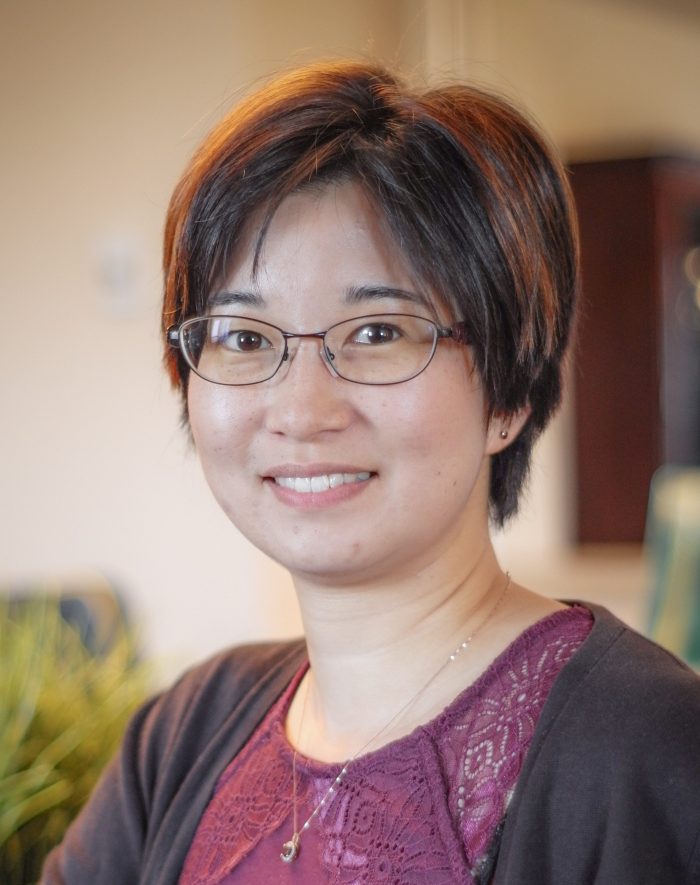
A young Japanese woman with a sweet, round face, glasses, and short-cropped hair stands inside a warm living space, smiling.

S.M. Shigemitsu is a Canadian fantasy writer of Japanese descent who published her debut novella, The Blue Bird of Happiness, on Amazon in 2022. She has also worked overseas as a teacher in Mongolia, Japan, and Bangladesh.


Hi, I’m Caylah Coffeen, a freelance editor and marketer of sci-fi and fantasy books. I love reading and writing and am a follower of Jesus Christ.

I’ve worked for Monster Ivy Publishing and Eschler Editing, and am currently a weekly editor with Havok Publishing. Reach out to chat about books and publishing!

Thanks for stopping by my website! I hope you’ve found some helpful resources about reading, writing, and publishing. If you liked this article, here’s some more free content…

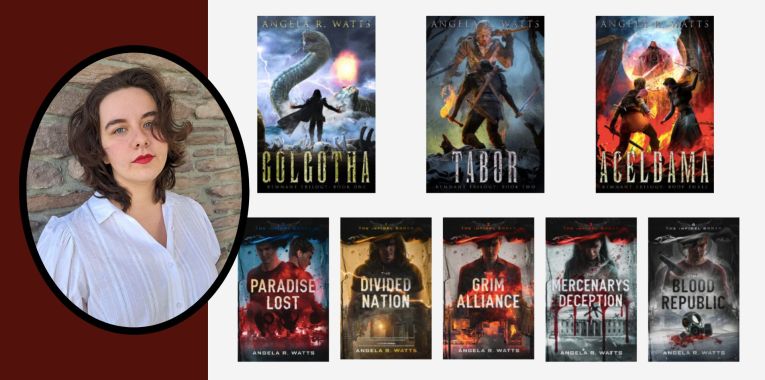
A split screen shows the portrait of a young brunette author on the left, and 2 rows of fantasy and sci-fi books on the right.

“Hope, Hope, Hope” – an Interview with Author Angela R. Watts

By Caylah Coffeen

You have a packed release schedule through January! Will you tell us about your upcoming books?

I am very excited for this year’s publication schedule. I set a personal, fun goal of launching nine books, and that number allowed for any anthology acceptances.

So far, I’ve had five releases this year, and the upcoming launches are, in no particular order of actual release:

War of the Fallen, Rogue Survivors #1 (space opera)

Icarus is Burning, Rogue Survivors #2 (space opera)

Of Fallen Gods, Rogue Survivors #3 (space opera)

Up From the Ashes, Glory Epoch Books #1 (post-apocalyptic, a series continuation from my bestselling and award-nominated series, The Infidel Books)

How to Campaign Your Book: A Simple Guide for Authors (nonfiction)

I might have more releases this year, but we’ll see. I also have a very solid launch schedule for 2024, too! Next year, I have multiple middle grade and adult titles set for release.

What do you love most about your new stories that you’re excited to share with readers?

Hope.

Hope, hope, hope.

I write fiction that shows hardships, trials, pain, sorrow, etc, but throughout the insanity, there is hope. My stories are intended to encourage. Inspire. And I pray that they offer readers a good story, with a lot of comfort.

I’ve gone through a great deal in my life. I could have given up. I could have turned away from the light. I could have, I could have…

I try to write stories with characters that face absolute chaos, but still, in the end, overcome. They live. They love. They hope. They do not stop or give up. These are themes in my stories that I cannot stop sharing… because the world is bleak, and tired, and wicked, but we do not have to be.

“They live. They love. They hope. They do not stop or give up.”

I hope my readers are inspired to live, and love, and hope, and dream, after reading these stories.

Can you share a moment when you felt being an author was incredibly satisfying?

I’m not sure if I can pick one. I find immense joy in writing, and I also am grateful for every step of the process. I find satisfaction and joy when I write, when I finish a draft, when I edit, when I format, and so forth. There’s also satisfaction, even if a bit wearisome, when a story releases into the world.

I think the one part of being an author that is always incredibly satisfying is getting a box (or two) of my own books. The feeling has not gotten old yet!

Many people have heard that being an author is difficult. What has your mental health journey been like as you stepped into this role?

I’ve never been able to relate to that perspective, so I’ll answer, but hopefully, my answer is not perceived as frivolous.

I have written since I was too young to even write: I told stories, illustrated them, and my family actually wrote the words down. Since then, I’ve never stopped writing stories. I wrote a lot of short stories and poems as a little kid.

When I was a preteen and such, one of my older sisters began to abuse me more often. During this time, I turned to fiction as a true escape. I gobbled up books, discovered anime, and of course, continued to write my own stories. I wrote some original things, and a lot of fanfiction. Writing, during this time of pain and fear, was therapy for me. I finished my first novella at age twelve, and shortly after this, the abuse stopped when the sister left.

From there, I quickly discovered the world of self-publishing. I kept writing novels, publishing them, and the like. Over the years, I’ve found my own routine, and my own pacing that works for me. I understand my routine isn’t for everyone, but writing is like breathing to me, and I write pretty much nonstop. I usually write daily, in whatever capacity, and a steady pace helps me complete stories and enjoy myself.

I do not view writing as a stressful act. I do not suffer or complain my way through the author life. It’s simply a part of me. When trials come, I conquer them the best I can, etc. I think the most difficult parts of the journey have been 1) marketing and publications do put a lot of stress on me physically, so I’ve also found a pattern and routine for this, so it isn’t too overwhelming for me and 2) many topics I research and write about are heavy, and difficult to ponder for too long, so usually, when I finish one of those scenes, I’ll give myself time to step away to mentally rest.

Overall, above everything, I keep a very close relationship with God, and pray throughout every story, every draft, every launch, and the like. God gives me these stories to watch and write out. Without His guidance, I would not be here.

How has your relationship with God shaped your career as an author and vice versa?

I’ve been a Believer since I was very, very young, and I’ve never strayed from the Lord. I do not say this to brag, but as a very simple fact, because many Believers have boat-rocking testimonies, and I’ve never had any grand “come to Jesus meeting”. My life has been difficult, yes, with multiple family issues, abuse, health diagnosis, and more, but I have clung to God throughout it all.

As I mentioned, writing is a sort of therapy, and I work alongside the Lord through every story. So I would say my relationship with Christ has strengthened throughout my author journey. Through writing, I can tackle themes, questions, situations, etc, that I might not be able to handle, or even consider, without using fiction as the catalyst. God helps me work through questions, ideas, and much more, and in the end, not only have I drawn closer to Him in the process, but that story is also able to minister to another.

I’ve had suicidal readers tell me that my stories helped them hold on. I’ve had Believers tell me that my books opened their eyes, helped them with their mental health struggles, and strengthened their faith. I’ve also had people tell me that my books have helped them through their grieving process… Or that some of my books have made them laugh and see joy again.

I remember every message my readers send me, because it’s why I publish these books. I would write whether I published or not. But when I publish, it becomes about how the story can minister to others, and it is always encouraging to hear when my books help someone. To me, publishing is a way to minister, and serve, others, and give glory to the Lord.

Is there anything else you want to share with readers or aspiring authors (perhaps something you haven’t had a chance to share in interviews before, or a recent impactful moment)?

Recently, I’ve been discussing the hypocrisy of the author community with a dear friend.

I have seen many new authors chastened for writing a story “incorrectly”. I have seen many new authors shunned for newbie “mistakes”, or for differing opinions than the “in crowd”.

Authors insist that community is important… But we must remember, there is such a thing as the wrong community.

If you are a new, or seasoned, author, and are surrounding yourself with people, whether authors or readers, that do nothing but berate you — even when they insist it is to “help you” — step back.

The creative process should not be a true community effort. If voices are engulfing you, and throttling the story inside of you, step back. Do not let anyone change your soul, do not let anyone force you into a box.

Write, and create, at your own pace, with your own soul, and do not accept abuse in the name of “community.” The right, healthy, supportive community will come, but don’t accept any less beforehand. Your voice matters. Don’t let anyone stifle it. 

A young white woman with short, curly brown hair and blue eyes leans pensively against a stone wall wearing a puffy white blouse.

ANGELA R. WATTS is the bestselling and award-nominated author of The Infidel Books and the Remnant Trilogy. She’s been writing stories since she was little, and has over 28 works published. She also writes articles for a few magazines and publishers. When she’s not writing, Angela is a freelance editor, blogger, anime-lover, and artist. She lives in Tennessee with her family and many pets. Angela loves connecting with readers, and you can follow her on social media to stay up-to-date with releases, or contact her through her website.

As an Amazon Affiliate we earn on qualifying purchases.

The Pros vs. Cons of Traditional, Indie, Hybrid, and Self-Publishing

You’ve written a beautiful book. Now how do you publish it? What are your options? Here we’ll break down the pros and cons of the 4 main publishing routes: traditional, indie, self-published, and hybrid. This is just a starting point, so make sure to do your own research as well as you decide on your best fit.

The Pros and Cons of Traditional Publishing

What is traditional publishing?

A publishing house buys the rights to your book, completes all editing, design, and distribution work, and pays you royalties after they’ve made back their investment. 

Pros:

  • Prestige
  • A large, consistent, trusting reader base
  • You are paid an advance averaging $1K-15K
  • A higher likelihood of appearing in bookstores
  • You will have an agent – your agent will go to bat for you, ensuring your proposals are professional and catch attention, and negotiating the best possible legal agreements

Cons:

  • You no longer own the rights to your work
  • The publisher has the final say on design and edits
  • *Big publishers won’t select your book unless they think they can sell many 1000s of copies
  • You don’t receive any royalties until you earn back your advance
  • Royalties are small
    • 5-8% for paperbacks
    • 10-15% for hardbacks
    • 20-25% on ebooks and audiobooks
  • Books are often sold at bulk discounts to retailers, so you receive royalties at lower than the retail price
  • Big publishers won’t invest much money into marketing new authors – you have to prove your worth to them first
  • You must submit through an agent – finding an agent is time-consuming, difficult, and costly (they receive 15% commission out of your advance & royalties)

*Here is an invaluable chart of the Big 5 Publishing companies and their imprints.

Traditional publishing could be a good fit if:

  • You’ve written a book with mass appeal
  • You want others to almost entirely handle the business side of book

The Pros and Cons of Publishing with an Indie/Small Press

What is a small or indie press?

A small or independent press is not affiliated with the Big 5 publishers, publishes less than 10 books in a year, and makes less than $25M annually. They may use a traditional publishing model, with slight variations. 

Pros:

  • They employ a professional, experienced team
  • Potentially higher royalties with room for negotiation
    • Some offer the same rates as traditional publishers: 5-25%
    • Others offer 40-60% in royalties
  • They publish way fewer books and so spend more time and effort marketing each one
  • May or may not expect agented submissions
  • They take risks on more “unusual” books rather than following formulas on what will sell
  • Growing respect, with many dedicated awards and competitions

Cons:

  • You no longer own the rights to your book
  • If they’re able to offer an advance, it’ll be small – usually you do not receive an advance
  • They have a smaller budget and team and so more limited options for distribution and marketing strategy
  • A smaller fanbase so less potential reach for your book

Here’s one searchable database of indie/small presses. Note that it is curated and their criteria for what makes a “good” press may differ from yours.

Indie publishing could be a good fit if:

  • You want a team of experts supporting you and advising you on the industry
  • But you want a greater level of creative freedom and negotiating power

The Pros and Cons of Self-publishing

How does self-publishing work?

An author arranges and pays for the publication of their work, rather than going through a publication. Note that authors have printed and distributed their own work for centuries, but online distribution platforms have made this approach more accessible than ever before.

Pros:

  • You retain all rights, creative control, and decision-making powers
  • You set your earnings with royalties ranging from 35-80% depending on the distribution platform
  • Complete flexibility on distribution and pricing strategies

Cons:

  • You must pay out of pocket for everything
  • You must build your own team for editing, distribution, design, marketing & publicity
  • You must complete extensive research about the publishing industry and wear many hats besides “author”
  • Many awards and reviewers still exclude self-published books, though more and more accept them each year

Amazon Kindle Direct, IngramSpark and Kobo are commonly used self-publishing platforms, but there are many other options.

Self-publishing could be a good fit if:

  • You’re highly motivated to learn about branding and marketing
  • You’re willing to approach your books as a business
  • You can afford to hire professionals to refine your book to industry standards

The Pros and Cons of Hybrid Publishing

What is a hybrid publisher?

A newer term, many people use the term “hybrid” interchangeably with “indie” or “vanity” publishing, leading to confusion. Hybrid publishing offers a middle ground between traditional and self-publishing. The author pays a team of professionals to edit, design, and market their book, but retains all rights to their work and so will receive 100% of profits.

Pros:

  • A professional team of publishers will create a custom plan to refine and publish your manuscript – you can choose as many or as few services as you want
  • You retain all creative power and have the last say – they are working for you
  • Unlike vanity presses, hybrid publishers actually follow through on their promises – they want to make their customers happy so they keep getting business
  • Hybrid publishers are often run by people who have, or still do work for traditional publishers – they know the industry inside and out
  • Time – you won’t have to spend time on queries or proposals, and your team will walk you through every step of the publishing process, making this potentially the greatest time-saving publishing route

Cons:

  • Cost – publishing services are expensive, and will cost more than hiring freelancers individually (as many self-published authors do)
  • You must research carefully to make sure you’ve chosen a reputable business rather than a vanity press
  • You may not make back the money you invested into your book
  • Your book will still be considered self-published and so excluded from many competitions and bestseller lists

Reputable hybrid publishers should always meet the following guidelines set forth by the Independent Book Publishers Association.

Hybrid publishing could be a good fit if:

  • Your time is worth more than your money
  • You already have an established brand or audience who will buy your book and make back your investment (e.x. influencers, businessmen).

The “right” choice is unique to YOU

There is no one right choice! Depending on your goals as an author, there is a right fit for you which may differ from what works best for your other author friends.

Unfortunately, there’s also no perfect choice. Pick your top 3 deal breakers – the 3 things which are most important for you as an author. For example: time, money, and creative freedom. Pick the publishing route which does 2 out of those 3 things the best.

Above all, trust your instinct and demand respect. No one should make you feel like a beggar, no matter their prestige.

Still have questions? Schedule a Free 15-min consultation today!


Hi, I’m Caylah Coffeen, a freelance editor and marketer of sci-fi and fantasy books. I love reading and writing and am a follower of Jesus Christ.

I’ve worked for Monster Ivy Publishing and Eschler Editing, and am currently a weekly editor with Havok Publishing. Reach out to chat about books and publishing!

Thanks for stopping by my website! I hope you’ve found some helpful resources about reading, writing, and publishing. If you liked this article, here’s some more free content…