15 Ancient Epics around the World – Plus Accessible Modern & Illustrated Versions

Demigods vs. monsters, petty gods and kings, dramatic poetry, and way too many genealogies – these are just a few of the elements that have made epics stir the hearts of men for millennia.

But if you’re only familiar with Greco Roman and Nordic epics, you’re in for a treat – cultures around the world have told epic poems and oral legends since the beginning of time. I’ll highlight 16 major works from these regions:

  1. Mediterranean and the Near East
    • Gilgamesh, Homer, The Aeneid, Shahnameh
  2. Europe
    • Beowulf, Volsunga Saga, The Táin, The Kalevala
  3. Asia
    • Ramayana, Mahabharata, The Epic of King Gesar, Darangen
  4. Africa
    • Mwindo, The Epic of Sundiata
  5. Americas
    • The Popol Vuh

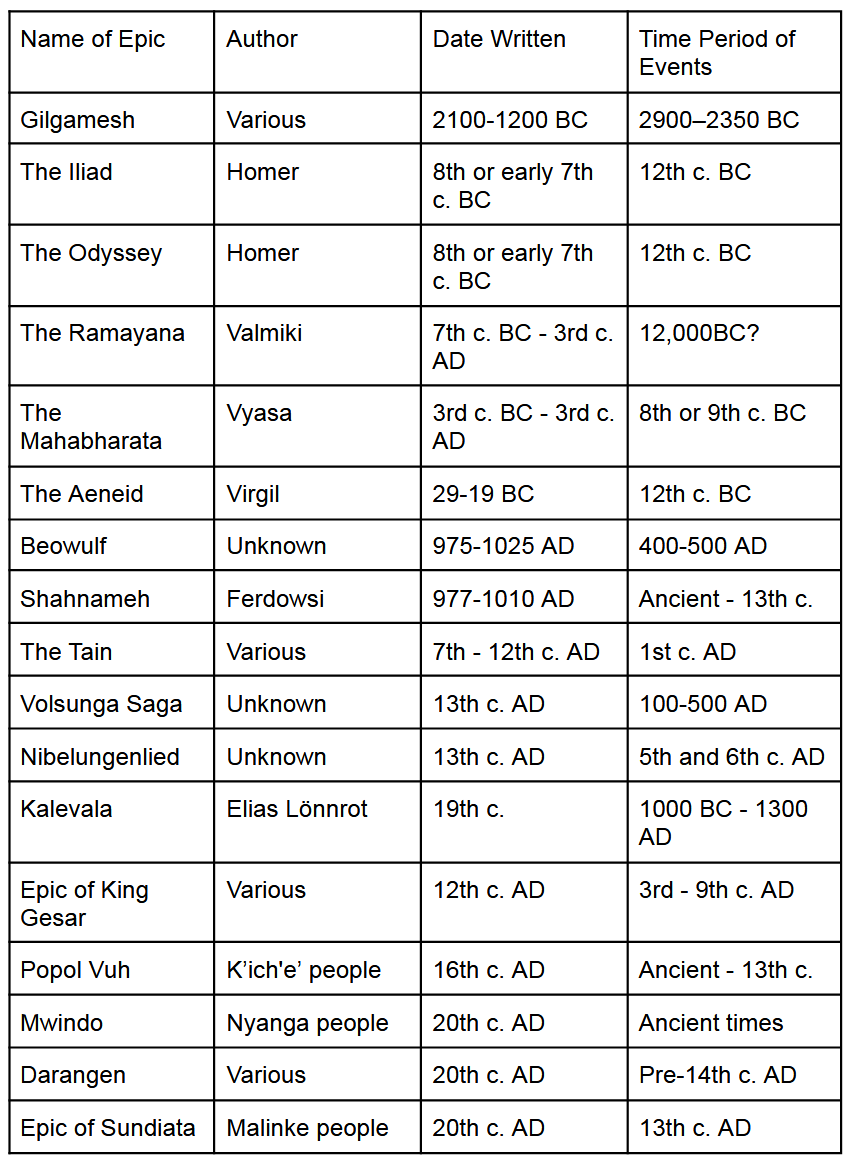
Note that, of the works on this list, only 6 were actually recorded during antiquity – Gilgamesh, The Iliad, The Odyssey, The Aeneid, The Mahabharata, and The Ramayana. The rest were either written during the Middle Ages, or are more recent compilations of culturally significant oral epics that have been passed down for generations.

According to a scholar of medieval literature that I consulted online, most scholars categorize literature according to the age it was written in, rather than by the story’s time of origin, theme, or setting.

But I’ve designed this post to serve as a reading list for people who love legendary, heroic, and mythic tales, so I’ve included works that feature a culture’s oldest, definitive epic traditions, regardless of when they were put on paper.

Most of these are narrative poems, some feature a mix of prose and verse, and a few are written purely in prose. I chose translations that capture the original beauty and style of the verse/prose, while still maintaining accuracy.

This article contains affiliate links – I may earn a small commission on qualifying purchases at no extra cost to you.

So let’s dive in!

Mediterranean and the Near East

Gilgamesh – Mesopotamia

Gilgamesh is the oldest known epic in the world, inscribed in cuneiform on clay tablets. It tells the story of King Gilgamesh and his dear friend Enkidu, their adventures together before Enkidu’s tragic death, and Gilgamesh’s following epistemological crisis about life and death.

“How can I keep silent? How can I stay quiet?
My friend, whom I loved, has turned to clay,
my friend Enkidu, whom I loved has turned to clay.
Shall I not be like him, and also lie down,
never to rise again, through all eternity?”
Gilgamesh

Modern Version of Gilgamesh

Here’s a three part illustrated version suitable for kids (pictured above). I’ve heard great things about this novelization by Emily H. Wilson as well!

Homer – Greece

The Iliad

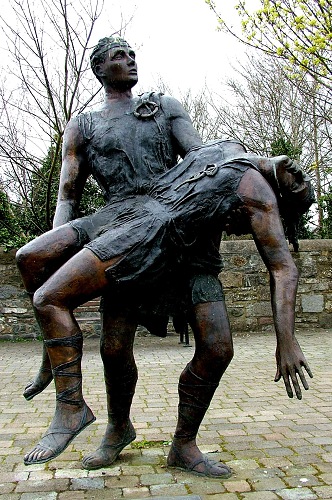
The Iliad tells 10 days of the Trojan War, including Achilles’ refusal to fight for the Greeks after his King takes one of his female prizes, Patroclus’ tragic death, and Achilles’ revenge upon Hector.

“Sing, goddess, the anger of Peleus’ son Achilleus
and its devastation, which put pains thousandfold upon the Achaians,
hurled in their multitudes to the house of Hades strong souls
of heroes, but gave their bodies to be the delicate feasting
of dogs, of all birds, and the will of Zeus was accomplished
since that time when first there stood in division of conflict
Atreus’ son the lord of men and brilliant Achilleus.”
― The exordium of The Iliad, Richard Lattimore (translator)

Modern Version of The Iliad

Rosemary Sutcliff wrote a beautiful version of the Iliad called Black Ships Before Troy, accompanied by stunning illustrations by Alan Lee (Art Direction, The Lord of the Rings). And I will never not laugh at Overly Sarcastic Productions’ description of Achilles as a “sulky burrito.”

The Odyssey

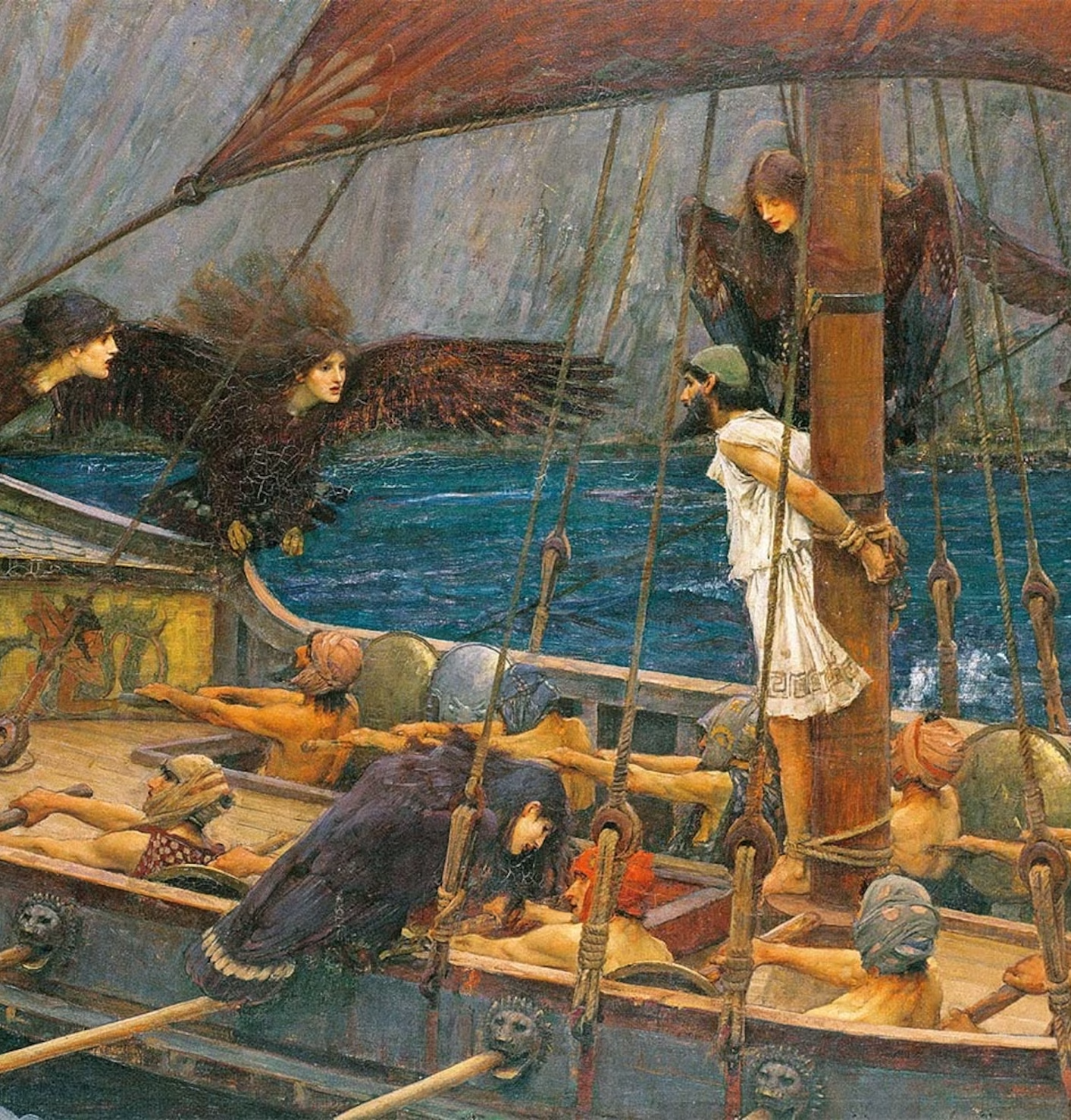
The Odyssey tells of Odysseus’ decade-long attempt to get home after the war, impeded by angry gods, sea monsters, and idiot companions.

“Tell me, Muse, of the man of many ways, who was driven
far journeys, after he had sacked Troy’s sacred citadel.
Many were they whose cities he saw, whose minds he learned of,
many the pains he suffered in his spirit on the wise sea,
struggling for his own life and the homecoming of his companions.
Even so he could not save his companions, hard though
he strove to; they were destroyed by their own wild recklessness…
here, goddess, daughter of Zeus, speak, and begin our story.”
― The exordium of The Odyssey, Richard Lattimore (translator)

Modern Version of The Odyssey

Gareth Hinds has created a lovely collection of graphic novel renditions of various classics, including The Iliad and The Odyssey. The Usborne Illustrated Odyssey is great for younger children.

The Aeneid – Rome

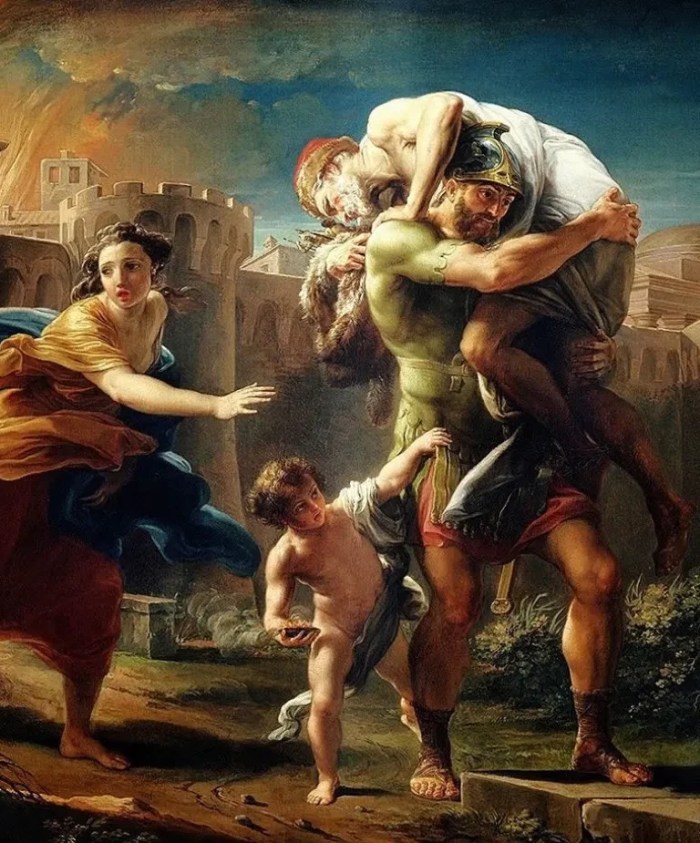
Roman fan fiction of Homer! The Romans thought it’d be super cool to have an origin story that connected them to the epic tales of Greek heroes, so Virgil got busy making a pretty propaganda piece about how the survivors of Troy, led by Aeneas, completed their own odyssey to find and establish a new land – Rome.

“I sing of arms and of a man: his fate
had made him fugitive; he was the first
to journey from the coasts of Troy as far
as Italy and the Lavinian shores.
Across the lands and waters he was battered
beneath the violence of high ones, for
the savage Juno’s unforgetting anger;
and many sufferings were his in war-
until he brought a city into being
and carried in his gods to Latium;
from this have come the Latin race, the lords
of Alba and the ramparts of high Rome.”
― The exordium of The Aeneid, Allen Mandelbaum (translator)

Modern Version of The Aeneid

The Aeneid for Boys & Girls is a lovely modern telling, accessible for kids and adults alike. Unfortunately, I couldn’t find many illustrated versions of The Aeneid, unlike for Homer’s works, which have many! Though there is a recent graphic novel.

Shahnameh: The Persian Book of Kings – Iran

The Shahnameh is an epic poem of about 50,000 distichs or couplets, composed by the poet Abolqasem Ferdowsi between the years 980 and 1010. He referenced prior histories and verses to compile the story of pre-Islamic Iran, beginning with Creation myths and continuing until the Arab invasion in the seventh century.

“I turn to right and left, in all the earth
I see no signs of justice, sense or worth:
A man does evil deeds, and all his days
Are filled with luck and universal praise;
Another’s good in all he does – he dies
A wretched, broken man whom all despise.”
Shahnameh: The Persian Book of Kings, Abolghasem Ferdowsi

Modern Version of The Shahnameh

Unfortunately, the “definitive translation” by Dick Davis, linked above, is already told mostly in prose, with snippets of verse scattered throughout. There is an earlier translation in full verse available on The Internet Archive, but it uses older English (“thou”), which makes it harder to understand. Since the leading version is already more of a summary than a direct translation of the full poem, I’d probably choose to read this gorgeously illustrated edition instead, which is actually how I first discovered the Shahnameh (my library had a copy)!

Europe

Beowulf – Norse

Beowulf is an Old English poem, written between 975 and 1025 AD, but set in pagan Scandinavia in the 5th and 6th centuries. It tells of how the warrior Beowulf defeats the monster Grendel, and then his mother (in a famous underwater battle), before sacrificing himself to defeat a dragon.

“So. The Spear-Danes in days gone by
and the kings who ruled them had courage and greatness.
We have heard of those princes’ heroic campaigns.

There was Shield Sheafson, scourge of many tribes,
a wrecker of mead-benches, rampaging among foes.
This terror of the hall-troops had come far… That was one good king.”

Beowulf, Seamus Heaney (translator)

Modern Version of Beowulf

This is a lovely illustrated version, great for kids. There’s also an edition of Seamus Heaney’s translation that includes photos of helmets, horns, and other materials from the time.

The Saga of the Volsungs – Norse

The Saga of the Volsungs is a late 13th century heroic saga, but in prose, rather than verse (excepting the prologue). It tells of the rise and fall of the Volsung clan, including the famous portion of Sigurd killing the serpent dragon Fáfnir.

“O hearken, ye who speak the English Tongue
How in a waste land ages long ago
The very heart of the North bloomed into song
After long brooding o’er this tale of woe!
Hearken, and marvel how it might be so,
That such a sweetness so well crowned could be
Betwixt the ice-hills and the cold grey sea.”
― The prologue of the Volsunga Saga, Eiríkr Magnússon, William Morris (translators)

Additional Nordic Epics

You may also have heard of the Poetic Edda, a collection of anonymous Icelandic narrative poems in alliterative verse, thought to have been composed sometime in the 9th-11th centuries. It’s more fragmented, and less of a cohesive epic, essentially like Ovid, but for Norse myths.

The Nibelungenlied is an epic chivalric tale (predates the romance) that recounts many of the stories present in the Edda and Volsunga Saga. However, it is much more Christian, containing less of the original pagan mythic content.

Modern Version of the Volsunga and Edda

This is a lovely compilation of legendary Nordic works: Ultimate Norse and Germanic Mythology Collection: The Prose Edda, The Poetic Edda, The Volsung Saga, and Beowulf, full of beautiful illustrations.

The Táin (Táin Bó Cúailnge) – Irish

The Táin has its origin in Irish oral tradition, but wasn’t written down until the Middle Ages. Often referred to as “The Irish Iliad,” it is actually written in prosimetrum, alternating prose and verse.

Also known as The Cattle Raid of Cooley, it tells of a Queen who, to spite her husband’s wealth, raids a neighboring kingdom to steal a great bull. Only a young demigod steps up to defend his land in single combat, since his king’s entire army is burdened by a curse. Tragically, he must face his best friend in battle.

“I am alone against hordes
I cannot stop nor let go
I stand here in the long cold hours
alone against every foe.”
The Táin, Ciaran Carson (translator)

Modern Version of The Táin

I found a modern illustrated children’s version of this tale by Alan Titley, but also loved this beautiful animated short that summarized the story.

Kalevala – Finnish

The Kalevala is a 19th-century compilation of Karelian and Finnish oral folklore and mythology, collected through the many trips of Elias Lönnrot. It tells the story of creation, voyages and wars, and of a legendary wealth-making machine. Kalevala poetry was also known as runic song, often in alliterative trochaic tetrameter, and incorporating call and response, choralists, and dancing hand in hand.

“I am wanting, I am thinking
To arise and go forth singing.
Sing my songs and say my
sayings,
Hymns ancestral harmonizing,
Lore of kindred lyricking.
In my mouth the words are
melting;
Utterances overflowing
To my tongue are hurrying,
Even against my teeth they
burst.”
― Prelude from The Kalevala Runo 1 – Creation and the Birth of Väinämöinen

Modern Version of the Kalevala

Kirsti Mäkinen (Author) and Pirkko-Liisa Surojegin (Illustrator) created a beautifully illustrated prose version of the Kalevala which also includes snippets of verse on each page – accessible for children.

Asia

Ramayana – India

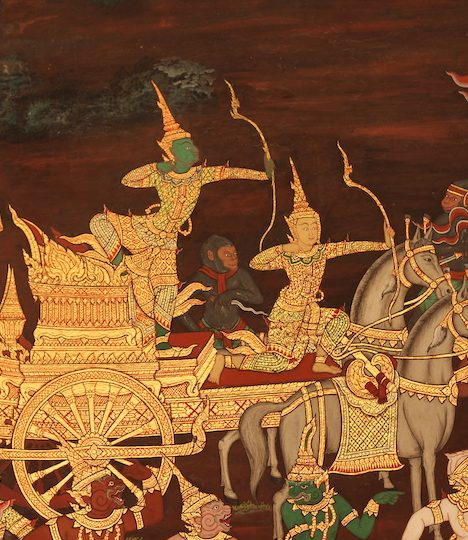
The Ramayana is an ancient Sanskrit epic (smriti) that narrates the life of Prince Rama, the seventh avatar of the Hindu deity Vishnu, following his adventures during a long exile, and his eventual crowning. It is attributed to Valmiki, and was likely written between the 7th and 5th centuries BC.

“O Ayodhya!
Architects designed you
to be beautiful,
gracious and strong.
Untouched by enemies,
invincible behind towering gates
with a wide moat circling your waist,
your brave and noble warriors
could find their target through sound alone.”
The Ramayana: A New Retelling of Valmiki’s Ancient Epic, by Linda Egenes

Modern Version of the Ramayana

I dislike a lot of modern renditions of epics because they not only lose the beauty of the original verse or language, but they often just feel like a summary. That gets boring in a hurry. But this lyrical modern prose rendition of the Ramayana reads more like a novel!

Mahabharata – India

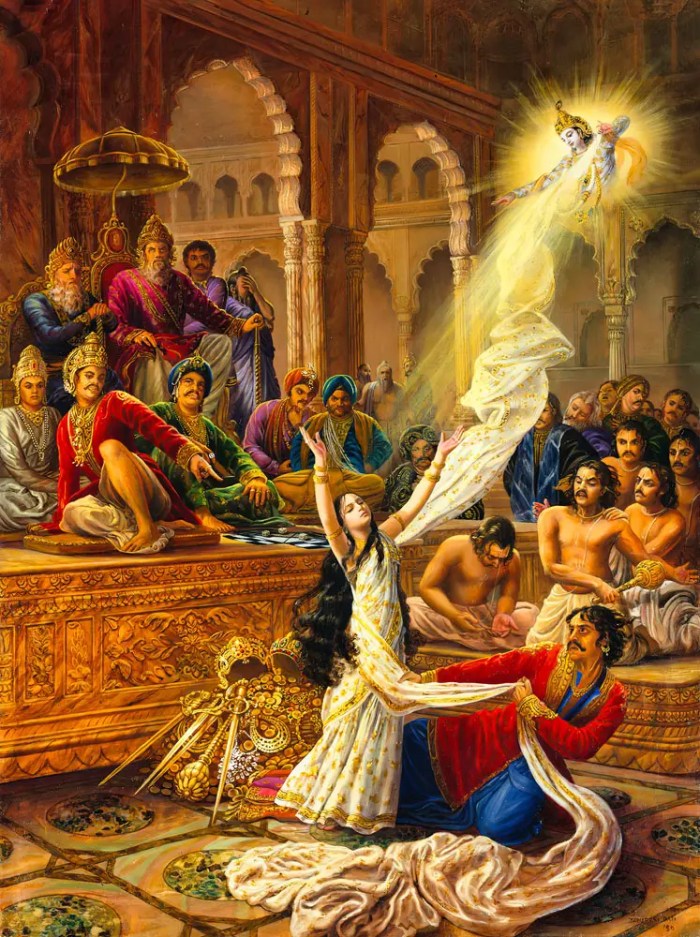
The other major Hindu epic, the Mahabharata tells of the tragic war between two factions of princely cousins, the Kauravas and the 5 Pāṇḍavas brothers, and their famous wife Draupadi. Attributed to Vyāsa, and composed over many centuries, starting in the 3rd century BC, it is often known as “the longest written epic poem in the world.”

“…I bless the name of Sarasvati,
goddess of deep learning and of art,
she who can touch a poet’s tongue with silver.
To her I dedicate my epic poem.

This is the tale of a tragic dynasty;
a narrative of hatred, honor, courage,
of virtue, love, ideals and wickedness,
and of a war so terrible, it marked
the threshold between one age and the next.”

Mahabharata: A Modern Retelling by Carole Satyamurti

Modern Version of the Mahabharata

I really enjoyed this podcast audio drama by Sudipta Bhawmik, though I certainly recommend keeping a cast list handy since it’s way too easy to lose track of all the characters and their names. This prose rendering by Ramesh Ramon reads like historical fiction!

The Epic of King Gesar – Tibet

The Epic of King Gesar is drawn from centuries of oral traditions, combining cultural, literary, musical, historical, and religious values of Tibet, focusing on the tales of a superhuman warrior king. It includes some 120 volumes, and it looks like, so far, only a small portion of it has been translated into English so far.

“The white smoke of the juniper rises
Fragrant and dense from the burning coals,
Billowing into an empty shining sky,
A vast mirror-like expanse
Unclouded by the shadow of birth or fear of death.
There, descending on this perfumed bridge of smoke and longing,
Swirling and whirling in the smoke clouds, as in a gathering storm,
Surrounded by a host of mounted Drala and Werma warriors,
Whose golden armor and steel sword blades glitter like lightning,
Rides the ever great and youthful conqueror,
Gesar, King of Ling, Lord of the four kinds of warrior.”
The Warrior Song of King Gesar, Douglas Penick

Modern Version of The Epic of King Gesar

The Warrior Song of King Gesar (excerpt above) seems like a captivating compilation of multiple parts of the tale. Shambhala Publication’s has translated the first 4 volumes of the epic more literally from the beginning, and they’ve published numerous other books about him, but I found the Warrior Song version more compelling. There seem to be a number of beautifully illustrated versions, but most are only available in expensive hardcover or sadly out of print.

Darangen – Philippines

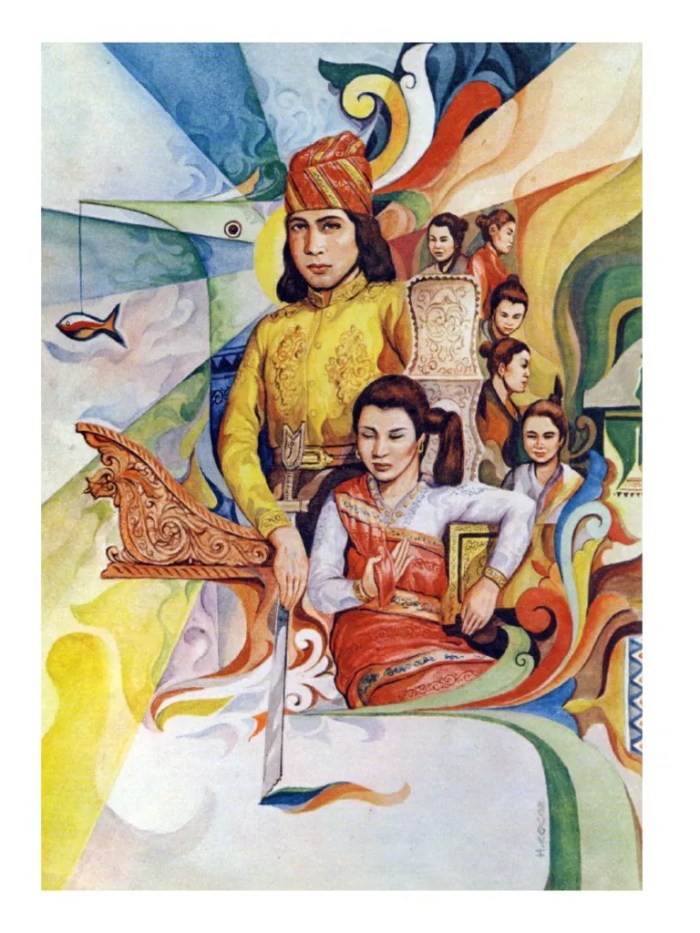
The Darangen is a collection of pre-Islamic Philippine tales, passed down orally for generations. It has 72,000 lines divided into 17 cycles in iambic tetrameter or catalectic trochaic tetrameter. To perform the full cycle through song and dance takes a week! It tells of the grand city of Bembaran ruled by the main hero, Prince Bantugan.

“And now I shall commence my tale
Beginning with the time of the
Enthronement of the first ruler
Called Diwata Ndaw Gibon.
His kingdom was one vacant space
Because he had as yet no wife,
No fair partner to grace his throne
And help him organize the place,
Nor were there any settlements
No subjects to people a town
For this lord was indeed alone.”
Darangen, recorded by The Folklore Division University Research Center Mindanao State University

Modern Version of the Darangen

Unfortunately, the translation I linked above is a bit awkward and not very engaging to read. It’s also only an excerpt from a book which seems out of print, though it is available at multiple libraries around the U.S. I was not able to find any modern or illustrated versions. But there are some great recordings of live performances by the efforts of UNESCO. I hope we’ll start seeing some lovely renditions and retellings in the future!

China?

China has a massive body of literature, including histories, poetry, religious works, and more. They did not seem to favor long-form narrative poems, though the Epic of Darkness, dated back to the Tang dynasty (618-907 AD), was recently discovered. It features the creation myths and flood narratives of the Han people, including the tale of Pangu. No English translation exists yet, as far as I could find.

More people recommend the Four Great Classic Novels, particularly The Journey to the West, as an example of China’s cultural and mythic epics. I love this animated series about the Monkey King!

Africa

The Mwindo – Congo

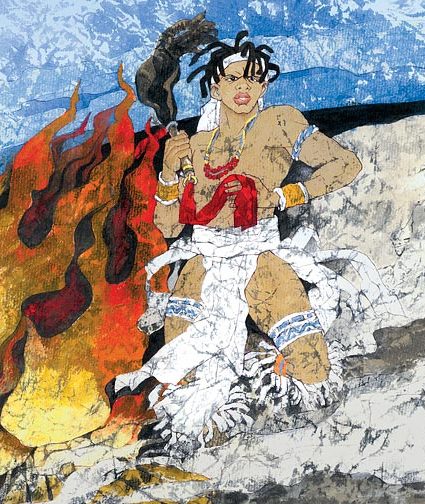
The Mwindo epic is an oral tale from the Congo told by the Nyanga people, traditionally performed by a bard through dance and noisemakers like bells and a calabash rattle. The audience would participate, singing along, and young men would accompany the bard on percussion. It tells the tale of a boy with magical powers whose father tries to kill him, spurring him on a series of quests.

“I am Mwindo,
the one born walking,
the one born talking.
My father She-Mwindo does not want me.
My father the chief wants to kill me.
But what can he do against me?”
The Magic Flyswatter: A Superhero Tale of Africa, Retold from the Mwindo Epic by Aaron Shepard

Modern Version of the Mwindo

This is a fun retelling that includes a mix of prose and verse. It reads like a novel for kids, but I enjoyed it as an adult too! You can find a more official translation here.

More Oral Epics From Africa

Africa is rich with oral traditions, poems, and songs. This is a lovely site that includes many excerpts. The Epic of Sundiata is also well known, but chronicles the creation of the Empire of Mali, a Medieval, not ancient, kingdom of West Africa. The Liyongo Epic is another that tells of a Medieval Swahili warrior chieftain.

Americas

The Popol Vuh – Mesoamerica

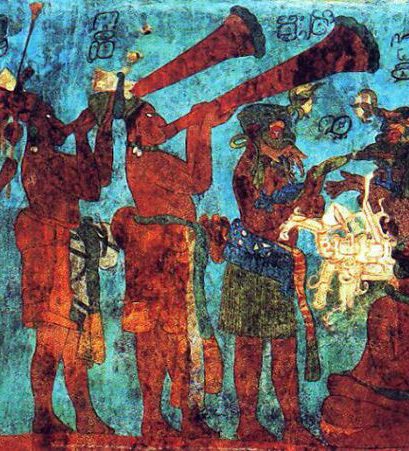
The Popol Vuh began as Mayan oral tradition millennia ago, telling of the world’s creation, the acts of the gods, and the founding of the K’iche’ kingdom. In the mid-sixteenth century, during the European conquest, members of the nobility wrote it down in an attempt to preserve their culture, and it was later translated into Spanish, and the original document lost.

“This is the account of when all is still silent and placid. All is silent and calm. Hushed and empty is the womb of the sky. These, then, are the first words, the first speech. There is not yet one person, one animal, bird, fish, crab, tree, rock, hollow, canyon, meadow, or forest. All alone the sky exists. The face of the earth has not yet appeared.”
― Allen J. Christenson (translator), Popol Vuh: The Sacred Book of the Maya

Modern Version of the Popol Vuh

Ilan Stevans has written a modern retelling of the Popol Vuh, complete with illustrations by Salvadoran folk artist Gabriela Larios. One reviewer said, “the art is so beautiful I wish it was available as prints.”

More mythic narratives from the Americas

While there is a difference between myths and epics, it’s quite sad that there aren’t more remaining works from Pre-Colombian Americas. So I thought I’d also include this great online database of Native American myths and legends. They focus more on tales from North American tribes, but include some from Central and South America as well.

Epics about Medieval Times

Many of the epics above were written during the Middle Ages, but about ancient legends or events that occurred through late antiquity (Beowulf, Volsunga). A number of other epics recount historical events that happened during the height of the Middle Ages, with far less mythic content.

The Epic of Sundiata – West Africa
The Sundiata is an epic poem of the Malinke people that tells of the hero Sundiata Keita (died 1255), founder of the Mali Empire. It was passed down orally for generations.

The Song of Roland – France
The Song of Roland is an 11th-century medieval poem (chanson de geste) about the feats of Frankish military leader Roland at the Battle of Roncevaux Pass in AD 778, during the reign of Charlemagne. It is the oldest surviving major work of French literature.

Cantar de mio Cid – Spain
The Song of My Cid is an anonymous Castilian epic poem based on the true story of hero and Medieval knight Rodrigo Díaz de Vivar—known as El Cid—who fought for the unification of Spain during the eleventh century.

The Tale of the Heike – Japan
An epic prose account (compiled prior to 1330) of the struggle between two clans to control Japan in the Genpei War (1180–1185). This was a major influence on other feudal samurai content.

The Secret History of the Mongols and The Epic of Jangar – Mongolia
The Mongolian Tuuli is an oral tradition comprising heroic epics that run from hundreds to thousands of lines and combine spells, fairy tales, myths and folk songs. The most famous ones tell the tale of Genghis Khan and his children.

Dates of Ancient Epics

What do you love most about ancient, mythic epics?


Hi, I’m Caylah Coffeen, a freelance editor and marketer of sci-fi and fantasy books. I love reading and writing and am a follower of Jesus Christ.

I’ve worked for Monster Ivy Publishing and Eschler Editing, and am currently a weekly editor with Havok Publishing. Reach out to chat about books and publishing!

Thanks for stopping by my website! I hope you’ve found some helpful resources about reading, writing, and publishing. If you liked this article, here’s some more free content…

18 Fantasy Books with Rivals, Frenemies, and Nemeses (set against an image of a chess board)

18 Fantasy Books with Rivals, Frenemies, and Nemeses

Some of the most compelling dynamics in fiction are the ones that aren’t so clear cut, or that mix many different emotions together. When two characters – strong, intelligent, and full of conviction – face off through combat, a clash of ideals, or political and strategic maneuvering, they bring out the best and worst in each other.

Famous pairs include Sherlock Holmes and Moriarty, Charles Xavier and Magneto, Yagami Light and L, and Anakin and Obi Wan. Many more fantasy books feature thrilling dynamics between commanders, mages, nobility, warriors, assassins, and more.

I’ve included books that feature:

  • Individuals who respect each others’ skills – perhaps grudgingly, or perhaps they’re the other’s biggest fan boy
  • “Met my match,” “fated showdown,” and “I’m most alive when facing you” vibes
  • Mutual obsession and delight in the contest
  • Honoring or grieving the other if they defeat them
  • A mixture of brotherhood and enmity (often these dynamics start as one and end as the other)

What this list does NOT include:

  • Pure enmity – characters who only hate each others’ guts and just want to destroy the other and move on with life
  • Antagonists the reader is meant to loathe and we’re nothing but happy when they’re gone (even if the protagonist doesn’t loathe them – see F*** Moash for details)
  • Rivals that don’t appear until later in the series

I’ve organized these books by the 4 major ways they tend to play out:

  1. Contests of Strength or Duels to the Death
  2. Strategic Maneuvering and Intellectual Sparring
  3. Enemies to Allies or Friends
  4. Clashes of Ideology

Contests of Strength or Duels to the Death

These are the raw physical conflicts, the characters who live for the thrill of the fight, who demand “he’s mine, no one else touch him,” and then hold the other in their arms as they lay dying (though not all these examples end in death).

1. The Lions of Al-Rassan by Guy Gavriel Kay

Ammar Ibn Khairan and Captain Rodrigo Belmonte are famous warriors on opposite sides of a brewing war. But when each of them stumbles into a political mess, they find themselves exiled to the same city where they are hired as mercenaries.

An unlikely friendship develops in a single summer, but when Belmonte’s King marches south to retake the land conquered by Ammar’s people, they must decide what’s truly worth fighting for.

This one will gut you! Read my review here.

2. Rhythm of War (The Stormlight Archives #4) by Brandon Sanderson

The Stormlight Archive is an incredible series and I highly recommend reading the whole thing. There are excellent duels (Szeth) in previous books, but several astonishingly excellent ones in the 4th.

Spearman, Windrunner, and idealist Kaladin faces off against 2 enemies – one who shares his sense of honor and enjoys their duels, and another cruelly neurotic enemy who is obsessively determined to end him.

This book also features the only compelling intellectual rivalry I’ve ever seen between two women. When the immortal Raboniel takes Queen Navani captive, they develop mutual respect for one another as they investigate properties of magic that could destroy them all.

3. The Grace of Kings (The Dandelion Dynasty #1) by Ken Liu

Kuni Garu and Mata Zyndu fight together to overthrow the emperor in a world inspired by China’s warring states period.

At first, they respect each other deeply—Kuni is the cunning, street-smart bandit who wins people over with charisma and adaptability, while Mata is the towering, idealistic warrior-noble obsessed with restoring honor and the old aristocratic order.

But their visions for the postwar world diverge completely, and they end up opposing one another ideologically and across the battlefield.

4. Heroes Die (The Acts of Caine #1) by Matthew Woodring Stover

Caine (real name Hari Michaelson), is an Actor and warrior who travels to a brutal alternate reality called Overworld, livestreaming his adventures back to Earth. He’s skilled, vicious, and extremely pragmatic, but completely under the control of a dystopian caste-system only too happy to send him to die.

When his wife and fellow Actress goes missing in Overworld, his masters give him the chance to rescue her, but only if he’ll agree to assassin Ma’elKoth, a charismatic and terrifying mage Emperor. But Ma’elKolth gets to Caine first, and they have a history…

Strategic Maneuvering and Intellectual Sparring

Politics, mind games, secretive plots, genius war tactics, cat and mouse games, you name it! The characters in these stories may not face off in a grand duel, but all their focus still lies in maneuvering and outmaneuvering the other through cleverness, subterfuge, manipulation, or more.

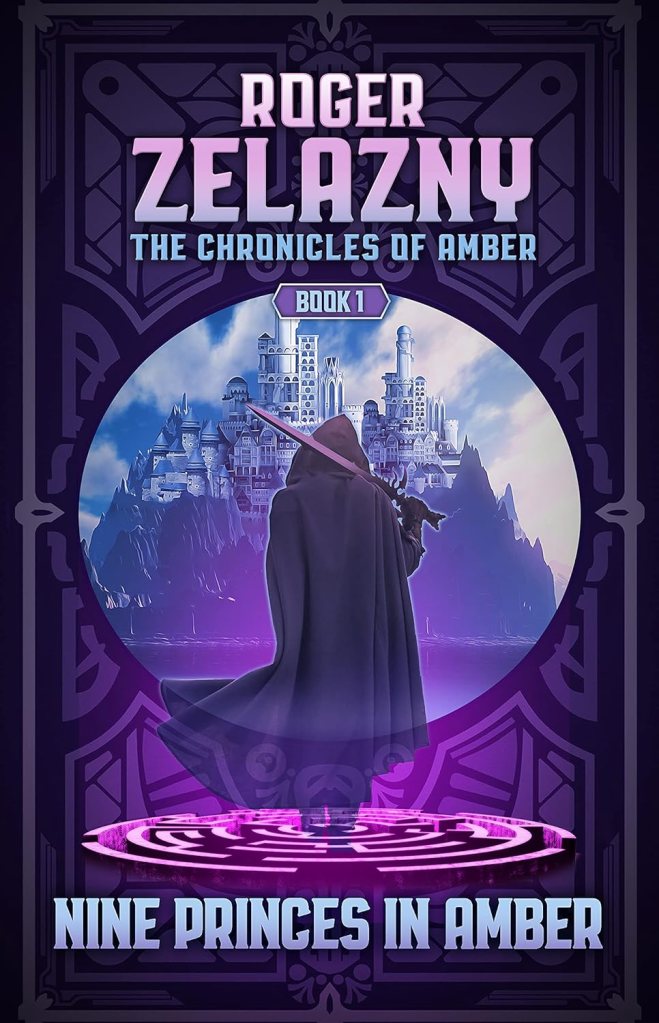
5. Nine Princes in Amber (The Chronicles of Amber #1) by Roger Zelazny

A group of ancient, magically powerful siblings vie for the throne at the heart of all universes after their father vanishes mysteriously. The siblings are all fixated on each other, sparring verbally, fuming about centuries old slights, setting traps, and chasing each other through universes of their own constructing.

Corwin is clever, funny, and out for revenge against his brother Eric, who has nearly killed him on several occasions. There are sword duels and strategic battles, but above all else, it is a mind game between these two brothers who are the only real 2 choices for the throne.

6. Gardens of the Moon (Malazan Book of the Fallen #1) by Steven Erikson

Gardens of the Moon cover: a circular tower rises from a jagged mountainside, silhouetted against a cloudy, full moon night.

Honestly, despite this series being recommended by most hardcore fantasy readers, I have no idea what it’s about. The blurb mentions so many players and conflicts that the “main” plot always escapes me. It seems the driving force is Empress Laseen’s ruthless expansion, particularly her latest campaign against the free city of Darujhistan.

But the cast is massive, including imperial commanders, mages on various sides, assassins and thieves from feuding guilds, warriors, and gods. I’ve heard readers mention various characters that could be called rivals or nemeses. Since this series is known primarily for its sprawling, interconnected plot, I thought I’d stick it in the mind games category!

7. The Darkness That Comes Before (The Prince of Nothing #1) by R. Scott Bakker

Anasûrimbor Kellhus, a monk-warrior-philosopher from a secretive, almost superhuman order, is intelligent, manipulative, and charismatic. Drusas Achamian is a weary, cynical sorcerer and spy for the Mandate School, burdened with prophetic dreams of an ancient apocalypse, guilt, and doubt.

Kellhus is playing chess on ten boards at once and Achamian knows it but can’t break free. This is more of a mind duel—one man is essentially conquering the other’s will while appearing to be his friend. It’s all the more tense because both are on the same side (for now), fighting in a massive holy war.

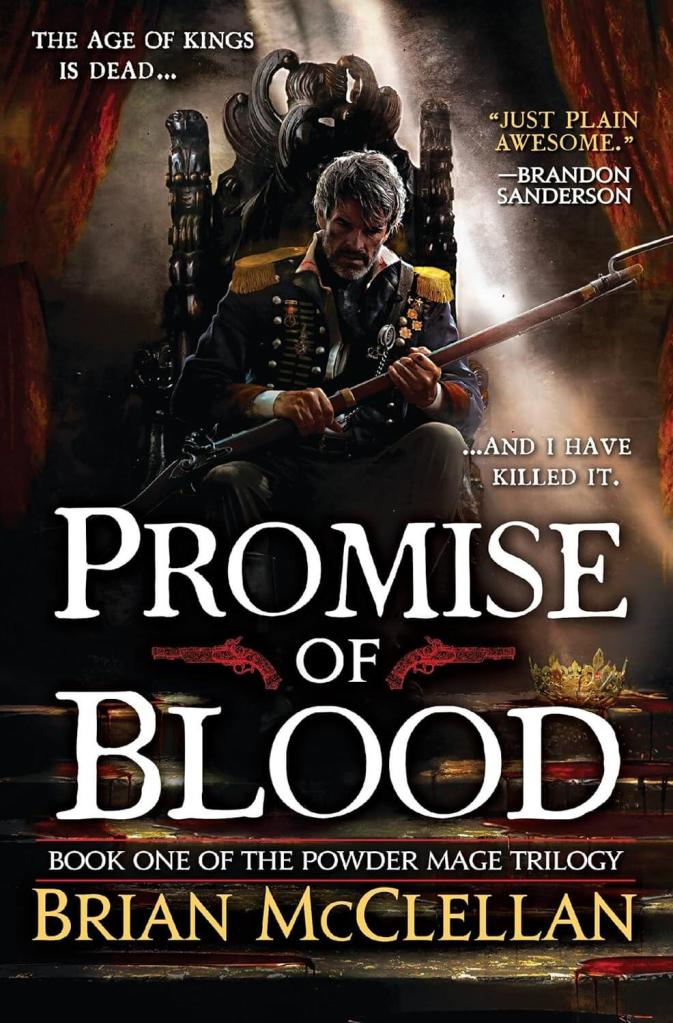
8. Promise of Blood (Powder Mage #1) by Brian McClellan

Field Marshal Tamas begins the book by orchestrating a coup, executing his king, and dismantling the monarchy’s ruling structures. This puts him in direct conflict with the Privileged, the elite sorcerers who were loyal to the king, who he continues to hunt down.

One of the surviving loyalist mages, Borbador, commands devastating sorcery, able to level battalions with a gesture. Tamas dominates military logistics, espionage, and large-scale troop movement. Their rivalry is played out mostly through military campaigns, political maneuvering, and indirect confrontations, which become more personal in later books.

9. Colours in the Steel (The Fencer Trilogy #1) by K.J. Parker

Temrai, a cunning and ruthless Chief from the Plains, infiltrates Perimadeia, the Triple City, to learn how to conquer it through siege. Opposite him stands Bardas Loredan, a skilled fencer, and the surviving member of a legendary band of soldiers who killed Temrai’s family.

For the past 12 years Loredan has worked as a “lawyer,” representing clients in duels to the death. But his past comes back to haunt him as a curse tightens around him and Temrai sets his scheme into action.

10. Furies of Calderon (Codex Alera #1) by Jim Butler

In the Calderon Valley of Alera, young Tavi is the only boy without a fury—no elemental power to command wind, flame, or stone. When a surprise Marat invasion shatters the peace, Tavi must rely only on his resourcefulness to turn the tides of war.

In later books, Tavi encounters Varg, a towering Marat war leader—brutal, cunning, and sworn to the destruction of Alera. In Varg, he finds something unexpected: a gadara—an adversary whose skill, honor, and unflinching candor make him, in some ways, more reliable than Tavi’s supposed allies.

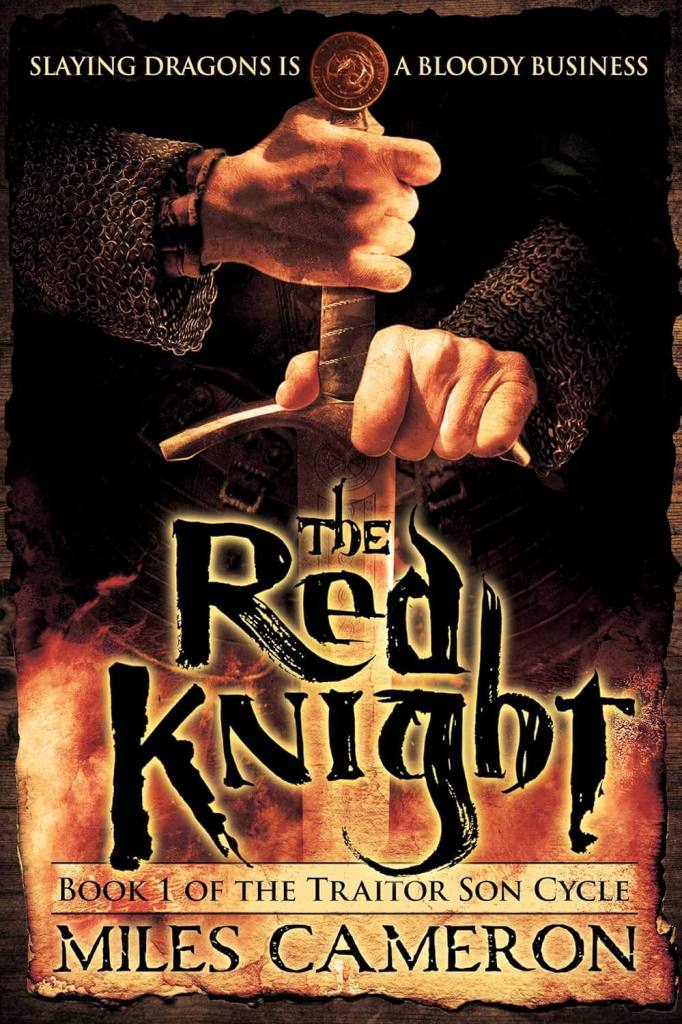
11. The Red Knight (The Traitor Son Cycle #1) by Miles Cameron

The Red Knight, Gabriel Muriens, the cocky captain of a mercenary company is hired to defend a nunnery against the Wild, a host of inhuman creatures. The Wild’s leader, the sorcerer Thorn, quickly becomes aware of the Red Knight’s presence and takes a personal interest in breaking him. The two face off in battles and political maneuvering, but do not come face-to-face until later books.

Enemies to Allies or Friends

The characters start out simply as enemies (though perhaps already have respect for the other), but their dynamic shifts throughout the story. Sometimes, a conflict like a civil war has ended, and former opponents realize they need not hold onto old grudges not of their making. Often, such characters must work together to defend against or defeat a greater evil.

The opposite dynamic – friends to enemies – exists as well, of course. But I often find those dynamics feature more bitterness (betrayed war buddy out for revenge) than satisfaction in the clash – though this list does feature a few friends to opponents.

12. Tuyo by Rachel Neumeier

Ryo inGara’s clan, hunted and outnumbered by the invading Warlord Aras, leaves him behind as a “tuyo” – a scapegoat prize upon which their enemies can take revenge, in exchange for the clan’s safety. But Aras spares Ryo’s life and asks for his fealty, eager to understand the mentality of the Northern winter clans who have been raiding his southern villages. Beginning to suspect the influence of a dark sorcerer, Aras and Ryo must work together to prevent war between their peoples.

13. Honored Enemy (Legends of the Riftwar #1) by Raymond E. Feist

Mercenary commander Dennis Hartraft and Captain Asayaga, leader of an invading Tsurani force, have circled one another for years. But when a group of dark elves threatens to annihilate both war bands at the start of a brutal winter, they join together in an unlikely alliance. Filled with mistrust and plagued by cultural misunderstandings, the two groups are barely held together by the leaders’ grudging respect for one another.

14. Black Sun Rising (The Coldfire Trilogy #1) by C.S. Friedman

Damien Vryce, a human priest from a technologically advanced but faith-driven society, and Gerald Tarrant, the infamous Hunter, an immortal being who is both monster and man, form an uneasy alliance of necessity, filled with ideological clashes and mutual manipulation.

Damien sees Tarrant as an abomination, while Tarrant sees Damien as naïve. Neither trusts the other’s motives, and each believes the other will betray him if given the chance, but they need the other’s skills as they and a small team set out to defeat a greater supernatural threat.

15. Good Omens by Terry Pratchett and Neil Gaiman

The demon Aziraphale and the angel Crowley spend thousands of years upon the earth, doing the work of Hell and Heaven respectively. But sometimes they bend the rules a little, giving each other a helping hand, and subtly subverting the agendas of each party. Over time, they form their own side, facing heaven and hell together to save the planet they both love. Each is the other’s only true friend. Not that they’d ever admit it!

Clash of Ideology

These stories often feature rivals on the same side of a conflict who disagree about how a country should be run, a war should be waged, or what ends justify the means. These conflicts are often slow-burn, with philosophical discussions and disagreements, and fallout from consequences that escalate to more open fights.

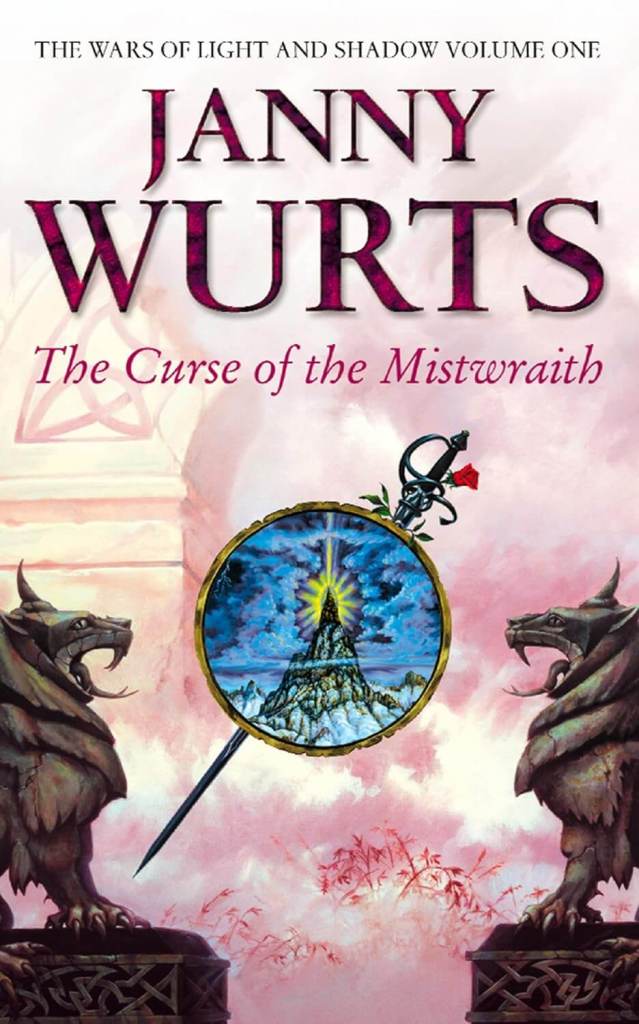
16. The Curse of the Mistwraith (Wars of Light and Shadow #1) by Janny Wurts

Shadow mage and pirate prince, Arithon, would much rather ditch the politics to live as an itinerant bard. Proud and charismatic, Prince Lysaer longs to fulfill his duty to his people, but is devastated by his inability to develop his light magic. Half-brothers, Arithon and Lysaer are mortal enemies – until their father’s quest for vengeance casts them through a portal and into a world from which they cannot return.

Alone in a land where they are hunted for their bloodline, an immortal wizard takes them under his wing as the subjects of an ancient prophecy – only if they pair their shadow and light magic together can they overcome the mistwraith’s curse upon the land. But their ideological differences are far from over.

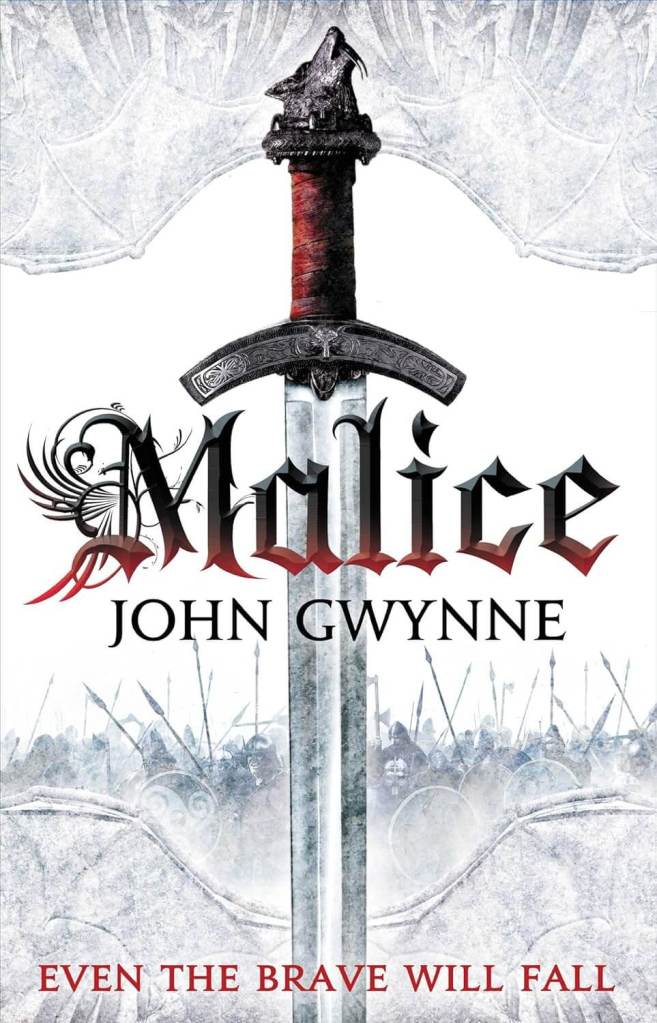
17. Malice (The Faithful and the Fallen #1) by John Gwynne

Corban and Nathair, crown prince of Tenebral, are being shaped by opposite sides of a much larger prophecy about the coming God-War — one foretold to pit the Bright Star (savior) against the Black Sun (destroyer).

The rivalry grows in the background through political moves, battlefield encounters, and each one’s conviction that they’re in the right. This one is a slow build, with the final showdown not happening till later books.

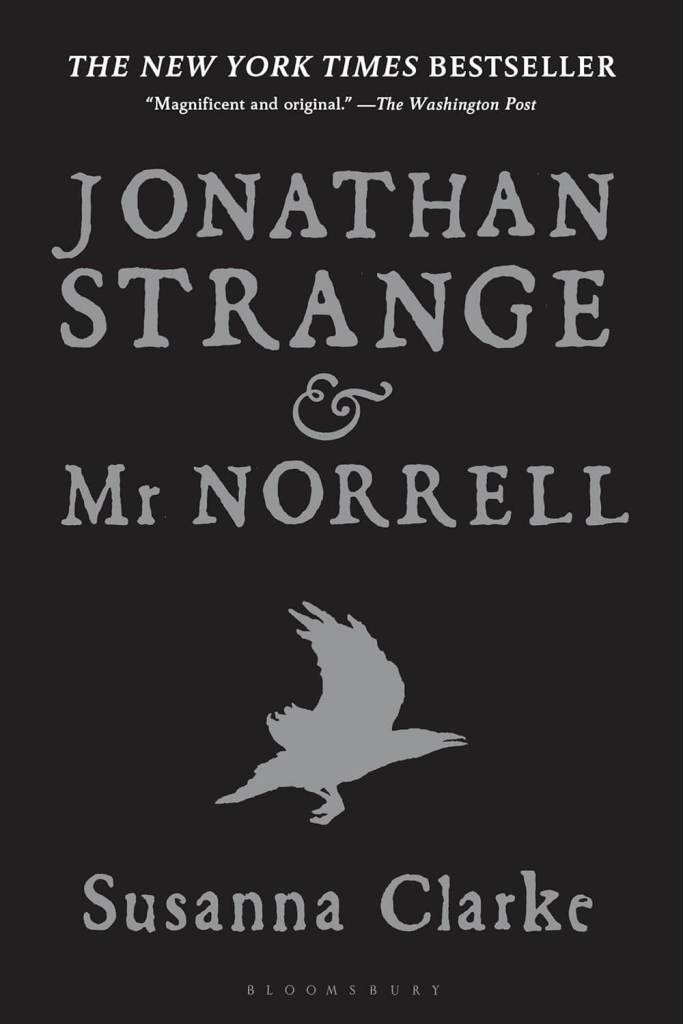
18. Jonathan Strange and Mr Norrell by Susanna Clark

Mr. Gilbert Norrell is a reclusive, book-hoarding scholar who believes magic should be controlled, respectable, and kept in the hands of a few (preferably just himself).

Jonathan Strange is young, impulsive, and brilliant—more interested in exploring the wild, dangerous side of magic and bringing back the legendary “old ways” tied to the mysterious Raven King.

They start with mutual respect, but their differences in temperament and philosophy quickly lead to friction, and a dueling of egos and ideas.

Who are your favorite rivals, nemeses, and frenemies in fantasy books?


Hi, I’m Caylah Coffeen, a freelance editor and marketer of sci-fi and fantasy books. I love reading and writing and am a follower of Jesus Christ.

I’ve worked for Monster Ivy Publishing and Eschler Editing, and am currently a weekly editor with Havok Publishing. Reach out to chat about books and publishing!

Thanks for stopping by my website! I hope you’ve found some helpful resources about reading, writing, and publishing. If you liked this article, here’s some more free content…

How to Set up an Author Table for Maximum Book Sales

Guest Post by Dylan West

There are many benefits to selling books at in-person, local events, including finding repeat customers, gaining reviews, and selling more books in one day than you can sell in a whole month online! I’ve outlined some more benefits in a previous article: 8 Reasons Authors Should Sell Books at In-Person Events.

But here, I’ll share what I’ve learned from years of successfully selling books at markets, library fairs, and more. Knowing what to do, and just as importantly, what not to do, will ensure you actually make a profit. I’ll explain some vital tips like:

  1. How to select good events
  2. Simple tactics to sell books – inoffensively
  3. How to set up your table for maximum engagement
  4. What to bring
  5. Insider tips

How to Select good events

Ask other vendors or the even organizer what you can expect at their event. They won’t be offended and can give you an idea of the type of crowd to expect, and whether the event is worth your time.

High Traffic Events

The most important element to look for is high shopping traffic. If 10 people come to your event and you historically sell to 10% of the people you speak with, you might sell only 1 book at this event. If 500 people come to your event and you manage to speak to 100 of them, you might sell 10 books.

It’s most likely that the traffic will be high if you:

  1. Table up on a Saturday.
    Saturdays are the very best day for sales events, hands down. Friday evenings are the next best. Sundays are a gamble. Sometimes a Sunday can give you decent traffic and other times the event is a complete ghost town.
  2. Pick an event in a big/medium size city
    that is close to major highways and civilization. If you table up on a farm in the middle of nowhere in a town having a name you’ve never heard of and has a population of < 5,000, you probably shouldn’t expect much traffic, and you probably shouldn’t table up there, unless you know from experience that this event really does draw crowds. And don’t assume that just because a podunk venue draws a moderate crowd on a Saturday, you can expect a decent crowd on Sunday. Sometimes the switch to Sunday kills shopping traffic.
  3. Sell at established markets
    with known traffic instead of inviting friends to your own private book signing event. If you invite 20 people to a signing and only 5% actually show up (which is about the average), you might get 1 person to show up! Many authors end up with NO attendees and get discouraged. Unless you’re a big name author, or you invited over a hundred people, don’t do this! Sell at markets that you know get at least 500 shoppers.
  4. Choose a market that happens every week.
    These are the safest events, because the event organizers typically do much more advertising of the event and the crowds are usually bigger. I make one local farmers market the backbone of my in-person sales—I go every Saturday from 9a to 2p. I do other events on Friday nights/Saturday nights/Sunday afternoons when I find them in addition to my regular Saturday morning market.

Low or no vendor fee

Let’s assume each book you sell nets you $5 of profit and your table fee was $100 for your event. If you sold only 10 books, that nets you $50. After you pay your fee, you just lost $50 to be at that event. On the other hand, if your fee was only $20, you earned $30. If you did a free public library event, you earned all $50.

Organizer doesn’t require vendor insurance

I’ve heard of events that require this, and in many cases that insurance can cost thousands of dollars each year! Avoid those events. Pick ones that only ask you to sign a form saying you accept risk for your own wares.

Close to home

If you have to drive a few hours to the event and a few hours home, you will burn away all your profits in gas expenses. And if you travel far enough, you’ll want to stay at a motel if it’s a multi-day event. If you pay $50 in gas and $100 in hotel fees, plus a $50 table fee for 2 days, that’s a total expense of $200.

How many books would you have to sell just to break even? Assuming from before that you net $5 profit on each book sale, that means you have to sell 40 books that weekend. If you think you can sell at least 20 books each day, you might cover your table fee. If you can’t, then you will lose money.

Simple tactics to sell books – inoffensively

Call out to passersby

If you only smile and wave, the vast majority of people will breeze right past your table. You’d think these people would proactively approach your table because they came to the event to shop, but they have to be drawn over to you.

Often they have dozens of tables to choose from. Even people who love the genre you sell will fail to recognize your books with their very obvious genre-hinted cover art and your large-lettered signage.

What should you call out? I use a variety of lines:

  1. “Free chocolate! Calorie-free books!” while pointing to my candy dish and books
  2. “Science fiction and fantasy!”
  3. “Buy a book and get a free spouse! Erm… I mean a free bookmark!”
  4. “I’ve got chocolate, I’ve got books, I’ve got chocolate books!”
  5. “Free chocolate and dad jokes!”
  6. “You have a sci-fi reader in your family?”

Be funny and relaxed. Many will stop and chat because you got their attention. If you keep it silly and lighthearted, people are less likely to be annoyed that you’re hawking them.

Put your book in their hands

If someone stops and asks what your book is about, don’t answer verbally. Instead, put your paperback in their hands with the back cover facing up and say that the book description says it best. This does several important things:

  • The book has now become real to them. They can feel the texture and weight of it.
  • By reading your back blurb, they’re getting a sampling of your writing style. If you’ve written it well, you can impress them with your writing skill and intrigue them about the book.
  • If the blurb gets their attention, they will often start flipping through the book. And if your formatting is top-notch, they will see how professional the product is and their confidence in you goes way up. If you have interesting chapter titles, they may notice those and be drawn in further. They might even start reading the first page!

Every second they spend examining your book invests them further in it. Now they’re spending time. Once they’ve done that, they are more likely to spend money on it. This has now become an event.

While people are reading your blurb, you get to watch their face and see their visceral reaction to it. If their brows rise and their faces glow, your blurb is doing its job. If you never get such a response from dozens of visitors to your table, you know it’s time to rework your blurb.

While people are reading your blurb, you’re also freed up to call out to other people.

If you explain your book’s plot to each person who asks, your voice will get tired quickly. Especially if you have to shout over loud street musicians.

How to Set Up Your Table for Maximum Engagement

Location is Paramount

It doesn’t take much at all to discourage shoppers from approaching your table. They will never tell you the reason. It’s up to us as vendors to figure out what that obstacle is, and remove it.

If removal is possible. You might have to ask the event organizer if you can shift your table over a few feet to avoid something like a tree stump or a narrow part of a hallway, or to move you to a completely different spot along a street.

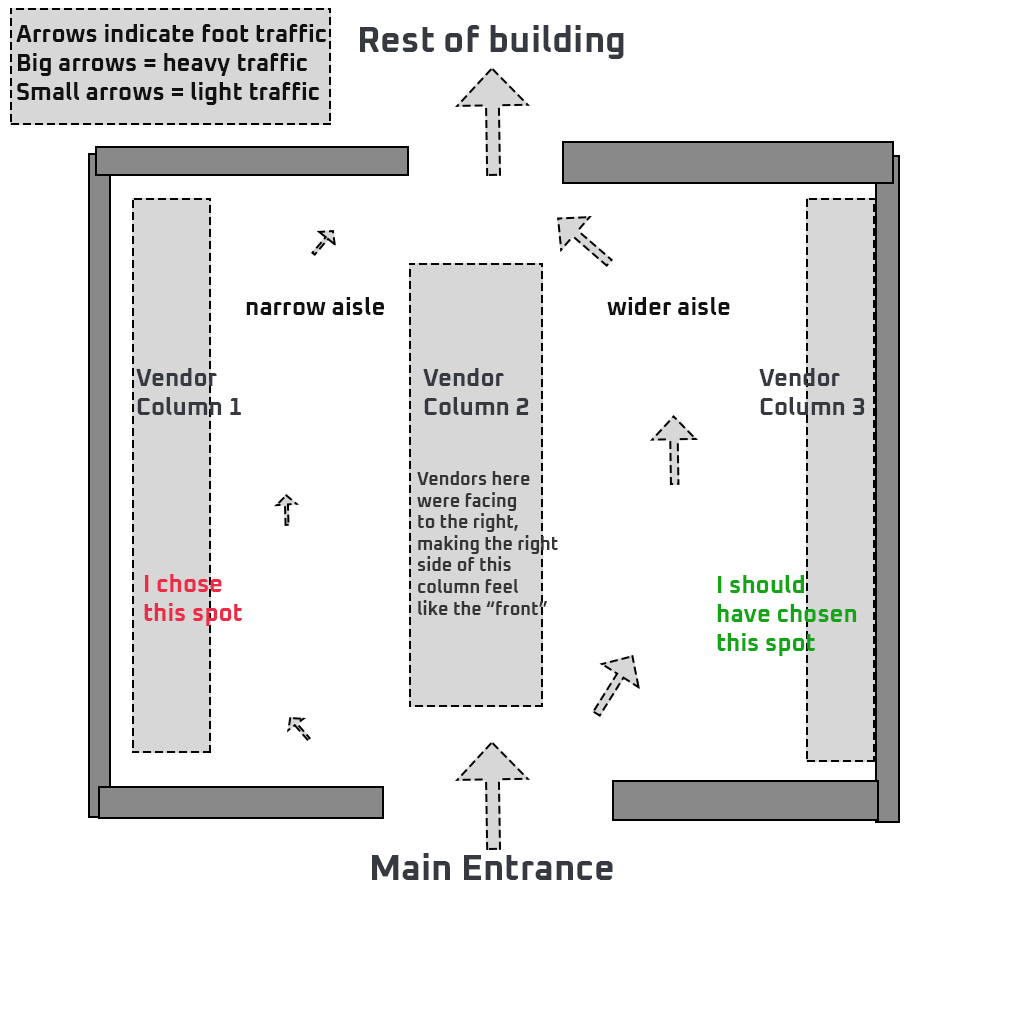
If you get to choose your table location, think carefully about possible traffic flow. For example, if your vendor area is divided into 3 columns of tables with 2 aisles, pick a spot on the right-hand column. Especially if that aisle is wider than the other! I learned this lesson the hard way at one of my library events:

Remove psychological barriers

Here’s a list of some I’ve discovered:

Distance

Move your table as close to the flow of foot traffic as you can. If visitors are walking in the middle of a street and your popup canopy is 7 feet away, most people will let their momentum drag them right past. And if your table is near the back of your canopy, such that visitors have to enter the canopy and walk a few feet inside to see your book covers, that’s too far.

It presents a subtle psych barrier that discourages all but the most determined visitors. And if you only talk to the most determined visitors, you will not sell many books at your event. I promise you.

Objects

At one event, I moved my table to the front of my canopy, but due to space constraints, one corner of my table butted up against a canopy pole. And my books were sitting on that end of the table. Could visitors easily avoid the pole? Sure. Did visitors let that pole deter them from approaching? Absolutely. Once I moved my books to the other end of the table, more visitors stopped to check them out.

Flooring

At an outdoor event, the ground was muddy from recent rain and I didn’t want someone dropping my books in the mud. So I laid down puzzle piece rubber waffle boards in a 9ft square and set my table on that. It jutted out a good 4 feet from the front of my table and I remembered thinking people might hesitate to approach for fear of tracking their muddy shoes on my clean waffle boards.

Guess what? The very first couple stood a few feet back from those boards and squinted. I immediately removed that layer of flooring and people started coming up to the table.

Turnaround Point

This is the worst obstacle of all. At one event, my table was near the end of a long street. There was nothing exciting at the very end of the street to draw people to walk the whole length. And so, for the first hour, most shoppers would walk to what I called “the turnaround point”.

About 2 tables away from mine, there was this spot on the road where I saw hundreds of people stop, squint down the road, decide they were at the end, turned around, and walked back the way they came. This was the most discouraging experience I’d ever had as a vendor.

At least until the shaved ice truck came and parked at the very end of the road! And then a street musician started strumming a guitar across from that. Then I had shoppers lining up in front of my table for shaved ice on a very cold day. And only then did I sell books.

Smart event organizers are aware of the turnaround effect and will place attractions at the end of hallways and streets to mitigate it.

Wide lanes

Similar to the point about distance, you want to try to avoid placing your table in a section of a path or street that is wider than the other sections. Shoppers will naturally tend to walk at the farthest point in the path from vendor tables, so if you pick a very wide section, shoppers may be too far away to see or hear you, and may feel the distance to be socially acceptable to ignore you from.

If you are able to relocate your table or move other structures (such as a friend’s tent or table) into the path across from you to narrow it down, you may turn a zero sale night into a big night.

What to Bring

Interactive Materials to Make Your Table Memorable

I bring the video game version of my debut novel for visitors to play:

This big monitor and the gaggle of kids and their laughter draw lots of people over (not to mention the parents). But you might not be able to create your own video game.

There are other gimmicks you can try: set up a gumball machine that dispenses slips of paper containing neat one-liners from your books, and make one of them a coupon for a free book. Or dress up in a costume related to your protag or villain. Just make it visually obvious that something about your table is different.

People should be able to say, “his table is the one with the [blank]!”

Ample Lighting

For outdoor, evening events during fall and winter, bring plenty of lighting, including hand lamps that visitors can hold up to your book. Don’t count on general area lighting and lights you string along the top of your canopy to provide enough light for reading your book’s back cover. At some events, they’ll ask you not to bring a popup canopy because it would block the lighting they provide and take up too much floor/ground space.

two tables

Always bring a small table along with your normal, big one. Sometimes events will let you in without prior notice or give you really juicy spots if you let them know you can fit your stuff on a 4ft by 2ft table and don’t need to use your 10ft by 10ft canopy. Some events promise to provide a table and chair for you. I always bring my own just in case they run out or there’s something about their table and chair I really don’t like.

a card reader

I recommend Square. The small reader is free with your account and the thing is durable—it can survive a trip through the washing machine! And don’t sign up for your account right away. Instead, ask another author who already has Square (like me!) to send you a referral email.

Only sign up with that referral and both you and the referring person enjoys a free $1000 of processing fees waived for 6 months, starting from your first card swipe. Just find a dedicated place to keep your square reader (not your pocket) so you don’t lose it and you don’t send it through the wash. Also, you must keep your smartphone charged in order to use the swiper (if you get the free swiper model, that is).

Make sure to ask about WiFi availability ahead of time!

Insider Tips

Chat with other author vendors

Ask them what other events they’re going to next. Be friendly to them—they just might end up inviting you to awesome events you didn’t know anything about. And they might offer to split their table with you. That lets you pay half the fee and gets you into events for which the submission deadline is long past.

I’ve gone to events that I heard about the day before! In order to capitalize on these last-minute event invites, try to keep your weekends open (if you don’t already have events scheduled, that is).

Sell at the last minute

When breaking down your setup, put your books away last. I can’t remember how many times I’ve sold books to passersby while I was packing away other things. One time I sold books after I’d broken down my entire setup because my backpack has a full sales kit in it, and I pulled books and a card swiper out from that.

At my farmer’s market on 10/12/2024, I sold 10 books after I started breaking down my table! All I did was look up for passersby, point to my books, and say, “I still have books out, if you’d like a look.”

Here’s what I’ve noticed: Many shoppers walking around after the official end of an event are happy when a vendor notices them and gives them something to shop for after all other vendors are closed. The last-minute nature can help nudge them to buy something. This is why I pack away my books last. I even bring down my tent and pack that away before I box up the books. I recommend you do the same.

The First Day of Events is the Most Important

If you sell at an event that lasts 2 or more days (of equal duration), and you can only show up on one of those days, pick day one.

Push for early sales on day one of multi-day events. Many shoppers may not feel any urgency to shop until later in that weekend. Always try to encourage them to buy sooner, because they may not return to you later like they promised! 

As the event wears on, you’ll start hearing shoppers say things like, “I’ve already spent all my money.” And what they really mean is, “I’ve already spent all my money on other vendors’ goods. You’re too late.” The younger the shopper, the truer this is.

My sales and marketing guide has WAY more content like this. Just email me at dylan.west@dylanwestauthor.com if you want me to share that google document with you for free!

Thanks and Book Appetit 🙂

About Dylan West

Dylan West writes faith-based, young adult science fiction and fantasy novels. He is a Jesus lover, web and video game developer, former Navy nuclear operator, foreign language nut, and a nut in general.

While other people are busy thinking normal thoughts, he’s crafting corny jokes. Dylan lives in Chesapeake, VA, with his wife and daughter.

You can play the related game that pairs with his first book, Scribes’ Descent, here: https://dylanwestauthor.com/demo.

8 Reasons Authors Should Sell Books at In-Person Events

Guest Post by Dylan West

For authors struggling to sell a single book on Amazon in a whole month: how would you like to sell 10 to 20 of them in a single day? When you table up at a local sales event, that’s not hard to do. That’s just one reason to vend at regular, local events. Here are some more:

1. Brand awareness

if you hang a big, clear, beautifully designed banner at your table, you let passersby know that your business exists. Because I table up at a decent-sized event each Saturday, over 50,000 people see my books and banner every year.

2. Fan building

When shoppers walk by or visit my table, people take actions like:

  • Check out my books and ask me questions
  • Buy my books or sign up for my newsletter (often both)
  • Buy the related merchandise. If they buy my t-shirt, they may wear it, providing free advertising
  • Give me donations (sometimes large ones)

In-person events are the best way to increase word of mouth and gain further opportunities. Some people will:

  • Tell other passersby to check out my books and rave about how good they are – this happens to me quite a bit, and it’s driven lots of sales 🙂
  • Tell friends about my books. Some may even buy my book as a gift or haul their friend over to my table
  • Invite me to some other sales event or speaking engagement. One person invited me to speak at a local college, which paid me a $100 speaking fee and bought 3 of my books to display at the front of their campus library!

Seeing you in person will make people remember:

  • To finish the book they bought from me last year
  • To buy more books because they loved the first one
  • To sign up for my newsletter or read the newsletter articles I’ve been sending them
  • That my books exist – that’s a huge thing. If someone buys a book from you a few years ago, it’s easy for them to forget about you if they didn’t sub to your newsletter

3. Sales Practice

Nothing makes you better at sales than getting hundreds of sales opportunities each month. Each shopper that stops is a live-fire practice session.

4. Steady cash flow

The money I make at my sales events funds my next book. I don’t have to pay anything out of pocket after my initial investment. I use sales earnings to pay for book cover art, ISBNs, formatting, software, copyright filings, business licenses, author copies, web hosting, domain names, paid ads, and a lot more I’m forgetting.

5. Newsletter building

The best way to gain new newsletter subscribers is to collect emails from people who just bought your book(s). They are more likely to open and read your emails than people who signed up for a free novella and then unsubbed right after.

6. Fun

I could go on for hours about all the wacky and funny things I’ve experienced at farmers markets and comic cons while vending. I get to meet neat people, pet cute doggies, crack lots of corny jokes, hear corny jokes in return, see really interesting performers, hear live music, and have the thrill of making big sales.

And I have fans hunting me down at events when they learn that my newest book just came out!

7. Identity

Nothing reminds you that you are, in fact, a published author like going to regular sales events. Many indies who published a book long ago have almost forgotten that they are a published author and that they should be selling their books.

Going to in-person events makes your authorship more real than if you lob an e-book onto Amazon and do nothing more.

8. Reviews

You will get more reviews for your books if you table up at sales events. Especially if you remember to ask shoppers to leave a review!

Now that I’ve persuaded you to table up at local events, let me share some tips for how to run them so you actually sell books – based on my years of experience!

Read Part 2: How to Set up an Author Table for Maximum Book Sales

About Dylan West

Dylan West writes faith-based, young adult science fiction and fantasy novels. He is a Jesus lover, web and video game developer, former Navy nuclear operator, foreign language nut, and a nut in general.

While other people are busy thinking normal thoughts, he’s crafting corny jokes. Dylan lives in Chesapeake, VA, with his wife and daughter.

Please sign up for his newsletter to get the geekiest science research tidbits that go into the making of his books: https://dylanwestauthor.com/.

The most important marketing concept for authors to understand – it’s not about you

These days, authors are forced to do more and more of their own marketing – an incredibly daunting prospect. Marketing is an entirely different industry, and most authors are going in completely blind!

Before you get into trial and error, testing different social platforms, ads, or other strategies, it’s vitally important to start with the right perspective, which will act as a cornerstone to solidify the foundation of your author business, if you will.

So I’ll help you get started by sharing the top 3 things you need to keep in mind at all times when marketing your book:

  1. What want or need does your book meet?
  2. Will your story make readers feel what they want to feel?
  3. It’s not about you and your book – it’s about your reader

What want or need does your book meet?

Our books are our babies. When sharing about them, authors often strive above all else to accurately convey the world and characters that they so dearly love.

But you can’t think of your book from your own perspective – you must view it from the eyes of a buyer.

Who, when showing off their first baby, describes their child to suit what the other person is likely thinking and feeling? No one.

It’s hard, but you need to think of your book as a product that can solve a want or need.

Imagine what a reader feels when they’re deciding whether or not to pick up a book. What goes through your own mind?

For example, “I’m feeling down and lonely, I want a pick me up. Maybe I’ll read a feel-good romance.” Or, “I’m bored and wish I could travel. I miss the beach.” Your job is to make their next thought be: “A pirate fantasy is just the excitement I need!”

When you create your book blurb, or marketing copy, or Instagram reel, it doesn’t matter as much that you convey how amazing your worldbuilding is, how unique your writing style is, or how cool your character will be.

Will your story make readers feel what they want to feel?

What’s most important is to ensure that readers understand what they will get out of reading your story – specifically what your book will make them feel and think.

If your book is a cerebral sci-fi think-piece, but the cover makes it look like a thrilling space opera, you’ll have disgruntled readers dropping it after a few chapters, and your ideal readers will skip past it without realizing that it’s just what they want.

The best marketing is VERY simple. What does your reader want? How does your book meet that want?

EVERY piece of marketing material should answer that unconscious question.

If a reader scrolls through your Instagram and Amazon listing and doesn’t remember your main character’s name, or the plot, but takes away an accurate impression like, “this book will be a dark, emotion wrecker,” then you have succeeded!

Because even if they don’t buy your book immediately, they’ll remember their impression the next time they want a killer, gritty story.

It’s not about you and your book – it’s about your reader

Approach all your marketing efforts from a would-be buyer’s perspective, and you’ll see a transformation in how readers interact with your book. Put yourself in their shoes.

Everything about marketing might sound overwhelming, but THIS one element is where you are at an advantage. You’re a storyteller – imagining the feelings and internal journey of other people is one of your greatest strengths! Leverage it!

Just remember, that when pitching your book, it’s NOT actually about you or your book. It’s about your reader.

You are the wise old mentor stepping alongside a lost young hero who needs a word of wisdom, an eye-opening experience, or a comforting touch. Your book is the tool you use to help a reader reach THEIR goal.

If you can make a would-be reader feel seen and heard, whether you’re chatting with them at a book fair, or sharing a meme on your socials, they will start to trust that your book will also be able to impact them in the way that they want and need.

When selling your book, tell the reader’s story, and how your book will make it better.


Hi, I’m Caylah Coffeen, a freelance editor and marketer of sci-fi and fantasy books. I love reading and writing and am a follower of Jesus Christ.

I’ve learned how to effectively market books by working for Monster Ivy Publishing, Eschler Editing, and two marketing agencies – Perk Brands and Aloha Life Digital. Reach out to chat about books and publishing!

Thanks for stopping by my website! I hope you’ve found some helpful resources about reading, writing, and publishing. If you liked this article, here’s some more free content…

22 High/Epic Adult Fantasy Books with 1 POV & a Male Protagonist

Books with a massive set of multiple POVs drive me crazy. I prefer stories with a tighter focus that invite readers to enjoy (and work to unravel) some mysteries about the larger world. Sometimes less is more.

But these days, multi-POV fantasy books seem to be the norm, especially in adult fantasy. It’s so hard to find books that feature only one point-of-view character, but I’ve done some legwork for you!

Note: this list focuses on male protagonists and dark, mythic, political, and military fantasy, rather than romance, satire, or coming-of-age.

I’ve read about half of these so far, and all others have at least a thousand 4+ star reviews. Most of these authors have a larger body of work which also feature a similar style.

  1. Classic and pre-2000s fantasy with 1 POV
  2. Modern fantasy books with 1 POV
  3. Fantasy books with predominantly 1 POV – but with brief cutaways

This article contains affiliate links – I may earn a small amount on qualifying purchases at no extra cost to you.

Classic and Pre-2000’s Fantasy with 1 POV

1. Nine Princes in Amber by Roger Zelazny

Ok, technically this is science fantasy, but it FEELS so epic, and most of the story takes place in a medieval setting. The main character is a centuries-old mage poet and swordsmaster who stepped out of literal golden age Avalon! One of my absolute favorites!

Corwin is a prince of Amber, the “immortal city from which every other city has taken its shape.” All other worlds, including Earth, are shadows of that reality. Corwin has spent centuries on Earth with no memory of his birth.

But when someone in the family tries to kill him, Corwin begins a search for his past, discovering the universe itself will bend to his shaping. He is one of nine men who might rule Amber, if he can fight past the armies of his brother and nemesis Eric.

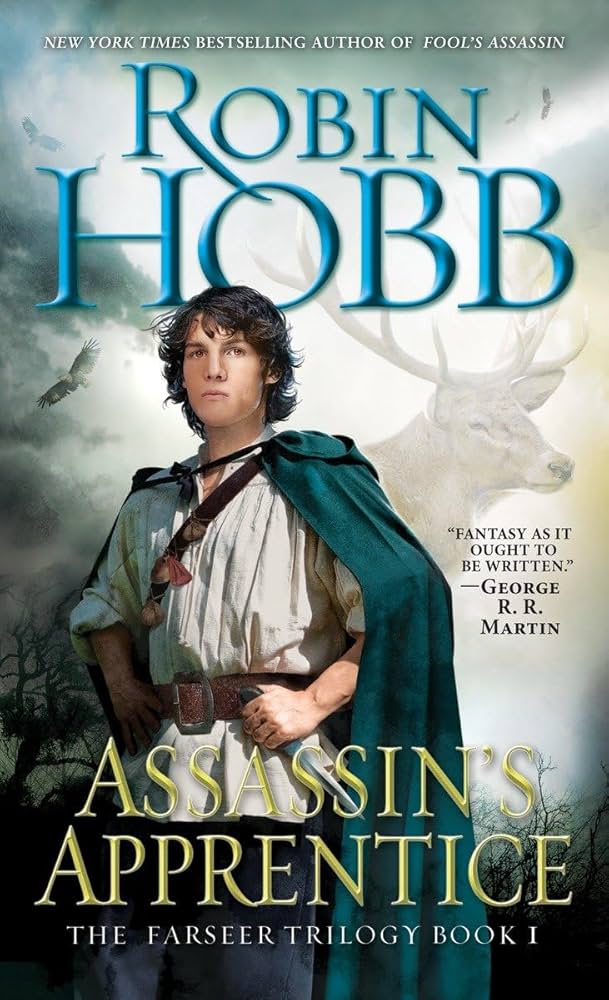
2. Assassin’s Apprentice (The Farseer Trilogy #1) by Robin Hobb

Young Fitz is the bastard son of Prince Chivalry, raised in the shadow of the royal court by his father’s gruff stableman. He is treated as an outcast by all the royalty except the devious King Shrewd, who has him secretly tutored in the arts of the assassin. For in Fitz’s blood runs the magic Skill.
 
As barbarous raiders ravage the coasts, Fitz grows to manhood and soon he will face his first dangerous, soul-shattering mission. And though some regard him as a threat to the throne, he may just be the key to the survival of the kingdom.

3. Elric of Melniboné (The Elric Saga #1) by Michael Moorcock

Elric is the brooding, albino emperor of the dying Kingdom of Melnibone. With Melnibone’s years of grandeur and decadence long since passed, Elric’s amoral cousin Yrkoon sets his eyes on the throne. Elric, realizing he is his country’s best hope, must face his nefarious cousin in an epic battle for the right to rule.

4. The Curse of Chalion by Lois McMaster Bujold

A man broken in body and spirit, Cazaril returns to the noble household he once served and is named secretary-tutor to the strong-willed princess. It is an assignment Cazaril dreads, for in the royal court of Cardegoss, the powerful enemies who once placed him in chains now occupy lofty positions.

Worse yet, a sinister curse hangs like a sword over the blighted House of Chalion. And only by employing the darkest, most forbidden of magics can Cazaril hope to protect his royal charge.

5. The Shadow of the Torturer (The Book of the New Sun #1) by Gene Wolfe

The writing style in this one is quite dense, and absolutely packed with complex vocabulary. The language is masterful, but it’s no light read. Keep a dictionary tab open!

The Shadow of the Torturer cover: a cloaked man in a strange mask holds a longsword, standing upon a curling pedestal throne that rises into a cloudy sky.

Severian is a torturer, born to the guild and with an exceptionally promising career ahead of him… until he falls in love with one of his victims, a beautiful young noblewoman. Severian helps her commit suicide and escape her fate. For a torturer, there is no more unforgivable act.

He is exiled from the guild with little more than Terminus Est, a fabled sword, to his name. Along the way, a strange gem falls into his possession, which only makes his enemies pursue him with ever-more determination…

6. The Legend of Nightfall by Mickey Zucker Reichert

This was published back in 1993, but the link will take you to an updated Kindle version that the publisher released in 2019, which is why it has apparently few reviews.

He has been known by countless names and deeds – thief, swordsman, assassin, adventurer. But chief among those personae is that of Nightfall, gifted with unique powers which any sorcerer would kill to possess.

Yet even the cleverest of beings must occasionally slip. When Nightfall falls prey to a royal trap, he is bound by sorcery and oath to guard a young prince on his quest. He will need every trick and talent to keep both himself and his idealistic charge from death at the hands of unknown betrayers.

Modern Fantasy Books with 1 POV

7. The Hands of the Emperor (Lays of the Hearthfire #1) by Victoria Goddard

Cliopher Mdang is the personal secretary of the Last god Emperor of Astandalas, the Lord Magus of Zunidh, the Sun-on-Earth.

He has spent more time with the Emperor of Astandalas than any other person. But he has never once touched his lord, nor called him by name. He has never initiated a conversation.

One day, Cliopher invites the Sun-on-Earth home to the Wide Seas for a holiday. The mere invitation could have seen Cliopher executed for blasphemy. The acceptance upends the world.

Read my 5-star review here!

8. The Name of the Wind by Patrick Rothfuss

The Name of the Wind cover: a cloaked figure faces a single tree in an overcast grassland, the world tinged a blue-grey.

My name is Kvothe.

I have stolen princesses back from sleeping barrow kings. I burned down the town of Trebon. I have spent the night with Felurian and left with both my sanity and my life. I was expelled from the University at a younger age than most people are allowed in. I tread paths by moonlight that others fear to speak of during day. I have talked to Gods, loved women, and written songs that make the minstrels weep.

You may have heard of me.

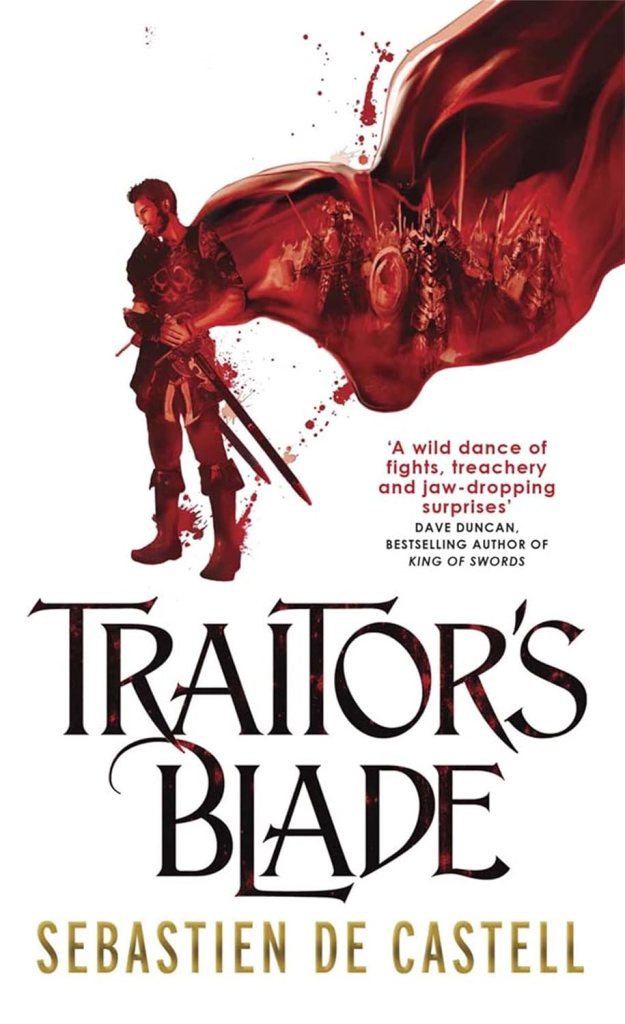
9. Traitor’s Blade (Greatcoats #1) by Sebastian de Castell

The Greatcoats are travelling magistrates bringing justice to all… or at least they were, before they watched the Dukes impale their King’s head on a spike. Now the land’s heroes are reviled as traitors, their Greatcoats in tatters.

Facio, Kest and Brasti have been reduced to working as mercenaries, but when they find their employer dead – and are forced to watch as the killer plants evidence framing them for the murder – they realize the royal conspiracy is spreading.

10. Sixteen Ways to Defend a Walled City by K.J. Parker

A siege is approaching, and the city has little time to prepare. The people have no food and no weapons, and the enemy has sworn to slaughter them all.

To save the city will take a miracle, but what it has is Orhan. A colonel of engineers, Orhan has far more experience with bridge-building than battles, is a cheat and a liar, and has a serious problem with authority. He is, in other words, perfect for the job.

11. Transformation (Rai Kirah #1) by Carol Berg

Note: this book is much better than its cover.

Seyonne is a man waiting to die. He has been a slave for sixteen years, almost half his life, and has lost everything of meaning to him: his dignity, the people and homeland he loves, and the Warden’s power he used to defend an unsuspecting world from the ravages of demons.  

But from the moment he is sold to the arrogant, careless Prince Aleksander, the heir to the Derzhi Empire, Seyonne’s desperately crafted apathy crumbles. When he discovers a demon lurking in the Derzhi court, he must find hope and strength in a most unlikely place…

12. Prince of Fools by Mark Lawrence

Prince Jalan Kendeth—drinker, gambler, seducer of women—has a secret. He can see the Red Queen’s, his grandmother’s, greatest weapon: The Silent Sister. But content with his role as a minor royal, Jal pretends that the hideous crone is not there.

After escaping a death trap set by the Silent Sister, Jal finds his fate magically intertwined with a fierce Norse warrior. But war with the undead is coming, and as the two undertake a journey to undo the spell, they realize they are but pieces in a game—and the Red Queen controls the board.

13. The Blacktongue Thief by Christopher Buehlman

Kinch Na Shannack owes the Takers Guild a small fortune for his education as a thief, which includes wall-scaling, lie-weaving, trap-making, plus a few small magics.

But today, Kinch has picked the wrong mark. Galva is a knight, a survivor of the brutal goblin wars, and handmaiden of the goddess of death.

Unsuccessful in his robbery and lucky to escape with his life, Kinch now finds himself braving krakens and giants with Galva in an epic journey to find her missing queen.

14. Among Thieves by Hulick Douglas

Drothe is a Nose, an informant who finds and takes care of trouble inside his criminal organization. On his latest assignment, Drothe unearths that someone is trying to stir up trouble between lower-level criminal organizations, including Drothe’s.

Rumors stir of a book containing imperial glimmer (or magic), and two crime bosses known as the Gray Princes are on the hunt. Drothe discovers the book, gaining the power to bring down emperors, shatter the criminal underworld, and unlock forbidden magic – if he can survive long enough to use it.

Fantasy Books with Predominantly 1 POV – but with brief cutaways

These books are told almost entirely (95%) from 1 point of view, with only brief cutaways to secondary characters. Note that some of these, like The Night Angel Trilogy and the Codex Alera, start incorporating more perspectives later in the series.

15. The Way of Shadows (Night Angel Trilogy #1) by Brent Weeks

The Way of Shadows cover: a cloaked man takes up a fighting stance, a dagger in each fist. Shadows swirl around him.

For Durzo Blint, assassination is an art – and he is the city’s most accomplished artist.

For Azoth, survival is precarious. As a guild rat, he’s grown up in the slums, and learned to judge people quickly – and to take risks. Risks like apprenticing himself to Durzo Blint.

But to be accepted, Azoth must turn his back on his old life and embrace a new identity and name. As Kylar Stern, he must learn to navigate the assassins’ world of dangerous politics and strange magics – and cultivate a flair for death.

16. Blood Song by Anthony Ryan

Vaelin Al Sorna was only a child of ten when his father left him at the iron gate of the Sixth Order to be trained and hardened to the austere, celibate, and dangerous life of a warrior of the Faith.
 
Vaelin’s father was Battle Lord to King Janus, ruler of the Unified Realm—and Vaelin’s rage at being deprived of his birthright knows no bounds. Even his cherished memories of his mother are soon challenged by what he learns within the Order.
 
But Vaelin cannot escape a future that will alter not only the Realm but the world.

17. The Black Company by Glen Cook

Some feel the Lady, newly risen from centuries in thrall, stands between humankind and evil. Some feel she is evil itself. The hard-bitten men of the Black Company take their pay and do what they must, burying their doubts with their dead. 

Until the prophesy: The White Rose has been reborn, somewhere, to embody good once more. There must be a way for the Black Company to find her… 

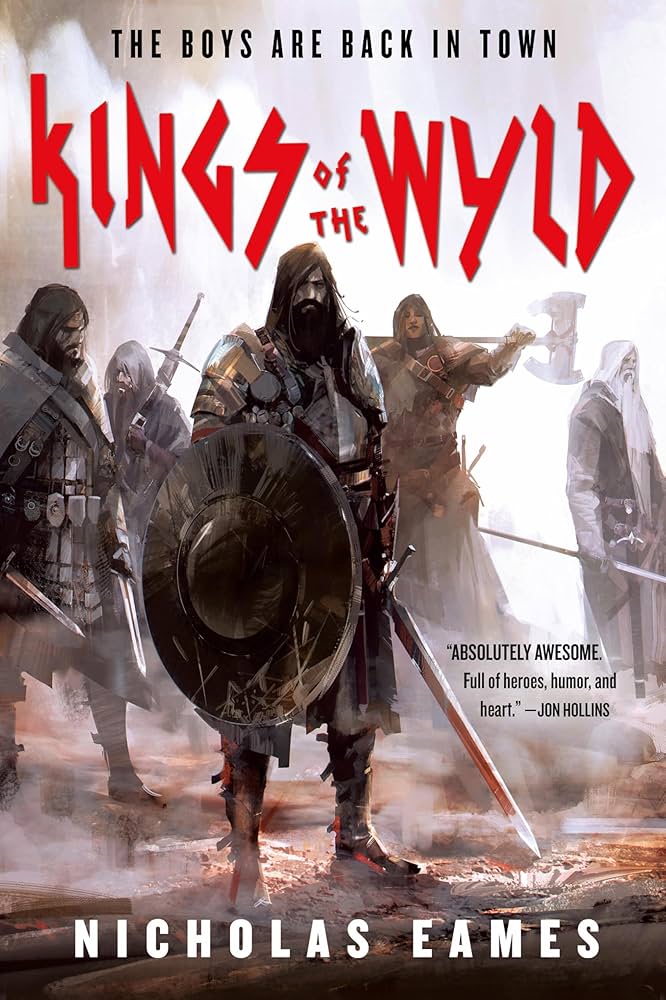
18. Kings of the Wyld by Nicholas Eames

Kings of the Wyld cover: a group of rough looking armored men stand together holding shields and bloodied swords.

Clay Cooper and his band were once the best of the best, the most feared and renowned crew of mercenaries this side of the Heartwyld.

Their glory days long past, the mercs have grown apart and grown old, fat, drunk, or a combination of the three. Then an ex-bandmate turns up at Clay’s door with a plea for help – the kind of mission that only the very brave or the very stupid would sign up for.

It’s time to get the band back together.

19. The Rage of Dragons by Evan Winter

Among the Omehi, one in every two thousand women has the power to call down dragons. One in every hundred men is able to magically transform himself into a bigger, stronger, faster killing machine.

Everyone else is fodder, destined to fight and die in the 200 year war. Young, gift-less Tau plans to get himself injured, get out early, and settle down to marriage, children, and land.

But when those closest to him are murdered, his grief turns to vengeance. He’ll become the greatest swordsman to ever live for the chance to kill the three who betrayed him.

20. Furies of Calderon (Codex Alera #1) by Jim Butcher

For a thousand years, the people of Alera have united against the aggressive and threatening races that inhabit the world, using their unique bond with the furies—elementals of earth, air, fire, water, wood, and metal. But in the remote Calderon Valley, the boy Tavi struggles with his lack of furycrafting.

At fifteen, he has no wind fury to help him fly, no fire fury to light his lamps. Yet as the Alerans’ most savage enemy—the Marat horde—return to the Valley, Tavi’s courage and resourcefulness will be a power greater than any fury, one that could turn the tides of war…

21. Age of Assassins by R.J. Barker

Girton Club-foot has no family, a crippled leg, and is apprenticed to the best assassin in the land. He’s learning the art of taking lives, but his latest mission tasks him with a far more difficult challenge: to save a life.

Someone is trying to kill the heir to the throne, and it is up to Girton to uncover the traitor and prevent the prince’s murder.

In a castle thick with lies, Girton finds friends he never expected, and a conspiracy that could destroy an entire kingdom.

22. The Silverblood Promise (The Last Legacy #1) by James Logan

Lukan Gardova is a cardsharp, academy dropout, and—thanks to a duel that ended badly—the disgraced heir to an ancient noble house.

When Lukan discovers that his estranged father has been murdered, he finds fresh purpose. Deprived of his chance to make amends for his mistakes, he vows to unravel the mystery behind his father’s death.

His search for answers leads him to Saphrona, fabled city of merchant princes, where anything can be bought if one has the coin. But the price of truth is the deadliest of all.


Hi, I’m Caylah Coffeen, a freelance editor and marketer of sci-fi and fantasy books. I love reading and writing and am a follower of Jesus Christ.

I’ve worked for Monster Ivy Publishing and Eschler Editing, and am currently a weekly editor with Havok Publishing. Reach out to chat about books and publishing!

Thanks for stopping by my website! I hope you’ve found some helpful resources about reading, writing, and publishing. If you liked this article, here’s some more free content…

Pursuing True Diversity in Fantasy Books

Guest post by Izaic Yorks

Fantasy as a genre has long captured the imaginations of readers with its thrilling adventures and heroic narratives. But if you’ve spent any time in the trenches of Reddit, BookTok, or even Threads, you’ve likely come across a question echoing throughout the zeitgeist:

Does fantasy suffer from a lack of diversity?

That, however, is the wrong question.

At the heart of this conversation lies a more critical distinction. The real question we should be asking is:

What do we even mean by “diversity”?

Is it simply about including characters of various races and socioeconomic backgrounds? 

Or does true diversity dig deeper? 

This article explores that very question while offering insights into how diversity can (and should) transform the realm of fantasy. Along the way, you might come to love me, or you might come to hate me. But one thing you won’t accuse me of is being a vapid wanderer with nothing but clouds for thoughts.

What Does Diversity Mean in Fantasy?

When we think about diversity in fantasy, what’s the first thing that comes to mind? For many, in a culture increasingly unmoored from classical philosophical foundations, “diversity” is often reduced to outward traits: ethnicity, gender, or socioeconomic status.

And yes, those factors matter.

But they shouldn’t overshadow what truly makes stories vibrant and enduring: diversity of thought. Because a book, at its core, is a well assembled stream of consciousness. A meditation and confrontation with ideas.

Diversity in My Own Career

This subject is actually quite dear in my own author journey and not for the reasons you might suspect. Whenever diversity comes up, it’s often along the lines of: “Hey, Izaic, why don’t you mention you’re Black? That could really help spotlight you or bring money in the door.” Every time I hear that, it feels like an arrow to the heart.

Why? 

Because it screams the bigotry of low expectations. Ideas that stand the test of time are based on merit. To have mine judged by skin tone or assumed hardships might grant me a short‑term dopamine hit but, in the end, would leave me wondering: did I earn X or Y, or was that just the result of someone’s assumption about me?

So, over and over again, I have declined grants or invitations that hinge solely on my skin tone. At times it’s been hard and a challenge to the life of virtue. Undoubtedly I am leaving money on the table, but I have faith that I am more than the base materials of my physical body. What remains, and what is important, is the diversity of my mind and soul, which God made perfectly to His design.

Beyond Biometric Metrics

Reducing diversity to metrics like race, gender, or class oversimplifies a much richer and more vital conversation. Biometric diversity does not automatically guarantee depth or quality in storytelling.

True diversity emerges from exploring nuanced ideas, conflicting beliefs, and different cultural frameworks for understanding universal human experiences.

Imagine a world where fantasy novels challenge readers to see the world differently—to entertain new possibilities and reflect deeply on their own beliefs.

That is authentic diversity.

More Than Skin Deep

Reducing diversity to physical characteristics is a form of tokenism, where characters are included as symbolic gestures rather than meaningful contributors to the narrative.

Instead, let’s consider stories where ideas and beliefs are the defining elements of uniqueness.

For example, a Black author can skillfully craft a European medieval fantasy steeped in knights, castles, and folklore. Likewise, a White author can authentically write a story centered around urban Black youths navigating the challenges of Chicago through the lens of portal fantasy.

The richness of a story stems not from the biometric traits of its characters or creators, but from the depth and clarity of its ideas.

Biological factors ≠ Diversity.

They are merely a potential starting point from which diversity might emerge.

This is not to deny the importance of representation but to elevate the conversation.

Our ultimate goal as lovers of literature should be compelling storytelling that speaks to the human condition. As Dr. Martin Luther King Jr. famously said, what matters most is “the content of their character.”

For fantasy, this means content that challenges, inspires, and transports readers into the vast frontiers of imagination.

The Reader’s Role in Seeking True Diversity

Writers aren’t the only ones responsible for cultivating meaningful diversity. Readers play an equally crucial role in shaping demand for more thoughtful and expansive narratives.

When audiences seek out stories that offer fresh perspectives and complex characters, they help pave the way for a broader, richer literary landscape.

Supporting Authentic Storytelling

Here’s how readers can contribute:

  • Explore New Authors: Seek out voices from various cultural and social backgrounds. But celebrate them not for their skin or heritage—celebrate them for the merit of their thoughts and craft.
  • Foster Conversations: Discuss books with others. Unearth the deeper themes and perspectives within a story.
  • Prioritize Depth: Choose books that offer intricate world-building, moral complexity, and provocative ideas over ones that simply check superficial boxes.

By demanding authenticity and intellectual richness, readers uplift authors and help shape a publishing culture centered on excellence.

Raising the Next Generation of Readers

Creating a culture where diversity of thought thrives doesn’t happen overnight. It begins with nurturing a love for reading in young minds. Exposing children of all backgrounds to a range of high-quality, diverse literature helps expand their worldview and strengthens critical thinking.

How to Foster a Love for Diverse Literature:

  • Start Early: Introduce imaginative fantasy stories that stretch the mind and expose kids to different ideas.
  • Align with Values: Share stories that reflect your core values but don’t avoid those that challenge or stretch them.
  • Create a Rich Literary Environment: Fill homes or classrooms with books spanning genres, cultures, and philosophies.
  • Celebrate Curiosity: Encourage kids to ask hard questions about characters, themes, and conflicts.
  • Train for Excellence: Stop paying lip service to mediocrity. If you’re invested in the future of Black youth—or any youth—invest in their craft. Train them rigorously. Push them to be extraordinary.

A sustained effort to introduce children to rich, diverse storytelling shapes a generation that values both creativity and authenticity. Excellence is the only foundation that ensures diversity lasts beyond trends.

Building a Future of Excellence in Fantasy Literature

Fantasy offers endless room for exploration, creativity, and connection. But for the genre to thrive, it requires intentional effort from writers, readers, and publishers alike.

Christian authors, especially, have a unique opportunity to contribute by anchoring their work in faith and reflecting the boundless creativity of God’s design.

The future of fantasy doesn’t rest on superficial representation. It depends on cultivating excellence and allowing the diversity of ideas to compete in all aspects of storytelling.

And that journey begins now.

With you.

About Izaic Yorks

Yorks spent six years as a professional Track athlete, earning silver in the United States championships, among several other distinguishing awards. Now, he seeks his true passion for authoring fantasy works with a heart for virtues that chase the Good, True, and Beautiful.

​Hailing from the Pacific Northwest, Yorks is now happily lost in Hillsborough, living the small-town life and raising a growing family with his wife Courtney.

Check out his book!


Hi, I’m Caylah Coffeen, a freelance editor and marketer of sci-fi and fantasy books. I love reading and writing and am a follower of Jesus Christ.

I’ve worked for Monster Ivy Publishing and Eschler Editing, and am currently a weekly editor with Havok Publishing. Reach out to chat about books and publishing!

Thanks for stopping by my website! I hope you’ve found some helpful resources about reading, writing, and publishing. If you liked this article, here’s some more free content…

13 Diverse Authors Adding Their Unique Voices to Christian Fantasy and Sci-Fi

God’s world is beautifully and wonderfully made! And his kingdom is made up of people from all 4 corners of the earth – I love hearing the stories of all my brothers and sisters in Christ.

Sci-fi and fantasy is special because it opens new worlds to me and examines ideas I may never have encountered otherwise. So when these genres are written by unique voices who come from different walks of life than me, I often find even greater delight in the imaginations they have spun into being!

Christian SFF has grown dramatically as a genre in the past 2 decades alone, and we’re seeing a wider range of authors than ever before! So I’ve compiled this list of diverse Christian authors of sci-fi and fantasy to help readers find and enjoy their compelling stories!

This article contains affiliate links – I may earn a small commission on qualifying purchases at no extra cost to you.

1. Anna Tan

About

Anna Tan grew up in Malaysia, the country that is not Singapore. She writes fantasy stories and fairy tales, puts together anthologies, and wrangles writers for the Malaysian Writers Society (MYWriters).

Anna has an MA in Creative Writing and is interested in Malay/Nusantara and Chinese legends and folklore in exploring the intersections of language, culture, and faith.

Standout Book: Amok (Absolution #1)

All Putera Mikal wants is to gain the Amok Strength, the supernatural power granted by Kudus to the Mahan royal family. No matter how religiously Mikal keeps his vows, Kudus still denies him the Strength—whilst his father, Sultan Simson, flaunts the Strength despite his blatant defiance of the Temple and the priests’ visions of coming doom.

Then the prophecies come true. Taken captive, Mikal must find a way to liberate his people and restore his throne in Maha—and the key to this is the Amok Strength. But what does it take to gain Kudus’ favour?

2. Tosca Lee

About

Tosca Lee is the award-winning, New York Times bestselling author of twelve novels, including a series with Ted Dekker. Her work has won multiple awards and has been translated into 17 languages and optioned for TV and film.

She serves on the Board of Directors of International Thriller Writers and as adjunct faculty for Drexel University’s MFA program. Tosca lives in Nebraska with her family, a drooling cat named Misty, and giant 160-lb. German Shepherd, Timber.

Standout Book: The Progeny

Emily Jacobs is the descendant of a serial killer. Now, she’s become the hunted.

Her quest takes her to the secret underground of Europe and the inner circles of three ancient orders—one determined to kill her, one devoted to keeping her alive, and one she must ultimately save.

Filled with adrenaline, romance, and reversals, The Progeny is the present-day saga of a 400-year-old war between the uncanny descendants of “Blood Countess” Elizabeth Bathory, the most prolific female serial killer of all time, and a secret society dedicated to erasing every one of her descendants.

3. Jon Del Arroz

About

Jon Del Arroz is a #1 Amazon Bestselling author and “the leading Hispanic voice in science fiction.” He is a popular YouTuber with hilarious livestreams.

He says on his X (Twitter), “I became a #1 bestselling author by standing for Christian values.” In his free time he likes roleplaying, reading comics, and playing tennis.

Standout Book: Justified (The Saga of the Nano Templar)

To save a world… he must rely on God.

After years of fighting for justice with his deadly nanotech, Templar Drin abandons his post, crash landing on a desert world controlled by a tyrannical alien empire. Its inhabitants are forced into slavery, broken where a once-proud race cultivated its lands.

For the first time in Drin’s life, he has no backup, no support, none of his brothers. Yet he still seeks to liberate millions of slaves from their captors and bring faith to a downtrodden world. But in his way stands the most dangerous weapon in the galaxy.

4. Valicity Elaine

About

Valicity Elaine is the author of several Christian YA dark fantasy novels and a former Booktuber. In 2015, after her experience with indie publishing, she founded The Rebel Christian Publishing.

Their goal is to produce and publish good quality Christian books with a strong focus on the inclusion and representation of minority cultures. They aim to keep Christ at the center of their business and to positively reflect the Christian faith in the books they produce.

Standout Book: I am Man

Code-X5 is a Guardian, fresh from the factory after a memory wipe. But there is a flaw in X5’s programming. He can’t pinpoint it, but something is wrong. Despite this, X5 just wants a fresh start, but that’s hard when your client is an exiled princess who wants you to bust her out of prison.

He thinks it will be a simple mission until they discover a scheme that could unravel the very fabric of the Valetian Empire.

Is it possible that X5’s programming is more than flawed… and that he wasn’t always a Guardian – what if he isn’t the only one?

5. Dylan West

About

Dylan West writes faith-based, young adult science fiction and fantasy novels. He is a Jesus lover, web and video game developer, former Navy nuclear operator, foreign language nut, and a nut in general.

While other people are busy thinking normal thoughts, he’s crafting corny jokes. Dylan lives in Chesapeake, VA, with his wife and daughter.

Standout Book: Scribe’s Descent

People worship technology on Planet Daishon. With inventions that prolong life and eradicate disease, it’s little wonder. Death seems obsolete until an earthquake kills thousands, including Mallory’s parents. Suspecting the top research center triggered it, she begins to investigate.

She unlocks an underground world and the remnants of a universal war. To survive, Mallory must trust the voice of one she can’t see, to find the very bottom. Something out of folklore is trapped there, and it is trying to escape.

6. Willamette Sutta

About

Willamette’s earliest memories of books coincided with those of America, when she first came here from Hong Kong at the age of seven. Awed by the abundance of free books, she determined to learn English so that she could partake of this bounty.

At first she wanted to be a detective, but after studying physics and library sciences, she became an academic librarian. Now she combines her love of information and speculation to create fantastic stories that nevertheless give an air of a world truer than the one we see.

Standout Book: Adamant in Dust

Pergi can only retain her father’s throne if she marries the neighboring prince, combining their kingdoms. Yet the same prophecy that calls for the reunification also warns that they must join by love. So she is supplanted by her younger sister, Sadira, who unexpectedly runs on her wedding day, only to be snared by the dark lord Malchor.

What starts as an impromptu rescue of the wayward bride leads to a desperate struggle against a deadly foe. For if Malchor completes his true goal, and gains the Far Stones of power, he will subjugate all the peoples of Miran. Can Pergi’s adamant sense of duty rise above the forces crushing her?

7. Lee James

About

Lee James writes stories of hope and redemption. Whether it’s fantasy, mystery or historical fiction, her beautifully awkward characters traverse a dark labyrinth on their journey to a hopeful end.

She is vehement about the importance of creating and preserving the sanctity of the written word. In that vein, she supports literacy programs and her local libraries. Most importantly, she supports her fellow writers. She also enjoys photography, watching The Simpsons, and of course, reading.

Standout Book: Azriel

Bree, a feisty protegee fighter, is sent to infiltrate the city of Azriel. Unexpectedly, the Watchmen of the Keep welcome her as one of their own.

But the city’s water source has dried up, they face constant attacks from the vengeful spirits of former Watchmen who sold their souls for power, and an immortal creature lurks.

Then, a Watchman is murdered. But only a Watchman can kill another Watchman, so all eyes shift to Bree. Should she betray the dying city, or find the killer before it’s too late?

8. Daniel Tuituku

About

Daniel Tuituku is from Hawaii, but grew up in North Carolina, which is still his home. He’s a Christian and homeschooled alum, and his favorite works include Pilgrim’s Progress and the writings of C.S. Lewis.

When he got laid off from a job back in 2021, he jumped on the opportunity to write and publish his first book, Strange City. Daniel writes about real world themes and problems, but ensures the message of salvation and hope shines through the darkness of this fallen world.

Standout Book: Outlaw City

Noe Ryker grew up in the Gray Zone as an orphan whose parents were killed for their beliefs. Whether he’s being harassed by The Law, being ordered around by robots, or forced to bow down to the tyrannical King, Noe has been giving in for too long.

All of that changes when he meets Faith, a strangely powerful woman – or spirit – he thought he once knew. Driven by a sense of purpose for the first time, Noe sets out to take down the King and liberate the city. But can he speak boldly, act courageously, and hold on to what he knows is true, even as the shadows of doubt and fear grow all around him?

9. Izaic Yorks

About

Yorks spent six years as a professional Track athlete, earning silver in the United States championships, among several other distinguishing awards. Now, he seeks his true passion for authoring fantasy works with a heart for virtues that chase the Good, True, and Beautiful.

​Hailing from the Pacific Northwest, Yorks is now happily lost in Hillsborough, living the small-town life and raising a growing family with his wife Courtney.

Standout Book: Aithos

Magnate Rivia watches his land crumble, and the High King refuses to answer his pleas. He sends a skyship on a desperate mission—commanded by an invalid whose body is shattered but whose will remains unbroken.

The invalid’s destination? The lost promised land that drove Magnate Rivia’s father to madness. Their path? The storm-ridden skies of Aithos, where dragons once soared, secrets lie buried, and death waits in the clouds.

Failure means rebellion. Success could mean salvation, but at what price?

10. R.J. Amezcua

About

R. J. Amezcua is the creative director of Quentorex Studios and the author of a science fiction book trilogy and an illustrated children’s book.

Mr. Amezcua’s favorite TV shows – Lost in Space, Outer Limits, and Star Trek – sparked his imagination. He also enjoys watching the Food Network, walking in the morning, and gathering with friends and family.

Standout Book: retribution (Mantis Force: Marium Kahnet #1)

Decades after global infanticide wiped out millions on the planet Ramah, Jazrene Vallo tries to piece her Holy Order back together.

But those responsible – the merciless, sorcerer-led Necrogog legions – still threaten multitudes of star systems, following their objective: to kill the promised Mantis messiah, whose birth mother is a member of the Holy Order, Marium Kahnet.

A group of rogue sisters is out for revenge. And her past isn’t clean either, with her own government seeking to prosecute her for war crimes. Even with a group of elite mercenaries and the instructions of a divine messenger, Jazrene may not be able to stop another wave of destruction.

11. A. Bean

About

A. Bean is a Christian author who writes fictional stories that reflect the body of Christ and the Bible. She writes in multiple genres, including end times fiction, historical fantasy, and more.

Her treasured dog, Sesame, is a small tricolor beagle that loves peas! On their days off, they like to travel, visit new restaurants, and find exciting dog treat recipes.

Standout Book: The Scribe

In a world where reading is a rare ability you must be born with, it’s been decades since a new Scribe has surfaced…

Amana Hart believes she was born with the Gift; the ability to innately understand and speak multiple languages – but she must keep this a secret. Only men of great wealth and stature are supposed to have this ability, so to pursue her dream of becoming a Scribe, she must take on a new identity.

Only God can keep Amana safe. The Scribal Institution will stop at nothing to silence liars and fakes. If she isn’t careful, she could end up burned at the stake.

12. S.E.M. Ishida

About

S. E. M. Ishida is a children’s book author who writes science fiction and fantasy. She is also a technical communicator. The two roles allow her to write for both small publishers as well as a large technology company.

Her hobbies include reading, drawing, and collecting toys. She likes robots and tea!

Standout Book: Nick Newton is Not a Genius

Nick Newton is not a Genius. He’s just a merely average boy from the country of Thauma. He may not be brilliant like his mom and dad or a child prodigy like his sister, but he won’t let that stop him from uncovering the mysteries of a clockwork factory or revealing a war hero’s greatest secret.

With help from two new friends and his butler named Jude, Nick embarks on an adventure that will change his life forever.

13. Jaymi Mozeak

About

Jaymi Mozeak was born in 1982 in Nuernberg, Germany. Soon after, her family moved back to the states where she grew up on the central coast of California.

Besides being an author, artist, and speaker, Jaymi Mozeak is also a Christian Seer. She became a Christian at age 7 and has walked with the Lord ever since. Now she draws inspiration for her stories and artwork from the dreams and visions she receives.

Standout Book: Demon Warrior

“I drank the blood of an angel… How can You want me?”

Follow Silver Fox, a brave young wolf-dog, in her quest to find a place for herself among the glories of heaven. She looks like a demon and is hampered, abused, and mistrusted because of it. She feels like no one will ever trust her or want her around.

No one will love her except Shepherd, the white lion. He alone invites her to join his army. What does he see in her that no one else has?

Help Me Expand This List!

Do you know of any other authors whose works would fit this list? Comment below or shoot me an email, and I’ll feature them here!


Hi, I’m Caylah Coffeen, a freelance editor and marketer of sci-fi and fantasy books. I love reading and writing and am a follower of Jesus Christ.

I’ve worked for Monster Ivy Publishing and Eschler Editing, and am currently a weekly editor with Havok Publishing. Reach out to chat about books and publishing!

Thanks for stopping by my website! I hope you’ve found some helpful resources about reading, writing, and publishing. If you liked this article, here’s some more free content…

Top Reviewers of Christian Speculative Fiction (Sci-Fi, Fantasy, and More)

Good reviews are absolutely essential for the sales of your book. Readers want to find out if your book is worth reading without having to expend much time upfront. The opinion of readers like them is a huge factor in decision-making.

But Christian fantasy, sci-fi, and horror are niche genres which have a relatively small audience. It’s already hard enough for authors of mainstream fiction to find reviewers, but you might feel incredibly frustrated trying to find the small crowd of readers who won’t condemn your themes of faith OR accuse you of “condoning witchcraft.”

So I’ve compiled a list of resources to help you gain reviews for your Christian SFF book – all of them are friendly toward indie and self-published authors:

  1. ARC websites DO accept Christian sci-fi and fantasy books
  2. Book magazines that review Christian sci-fi and fantasy
  3. Websites that review Christian spec fic
  4. Blogs that review Christian speculative fiction
  5. Christian speculative fiction on Booktube
  6. Christian fantasy reviewers on Instagram
  7. Goodreads reviewers of Christian SFF

ARC Websites DO Accept Christian Sci-Fi & Fantasy Books

Top advanced reader copy (ARC) websites include NetGalley, BookSirens, and BookSprout. Publishers list their upcoming releases and readers can create an account and request free copies, in exchange for leaving an honest review.

These websites accept all types of genres and any reader can sign up for a free account. I’ve seen Christian fantasy and sci-fi listed on these sites (I’m a reviewer on BookSirens). It’s quite possible that other Christian readers of sci-fi and fantasy browse these websites and will request your book.

The MOST important factor which affects your book’s likelihood of approval on these sites is your release date. If your book was published more than 6 months ago, they will not consider it eligible. Ideally, your book should be available on these sites at least 3 months before publication so that you gain some positive reviews by the time your book goes live. That’s why they’re called advance reader copies.

Note that you are not paying for a review. You are paying these companies to connect you with their list of reviewers.

NetGalley

This is the go-to location for the Big 5 Publishers, so indie authors have to compete with many famous authors and books in high-demand. However, the publishers are also picky about which reviewers they send free books, so there are many readers on the platform who want free books and will keep browsing if they don’t get their top choice.

Prices: $60-800+ depending on what type of plan you purchase. Kindlepreneuer has a great article summarizing the best NetGalley deals.

BookSirens (Our Top Choice!)

This is my favorite ARC site because I think they have the best search function – this makes it easy for me, as a reader, to narrow down their choices and find exactly the type of book I’m looking for.

They also keep a public database of reviewers which allows authors to search for good matches and reach out in-person to readers they think will enjoy their book.

Prices: $10/ARC plus $2/reader or $100/year for unlimited ARCs – learn more

BookSprout

BookSprout is similar to BookSirens, in that it’s very friendly to indie authors. Their plans offer a certain amount of reviewers per month. For instance, if you pick their $9/mo plan, you can receive up to 25 reviews. With their $29 and $59/mo plans, you get unlimited potential reviews.

Prices: $9-59/month – learn more

Book Magazines that Review Christian Sci-Fi and Fantasy

Readers Favorite

This is a popular site that reviews indie and bestselling authors alike. They state that, “more than half of the books submitted for a free review will receive one within three (3) months. Some books are reviewed in less than a week while others are never selected for review.”

You can see some of the Christian fantasy books they currently have listed.

Request a free review.

Independent Book Review

The Independent Book Review exclusively reviews indie release in a wide variety of genres. They’re composed of a team of reviewers, with varied preferences. They note that they do not accept: “some religious books.” But that likely does not exclude SFF with themes of faith, redemption, and the like.

Request a free review.

Booklist Online

This site helps library professionals choose which books to stock. They state, “As the book review journal of the American Library Association, Booklist connects library and education workers to the books and resources needed to support and enrich their communities.” They also have a branch of their site oriented toward library patrons who are searching for their next read.

Since they receive over 60K review requests per year, I suggest only submitting to them if you think your book has wide appeal. This could be a great option for children’s book authors as well.

Request a free review. Or look through their database of reviewers and connect locally.

Websites that Review Christian Spec Fic

Lorehaven (Our TOP Choice!)

Lorehaven is currently the only major website completely dedicated to writing about Christian sci-fi, fantasy, and other speculative fiction. They maintain a database of Christian SFF books, and authors and readers alike can submit books to be included.

They have a team of reviewers and for your book to be considered it must be: Christian-made, fantastical in genre, and professionally published (indie or traditional). Lorehaven also runs a podcast and has an active discord server for readers.

Request a free review.

Redeemed Reader

They review both secular and Christian-made sci-fi and fantasy, but focus on works released by major publishers. So this is not a good option for self-published authors. They review mostly middle grade and YA, aiming their reviews at parents, though you can submit books aimed at adults as well.

Find their review submission guidelines here.

Reformed Perspective

Jon Dykstra, the editor of Reformed Perspective, has reviewed a number of Christian fantasy books, including the Wingfeather Saga and The Dark Harvest Trilogy. There’s not an official way to request reviews on this website, which emphasizes curated and reflective content, but there is no harm in bringing your series to their attention.

You can contact them here.

PluggedIn

PluggedIn is aimed at parents and mostly reviews popular media. Their intent is to help parents filter through the (often secular) content their children are most likely to encounter and request to read or watch. But they have reviewed Christian-made fantasy novels.

They do not have an official way to request reviews, but you can email them directly at letters@pluggedin.com. Keep in mind that the more requests they receive for a certain type of review (or specific work of fiction), the more likely they are to see it as a high demand and expand into that area.

Blogs That Review Christian Speculative Fiction

A Writer’s Hand (by Creative Cornerstones)

This is our blog, and we’re glad you’ve found your way here! We love reviewing science fiction and fantasy of all types, including those with Christian themes!

You may submit a review request here. Please be sure to check out my reading wishlist first! Note that I do not review books with more than 2 POVs.

Periapsis Press (Our Top Choice!)

Periapsis Press is one of the most prolific reviewer sites of Christian SFF, run by Katie and David Roome! They also offer author interviews and invite guest posts from reviewers.

Request a review.

Christian Indie Book Review

Chris Solaas writes concise reviews that include: an analysis of each story, a summary of the Christian content, and estimated ratings for mature content. He notes that he receives way more requests than he can ever accept or even respond to, and is also behind on the books he has chosen to read.

Request a review.

Madi’s Musings

She reviews fantasy and historical romance if they’re “squeaky clean.” She is actively posting.

Request a review.

Kristi’s A Journey of Words 

Kristi notes: “As a self-published author myself, I realize the need for reviews and certainly empathize with the difficulty of self-marketing. I read some fantasy, but not really paranormal. I read sci-fi, but not so much space operas.” She has a list of her preferred genres.

Request a review.

Explore Words and Worlds

Leah is a Christian and avid book lover who reviews books clean in language and content, though she will read dark and violent content – which she will then warn of in her reviews.

Request a review.

GraceBought

Coralie reads and reviews both Christian fantasy and classics. She notes in her book review index that you can reach out on her contact page if you’d like to see specific reviews.

Request a review.

Inside the Wrong Mind

Kim is a Christian and reviews clean fiction including fantasy, sci-fi, and romance.

Request a review.

Wishful Endings

Tressa only reviews clean books and notes, “I pretty much read all sub-genres (contemporary, historical, fantasy, dystopian, scifi, steampunk, etc., except most thrillers).” She is backlogged with requests, so be sure to compare her recent reads with your book to see if you’ll be a good fit.

Request a review.

Christian Speculative Fiction on Booktube

Be aware that YouTube videos rarely focus on reviews of individual books, and are more likely to include a list of recommendations or a discussion and comparison of a genre. It’s still a great way to reach a wider audience of readers!

Celestria

Celestria says, “I talk about clean and Christian books here. Subscribe to watch me fangirl about fictional characters, drink too much coffee, and sing the occasional song.”

Rochelle Ackerman

Rochelle is a vlogger based out of South Africa! She makes videos about her faith, her daily life, and books. Here’s a video she made about Christian fantasy.

Rachel Reads

Her bio says she’s “a teenage author, book lover, and Christian with a big dream and an even bigger God.” She reviews and recommends Christian fantasy, definitely on the cleaner side.

Book Lover Amanda

She creates a lot of great content, including book recommendations and reading vlogs.

Jamie The Kansan Reader

She focuses most on clean fantasy fiction and is actively creating videos.

The Rebel Christian

Valicity Elaine used to run this BookTube channel, but transformed it into an indie publishing company with the same name! She still actively reviews on Goodreads. I encourage you to get in touch with her!

Christian Fantasy Reviewers on Instagram

There are many great book reviewers on Instagram who mention that they’re Christian and love to read sci-fi and fantasy! Try searching with tags like #Christianbookblogger, #christianfantasy, and #bookreview. It might take you a while to filter through, but it’s well worth it. I find reviewers on IG to be incredibly friendly, excited, and open to helping share the work of new and indie authors!

Note: I am actively researching and expanding this section.

Goodreads Reviewers of Christian SFF

These individuals have left Goodreads reviews on multiple major works of Christian sci-fi and fantasy and most note on their profile that they are interested in both genre fiction and Christian works. I only included accounts of people who have been active on the platform within the past year.

You could certainly friend them and send a message, but keep in mind that most of these people are readers who do not run “official” reviewer blogs. So be sure to browse through some of their favorites to make sure that they’d actually be interested in your book, BEFORE reaching out to them.
Find more individual readers by scrolling through positive reviews left on your favorite Christian SFF books!

Who Are Your Favorite Reviewers?

If you’re an author of Christian SFF and have some favorite reviewers who love your work, please share so I can keep expanding this list! If you yourself are a reviewer of Christian SFF, please let me know if you’d like to be featured!


Hi, I’m Caylah Coffeen, a freelance editor and marketer of sci-fi and fantasy books. I love reading and writing and am a follower of Jesus Christ.

I’ve worked for Monster Ivy Publishing and Eschler Editing, and am currently a weekly editor with Havok Publishing. Reach out to chat about books and publishing!

Thanks for stopping by my website! I hope you’ve found some helpful resources about reading, writing, and publishing. If you liked this article, here’s some more free content…

15 High/Epic Fantasy Books About Tropical Settings and Cultures

Due to the heavy influence of Greco-Roman, Egyptian, and Norse myths, European fairy tales, and the Bible, fantasy books have largely been set in European and Mediterranean analogues. These settings usually include temperate forests and mountains, deserts, and cold regions.
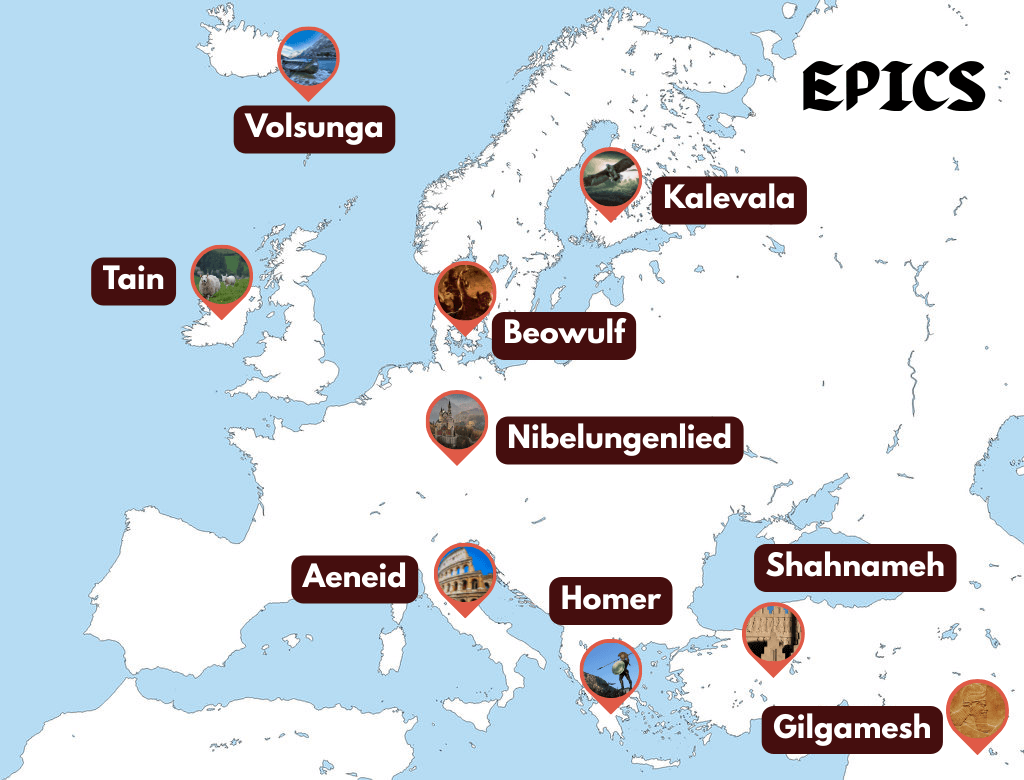
But what are some fantasy books set in the tropics?

Note: I’m using the scientific definition of the word “tropics.” According to the Köppen climate classification system, Earth is divided into five main climate groups based on patterns of seasonal precipitation and temperature. The weather, flora and fauna, and geography vary vastly within each zone. So a fantasy story set in the tropical zone may very well feature tropical islands or rain forests, but could also take place in savannahs, highlands, volcanic valleys, and more. I’m omitting deserts only because that’s already a well-established sub-genre.
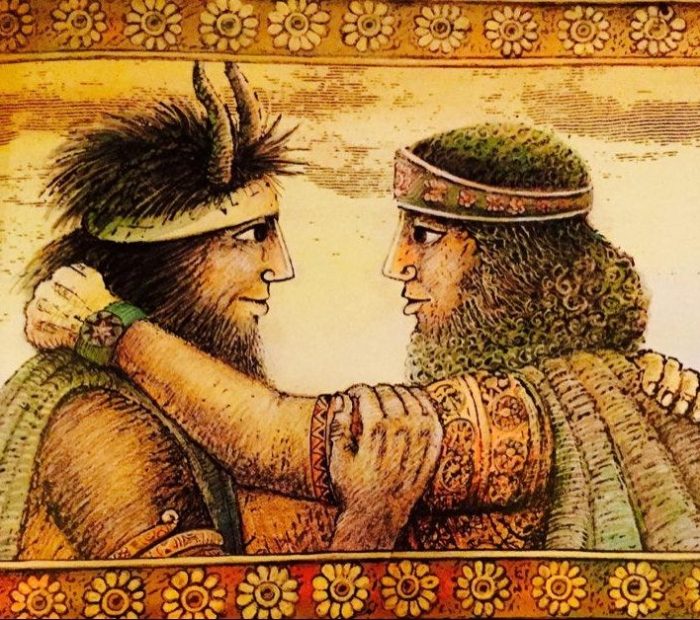
I’ve most commonly encountered tropical settings in seafaring fantasy books that feature pirates and Caribbean-style islands (popular vacation spot for Western authors). There’s also a slew of cringe-worthy “savage jungle tribes,” who threaten traveling heroes in the tradition of pulp fiction or Indiana Jones, which I want to avoid.

But do any fantasy books feature intricate, original worldbuilding of tropical zone societies? Or ones where the author has clearly deeply researched an existing culture and written stories inspired by their land and mythos? Ones about a main character who’s grown up in the culture, rather than a “gawking outsider,” reader-insert POV?

I’ve scoured the internet to compile this list (favoring adult fantasy over YA) – I hope you find some great reads!

This article contains affiliate links – I may earn a small commission on qualifying purchases at no extra cost to you.

Islander-Inspired Fantasy

1. The Hands of the Emperor by Victoria Goddard

The main character in this book is from a culture inspired by the Pacific Islands, but there are many other intricately developed cultures in this world which the mc negotiates with! Read my 5 star review here!

Cliopher Mdang is the personal secretary of the Last god Emperor of Astandalas, the Lord of Rising Stars, the Lord Magus of Zunidh, the Sun-on-Earth
He has spent more time with the Emperor of Astandalas than any other person.
He has never once touched his lord. He has never called him by name. He has never initiated a conversation.

One day Cliopher invites the Sun-on-Earth home to the Wide Seas for a holiday.

The mere invitation could have seen Cliopher executed for blasphemy. The acceptance upends the world.

2. Warbreaker by Brandon Sanderson

This story contrasts two cultures: a small kingdom that’s a European analogue and a coastal city state inspired partly by Sanderson’s honeymoon in Hawaii. I believe he was also influenced by Indonesian culture. Read my 4 star review here.

Each person is born endowed with the power of one Breath―which can be sold and collected by others, then used to Awaken objects and even corpses to do their bidding. A few individuals who die in glory return as gods, with the power of thousands of Breath, but no memory of their mortal lives―and are enthroned in Hallandren’s Court of Gods.

To Vivenna and Siri, princesses of Idris, the abuse of Breath and deification of the Returned are repugnant blasphemy. But with one princess wed to the God King of their nation’s enemies in a bid for peace, the other finds she must rely on Breath-using mercenaries to try to rescue her sister from her monstrous husband.

3. The Bone Ships by R.J. Barker

This story is mostly set at sea. Characters travel an ocean full of islands which some readers have described as “Asian-inspired.”

For generations, the Hundred Isles have built their ships from the bones of ancient dragons to fight an endless war. The dragons disappeared, but the battles for supremacy persisted.

Now, the first dragon in centuries has been spotted in far-off waters, and both sides see a chance to shift the balance of power in their favor. Because whoever catches it will win not only glory but the war.

4. Nation by Terry Pratchett

This story takes place on an island set in a Pacific Ocean analogue. Pratchett subverts tropes commonly seen in tales about shipwreck survivors encountering natives with his characteristic satirical humor.

When a giant wave destroys his village, Mau is the only one left. Daphne—a traveler from the other side of the globe—is the sole survivor of a shipwreck. Separated by language and customs, the two are united by catastrophe.

Slowly, they are joined by other refugees. And as they struggle to protect the small band, Mau and Daphne defy ancestral spirits, challenge death himself, and uncover a long-hidden secret that literally turns the world upside down.

5. Where the Waters Turn Black by Benedict Patrick

This story also carries a flavor of the south Pacific Islands and caught my attention because of the mythic vibe.

The Crescent Atoll is a remote string of tropical islands, connected by long canoe journeys and a love of stories. Islanders live in constant contact with gods and monsters, following the rules handed down by their storytellers to survive in harmony with these primal forces.

But, when a young ocarina player called Kaimana discovers the lair of a taniwha – a legendary monster – she attracts the ruining gaze of the god of war. In a land of sea witches, pig-faced gods, and Magpie Kings, Kaimana must trust her growing friendship with her taniwha if they are both to survive.

African-inspired Fantasy

6. The Rage of Dragons by Evan Winter

Among the Omehi, one in every two thousand women has the power to call down dragons. One in every hundred men is able to magically transform himself into a bigger, stronger, faster killing machine.

Everyone else is fodder, destined to fight and die in the 200 year war. Young, gift-less Tau plans to get himself injured, get out early, and settle down to marriage, children, and land.

But when those closest to him are murdered, his grief turns to vengeance. He’ll become the greatest swordsman to ever live for the chance to kill the three who betrayed him.

7. Imaro by Charles Saunders

A rousing adventure… a tale of a young man’s continuing struggle to gain acceptance amongst his people, and to break the cycle of alienation and violence that plagues his life.

Imaro is a larger-than-life warrior, an outcast, who travels across Nyumbani, searching for a home. No Tarzan… no Conan… Imaro is a warrior inspired by pre-colonial African legends and myths. The first of its kind and a cult classic!

For more African-inspired fantasy, check out this list. Also take a look at the sub-genre coined “Sword and Soul.”

South Asian Inspired Fantasy

8. Sons of Darkness by Gourav Mohanty

A re-imagining of the Indian epic the Mahabharata.

Bled dry by violent confrontations with the Magadhan Empire, the Mathuran Republic simmers on the brink of oblivion. A cast of sinister queens, naive kings, pious assassins and ravenous priests are converging where the Son of Darkness is prophesied to rise… even as forgotten Gods prepare to play their hand.

9. The Garden of Delights by Amal Singh

In the city of Sirvassa, where petals are currency and flowers are magic, the Caretaker tends to the Garden of Delights. He imparts temporary magical abilities to the citizens of Sirvassa, while battling a curse of eternal old age.

He thinks no Delight could lift his curse, until one grants a young girl the ability to change reality.

When a magical rot takes root in his Garden, the Caretaker must join forces with the girl and stop it from spreading, only to learn that Delights are always a precursor to Sorrows.

For more India-inspired fantasy, check out this list.

10. Revelation by Shienny M.S.

This is the only (high) fantasy book I was able to find that’s set in an Indonesia equivalent! However, the English version is out of print. I reached out to the author to see if there’s still any way to obtain a copy.

Vrey, a notorious thief, embarks on a journey to search for a legendary treasure, the Nymph Dress.

Meanwhile, Valadin, a knight, is on a secret quest to seek the power of the Aethers, the seven mythical beings worshiped by his race.

When Vrey steals an important amulet Valadin requires to complete his quest, their paths converge and their hidden past is brought to light. Once the closest of companions, they now have to face each other as enemies.

11. Vandarian Saga – Indonesian Open Fantasy World

I was also fascinated to discover that there is an open fantasy world popular in Indonesia which many authors have written about. There’s also a video game. But according to the script writer of a comic adaptation of the Vandarian Saga, fantasy is unpopular in Indonesia, and writers face stigma. I still hope to see English versions and originals by Indonesian authors though!

12. The Last Phi Hunter by Salinee Goldenberg

This one is Thai-inspired! I haven’t read it yet, but I’m excited to, as I visited Bangkok, Chiang Mai, and the mountains bordering Myanmar back in high school!

Phi Hunter, Ex, is on the hunt for the legendary Shar-Ala, the demon of nightmares and madness who has eluded his masters for decades.

On his quest, Ex meets the charming runaway Arinya,and the two strike a deal. For a hefty payday, Ex will escort her through the forest, protecting her unborn child from malignant spirits.

With men and monsters on their tail, and secrets that could unravel the whole kingdom, Arinya and Ex must get to the safety of the Capital of Suyoram before it’s too late.

13. Kings of Paradise by Richard Nell

This one stood out to me because it features 2 settings less commonly seen in fantasy – a tropical island inspired by Sri Lanka, AND a frozen tundra. I imagine the contrast will be fascinating!

Ruka, called a demon at birth, is a genius. Born malformed into the snow-covered wasteland of the Ascom, he was spared from death by his mother’s love. Now he is an outcast, consumed with hate for those who’ve wronged him.

Across the sea on the island of Sri Kon, Kale is the youngest son of the Sorcerer King. At sixteen, Kale is a disappointment. As the first prince ever forced to serve with low-born marines, Kale must prove himself to secure his future and love.

But in a changing world where ash meets paradise, only one man can be king…

Americas-Inspired Fantasy

14. The Return of the Sorceress by Silvia Moreno-Garcia

This one is inspired by Mesoamerican settings and myths, by the author better known for Mexican Gothic.

In a fantastical land where jewels and blood provide symbiotic magical powers to their wearers, Yalxi, the deposed Supreme Mistress of the Guild of Sorcerers, is on a desperate mission. Her lover and confidant seized her throne and precious diamond heart and now she must find a weapon capable of destroying him.

But this will mean turning to unlikely allies and recalling suppressed memories. For Yalxi is no great hero—she forged her path in blood and must reckon with the consequences.

15. Cradle of Sea and Soil by Bernie Anés Paz

This story is set in an archipelago inspired by Puerto Rico. The islands are connected by root-roads extending from massive “tree-lords” – cool, right! It made me think of the root bridges of Meghalaya, India. Its blurb doesn’t do the setting justice.

The Primordial Wound has festered with corruption since the birth of the world. The island tribes have warred against its spawn for just as long—and they are losing.

Former warrior Colibrí lives in exile, burdened by the same spiritual affliction that drove her ancestors insane. Her son Narune dreams of becoming a mystic to earn glory and prove their worth.

When Colibrí discovers a hidden source of corruption, she must live up to her old oaths.

Tropical Settings in Other Fantasy Sub-Genres

If you love tropical settings and are interested in other fantasy sub-genres, you’ll have a good chance of finding:

  • Urban fantasy or supernatural stories set in South Asia (Jade City)
  • Historical fantasy or magic realism set in Africa (Changa’s Safari)
  • Magic realism or contemporary fantasy set in Central and South America (Gods of Jade and Shadow)

Hi, I’m Caylah Coffeen, a freelance editor and marketer of sci-fi and fantasy books. I love reading and writing and am a follower of Jesus Christ.

I’ve worked for Monster Ivy Publishing and Eschler Editing, and am currently a weekly editor with Havok Publishing. Reach out to chat about books and publishing!

Thanks for stopping by my website! I hope you’ve found some helpful resources on reading, writing, and publishing. If you liked this article, here’s some more free content…